

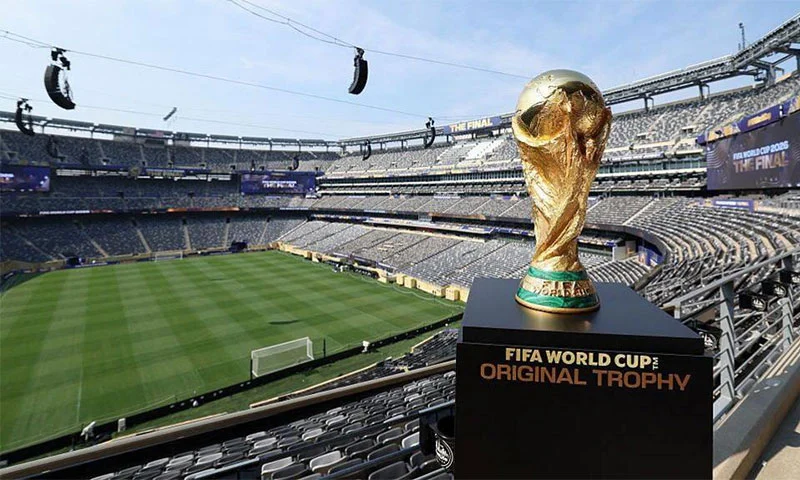
FIFA has unveiled its fan-selected World Cup 2026 Dream XI, with champions Spain placing three players in the 4-3-3 lineup. France also earned three places, while runners-up Argentina supplied two players. Spain defeated Argentina 1-0 after extra time to win its second world title. FIFA said supporters worldwide chose the team following the tournament across Canada, Mexico and the United States. Its official rules state: “The final Dream XI is based on fan votes and is confirmed by FIFA.” Messi, Mbappe and Rodri Headline Dream XI Cape Verde goalkeeper Vozinha claimed the place in goal after heroic displays during his country’s historic debut campaign. The defence features Spain full-backs Marc Cucurella and Pedro Porro, France centre-back Dayot Upamecano and Argentina defender Lisandro Martinez. Read More: FIFA Reveals Stunning Numbers Behind World Cup 2026 Spain captain Rodri anchors the midfield after playing a decisive role in La Roja’s title triumph. England’s Jude Bellingham and France’s Michael Olise join him. Bellingham scored seven goals, the highest total by an England player in one World Cup. Olise registered seven assists and broke Pele’s record for the most assists in a single edition. View this post on Instagram A post shared by FIFA World Cup (@fifaworldcup) The forward line contains Argentina captain Lionel Messi, France star Kylian Mbappe and Norway striker Erling Haaland. Messi, aged 39, scored eight goals and provided four assists as he carried Argentina to another final. Mbappe won the Golden Boot with 10 goals and became the World Cup’s all-time leading scorer with 22. Haaland struck seven times during Norway’s first World Cup appearance in nearly three decades. His goals marked an exceptional debut for a nation absent from the tournament for more than 20 years. Read More: Messi Effect? FIFA World Cup Final Tickets Break US Record The final list includes players from six nations: Spain, France, Argentina, England, Norway and Cape Verde. Although some early reports described seven nations, the named XI represents six. Cubarsi and Unai Simon Absences Raise Questions The selection quickly sparked debate because voters overlooked two major figures from Spain’s dominant defence. Pau Cubarsi missed out despite winning the FIFA Young Player Award. Spain conceded only one goal during eight matches, the fewest ever by a World Cup-winning team. Tournament figures also credited Spain with allowing only 10 shots on target. Golden Glove winner Unai Simon also failed to make the team after recording seven clean sheets, a World Cup record. Fans questioned whether those numbers should have placed him ahead of Vozinha. Vozinha still presented a strong case because his individual brilliance powered Cape Verde’s remarkable campaign. However, Spain’s defensive dominance strengthened the argument for Simon. Read More: Spain Breaks Messi’s Heart to Win the 2026 FIFA World Cup Supporters also questioned whether Cubarsi or Aymeric Laporte deserved a place ahead of Upamecano or Martinez. Both selected centre-backs delivered excellent tournaments, but Spain’s collective defensive record remained unmatched. Ultimately, FIFA’s Dream XI rewarded individual impact and global fan support. Yet the absence of Cubarsi and Simon left many wondering whether the vote underrepresented the newly crowned champions.
World Cup Debutants Cape Verde Make History, Reach Last 32
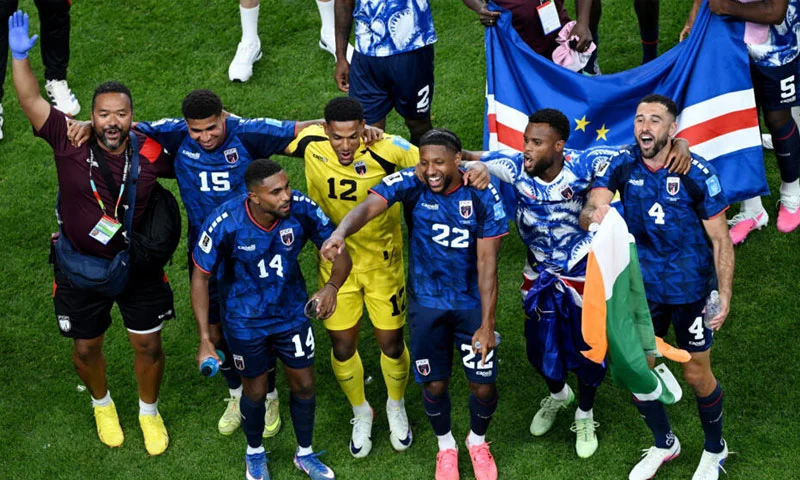
Cape Verde continued their remarkable FIFA World Cup debut by reaching the Round of 32 after a goalless draw with Saudi Arabia in Houston. The result secured second place in the group and set up a blockbuster meeting with defending champions Argentina. The African nation completed one of the tournament’s biggest surprises despite failing to score. Cape Verde finished with three points after drawing all three group matches. Spain topped the group with seven points after beating Uruguay 1-0, while Uruguay and Saudi Arabia both exited with two points. The final whistle sparked emotional celebrations among Cape Verde’s players, coaches and supporters. Players gathered around their phones to monitor the outcome of Spain’s victory over Uruguay before celebrating qualification together. Historic Night for Cape Verde The celebrations continued long after the match ended. Supporters beat drums inside Houston Stadium as players wrapped themselves in national flags and posed for photographs on the pitch. The achievement marked another milestone for the island nation of around 500,000 people, which is making its first appearance at a men’s FIFA World Cup. Cape Verde celebrate history. 🇨🇻 Fans and players together after sealing a historic knockout qualification on their World Cup debut. Pure emotion. ❤️#WorldCupwithMicky#CapeVerde pic.twitter.com/lHSmGwh9eC — Micky Jnr (@MickyJnr__) June 27, 2026 Cape Verde looked the more dangerous side throughout the match. However, the team failed to convert several clear chances despite dominating large periods of play. Laros Duarte missed the best opportunity when he found himself one on one with Saudi goalkeeper Mohammed Alowais but failed to finish. Both teams started with urgency because qualification remained within reach. However, misplaced passes and mistimed tackles disrupted the game’s rhythm during the opening half. Willy Semedo produced Cape Verde’s first notable effort after cutting inside from the left before firing from a tight angle. The Africans gradually increased the pressure and controlled possession. Saudi Arabia Exit After Disappointing Campaign Saudi Arabia produced their first shot on target only in first half stoppage time. Mohamed Kanno directed a header straight at Cape Verde goalkeeper Vozinha. The match also carried an emotional moment for Vozinha. His mother watched him from the stands after arriving late in the United States because of delays linked to the cost of obtaining a US visa. Cape Verde dominated the second half and finished with 15 attempts on goal. Yet the team lacked composure in the final third and could not find the breakthrough. Saudi Arabia struggled to threaten throughout the match. The Green Falcons rarely tested Cape Verde’s defence and finished the tournament with just one goal from three group matches. The draw proved enough for Cape Verde to extend its fairytale run. The debutants now face defending champions Argentina in the knockout stage, where they will attempt to produce another historic upset. Spain advanced as group winners with seven points following their victory over Uruguay. Cape Verde claimed second place with three draws. Uruguay and Saudi Arabia bowed out after collecting two points each.
50K Followers to Millions: How Vozinha’s Life Changes Overnight
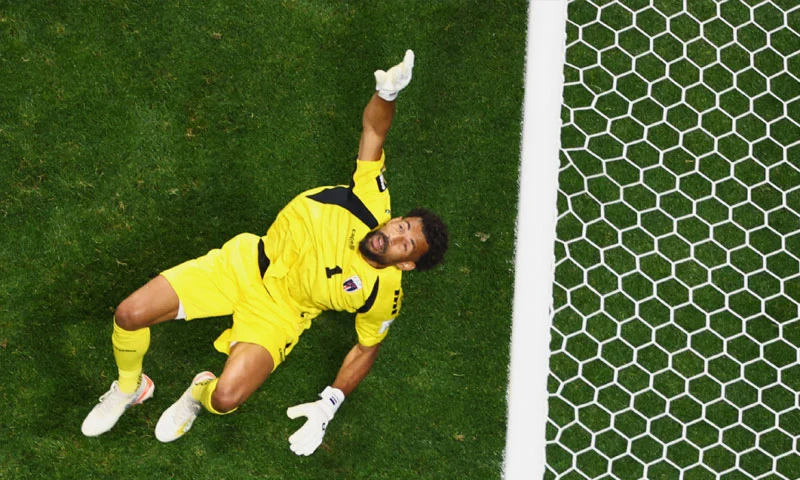
Cape Verde’s FIFA World Cup debut delivered one of the tournament’s biggest surprises on Monday as the African nation held former world champions Spain to a remarkable 0-0 draw, thanks largely to an extraordinary performance by veteran goalkeeper Vozinha. Spain dominated possession and created 27 shots throughout the Group H encounter in Atlanta. Yet they could not find a way past the 40-year-old goalkeeper, who produced a series of crucial saves to secure a historic point for Cape Verde in its first-ever World Cup appearance. As the final whistle blew, the emotion of the moment overwhelmed the goalkeeper. Vozinha fell to the ground near his goal and broke into tears. “I work all my life for this, for this moment, for this dream,” he said after the match. For Cape Verde, the draw represented far more than a single point. It marked a landmark achievement against one of football’s traditional powerhouses and instantly turned Vozinha into one of the faces of the tournament. A Journey Few Thought Would Reach the World Cup Unlike many World Cup stars who emerge through elite academies, Vozinha’s path to football’s biggest stage was long and uncertain. Born in Cape Verde, he did not make his professional debut until the age of 25 with Angolan club Progresso. His career then took him across Moldova, Cyprus, Slovakia and Portugal’s lower leagues. Spain brought tactics. Cape Verde brought Vozinha pic.twitter.com/RHiMtS3vRZ — Natch (@dammies100) June 16, 2026 Today, he plays for Portuguese club Chaves, far from the spotlight enjoyed by Europe’s biggest stars. He joined Cape Verde’s national team setup in 2012 and admitted in previous years that retirement crossed his mind more than once. However, persistence and determination kept him going. His nickname also reflects his unusual journey. “Vozinha,” which translates to “grandmother” in Portuguese, began as a teasing nickname from older teammates. He later embraced the name himself when sharing a similar name with another player created confusion within the squad. Monday’s performance showed why he never gave up. Spain repeatedly tested the goalkeeper through crosses, long-range efforts and close-range opportunities. Time and again, Vozinha responded with calm saves and confident positioning. Overnight Fame and What Comes Next The result transformed Vozinha into an internet sensation almost instantly. Before kickoff, his Instagram account had roughly 50,000 followers. Within hours of the draw, that figure surged beyond 1.5 million. Reports later indicated the number was rapidly approaching six million as football fans around the world celebrated his performance. The result also leaves Group H wide open. Spain will remain in Atlanta to face Saudi Arabia on June 21 before concluding their group campaign against Uruguay in Mexico. Cape Verde will travel to Miami for a clash with Uruguay on the same day before meeting Saudi Arabia in Houston on June 26. Regardless of what happens next, Vozinha has already written one of the most compelling stories of the 2026 FIFA World Cup. His journey from football obscurity to global recognition serves as a reminder that some of the game’s greatest moments belong not to superstars, but to dreamers who refuse to quit.
Meet the Eight Players Over 40 Heading to the FIFA World Cup
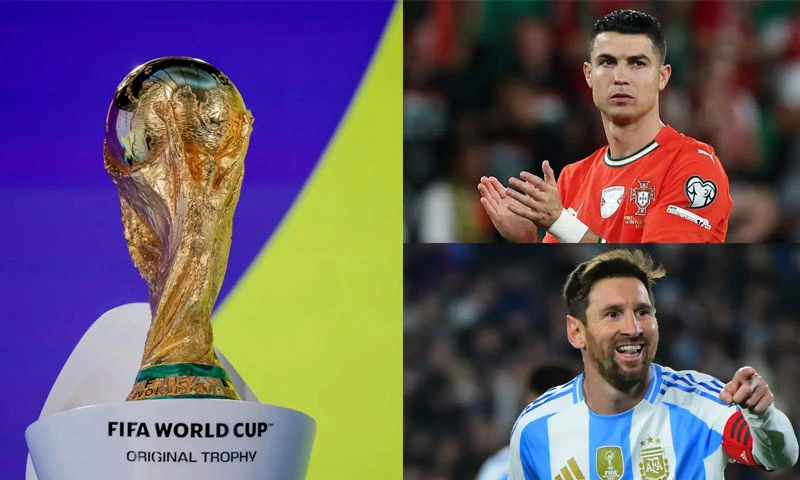
The 2026 FIFA World Cup will feature a record number of players aged 40 or older, highlighting how elite footballers continue to extend their careers through fitness, nutrition and sports science. Eight players aged 40 and above will compete in the tournament across Canada, Mexico and the United States. That total exceeds the combined number from the previous 22 World Cups. The list includes Cristiano Ronaldo, Luka Modric, Edin Dzeko, Manuel Neuer and Guillermo Ochoa. Their presence challenges the idea that top-level football belongs only to younger players. Portugal captain Ronaldo, now 41, will make history as the first player to appear in six FIFA World Cups. Mexico goalkeeper Ochoa, 40, will also reach that milestone. Argentina captain Lionel Messi, who turns 39 later this month, remains one of football’s most influential figures. He led Argentina to World Cup glory in Qatar and now aims to add another chapter to his remarkable career. Veteran Stars Chasing More History Ronaldo arrives with a record few players can match. He has scored in each of the five World Cups he has played. Portugal coach Roberto Martinez believes experience remains Ronaldo’s greatest asset. “None have lived what he has in the number of decisive games he’s played over his career,” Martinez said. “He also brings experience in decisive moments that nobody else in the squad can match.” Croatia’s Modric and Bosnia and Herzegovina’s Dzeko also have an opportunity to make history. Both players could join a very exclusive group of over-40 World Cup goalscorers. Only Cameroon’s Roger Milla has achieved that feat. He scored at the age of 42 during the 1994 World Cup in the United States and remains the oldest scorer in tournament history. More than three decades later, his record still stands. Goalkeepers Continue to Defy Age Scotland goalkeeper Craig Gordon will be the oldest player at the tournament. At 43, he could become the second-oldest player ever to appear in a World Cup match. Only Egypt’s Essam El Hadary ranks ahead of him. The Egyptian goalkeeper played at 45 during the 2018 World Cup in Russia. Gordon is likely to serve as backup to Angus Gunn. However, even a single appearance would secure his place in the record books. Germany’s Manuel Neuer, who helped his country win the 2014 World Cup, hopes to recover from a calf injury before Germany’s opening match against Curaçao. Cape Verde’s Vozinha and Uruguay’s Fernando Muslera, who turns 40 during the tournament, complete the group of veteran players. Recent injuries have affected both Messi and Ronaldo. Even so, neither player’s legacy faces any threat. Their achievements already rank among the greatest in football history. The 2026 World Cup now offers one more opportunity for football’s elder statesmen to prove they can still perform on the sport’s biggest stage.
