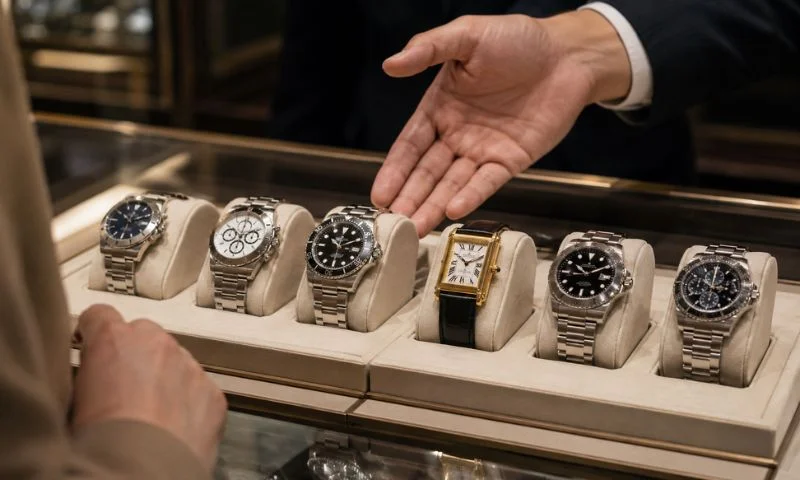
Luxury watch prices are showing signs of recovery after a prolonged decline. Cartier has emerged as the fastest-rising name in recent secondary-market data. Pandemic-era speculation faded, quick resales became less profitable and rising supply pushed prices lower. However, the latest Morgan Stanley and WatchCharts report suggests buyers are returning with greater confidence. Secondary watch prices rose 1.5 per cent during the second quarter of 2026. This marked the fourth consecutive quarter with gains above 1 per cent. Moreover, 27 of the 35 brands tracked by WatchCharts recorded growth, up from 25 in the previous quarter. Big Three Continue to Command Premiums Morgan Stanley’s value-retention data showed improvement at seven of the eight major Swiss brands reviewed. Value retention measures the difference between a watch’s retail price and resale value. Patek Philippe remained the market leader. Its watches traded 15.4 per cent above retail on average at the end of the quarter. Rolex followed at 9.8 per cent, while Audemars Piguet remained 3 per cent above retail. Read More: Phillips Sets All Time Watch Auction Record in Just Six Months These were the only three tracked brands commanding average resale premiums. Patek’s Nautilus and Aquanaut collections traded 74 per cent and 90 per cent above retail, respectively. Rolex Oyster Perpetual watches traded around 35 per cent over list price. The figures show that buyers still trust established sports-watch models. Yet the wider improvement suggests demand is spreading beyond the market’s dominant names. Morgan Stanley noted that “the recovery became more broad-based,” although pricing power outside the three leading brands remains limited. The report also showed that every tracked brand improved its value retention over the past year. Cartier Prices Accelerate Despite Retail Discount Cartier delivered the biggest surprise in separate data from Chrono24’s ChronoPulse Index. Its secondary-market prices jumped 5.9 per cent in June and rose 9.9 per cent over six months. That made Cartier the index’s strongest recent performer. Still, Cartier has not caught Rolex or Patek Philippe. Morgan Stanley placed its average value retention at minus 27.4 per cent, so its watches continued to sell below retail. The reports measure different aspects of the market. ChronoPulse tracks price movements using more than 600,000 transactions. Morgan Stanley compares resale values with current retail prices. Cartier’s resale prices increased, but higher retail prices weakened its value-retention rate during the quarter. In fact, Cartier was the only one of the eight tracked brands to record a quarterly decline in value retention. This explains how Cartier can lead short-term growth while still trading at a sizable discount. Rolex, Patek Philippe and Audemars Piguet are protecting premiums they already hold. Cartier, meanwhile, is attracting buyers from a much lower starting point. The market has not fully recovered from its post-pandemic correction. However, shrinking discounts and broader gains suggest the decline is easing. Rolex and Patek remain the safer names for value retention, but Cartier is now drawing the greatest attention.


