

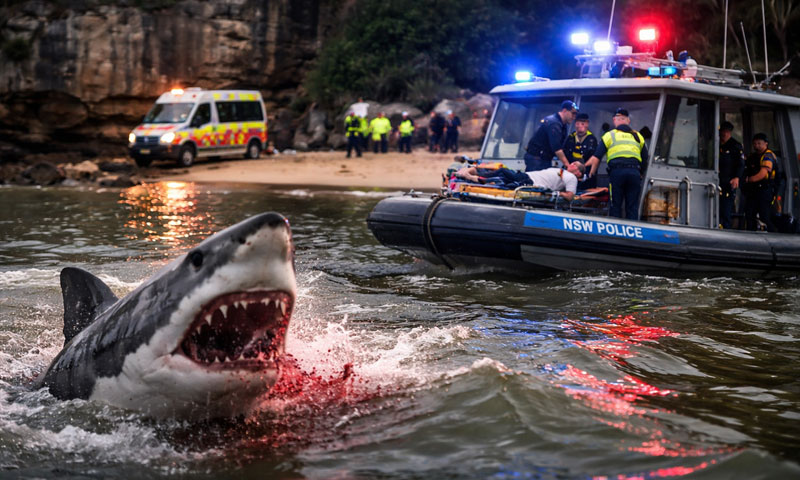
A young boy remains in critical condition after being attacked by a shark inside Sydney Harbour, authorities confirmed on Monday, with recent heavy rainfall believed to have created conditions conducive to the incident. The boy, estimated to be between 12 and 13 years old, was swimming with friends late Sunday afternoon near a beach in Vaucluse, around nine kilometres from Sydney’s central business district. Police said he had been jumping from a six-metre rock into the water when the shark struck. Emergency services were alerted shortly after the attack. The boy was pulled from the water by his friends, suffering severe injuries to both legs. He was later transported to hospital, where he remains in intensive care. New South Wales Police Superintendent Joseph McNulty said officers and paramedics acted swiftly, crediting their response — along with the actions of the boy’s friends — for saving his life. “He’s in for the fight of his life now, and the actions of emergency services yesterday gave him that chance,” McNulty told reporters. Police said days of heavy rainfall had caused large volumes of freshwater runoff to enter the harbour, reducing water clarity and creating brackish conditions. Authorities believe this environment may have attracted a bull shark, a species known to thrive in such waters. “We believe the combination of the brackish water, the fresh water, and the splashing created a perfect storm for this type of shark attack,” McNulty said. He also praised the boy’s friends for their bravery, describing their actions as “gallant” in the moments following the attack. Officers transferred the unconscious child onto a police vessel, where they administered first aid and applied two tourniquets to control severe bleeding. The boat then sped across the harbour to a nearby wharf, where ambulance paramedics were waiting to continue emergency treatment. The boy was taken to Sydney Children’s Hospital, where he remains surrounded by family and friends. Shark Attacks in Australia Australia has recorded more than 1,280 shark-related incidents since records began in 1791, with over 250 resulting in fatalities, according to national databases tracking human-shark encounters. On average, the country experiences around 20 shark attacks each year, with fewer than three proving fatal. Experts note that these figures remain small compared to other beach-related dangers, such as drownings. Scientists say a combination of increasingly crowded coastal waters and rising ocean temperatures may be influencing shark behaviour and migratory patterns, potentially contributing to a rise in encounters with humans. The latest incident comes amid heightened public concern following several recent fatal attacks off the New South Wales coast, including the death of a surfer at a popular northern Sydney beach in September and the killing of a woman by a bull shark at a remote beach north of the city two months later.
Think Twice Before Drinking Water on Flights, New Study Warns
Airline passengers may want to rethink what they drink on board. A new study has warned that water served on many flights could be potentially unhealthy, prompting researchers to advise travelers to stick to bottled water and avoid coffee or tea prepared using aircraft water systems. The findings come from the Center for Food as Medicine & Longevity, which analyzed more than 35,000 water samples collected from 10 major and 11 regional airlines over a three-year period. Based on the results, the nonprofit also recommends avoiding washing hands with airplane tap water and instead using hand sanitizer with at least 60% alcohol. While water quality may not rank high among passengers’ safety concerns, the organization described it as an important public health issue. Drinking contaminated aircraft water, it warned, can lead to gastrointestinal illness and potential exposure to harmful pathogens. What the study found The analysis showed that 2.7% of samples tested positive for total coliform bacteria, an indicator that disease-causing organisms may be present in the water system. More alarmingly, E. coli was detected 32 times across the 21 airlines reviewed. “Testing for coliform bacteria is critical because its presence suggests that pathogens could enter the drinking water supply,” the group said. In the United States, onboard water systems are regulated under the Environmental Protection Agency’s Aircraft Drinking Water Rule (ADWR), introduced in 2011. The rule requires airlines to regularly test water, flush and disinfect tanks multiple times a year, and monitor for contamination. However, the study noted that enforcement is inconsistent and penalties for violations are rarely imposed. Airlines respond Several airlines pushed back against the findings. American Airlines said it is reviewing the study but stressed that its potable water program complies fully with EPA rules and has passed recent audits without violations. JetBlue Airways said it follows EPA, FDA, and FAA standards and primarily serves bottled drinking water onboard.Spirit Airlines said it maintains a comprehensive testing and maintenance program and has improved procedures in recent years. Industry group Airlines for America said passenger and crew safety remains the sector’s top priority, adding that U.S. airlines follow federal guidelines to ensure onboard water safety. Major airlines ranked: best to worst The study scored airlines on a five-point scale, with points deducted for violations such as detecting contaminants in water samples. Delta Air Lines — 5.00 (Grade A) Frontier Airlines — 4.80 (Grade A) Alaska Airlines — 3.85 (Grade B) Allegiant Air — 3.65 (Grade B) Southwest Airlines — 3.30 (Grade C) Hawaiian Airlines — 3.15 (Grade C) United Airlines — 2.70 (Grade C) Spirit Airlines — 2.05 (Grade D) JetBlue Airways — 1.80 (Grade D) American Airlines — 1.75 (Grade D) Regional airlines ranked: best to worst GoJet Airlines — 3.85 (Grade B) Piedmont Airlines — 3.05 (Grade C) Sun Country Airlines — 3.00 (Grade C) Endeavor Air — 2.95 (Grade C) SkyWest Airlines — 2.40 (Grade D) Envoy Air — 2.30 (Grade D) PSA Airlines — 2.25 (Grade D) Air Wisconsin — 2.15 (Grade D) Republic Airways — 2.05 (Grade D) CommuteAir — 1.60 (Grade D) Mesa Airlines — 1.35 (Grade F) What passengers should do Until oversight improves, researchers advise travelers to avoid aircraft tap water entirely—including coffee and tea—and rely on sealed bottled beverages. For hygiene, alcohol-based hand sanitizer is considered safer than washing hands with onboard water. The study concludes that while many airlines meet basic regulatory requirements, stronger enforcement and greater transparency are needed to ensure that something as simple as a glass of water at 35,000 feet does not pose a health risk.
Deadly Cold Snap Hits Europe: Six Dead, More Than 600 Flights Grounded
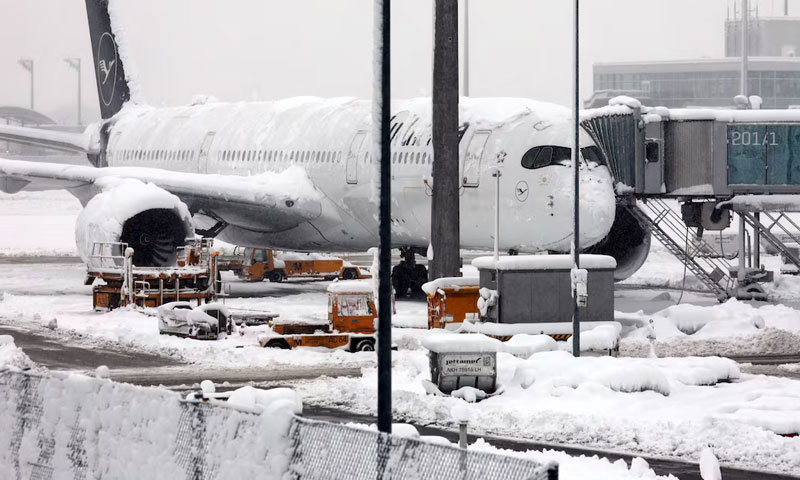
A powerful winter cold snap has swept across large parts of Europe, leaving at least six people dead and causing widespread disruption to travel, power supplies, and daily life. Heavy snowfall, freezing rain, and dangerously low temperatures forced the cancellation of hundreds of flights and stranded thousands of passengers at major transport hubs, including Paris and Amsterdam. Air travel was hit especially hard. More than 600 flights were cancelled at Amsterdam’s Schiphol airport in a single day as crews struggled to clear runways and de-ice aircraft. In Paris, authorities announced plans to cancel around 40% of flights at Charles de Gaulle airport, with further reductions at Orly, in an effort to keep operations safe amid persistent ice and snow. ❄️ Europe Travel Disruptions Intensify ❄️ A worsening cold snap is set to bring heavier snowfall across Europe, leading to more flight cancellations, delayed trains, and blocked roads in the coming days. ✈️ KLM has confirmed the cancellation of 600 flights at Amsterdam Schiphol… pic.twitter.com/GcdMZ334Tr — AirNav Radar (@AirNavRadar) January 6, 2026 France recorded the highest death toll, with five people killed in weather-related incidents. In the southwestern Landes region, icy roads caused multiple collisions, killing three people and injuring at least 15 others. Two more fatalities were reported in the Paris region. One driver died after crashing into a heavy goods vehicle, while a taxi driver lost control on a snow-covered road, plunging into the Marne River. The passenger survived but was treated for hypothermia. French authorities placed 38 districts under an “orange” alert for snow and black ice, warning of extremely hazardous driving conditions. Rail services were also disrupted, with numerous cancellations and delays, including high-speed connections between Paris and Amsterdam. Further southeast, the Balkans faced severe conditions as heavy snow and rain swelled rivers and brought transport to a standstill. In Sarajevo, a woman was killed when a tree branch, weighed down by thick, wet snow, fell on her. Power and water outages were reported in parts of Serbia, Croatia, and Montenegro, highlighting the broader strain on infrastructure. KLM CANCELS HUNDREDS OF FLIGHTS AS DE-ICING FLUID SUPPLY CRISIS HITS SCHIPHOL Since Friday, January 2, KLM has been de-icing aircraft around the clock at Amsterdam Schiphol, using about 85,000 liters of fluid daily amid severe winter weather in Europe. Persistent snowfall,… pic.twitter.com/VEFVv9ZZ6Y — Turbine Traveller (@Turbinetraveler) January 6, 2026 Elsewhere, Germany braced for more snow as temperatures in some regions dropped below –10°C, while the UK experienced its coldest night of the winter so far, triggering school closures and transport chaos. Italy and Spain also saw unusual winter scenes, from flooded rivers to snowfall during public events. Weather services warn that disruptions are likely to continue for several days, with more snow and freezing temperatures forecast across much of northern and western Europe.
