


Hospitals across the Paris region will receive around 1,000 air conditioners by the end of this week as France prepares for another spell of extreme heat, according to French broadcaster BFMTV. The deliveries form part of a nationwide government plan to supply 30,000 air conditioners to hospitals. Officials hope the programme will strengthen healthcare facilities after the country’s record breaking June heatwave placed hospitals under intense pressure. Many hospitals in the Paris region have already started buying extra cooling units while waiting for the government’s deliveries. “I think it’s very important and really necessary to get through a second heatwave, especially if it comes in a short period of time,” Emmanuel Raffoux, head of the haematology department at Saint Louis Hospital, told BFMTV. “Our bodies have suffered and are trying to recover. For the patients here, many will likely experience a second heatwave during the same hospital stay,” he added. The latest preparations come only days after France endured an intense heatwave that pushed temperatures above 35 degrees Celsius across much of the country. Several regions also recorded temperatures exceeding 40 degrees Celsius, forcing authorities to issue widespread heat alerts. Hospitals expand cooling capacity before another hot spell The recent heatwave exposed major weaknesses in hospital infrastructure. Temperatures inside some hospital rooms climbed to 32 degrees Celsius during last week’s extreme weather. Doctors struggled to keep patients comfortable, particularly older people and those receiving long term treatment. The Paris Public Hospital Network, known as AP HP, said it deployed or purchased 800 air conditioners between late summer 2025 and mid 2026. The network also bought another 1,000 units in less than one week as temperatures surged. Hospital officials said they expect the government to reimburse those emergency purchases through the national procurement programme. Some hospitals have also introduced other measures. Staff have reorganised wards, moved vulnerable patients into cooler areas and increased supplies of ice, fans and hydration equipment after emergency departments saw a sharp rise in heat related illnesses. France prepares for hotter summers as climate risks grow French weather forecasters expect another period of intense heat next week, prompting hospitals to accelerate preparations. Prime Minister Sebastien Lecornu recently announced a €100 million investment package to improve cooling systems and strengthen hospitals against future heatwaves. He described reducing pressure on hospitals during extreme heat as an “absolute priority.” The World Health Organization has warned that Europe’s recent heatwave should serve as “a dress rehearsal” for hotter summers ahead. The agency said Europe is warming more than twice as fast as the global average. It also warned that heatwaves have become a recurring public health threat rather than isolated weather events. French health officials believe the new cooling equipment will improve patient care during future heatwaves. They also acknowledge that hospitals must continue adapting as climate change increases the frequency and intensity of extreme summer temperatures.
Why France’s Latest Heatwave Has Authorities on High Alert
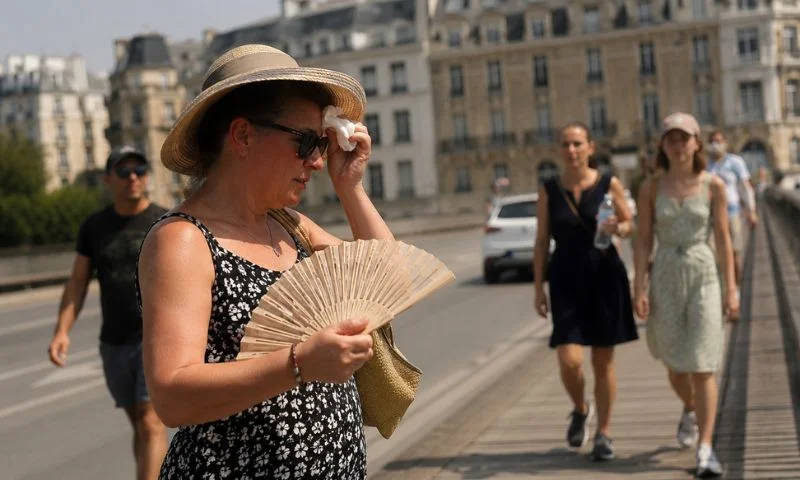
France recorded 2,025 excess deaths during the peak week of its record breaking June heatwave, according to new figures released by the country’s public health authority, as officials warned the final death toll could rise further once regional data becomes available. Public Health France said the country saw “an increase of 29.1 percent, corresponding to 2,025 additional deaths compared with the previous week” during the week beginning June 22. The agency added that the figure was probably “an underestimate” because authorities have not yet received complete data from all regions. The heatwave lasted around 11 days and pushed temperatures above 40 degrees Celsius across many parts of France. It became one of the earliest and most intense heat events ever recorded in the country. Health officials said the extreme temperatures placed enormous pressure on hospitals, emergency services and elderly care facilities. The Paris region suffered the biggest increase in mortality. Public Health France reported a 62 percent rise in deaths there during the week starting June 22. Authorities also recorded a similar spike in the Pays de la Loire region. Government faces criticism as heat deaths climb The rising death toll has intensified political pressure on Prime Minister Sebastien Lecornu’s government. Several opposition politicians accused authorities of failing to protect vulnerable people during the extreme heat. On Thursday, the Greens filed a no confidence motion against the government, arguing that France needs stronger measures to deal with rising temperatures. Health Minister Stephanie Rist urged caution while discussing the figures. “It will probably not be comparable,” she said on Friday, referring to the catastrophic 2003 heatwave that killed around 15,000 people, many of them elderly residents in nursing homes. Nicolas Revel, director general of the Paris public hospital system, also believes the final toll will remain below the 2003 disaster. He said he expected the number of deaths from the June heatwave to be lower than in 2003 but “probably” higher than last year’s heat episode, which claimed 5,700 lives. Climate experts warn Europe must prepare for more extreme heat Health officials stressed that France has improved its emergency response since the deadly 2003 disaster. Authorities activated heat alerts, opened cooling centres and issued repeated public health warnings during the June heatwave. Hospitals also expanded emergency capacity to handle rising numbers of patients suffering from heatstroke, dehydration and other heat related illnesses. Scientists say climate change continues to make European heatwaves more frequent, longer and more intense. France experienced several record breaking temperature days in June, including average national temperatures that exceeded previous records set in 2003 and 2019. More than 40 percent of mainland France recorded temperatures above 40 degrees Celsius during the event. Meteorologists have also warned that another spell of extreme heat could affect parts of France and neighbouring countries in the coming days. Public health officials continue to monitor mortality figures and expect updated assessments once complete regional data becomes available.

Experts Say the World Cup Is Being Played in Dangerous Heat
The extreme heat and humidity affecting large parts of the United States during the 2026 FIFA World Cup would have been “virtually impossible” without human driven climate change, a new scientific study has found. The research, released on Friday by the World Weather Attribution (WWA) group, says climate change has dramatically increased the severity of the current heat wave across the central and eastern United States and southern Canada. “On America’s 250th birthday, our study gives a clear reality check,” said Theodore Keeping, an extreme weather and wildfire researcher at Imperial College London who co-authored the study. “The climate the country has today is fundamentally different to the one it had when the Founding Fathers signed the Declaration of Independence.” The findings come as the United States celebrates Independence Day and hosts several FIFA World Cup matches under dangerous weather conditions. Scientists said a strong “heat dome” has trapped hot, humid air over a vast region. Heat domes occur naturally. However, climate change now makes them much more intense. Many cities have recorded temperatures above 100 degrees Fahrenheit, or 38 degrees Celsius. High humidity has made the heat feel even more dangerous. Researchers say climate change made the event far more likely Instead of using air temperature alone, researchers measured heat stress through Wet Bulb Globe Temperature, or WBGT. The index combines temperature, humidity, wind and sunlight to measure health risks. The team compared today’s climate with a world that had no human caused warming. Researchers said greenhouse gas emissions have already increased global temperatures by about 1.4 degrees Celsius since the pre industrial era. The results showed a dramatic difference. Without climate change, forecast WBGT levels would have been almost impossible. Scientists estimated such conditions would appear only once every 5,000 years. Even today, researchers estimate the event happens only once every 200 years. They also noted uncertainty because of the event’s exceptional intensity. The team also tested whether the developing El Nino influenced the heat wave. Instead, El Nino produced a slight cooling effect across northeastern North America. Researchers concluded it did not drive the extreme weather. Player safety concerns grow ahead of key World Cup matches The study has renewed concerns about player and fan safety during the tournament. The July 4 World Cup match between France and Paraguay in Philadelphia could begin with WBGT levels above 82 degrees Fahrenheit. FIFPRO, the global players’ union, says organisers should delay matches when heat stress reaches unsafe levels for players and spectators. FIFA has already introduced mandatory cooling breaks during matches. Officials have also increased access to drinking water and shaded areas at stadiums. Climate experts, however, say those steps alone will not solve the growing problem. Earlier WWA research found climate change has increased the number of World Cup matches likely to face dangerous heat compared with the 1994 tournament in the United States. Scientists estimated that 26 matches could reach WBGT levels of at least 26 degrees Celsius. Several games may exceed the 28 degree threshold where FIFPRO recommends postponements. Researchers say future tournaments will face similar risks unless countries reduce greenhouse gas emissions and sports bodies strengthen heat safety measures.
Paris Takes Rare Step as Europe Bakes Under Record Breaking Heat
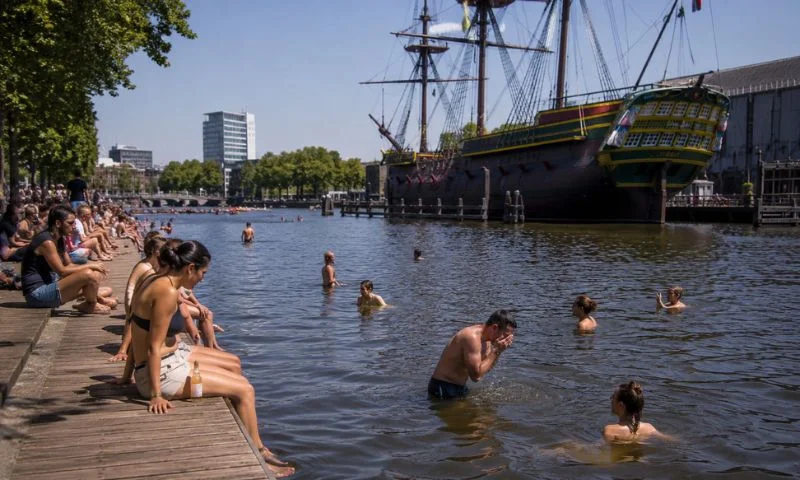
A relentless heatwave continued to grip Europe on Saturday, pushing temperatures to record levels, disrupting daily life, and forcing authorities to impose emergency restrictions as health services struggled to cope with rising demand. Paris banned drinking alcohol in public throughout the weekend, while the city’s Pride March was postponed because of the extreme heat. Authorities also announced that the Eiffel Tower and the Louvre Museum would continue closing early to protect visitors and staff as temperatures in the French capital climbed to 39 degrees Celsius. The heat prompted thousands of residents and tourists to seek relief in parks, canals, and fountains across Paris. However, officials warned that the soaring temperatures also increased the risk of fatal accidents. Emmanuel Grégoire, the mayor of Paris, said a man drowned in the Canal Saint Martin on Friday night and urged people to avoid swimming outside supervised areas or beyond designated opening hours. France remained on high alert as 37 departments stayed under the country’s highest red heat warning on Saturday. Météo France said the number would fall to 24 on Sunday, although dangerous conditions would persist. The country also recorded its hottest day on record on Wednesday, with the national average temperature reaching 30 degrees Celsius. Germany and UK Break Temperature Records The extreme heat extended well beyond France. Germany remained under widespread heat warnings, with the western city of Saarbrücken recording 41.3 degrees Celsius on Friday, the country’s highest temperature on record. Uwe Baumgarten of the German Weather Service told AFP that the record “could be surpassed on Saturday” as another exceptionally hot day unfolded. In the United Kingdom, the Met Office confirmed that the village of Santon Downham in Suffolk reached 37.3 degrees Celsius, making it the hottest June day ever recorded in the country. Eastern and southeastern England remained under an amber heat warning as officials urged people to stay hydrated and avoid unnecessary outdoor activities. Read More: Pakistan on Heatwave Alert as Karachi Hits 44°C, 10 Dead Spain also continued to endure intense temperatures above 40 degrees Celsius in several regions. Spain’s national weather agency said conditions would remain “warmer than normal” into next week, particularly across western, central, and southern parts of the mainland. Scientists have repeatedly warned that human driven climate change is making heatwaves more frequent, longer lasting, and more intense across Europe. Meteorologists said a persistent high pressure system has trapped hot air over much of the continent, delaying any meaningful cooling. Emergency authorities across Europe have responded by cancelling public events, restricting alcohol consumption, shortening sporting competitions, and issuing health alerts as hospitals face increasing numbers of heat related emergencies. The restrictions in Paris reflect growing concern that extreme weather is no longer an occasional event but a recurring public safety challenge. Officials continue to urge residents and visitors to limit outdoor activity during peak afternoon hours, drink plenty of water, and closely follow official weather advisories until temperatures begin to ease.
