

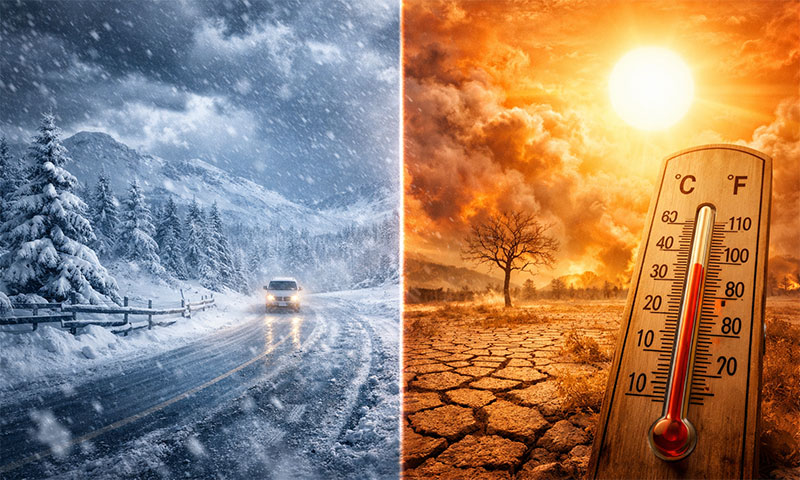
From North America and East Asia to South Asia, this winter has delivered unusually intense snowfall and prolonged cold, setting records and disrupting daily life across multiple regions. Countries including the United States, Japan and Russia have reported historic snow accumulation, while Pakistan’s northern areas and Balochistan have also experienced some of the heaviest snowfall in years — prompting renewed discussion among scientists about how climate change is reshaping weather extremes. In Pakistan, the impact has been particularly striking. Gilgit-Baltistan, upper Khyber Pakhtunkhwa and northern Balochistan have faced persistent snowstorms, road closures and freezing temperatures. Notably, Quetta and Abbottabad recorded widespread snowfall after many years, an event residents and local authorities described as rare فfor urban centres that have seen diminishing snow frequency over the past decade. The Pakistan Meteorological Department (PMD) said the snowfall was linked to strong westerly weather systems interacting with unusually cold air, warning that such intense winter episodes could occur even as long-term temperature trends continue upward. Heavy snowfall has affected Chitral, with over one foot of snow recorded in the town. Roads including the Lawari Tunne remain closed and power supply is disrupted. ❄️#Snowfall #Chitral #Pakistan pic.twitter.com/dKuANHmhRC— Chitral (@ChitralPK) January 23, 2026 A warming world — with sharper cold extremes Climate scientists stress that severe winters do not contradict global warming. According to the World Meteorological Organization (WMO), recent years remain among the warmest on record globally, despite episodes of extreme cold in some regions. WMO Secretary-General Celeste Saulo has said that rising global temperatures are increasing atmospheric moisture and energy, which can intensify weather systems of all kinds — including winter storms. “High land and ocean temperatures are contributing to more extreme weather events across the world,” the WMO noted in its latest global climate update. The Intergovernmental Panel on Climate Change (IPCC) explains that while cold extremes are decreasing overall, climate change is also linked to greater variability and volatility in weather patterns. This means regions can still experience short-lived but severe cold spells, especially when Arctic air masses are displaced southward. Why heavy snow can increase in some regions Scientists note that a warmer atmosphere can hold more moisture, which can lead to heavier precipitation. When temperatures remain below freezing, that moisture falls as snow rather than rain — producing intense snowfall events, even in a generally warming climate. This mechanism has been observed globally this winter — from record snowfalls in parts of Japan to widespread disruption across the United States — and was also evident in Pakistan’s recent snowstorms, particularly in Quetta, Ziarat, Abbottabad and the upper valleys of KP and Gilgit-Baltistan. What lies ahead: colder shocks, hotter summers While winters may still deliver sudden cold extremes, scientists warn that the bigger long-term shift is toward hotter and more dangerous summers. The IPCC projects that as global temperatures rise: Heatwaves will become more frequent and intense Cold spells will be less common but potentially more disruptive Energy demand, health risks and water stress will increase Climate researcher Samantha Burgess of the European Centre for Medium-Range Weather Forecasts (ECMWF), cited in WMO-linked assessments, has warned: “Every fraction of a degree matters. Even small increases in global temperature significantly raise the risk of extreme weather.” For Pakistan, experts say this means greater seasonal contrasts — harsher heatwaves in summer alongside sporadic but powerful winter systems. Urban centres not adapted to snow or extreme cold, such as Quetta and Abbottabad, may face growing infrastructure and public safety challenges. Japan: Today, Sapporo had the heaviest snowfall ever recorded for the month of January.pic.twitter.com/CD9amYLhDE— Volcaholic 🌋 (@volcaholic1) January 25, 2026 Human impact and adaptation Across Pakistan, recent snowfall has already affected transport, water supply and tourism, while freezing temperatures damaged pipelines and left remote communities temporarily cut off. Authorities and climate analysts agree that adapting infrastructure and disaster preparedness to both heat and cold extremes is becoming increasingly urgent. The WMO has repeatedly warned that climate change is no longer a future risk but a present reality, urging governments to strengthen early-warning systems and resilience planning.
More Rain and Snow Ahead as Fresh Weather System Moves Into Pakistan
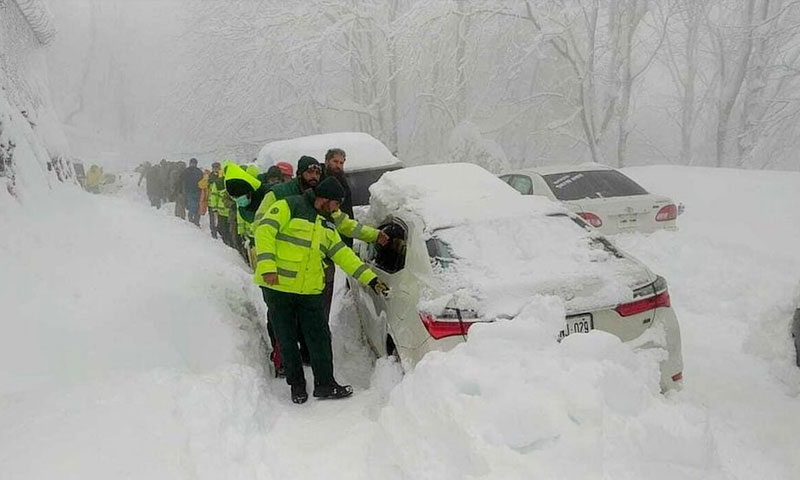
Pakistan is bracing for another round of rain, snow and freezing temperatures as the Pakistan Meteorological Department (PMD) warned that a new westerly weather system will affect large parts of the country from Sunday night through Tuesday, compounding disruption already caused by severe winter conditions in the upper regions. According to the PMD, the fresh weather system will enter western parts of the country on January 25 and spread to upper regions by January 26, bringing rain, strong winds and thunderstorms in plains, while heavy snowfall is expected in mountainous areas. Authorities across Khyber Pakhtunkhwa, Gilgit-Baltistan, Azad Kashmir, northern Balochistan and parts of Punjab have been placed on high alert due to the risk of road blockages, landslides and avalanches. The warning comes as life in several northern and western regions remains severely disrupted by ongoing snowfall and extreme cold. Key highways have been blocked, remote communities cut off, and tourists stranded in multiple locations. In northern Balochistan, snow and icy conditions have paralysed travel on major routes, including the Quetta–Ziarat and N-50 highways, where traffic has been suspended at several points. Dozens of vehicles remained stranded, while more than 100 tourists were reported stuck in and around Chaman. Authorities also imposed a temporary ban on tourist travel to Ziarat due to hazardous road conditions. Temperatures in parts of Balochistan plunged to minus 12 degrees Celsius, freezing water pipelines and causing acute shortages of drinking water in Quetta, Kalat, Chaman and Ziarat. Although snowfall has eased in some areas, intense cold and strong Siberian winds continue to grip the region. Meanwhile, heavy snowfall has affected several districts of Khyber Pakhtunkhwa, including Mansehra, Shangla, Dir, Swat, Kohistan, Kalam and Chitral, with reports of vehicles stranded and travel severely restricted. In Tirah Valley, rain and snow left around 100 vehicles stuck, prompting rescue operations by Rescue 1122, which shifted dozens of people to safer locations. Looking ahead, the PMD has forecast rain with strong winds and thunderstorms in Balochistan on January 25 and 26, while upper Sindh may also receive rainfall on January 26. From January 26 to 27, widespread rain and snowfall are expected in Gilgit-Baltistan, Azad Kashmir, Chitral, Dir, Swat, Shangla, Kohistan, Murree and the Galiyat, with brief breaks in between. Islamabad and surrounding areas are also likely to see showers, while parts of Punjab may experience cloudy weather with intermittent rain. Authorities have advised commuters and tourists to exercise caution, particularly in hilly areas where slippery roads, poor visibility and sudden closures are likely. Relevant departments have been placed on alert to respond swiftly to emergencies, as officials warn that the incoming system could further disrupt daily life, travel and tourism across large parts of the country.
Air Crisis Deepens: Dhaka Ranked Worst, Lahore and Delhi Not Far Behind
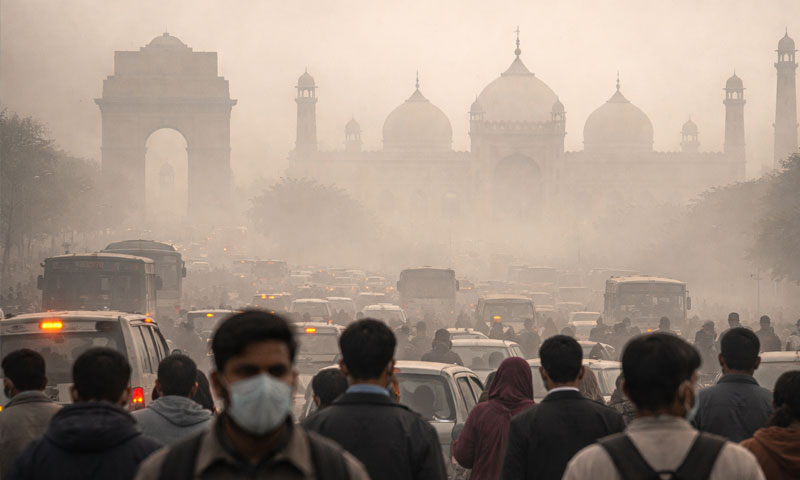
Dhaka has topped the global list of the world’s most polluted cities, recording a “very unhealthy” Air Quality Index (AQI) of 299, just shy of the hazardous threshold, according to the latest industry air-quality data. Close behind, Delhi ranked second with an AQI of 264, while Lahore placed third at 228, underscoring the severe air pollution crisis gripping South Asia’s largest urban centres. Kolkata followed with an AQI of 225, also in the “very unhealthy” category. Other cities appearing near the top of the global pollution rankings include Bishkek (213), Sarajevo (201), Kraków (195), Medan (194), Warsaw (180), and Kabul (175). Most of these cities fall within the unhealthy (red) or very unhealthy (purple) AQI zones. Why pollution levels are surging Experts attribute these alarming readings to a combination of vehicular emissions, industrial pollution, brick kilns, biomass burning, construction dust, and unfavourable seasonal weather patterns. During winter, calm winds and temperature inversions trap pollutants close to the ground, preventing their dispersion and worsening smog conditions. According to global monitoring data, only around 17% of cities worldwide meet the annual PM2.5 air-quality guidelines set by the World Health Organization. In South Asia and parts of Africa, average PM2.5 levels are at least ten times higher than the WHO’s recommended annual limit of 5 micrograms per cubic metre. South Asia’s winter smog crisis Delhi, home to roughly 32 million people, continues to exemplify the region’s winter smog emergency. While air quality fluctuates during the day, winter months routinely push PM2.5-based AQI readings beyond 300, often crossing 400 during severe cold spells. Lahore has repeatedly ranked among the world’s most polluted cities this winter, with thick smog disrupting daily life, closing schools, and increasing hospital admissions. Dhaka, meanwhile, has seen persistent high pollution levels driven by traffic congestion, industrial emissions, and brick kilns operating around the capital. Serious health consequences Health researchers warn that prolonged exposure to AQI levels above 300 can cause severe respiratory and cardiovascular damage. Some studies equate a full day of breathing such air to smoking multiple cigarettes, while heavy outdoor exposure during peak smog episodes has been likened to inhaling the equivalent of dozens of cigarettes per day. These conditions significantly raise the risk of asthma, chronic lung disease, heart attacks, and premature death, particularly among children, the elderly, and those with pre-existing health conditions. How air quality is monitored Global rankings are compiled using real-time and ground-level data from tens of thousands of monitoring stations operated by companies such as IQAir. The system allows hourly tracking of pollution spikes and issues public health alerts when AQI levels reach dangerous thresholds. The bigger picture While modest improvements have been reported in a handful of cities, the majority of urban populations worldwide continue to breathe air that poses serious short- and long-term health risks. The latest rankings highlight the urgent need for stricter emission controls, cleaner energy transitions, and coordinated regional action, particularly in densely populated regions like South Asia.
Deadly Cold Snap Hits Europe: Six Dead, More Than 600 Flights Grounded
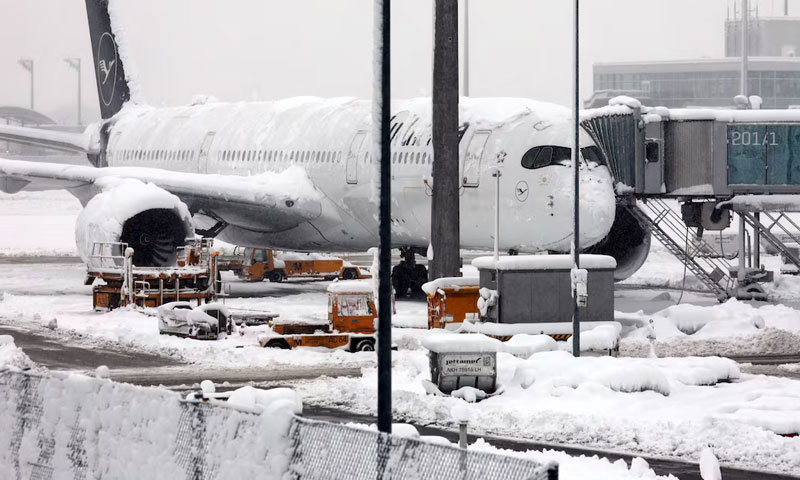
A powerful winter cold snap has swept across large parts of Europe, leaving at least six people dead and causing widespread disruption to travel, power supplies, and daily life. Heavy snowfall, freezing rain, and dangerously low temperatures forced the cancellation of hundreds of flights and stranded thousands of passengers at major transport hubs, including Paris and Amsterdam. Air travel was hit especially hard. More than 600 flights were cancelled at Amsterdam’s Schiphol airport in a single day as crews struggled to clear runways and de-ice aircraft. In Paris, authorities announced plans to cancel around 40% of flights at Charles de Gaulle airport, with further reductions at Orly, in an effort to keep operations safe amid persistent ice and snow. ❄️ Europe Travel Disruptions Intensify ❄️ A worsening cold snap is set to bring heavier snowfall across Europe, leading to more flight cancellations, delayed trains, and blocked roads in the coming days. ✈️ KLM has confirmed the cancellation of 600 flights at Amsterdam Schiphol… pic.twitter.com/GcdMZ334Tr — AirNav Radar (@AirNavRadar) January 6, 2026 France recorded the highest death toll, with five people killed in weather-related incidents. In the southwestern Landes region, icy roads caused multiple collisions, killing three people and injuring at least 15 others. Two more fatalities were reported in the Paris region. One driver died after crashing into a heavy goods vehicle, while a taxi driver lost control on a snow-covered road, plunging into the Marne River. The passenger survived but was treated for hypothermia. French authorities placed 38 districts under an “orange” alert for snow and black ice, warning of extremely hazardous driving conditions. Rail services were also disrupted, with numerous cancellations and delays, including high-speed connections between Paris and Amsterdam. Further southeast, the Balkans faced severe conditions as heavy snow and rain swelled rivers and brought transport to a standstill. In Sarajevo, a woman was killed when a tree branch, weighed down by thick, wet snow, fell on her. Power and water outages were reported in parts of Serbia, Croatia, and Montenegro, highlighting the broader strain on infrastructure. KLM CANCELS HUNDREDS OF FLIGHTS AS DE-ICING FLUID SUPPLY CRISIS HITS SCHIPHOL Since Friday, January 2, KLM has been de-icing aircraft around the clock at Amsterdam Schiphol, using about 85,000 liters of fluid daily amid severe winter weather in Europe. Persistent snowfall,… pic.twitter.com/VEFVv9ZZ6Y — Turbine Traveller (@Turbinetraveler) January 6, 2026 Elsewhere, Germany braced for more snow as temperatures in some regions dropped below –10°C, while the UK experienced its coldest night of the winter so far, triggering school closures and transport chaos. Italy and Spain also saw unusual winter scenes, from flooded rivers to snowfall during public events. Weather services warn that disruptions are likely to continue for several days, with more snow and freezing temperatures forecast across much of northern and western Europe.
