

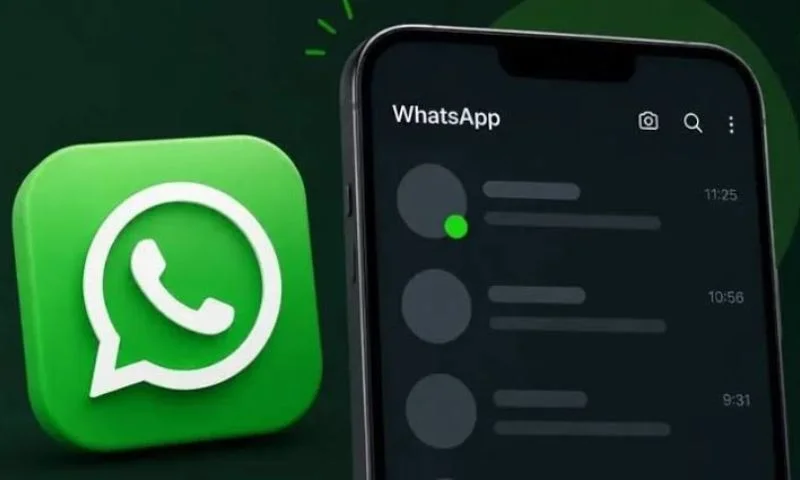
WhatsApp has begun testing a new “Green Dot” feature that allows users to instantly see when a contact is online, marking another step in Meta’s effort to make the messaging app more interactive while keeping existing privacy controls in place. The feature is currently available to a limited number of beta testers on Android and iPhone. It first appeared in the Android beta version 2.26.24.5 and has now expanded to iOS beta users through Apple’s TestFlight programme. Instead of relying on the familiar “Online” text label, WhatsApp now displays a small green circle on a contact’s profile picture whenever that person is actively using the app. The indicator disappears as soon as the user leaves WhatsApp, offering a real time view of availability. For now, users can only see the Green Dot on the Chat Info screen, which opens after tapping a contact’s name at the top of a conversation. It does not yet appear in the main chat list or inside chat windows, although future updates could expand its visibility. Privacy settings remain unchanged despite new feature WhatsApp says the Green Dot will respect the app’s existing privacy settings. The indicator will only appear if a user has chosen to share their “Last Seen and Online” status. People who hide their online status will not display the Green Dot, and they also will not see it for others. This approach ensures the feature does not override existing privacy preferences. Read More: WhatsApp Finally Lets You Chat Without Sharing Your Phone Number The visual cue replaces the current “Online” text label shown on the Chat Info page. Meta believes the new design makes it easier for users to identify active contacts without reading additional text. Technology analysts note that similar online indicators already exist on messaging platforms such as Instagram, Facebook Messenger, Telegram and Discord. WhatsApp’s version follows the same principle while maintaining the app’s privacy focused design. Green Dot could become part of a larger contacts hub The Green Dot is expected to play a bigger role in WhatsApp’s upcoming Contacts Hub, a feature currently under development. According to beta tracking platform WABetaInfo, the new hub will display contacts who are currently online or were recently active. Users may also be able to sort contacts by availability, making it easier to find someone ready to chat. The Green Dot will serve as the primary visual indicator throughout that section. WhatsApp continues to roll out new features gradually through its beta programme before making them available to all users. The company has not announced when the Green Dot will arrive in the stable version of the app. With more than three billion monthly users worldwide, WhatsApp regularly tests new features in beta builds before wider release. Recent additions include usernames, stronger anti scam protections and expanded Meta AI tools, reflecting the company’s continued focus on improving user experience while preserving end to end encryption and privacy.

WhatsApp Finally Lets You Chat Without Sharing Your Phone Number
WhatsApp is rolling out one of its biggest privacy upgrades yet, allowing users to reserve unique usernames and connect with new people without revealing their phone numbers. The feature became available for username reservations on Monday and will gradually roll out worldwide over the coming months. Once fully launched later this year, users will be able to start conversations using usernames instead of sharing their mobile numbers with people outside their contact list. your phone number is personal and sometimes you want to connect without handing it over. that’s why we’re introducing usernames for WhatsApp. starting this week, you can reserve a username to use later this year when we launch the feature. It takes just a few seconds, make sure… — WhatsApp (@WhatsApp) June 29, 2026 The new system aims to address a long standing privacy concern. Many users rely on WhatsApp for communities, clubs, businesses and public groups but hesitate to share their personal phone numbers with strangers. “For most people, choosing a WhatsApp username should be something unique that only people you want to contact you will know,” WhatsApp said. Privacy takes center stage Unlike social media platforms, WhatsApp will not create a public directory of usernames. Users cannot browse profiles or receive suggestions. Anyone wishing to contact another person for the first time must already know that person’s exact username. Meta stressed that the feature focuses on privacy rather than social networking. “At its core, it’s a privacy feature, not a social media handle. There’s no directory to browse and no suggestions, so people need to know your exact username to contact you for the first time,” the company said. WhatsApp opened reservations before the full launch because of its enormous user base. “For over three billion people on WhatsApp a lot of names overlap, which is why we’re opening reservations early so everyone has the opportunity to select the username that matters to them,” the company said. Users can reserve a username by updating to the latest version of WhatsApp and navigating to Settings > Account > Username. The feature will reach countries in phases, and eligible users will receive an in app notification when it becomes available. Businesses and creators also benefit Meta will allow eligible creators, businesses and organizations to claim usernames that match their existing Facebook or Instagram identities. The move will help them maintain a consistent presence across Meta’s platforms while reducing impersonation risks. High profile usernames have also been reserved to protect public figures. WhatsApp also plans to introduce an optional username key that users can share for an additional layer of protection. Even if someone knows a username, the key can prevent unwanted first contact unless it is shared directly. Business model remains unchanged The announcement comes as WhatsApp expands its business services, artificial intelligence features and payment offerings. However, the company rejected suggestions that usernames would become a new advertising tool. “Usernames doesn’t change how WhatsApp’s business model works. Our focus remains on helping businesses connect with and serve their customers better,” the company said. Usernames is an easier way for customers to find and connect with you on WhatsApp Business. Learn more about reserving yours now: https://t.co/4jPgXvuejW https://t.co/AdcEttA7vJ — WhatsApp for Business (@whatsappforbiz) June 29, 2026 Meta recently introduced its Meta Business Agent, an AI powered assistant that helps businesses respond to customers around the clock on WhatsApp and Messenger. At the same time, the company continues to face regulatory scrutiny and legal challenges over child safety and privacy issues in several countries. For users, the immediate benefit is simple. They can soon share a unique WhatsApp identity instead of their personal phone number, giving them greater privacy while keeping the messaging experience familiar.

WhatsApp Users Discover Secret Trick That Could Expose a Block
For years, WhatsApp users have relied on clues such as missing profile photos, hidden “Last Seen” status and single grey check marks to guess whether someone has blocked them. However, those signs often prove unreliable because privacy settings, internet connectivity issues and account changes can produce similar results. Now, a newly discovered behavior within WhatsApp’s encryption system may offer users another way to check their status without sending a message or making a call. According to a report by WhatsApp feature tracker WABetaInfo, the platform’s automatic encryption verification tool could serve as an unofficial indicator that something is wrong with a chat, including the possibility that a user has been blocked. Encryption Tool Draws Attention WhatsApp originally introduced encryption verification to help users confirm that their conversations remain protected by end-to-end encryption (E2EE). The security feature sits within the contact information section of a chat. Users can open a conversation, tap a contact’s profile name and select “Encryption.” WhatsApp then automatically checks whether the encrypted connection between both accounts remains intact. According to WABetaInfo, the process normally completes without issues when both accounts communicate as expected. However, researchers observed a different pattern in some blocked chats. The report says WhatsApp may repeatedly fail to complete the verification process and instead suggest alternative verification methods. “If everything is normal, the verification completes smoothly. But if WhatsApp repeatedly fails to verify encryption and suggests alternative methods, it could hint that something’s off, possibly including being blocked.” The discovery has attracted attention because the method allows users to investigate quietly. Unlike messages or voice calls, the verification process does not alert the other person. “The interesting part: This method doesn’t notify the other person at all, unlike sending a message or placing a call, so users can check quietly, without tipping anyone off.” Not Official Proof of a Block Despite growing interest in the feature, WhatsApp has not confirmed that encryption verification can identify blocked accounts. WABetaInfo stressed that users should not treat the behavior as definitive evidence. The publication noted that the issue appeared consistently in known blocked chats during testing. However, it cautioned that other technical factors could potentially trigger similar verification problems. WhatsApp’s official support pages continue to state that the company intentionally avoids providing direct confirmation when someone blocks a user. Instead, it points to indirect indicators such as undelivered messages, missing profile updates and unavailable status information. Privacy experts say this approach helps protect user privacy and prevents unwanted contact. The latest finding comes as WhatsApp continues expanding security features across its platform. The Meta-owned messaging service recently introduced advanced chat privacy tools, encrypted backups and stronger account protection measures for its more than two billion users worldwide. For now, the encryption verification trick remains an unofficial workaround rather than a confirmed feature. Still, for users trying to solve the mystery of a silent WhatsApp contact, it may provide the strongest clue yet without revealing their suspicions.
WhatsApp Is Getting a Game-Changing Instagram-Style Close Friends Feature
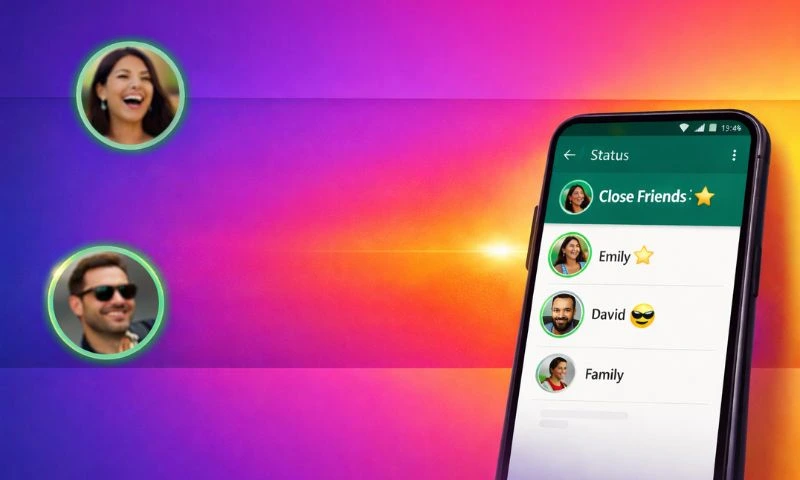
Meta’s popular messaging app WhatsApp is reportedly preparing to roll out an Instagram-like “Close Friends” feature that will give users more control over who sees their Status updates. According to the latest report by Business Today, this new option is currently under development and was spotted in WhatsApp beta builds for Android. At present, WhatsApp users choose from basic Privacy settings when sharing a Status. They can select “My Contacts,” “My Contacts Except,” or “Only Share With.” With the new Close Friends list, users will be able to save a group of trusted contacts that they often share personal updates with. This change makes sharing intimate moments easier, without the need to constantly adjust privacy settings. Feature tracker WABetaInfo first spotted the Close Friends option in beta versions 2.26.5.11 and 2.26.5.13 on Android, suggesting a wider rollout could come soon after testing is complete. Instead of manually selecting contacts every time, users can now pre-define their inner circle and use it with just one tap. Unlike Instagram, where only followers can be added to a Close Friends list, WhatsApp’s version will use the app’s existing contacts. Users can add or remove people from their Close Friends list either from the Status privacy settings screen or directly when posting a Status update. However, changes to the list will apply only to future Status posts. If someone is removed after a Status is posted, they will still be able to see updates they were initially granted access to. Reports from other tech news outlets confirm that WhatsApp testers noticed customised lists can even have names and emojis, making it easier for users to distinguish different groups, such as close family versus colleagues. Selected contacts in the Close Friends list are expected to see a different coloured circle around the sender’s profile photo, much like Instagram’s green ring that shows stories shared with only close friends. For many users, this feature could be a valuable privacy tool. People often hesitate to post photos or thoughts on WhatsApp Status because they do not want everyone in their contact list to see them. The Close Friends list gives a private space to share moments without stress. WhatsApp has not yet announced when the Close Friends feature will be widely available. The company is currently testing the tool with beta users and gathering feedback before a stable release.
