

For years, WhatsApp users have relied on clues such as missing profile photos, hidden “Last Seen” status and single grey check marks to guess whether someone has blocked them. However, those signs often prove unreliable because privacy settings, internet connectivity issues and account changes can produce similar results. Now, a newly discovered behavior within WhatsApp’s encryption system may offer users another way to check their status without sending a message or making a call. According to a report by WhatsApp feature tracker WABetaInfo, the platform’s automatic encryption verification tool could serve as an unofficial indicator that something is wrong with a chat, including the possibility that a user has been blocked. Encryption Tool Draws Attention WhatsApp originally introduced encryption verification to help users confirm that their conversations remain protected by end-to-end encryption (E2EE). The security feature sits within the contact information section of a chat. Users can open a conversation, tap a contact’s profile name and select “Encryption.” WhatsApp then automatically checks whether the encrypted connection between both accounts remains intact. According to WABetaInfo, the process normally completes without issues when both accounts communicate as expected. However, researchers observed a different pattern in some blocked chats. The report says WhatsApp may repeatedly fail to complete the verification process and instead suggest alternative verification methods. “If everything is normal, the verification completes smoothly. But if WhatsApp repeatedly fails to verify encryption and suggests alternative methods, it could hint that something’s off, possibly including being blocked.” The discovery has attracted attention because the method allows users to investigate quietly. Unlike messages or voice calls, the verification process does not alert the other person. “The interesting part: This method doesn’t notify the other person at all, unlike sending a message or placing a call, so users can check quietly, without tipping anyone off.” Not Official Proof of a Block Despite growing interest in the feature, WhatsApp has not confirmed that encryption verification can identify blocked accounts. WABetaInfo stressed that users should not treat the behavior as definitive evidence. The publication noted that the issue appeared consistently in known blocked chats during testing. However, it cautioned that other technical factors could potentially trigger similar verification problems. WhatsApp’s official support pages continue to state that the company intentionally avoids providing direct confirmation when someone blocks a user. Instead, it points to indirect indicators such as undelivered messages, missing profile updates and unavailable status information. Privacy experts say this approach helps protect user privacy and prevents unwanted contact. The latest finding comes as WhatsApp continues expanding security features across its platform. The Meta-owned messaging service recently introduced advanced chat privacy tools, encrypted backups and stronger account protection measures for its more than two billion users worldwide. For now, the encryption verification trick remains an unofficial workaround rather than a confirmed feature. Still, for users trying to solve the mystery of a silent WhatsApp contact, it may provide the strongest clue yet without revealing their suspicions.
WhatsApp’s New Feature Lets You See Status Updates from Unknown Numbers
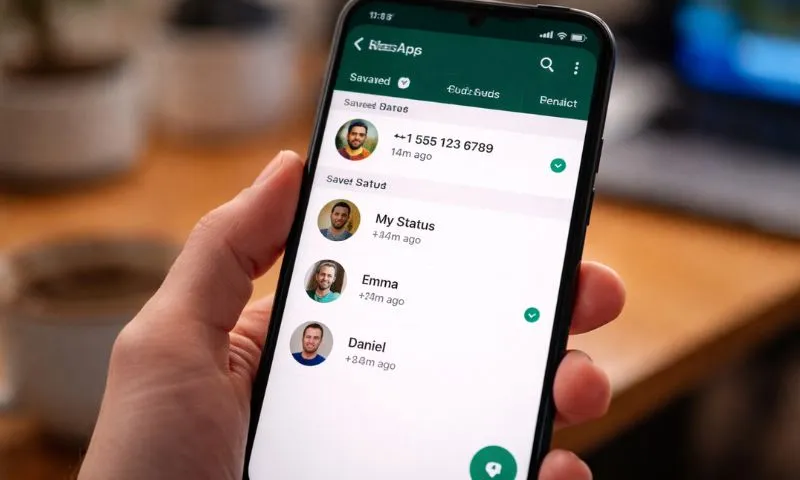
WhatsApp has quietly introduced a new feature that allows users to receive status updates from phone numbers that are not saved in their contacts, marking a subtle but notable shift in how the platform handles visibility and interaction. According to recent updates, users may now see status updates from unknown numbers if they have recently interacted with them through calls or messages. The change applies specifically to contacts involved in recent activity, meaning the feature does not open status visibility to all unknown users, but rather those with whom there has been prior communication. How the feature works When a user receives a status update from an unsaved number, WhatsApp displays a tilde symbol before the contact name, along with the phone number, to indicate that the update is coming from a recent interaction rather than a saved contact. An introductory prompt may also appear, explaining why such updates are visible and how the feature functions. Importantly, WhatsApp has emphasised that the update does not alter existing privacy settings. Users still retain full control over who can view their status updates, and visibility continues to depend on personal privacy preferences configured within the app. The feature works both ways. If a user can see someone’s status despite not saving their number, it means the other person has their number saved and has allowed status visibility accordingly. Read More: New Parental Controls Could Change How Kids Use WhatsApp Privacy and user control remain central WhatsApp has long positioned itself as a privacy-focused messaging platform, offering end-to-end encryption for messages, calls, and shared media. The introduction of this feature reflects an attempt to balance usability and privacy by enabling more dynamic interactions without fully exposing user information to unknown parties. Industry observers say the update could improve engagement, particularly in cases where users communicate with businesses, delivery services, or temporary contacts who are not permanently saved in their address books. At the same time, the feature may raise concerns among some users about unexpected visibility, even if privacy controls remain unchanged. Part of a broader evolution The rollout comes amid a wave of updates aimed at modernising WhatsApp’s user experience. In recent months, the Meta-owned platform has been expanding features across messaging, status updates, and group interactions, while also introducing artificial intelligence tools to enhance communication. WhatsApp, which has more than three billion users globally, continues to evolve to keep pace with competing platforms such as Telegram and Signal, as well as social media rivals that increasingly blend messaging with content sharing. Experts note that even small interface changes can have a significant impact at scale, particularly on a platform used daily for both personal and professional communication. Read More: Talk to Anyone, Anywhere: WhatsApp Set to Revolutionise Messaging with Translation Feature What it means for users While the update is relatively minor in appearance, it signals a broader shift toward more fluid connections between users, even beyond traditional contact lists. For users, the key takeaway remains control. Privacy settings still determine who can see their updates, and the feature does not override those preferences. However, the ability to see updates from unsaved numbers may change how users perceive interactions on the platform, especially in regions where WhatsApp is the primary mode of communication. Read More: Meta and PTA Introduce New Anti-Hacking Tool for WhatsApp Accounts
