

For years, WhatsApp users have relied on clues such as missing profile photos, hidden “Last Seen” status and single grey check marks to guess whether someone has blocked them. However, those signs often prove unreliable because privacy settings, internet connectivity issues and account changes can produce similar results. Now, a newly discovered behavior within WhatsApp’s encryption system may offer users another way to check their status without sending a message or making a call. According to a report by WhatsApp feature tracker WABetaInfo, the platform’s automatic encryption verification tool could serve as an unofficial indicator that something is wrong with a chat, including the possibility that a user has been blocked. Encryption Tool Draws Attention WhatsApp originally introduced encryption verification to help users confirm that their conversations remain protected by end-to-end encryption (E2EE). The security feature sits within the contact information section of a chat. Users can open a conversation, tap a contact’s profile name and select “Encryption.” WhatsApp then automatically checks whether the encrypted connection between both accounts remains intact. According to WABetaInfo, the process normally completes without issues when both accounts communicate as expected. However, researchers observed a different pattern in some blocked chats. The report says WhatsApp may repeatedly fail to complete the verification process and instead suggest alternative verification methods. “If everything is normal, the verification completes smoothly. But if WhatsApp repeatedly fails to verify encryption and suggests alternative methods, it could hint that something’s off, possibly including being blocked.” The discovery has attracted attention because the method allows users to investigate quietly. Unlike messages or voice calls, the verification process does not alert the other person. “The interesting part: This method doesn’t notify the other person at all, unlike sending a message or placing a call, so users can check quietly, without tipping anyone off.” Not Official Proof of a Block Despite growing interest in the feature, WhatsApp has not confirmed that encryption verification can identify blocked accounts. WABetaInfo stressed that users should not treat the behavior as definitive evidence. The publication noted that the issue appeared consistently in known blocked chats during testing. However, it cautioned that other technical factors could potentially trigger similar verification problems. WhatsApp’s official support pages continue to state that the company intentionally avoids providing direct confirmation when someone blocks a user. Instead, it points to indirect indicators such as undelivered messages, missing profile updates and unavailable status information. Privacy experts say this approach helps protect user privacy and prevents unwanted contact. The latest finding comes as WhatsApp continues expanding security features across its platform. The Meta-owned messaging service recently introduced advanced chat privacy tools, encrypted backups and stronger account protection measures for its more than two billion users worldwide. For now, the encryption verification trick remains an unofficial workaround rather than a confirmed feature. Still, for users trying to solve the mystery of a silent WhatsApp contact, it may provide the strongest clue yet without revealing their suspicions.
WhatsApp Is Getting a Game-Changing Instagram-Style Close Friends Feature
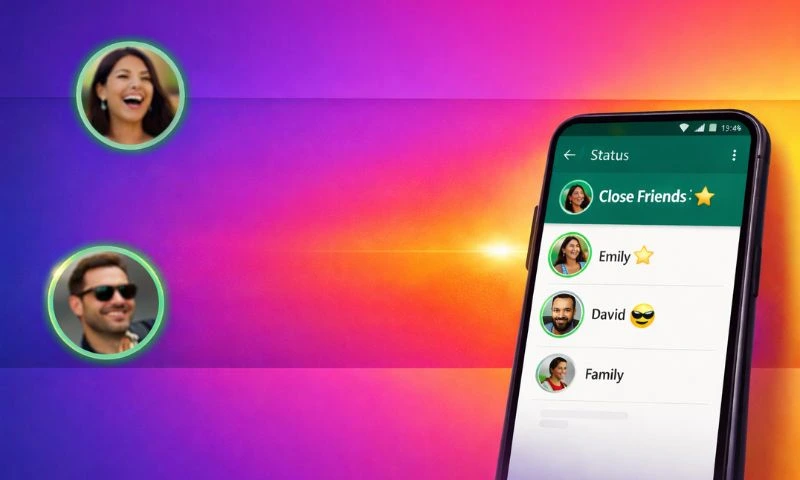
Meta’s popular messaging app WhatsApp is reportedly preparing to roll out an Instagram-like “Close Friends” feature that will give users more control over who sees their Status updates. According to the latest report by Business Today, this new option is currently under development and was spotted in WhatsApp beta builds for Android. At present, WhatsApp users choose from basic Privacy settings when sharing a Status. They can select “My Contacts,” “My Contacts Except,” or “Only Share With.” With the new Close Friends list, users will be able to save a group of trusted contacts that they often share personal updates with. This change makes sharing intimate moments easier, without the need to constantly adjust privacy settings. Feature tracker WABetaInfo first spotted the Close Friends option in beta versions 2.26.5.11 and 2.26.5.13 on Android, suggesting a wider rollout could come soon after testing is complete. Instead of manually selecting contacts every time, users can now pre-define their inner circle and use it with just one tap. Unlike Instagram, where only followers can be added to a Close Friends list, WhatsApp’s version will use the app’s existing contacts. Users can add or remove people from their Close Friends list either from the Status privacy settings screen or directly when posting a Status update. However, changes to the list will apply only to future Status posts. If someone is removed after a Status is posted, they will still be able to see updates they were initially granted access to. Reports from other tech news outlets confirm that WhatsApp testers noticed customised lists can even have names and emojis, making it easier for users to distinguish different groups, such as close family versus colleagues. Selected contacts in the Close Friends list are expected to see a different coloured circle around the sender’s profile photo, much like Instagram’s green ring that shows stories shared with only close friends. For many users, this feature could be a valuable privacy tool. People often hesitate to post photos or thoughts on WhatsApp Status because they do not want everyone in their contact list to see them. The Close Friends list gives a private space to share moments without stress. WhatsApp has not yet announced when the Close Friends feature will be widely available. The company is currently testing the tool with beta users and gathering feedback before a stable release.
