


A court in central China has ordered a woman to publicly apologise to her husband after ruling that her social media posts exposing his extramarital affair crossed the legal line into defamation — a decision that has sparked widespread debate online. The woman, Niu Na, from Henan province, revealed on social media that she had been married to her husband Gao Fei for more than a decade and that the couple share a daughter. According to Niu, she later discovered that Gao, a team leader at a local coal mining company, had been involved in a five-year affair with a married colleague surnamed Han. Niu alleged that during the affair, Gao used the couple’s joint assets to purchase gold jewellery, cosmetics and clothing for his mistress. Enraged by the betrayal, she took to Douyin, China’s version of TikTok, where she publicly disclosed details of the relationship, named workplaces linked to both individuals, and shared a sarcastic short story mocking her husband’s infidelity. Soon after the posts gained attention, Gao filed a lawsuit accusing Niu of defamation. The court ruled in his favour, stating that personal moral misconduct does not justify violating another person’s legal rights or reputation, regardless of the circumstances. As part of the judgment, Niu was ordered to post public apology videos for 15 consecutive days, with each video subject to court approval. Under Chinese civil law, defamation can result in legal obligations including a public apology, cessation of harmful behaviour and, in some cases, financial compensation. Since January 12, Niu has been uploading daily apology videos on Douyin. In one clip, she says:“I was overwhelmed by anger and made the wrong decision to insult you. I am sorry.” However, the apology videos — delivered with a notably ironic tone — quickly went viral. Within days, Niu amassed millions of likes and gained more than 350,000 followers, turning the court-mandated apology into an unexpected social media phenomenon. In the videos, Niu continues to reference her husband’s affair, sharing screenshots of chat records, financial transfers, and even images showing Gao’s injuries after he was allegedly assaulted by his mistress’s husband. In one video, she remarks sarcastically:“You and your mistress are clearly in true love. Even with serious moral flaws, your reputation deserves respect.” In another post, Niu displayed injuries she said were caused by domestic violence, adding that while she had suffered deeply, her emotional distress did not excuse her actions.“Emotional issues should be handled legally,” she said. Public reaction has been overwhelmingly supportive. Many users praised her composure and criticised the legal outcome, arguing that she was punished for exposing wrongdoing. Some commenters suggested her apology videos should be broadcast publicly to highlight the irony of the ruling. Capitalising on her sudden popularity, Niu has begun selling clothing, hair accessories and cosmetics featured in her videos, while also hosting livestreams sharing her personal journey and promoting her hometown. Each livestream reportedly attracts more than 10,000 viewers. It remains unclear whether Niu and Gao have formally divorced, though the two are currently living separately. Niu has said the betrayal took a severe toll on her health, but thanked her supporters for helping her move forward. “Your love and encouragement give me the strength to keep going,” she told followers.
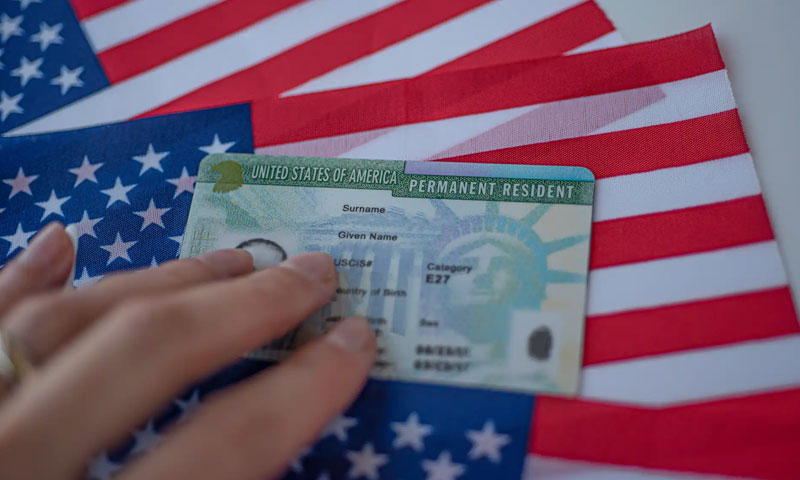
Marriage to a US citizen is no longer a guaranteed route to a Green Card
A Permanent Resident Card commonly known as a Green Card allows immigrants to live and work permanently in the United States and places them on the pathway to eventual citizenship. While Green Card holders do not enjoy all the rights of US citizens, they are entitled to many key legal and social protections. For decades, marriage to a US citizen has been viewed as one of the most reliable ways to secure permanent residency. Under US immigration law, the spouse of an American citizen qualifies as an “immediate relative”, making them eligible to apply for a Green Card through the US Citizenship and Immigration Services (USCIS). However, immigration attorney Brad Bernstein says that legal marriage alone is no longer sufficient. Speaking in a recent social media video, Bernstein—who has more than three decades of experience and practices at the Law Offices of Spar & Bernstein—said marriage-based applications are now being examined far more aggressively. Authorities, he explained, are focused less on marriage certificates and more on whether couples genuinely live as spouses. “Being married does not get you a Green Card,” Bernstein said. “Living together gets you a Green Card.” Cohabitation under intense scrutiny Bernstein cautioned that couples who are married but live separately face a high risk of denial. According to him, USCIS officers give little weight to explanations such as work, education, finances or convenience. “Immigration officers don’t care why you live apart,” he said. “They only care whether you actually share a home as husband and wife.” Under current enforcement practices, a marriage is considered bona fide only if the couple maintains a shared residence and daily life together. Failure to do so, Bernstein warned, often triggers deeper investigations, tougher interviews and, in many cases, outright rejection of the application. “If spouses are not living together full-time, the case is already in trouble,” he said, urging applicants in such situations to seek legal advice before filing. How USCIS assesses ‘good faith’ marriages USCIS evaluates marriage-based Green Card cases by examining the “totality of the relationship,” rather than relying solely on documents or addresses. Officers look for evidence that the marriage was entered into in good faith, with a genuine intent to build a life together. Under USCIS policy, a marriage may be legally valid yet still denied if officials determine that the couple had no real intention to live together and entered the union primarily to bypass immigration laws. Part of a broader immigration crackdown The tougher approach reflects wider immigration measures under President Donald Trump, whose administration has tightened several legal immigration pathways. These steps have included suspending the Diversity Visa Lottery, which previously offered up to 50,000 visas annually to applicants from underrepresented countries. USCIS has also shortened the validity period of work permits for Green Card applicants to 18 months and ordered a sweeping review of permanent residency holders from 19 countries previously labelled “countries of concern.” The increased oversight follows a series of violent incidents involving Green Card holders, which the administration has cited as justification for stricter enforcement. For prospective applicants, immigration experts say the message is clear: marriage alone is no longer enough. Proving a shared life—under one roof—has become central to securing a marriage-based Green Card.
