

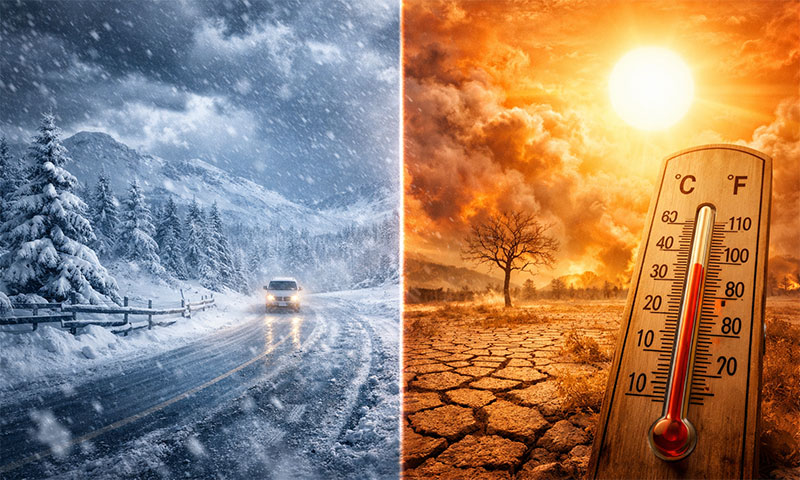
From North America and East Asia to South Asia, this winter has delivered unusually intense snowfall and prolonged cold, setting records and disrupting daily life across multiple regions. Countries including the United States, Japan and Russia have reported historic snow accumulation, while Pakistan’s northern areas and Balochistan have also experienced some of the heaviest snowfall in years — prompting renewed discussion among scientists about how climate change is reshaping weather extremes. In Pakistan, the impact has been particularly striking. Gilgit-Baltistan, upper Khyber Pakhtunkhwa and northern Balochistan have faced persistent snowstorms, road closures and freezing temperatures. Notably, Quetta and Abbottabad recorded widespread snowfall after many years, an event residents and local authorities described as rare فfor urban centres that have seen diminishing snow frequency over the past decade. The Pakistan Meteorological Department (PMD) said the snowfall was linked to strong westerly weather systems interacting with unusually cold air, warning that such intense winter episodes could occur even as long-term temperature trends continue upward. Heavy snowfall has affected Chitral, with over one foot of snow recorded in the town. Roads including the Lawari Tunne remain closed and power supply is disrupted. ❄️#Snowfall #Chitral #Pakistan pic.twitter.com/dKuANHmhRC— Chitral (@ChitralPK) January 23, 2026 A warming world — with sharper cold extremes Climate scientists stress that severe winters do not contradict global warming. According to the World Meteorological Organization (WMO), recent years remain among the warmest on record globally, despite episodes of extreme cold in some regions. WMO Secretary-General Celeste Saulo has said that rising global temperatures are increasing atmospheric moisture and energy, which can intensify weather systems of all kinds — including winter storms. “High land and ocean temperatures are contributing to more extreme weather events across the world,” the WMO noted in its latest global climate update. The Intergovernmental Panel on Climate Change (IPCC) explains that while cold extremes are decreasing overall, climate change is also linked to greater variability and volatility in weather patterns. This means regions can still experience short-lived but severe cold spells, especially when Arctic air masses are displaced southward. Why heavy snow can increase in some regions Scientists note that a warmer atmosphere can hold more moisture, which can lead to heavier precipitation. When temperatures remain below freezing, that moisture falls as snow rather than rain — producing intense snowfall events, even in a generally warming climate. This mechanism has been observed globally this winter — from record snowfalls in parts of Japan to widespread disruption across the United States — and was also evident in Pakistan’s recent snowstorms, particularly in Quetta, Ziarat, Abbottabad and the upper valleys of KP and Gilgit-Baltistan. What lies ahead: colder shocks, hotter summers While winters may still deliver sudden cold extremes, scientists warn that the bigger long-term shift is toward hotter and more dangerous summers. The IPCC projects that as global temperatures rise: Heatwaves will become more frequent and intense Cold spells will be less common but potentially more disruptive Energy demand, health risks and water stress will increase Climate researcher Samantha Burgess of the European Centre for Medium-Range Weather Forecasts (ECMWF), cited in WMO-linked assessments, has warned: “Every fraction of a degree matters. Even small increases in global temperature significantly raise the risk of extreme weather.” For Pakistan, experts say this means greater seasonal contrasts — harsher heatwaves in summer alongside sporadic but powerful winter systems. Urban centres not adapted to snow or extreme cold, such as Quetta and Abbottabad, may face growing infrastructure and public safety challenges. Japan: Today, Sapporo had the heaviest snowfall ever recorded for the month of January.pic.twitter.com/CD9amYLhDE— Volcaholic 🌋 (@volcaholic1) January 25, 2026 Human impact and adaptation Across Pakistan, recent snowfall has already affected transport, water supply and tourism, while freezing temperatures damaged pipelines and left remote communities temporarily cut off. Authorities and climate analysts agree that adapting infrastructure and disaster preparedness to both heat and cold extremes is becoming increasingly urgent. The WMO has repeatedly warned that climate change is no longer a future risk but a present reality, urging governments to strengthen early-warning systems and resilience planning.
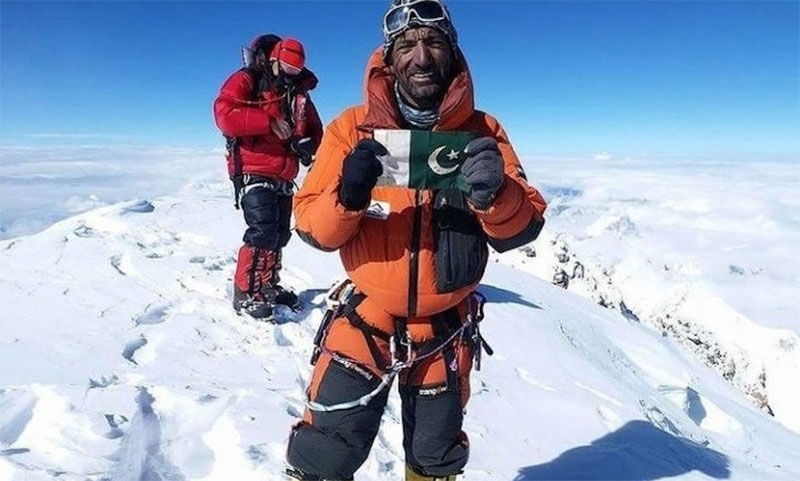
Ali Sadpara’s Last Climb: Winter K2 Tragedy Takes Centre Stage at Sundance
A haunting new documentary revisiting one of mountaineering’s most devastating tragedies — the fatal 2021 winter climb of K2 that claimed the lives of legendary climbers Muhammad Ali Sadpara and John Snorri — has captured international attention after premiering at the 2026 Sundance Film Festival in the United States. Directed by award-winning filmmaker Amir Bar-Lev, the film offers a stark and deeply personal account of one of the most dangerous seasons ever recorded on K2, the world’s second-highest mountain. The documentary explores the high-stakes race to conquer what mountaineers long considered the sport’s final unclaimed achievement — the first winter ascent of K2. The film centres on the expedition involving Snorri and the father-son duo of Ali Sadpara and Sajid Sadpara, who set out to summit K2 during winter, when extreme cold, violent winds, and technical challenges make survival uncertain. That season proved deadly, claiming multiple lives and exposing fractures within modern mountaineering culture. The Last First: Winter K2 chronicles the climbers’ final push toward the summit and the tragic events that followed, including the disappearance of Ali Sadpara and Snorri during their descent. Their deaths sent shockwaves through the global climbing community and reignited debate about risk, responsibility, and ethics in extreme alpinism. Beyond the tragedy itself, the documentary examines deeper issues shaping the sport today — including the pressures of commercial expeditions, the influence of social media and influencer culture, and long-standing inequalities between climbers from the Global South and those who have traditionally dominated mountaineering narratives. Sajid Sadpara, who survived the climb after being forced to turn back and later took part in search operations for his father, attended the film’s premiere in Park City, Utah. Addressing the audience, he shared emotional details about the expedition’s strategy and the moment his father and Snorri went missing during their descent. Festival organisers described the film as a powerful exploration of the immense dangers of winter climbing on K2 and a meditation on the evolving identity of high-altitude mountaineering. Bar-Lev, whose previous work includes The Tillman Story and Long Strange Trip, uses the tragedy as a lens to examine how extreme climbing has changed over time. In an interview with Deadline, he reflected on the historical context behind the expedition. “By January 2005, all the world’s tallest mountains — the 14 peaks above 8,000 metres — had been climbed in winter, all except one,” Bar-Lev said. “That mountain was K2, in Pakistan.” “Becoming the first to summit K2 in winter stood as mountaineering’s last great unachieved feat — ‘the last first,’” he added. The film also documents how the original expedition was unexpectedly joined by rival climbers, film crews, and commercial clients, transforming a singular quest into a crowded and high-pressure race — with fatal consequences.
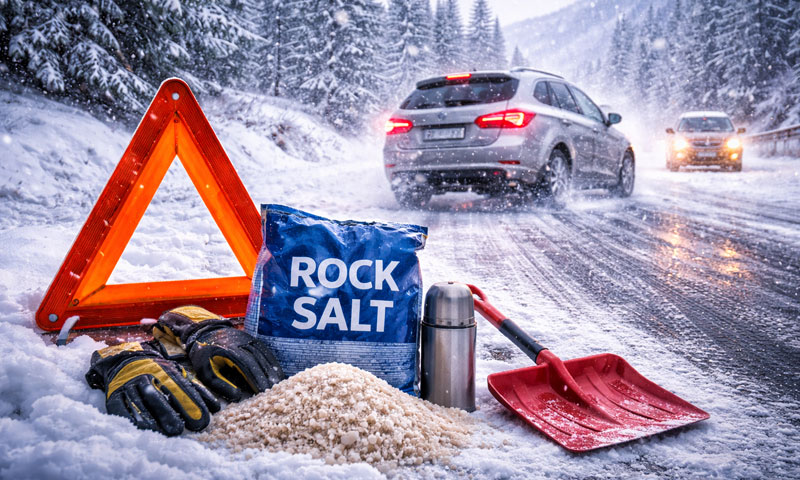
Slippery Roads, Freezing Nights: Safety Guide as Snowfall Hits Pakistan
As snowfall continues across many parts of Pakistan, icy roads and freezing temperatures pose serious risks to motorists and pedestrians. Slippery surfaces significantly increase the chances of accidents, injuries, and road closures. Authorities and safety experts advise taking preventive measures to reduce ice formation and adopting safe practices to protect yourself and others. How to Prevent Ice Formation on Roads and Driveways Use Salt or Sand Spreading rock salt, calcium chloride, or sand on roads, driveways, and walkways helps melt ice and improves traction. Salt lowers the freezing point of water, while sand provides grip even when ice remains. Clear Snow Early Removing snow before it compacts and freezes is crucial. Fresh snow is easier to shovel and less likely to turn into hard ice. Avoid Water Accumulation Ensure proper drainage so melted snow does not refreeze overnight. Blocked drains and standing water quickly turn into dangerous ice patches. Apply De-icing Solutions In high-risk areas, liquid de-icers or brine solutions can be sprayed in advance to prevent ice from bonding with road surfaces. Limit Traffic Where Possible Reduced vehicle movement during heavy snowfall helps prevent snow from being compressed into slippery ice layers. How to Stay Safe While Driving on Snowy and Icy Roads Drive Slowly and Smoothly Reduce speed and avoid sudden braking, sharp turns, or rapid acceleration. Gentle movements help maintain control on slippery roads. Increase Following Distance Keep at least three to four times more distance than usual between your vehicle and the one ahead, as braking distances increase on ice. Use Winter-Ready Tires if Available Tires with deeper tread provide better grip on snow and ice. Always check tire pressure, as cold temperatures can reduce it. Avoid Hills and Slopes If possible, avoid steep roads, as vehicles can easily slide downhill on icy surfaces. Carry an Emergency Kit Keep essentials in your car, including a torch, warm clothing, blanket, water, first-aid kit, shovel, sand or salt, and a charged mobile phone. Pedestrian Safety Tips During Snowfall Wear Proper Footwear Use shoes or boots with non-slip soles to reduce the risk of slipping on ice. Walk Carefully Take small steps, keep your hands free, and avoid rushing on snowy or icy paths. Be Visible In foggy or snowy conditions, wear bright or reflective clothing to remain visible to drivers. General Safety Advice Avoid unnecessary travel during heavy snowfall. Follow weather advisories issued by local authorities. Check road conditions before starting your journey. Elderly people and children should stay indoors as much as possible during extreme cold. Snowfall can be beautiful, but it also brings hidden dangers. By taking timely preventive steps and following safety guidelines, individuals and communities can significantly reduce the risks associated with icy roads and harsh winter conditions.
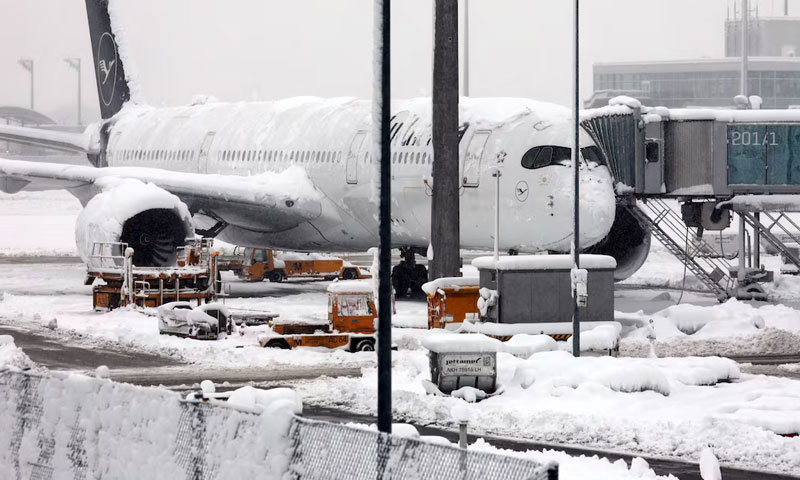
Deadly Cold Snap Hits Europe: Six Dead, More Than 600 Flights Grounded
A powerful winter cold snap has swept across large parts of Europe, leaving at least six people dead and causing widespread disruption to travel, power supplies, and daily life. Heavy snowfall, freezing rain, and dangerously low temperatures forced the cancellation of hundreds of flights and stranded thousands of passengers at major transport hubs, including Paris and Amsterdam. Air travel was hit especially hard. More than 600 flights were cancelled at Amsterdam’s Schiphol airport in a single day as crews struggled to clear runways and de-ice aircraft. In Paris, authorities announced plans to cancel around 40% of flights at Charles de Gaulle airport, with further reductions at Orly, in an effort to keep operations safe amid persistent ice and snow. ❄️ Europe Travel Disruptions Intensify ❄️ A worsening cold snap is set to bring heavier snowfall across Europe, leading to more flight cancellations, delayed trains, and blocked roads in the coming days. ✈️ KLM has confirmed the cancellation of 600 flights at Amsterdam Schiphol… pic.twitter.com/GcdMZ334Tr — AirNav Radar (@AirNavRadar) January 6, 2026 France recorded the highest death toll, with five people killed in weather-related incidents. In the southwestern Landes region, icy roads caused multiple collisions, killing three people and injuring at least 15 others. Two more fatalities were reported in the Paris region. One driver died after crashing into a heavy goods vehicle, while a taxi driver lost control on a snow-covered road, plunging into the Marne River. The passenger survived but was treated for hypothermia. French authorities placed 38 districts under an “orange” alert for snow and black ice, warning of extremely hazardous driving conditions. Rail services were also disrupted, with numerous cancellations and delays, including high-speed connections between Paris and Amsterdam. Further southeast, the Balkans faced severe conditions as heavy snow and rain swelled rivers and brought transport to a standstill. In Sarajevo, a woman was killed when a tree branch, weighed down by thick, wet snow, fell on her. Power and water outages were reported in parts of Serbia, Croatia, and Montenegro, highlighting the broader strain on infrastructure. KLM CANCELS HUNDREDS OF FLIGHTS AS DE-ICING FLUID SUPPLY CRISIS HITS SCHIPHOL Since Friday, January 2, KLM has been de-icing aircraft around the clock at Amsterdam Schiphol, using about 85,000 liters of fluid daily amid severe winter weather in Europe. Persistent snowfall,… pic.twitter.com/VEFVv9ZZ6Y — Turbine Traveller (@Turbinetraveler) January 6, 2026 Elsewhere, Germany braced for more snow as temperatures in some regions dropped below –10°C, while the UK experienced its coldest night of the winter so far, triggering school closures and transport chaos. Italy and Spain also saw unusual winter scenes, from flooded rivers to snowfall during public events. Weather services warn that disruptions are likely to continue for several days, with more snow and freezing temperatures forecast across much of northern and western Europe.
