


Oprah Winfrey will close the residential school she founded in South Africa nearly 20 years ago. The Oprah Winfrey Leadership Academy for Girls will end operations in its current form after the 2027 academic year. Winfrey plans to replace the single-campus model with a wider scholarship programme for academically talented girls across South Africa. Her representative said the approach could roughly double the number of students receiving educational support. Academy to Complete Final Two Classes The tuition-free boarding school opened in 2007 in Henley-on-Klip, Gauteng. Winfrey created it with former South African president Nelson Mandela to support talented girls from disadvantaged communities. The academy will graduate two more classes before ending residential operations. Students who remain after 2027 will transfer to other top-tier schools. Winfrey will cover their full tuition until graduation. Read More: No Signal, No School: Internet Crisis Hits Girls’ Education in KP Gauteng’s Department of Education will then take control of the campus and continue operating it as a public school. The handover follows the original partnership agreement behind the academy. “The dream was never simply to build a school. It was to invest in the limitless potential of young women,” Winfrey said. She added that her mission “doesn’t end with one campus. It continues in every girl whose future can be transformed through education.” Scholarships to Reach More Girls The expanded scholarship programme will support students at leading schools throughout South Africa. Winfrey’s team expects it to reach about twice as many girls as the residential model. The programme will begin after current academy students complete their studies. Officials have not released details about annual intake, participating schools or the selection process. Winfrey said the change would allow her education initiative to operate beyond one location. She said the next chapter would continue a promise that began more than 20 years ago. The academy has graduated more than 1,000 students since opening, according to the announcement. Many graduates later pursued higher education and entered professional fields. A study cited by the academy found that almost all surveyed graduates continued into higher education. A School Built From Mandela Partnership Winfrey developed the academy after visiting under-resourced schools in disadvantaged South African communities. She wanted financial hardship to stop limiting academic talent. The media entrepreneur invested about $40 million in the 22-building campus. It includes classrooms, science and computer laboratories, boarding facilities, a theatre, sports spaces and student support services. The project grew from discussions with Mandela about opportunities for South African girls. Winfrey, Mandela and then education minister Kader Asmal later broke ground for the school. Read More: Airblue Offers Cabin Crew Careers to Multan and Sialkot Women The campus will continue serving students after the academy ends its current model. Winfrey’s education work will move toward scholarships and partnerships across the country. The transition closes a major chapter but does not end Winfrey’s involvement. Her team said the new system would preserve the mission while giving more young women access to high-quality education.
Experts Warn AI Could Deepen Gender Inequality in Pakistan
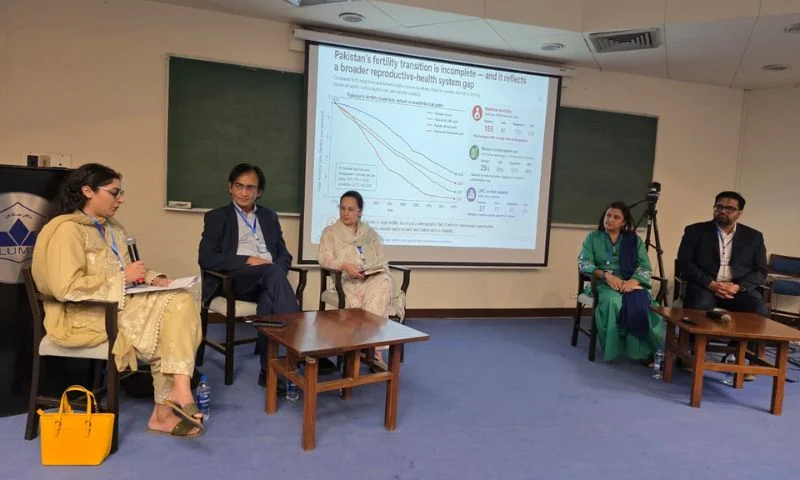
Experts at a gender and economy conference in Lahore warned that artificial intelligence could either unlock major economic opportunities for women or deepen existing inequalities if Pakistan fails to expand digital education and skills training. The discussion took place during a panel on “Health & Gender” moderated by Warda Riaz at LUMS. Panelists included Fyeza Jehan, Usman Ali, Adnan Khan and M. Farhan Majid. Speakers stressed that women’s economic empowerment depends heavily on education, access to information and bargaining power within society. One panelist said affordable learning opportunities and digital skills programmes could help women overcome structural barriers that continue to limit workforce participation and entrepreneurship. “There is a risk that communities with lower skills will be unable to benefit from new technologies,” the panel noted during the discussion. The experts warned that countries failing to invest in digital capacity-building may fall further behind in productivity and global competitiveness. AI Could Transform Women-Led Businesses The panel highlighted how digital tools and AI systems are rapidly reshaping business operations around the world. Referring to survey findings conducted with the Asher Blair Foundation, speakers said women entrepreneurs from nearly 80 countries showed strong interest in adopting generative AI tools. According to the findings, many women business owners wanted to use AI for accounting, payroll management and routine administrative work. Experts said AI could help women-led enterprises reduce time-consuming manual tasks while improving efficiency and productivity. The panel also referenced estimates suggesting Pakistan’s women-focused digital economy could represent a market worth nearly $500 million. That estimate is linked to Pakistan’s female population of around 73 million, highlighting the scale of untapped economic potential. Pakistan has one of the lowest female labor force participation rates in South Asia. The World Bank estimates female participation remains below 25 percent, despite rising smartphone and internet usage. Digital access for women also remains uneven, particularly in rural areas where internet access, digital literacy and educational opportunities remain limited. Digital Divide Could Hurt Long-Term Growth Experts warned that Pakistan’s weak education indicators and low literacy rates could limit the country’s ability to benefit from AI-driven economic transformation. They argued that unequal access to technology may create broader macroeconomic problems in the future. According to the discussion, economies with lower digital adoption could face slower productivity growth and greater dependence on imports. Meanwhile, digitally advanced economies may continue scaling faster through automation and AI integration. The panelists urged policymakers, educational institutions and private companies to invest urgently in women’s digital education and technology-focused training. They said inclusive access to AI skills would play a critical role in ensuring equitable economic growth across Pakistan. Analysts worldwide have increasingly warned that AI may widen social and economic inequality if governments fail to invest in education and workforce adaptation. For Pakistan, experts said the challenge now lies in ensuring women are not excluded from the next phase of technological and economic change.
