
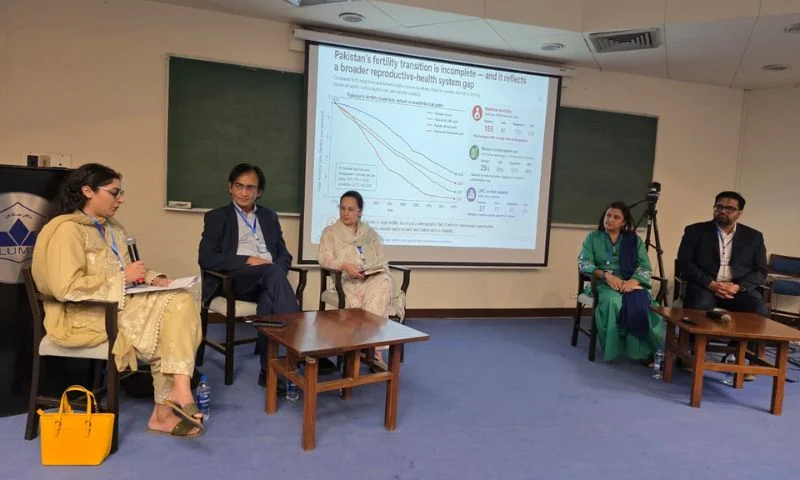
Experts at a gender and economy conference in Lahore warned that artificial intelligence could either unlock major economic opportunities for women or deepen existing inequalities if Pakistan fails to expand digital education and skills training. The discussion took place during a panel on “Health & Gender” moderated by Warda Riaz at LUMS. Panelists included Fyeza Jehan, Usman Ali, Adnan Khan and M. Farhan Majid. Speakers stressed that women’s economic empowerment depends heavily on education, access to information and bargaining power within society. One panelist said affordable learning opportunities and digital skills programmes could help women overcome structural barriers that continue to limit workforce participation and entrepreneurship. “There is a risk that communities with lower skills will be unable to benefit from new technologies,” the panel noted during the discussion. The experts warned that countries failing to invest in digital capacity-building may fall further behind in productivity and global competitiveness. AI Could Transform Women-Led Businesses The panel highlighted how digital tools and AI systems are rapidly reshaping business operations around the world. Referring to survey findings conducted with the Asher Blair Foundation, speakers said women entrepreneurs from nearly 80 countries showed strong interest in adopting generative AI tools. According to the findings, many women business owners wanted to use AI for accounting, payroll management and routine administrative work. Experts said AI could help women-led enterprises reduce time-consuming manual tasks while improving efficiency and productivity. The panel also referenced estimates suggesting Pakistan’s women-focused digital economy could represent a market worth nearly $500 million. That estimate is linked to Pakistan’s female population of around 73 million, highlighting the scale of untapped economic potential. Pakistan has one of the lowest female labor force participation rates in South Asia. The World Bank estimates female participation remains below 25 percent, despite rising smartphone and internet usage. Digital access for women also remains uneven, particularly in rural areas where internet access, digital literacy and educational opportunities remain limited. Digital Divide Could Hurt Long-Term Growth Experts warned that Pakistan’s weak education indicators and low literacy rates could limit the country’s ability to benefit from AI-driven economic transformation. They argued that unequal access to technology may create broader macroeconomic problems in the future. According to the discussion, economies with lower digital adoption could face slower productivity growth and greater dependence on imports. Meanwhile, digitally advanced economies may continue scaling faster through automation and AI integration. The panelists urged policymakers, educational institutions and private companies to invest urgently in women’s digital education and technology-focused training. They said inclusive access to AI skills would play a critical role in ensuring equitable economic growth across Pakistan. Analysts worldwide have increasingly warned that AI may widen social and economic inequality if governments fail to invest in education and workforce adaptation. For Pakistan, experts said the challenge now lies in ensuring women are not excluded from the next phase of technological and economic change.
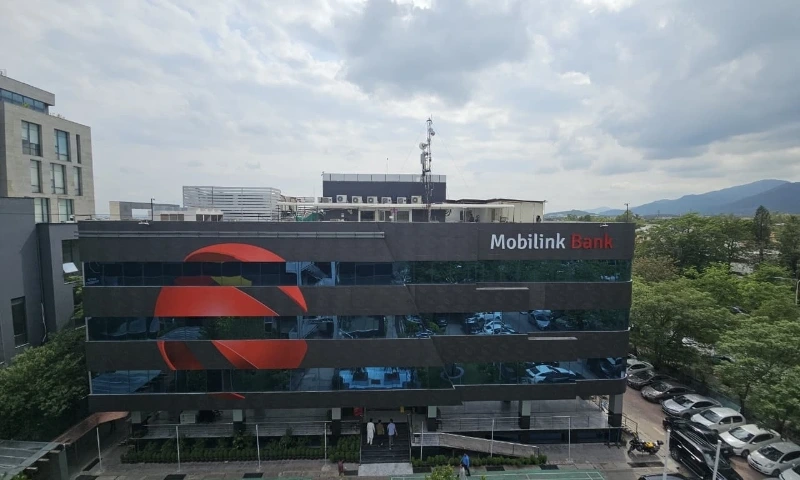
Mobilink Bank Becomes Microfinance Leader with Historic PKR 3.62B Profit
Pakistan’s leading digital microfinance bank, Mobilink Bank has announced its financial results for the year ended December 31, 2025. The bank delivered strong growth across key financial and operational indicators while reinforcing its leadership position in Pakistan’s microfinance banking sector. Mobilink Bank delivered a strong financial turnaround in 2025, with *Profit Before Tax reaching PKR 3.62 billion, reflecting a 217% YoY growth,* while total revenue rose 33% to PKR 89.5 billion. Deposits grew 38% to PKR 214 billion, the highest in the microfinance industry, highlighting strong customer confidence. The Gross Loan Portfolio expanded to PKR 103 billion, up 38%. The Bank also maintained a healthy Capital Adequacy Ratio (CAR) of 19.53% at the year end, underscoring its solid capital position and prudent risk management. In line with its sustainability priorities, the Bank recorded a 55.5% YoY incremental increase in green financing, supporting individuals, households and small businesses in adopting sustainable products/resources. It also continued to advance financial inclusion, with women representing 24.6% of the loan portfolio base, supported through targeted loan offerings and greater digital access. A major highlight of 2025 was the launch of Islamic Banking, which marked a strategic milestone in the Bank’s evolution to be able to cater to diverse social segments. By introducing Shariah-compliant financial solutions, Mobilink Bank broadened access to faith-aligned banking products while reinforcing its position as a responsible and forward-looking microfinance institution. The Bank’s performance reflects its firm commitment to responsible lending, ensuring that all credit decisions are grounded in prudent affordability assessments, transparent pricing, fair collection practices, and full compliance with applicable SBP regulations. It continues to strengthen internal controls to prevent customer over-indebtedness and support sustainable financial inclusion. The Bank’s growth trajectory has been further strengthened by continued shareholder confidence, reinforcing its capital position and supporting its long-term expansion and digital transformation strategy. Commenting on the financials, Haaris Mahmood Chaudhary, President & CEO Mobilink Bank said, “Behind these numbers is a deeper purpose of expanding access to finance for the underserved. As the country’s largest microfinance bank, we are grateful to our customers, regulators, shareholders, and teams whose trust and dedication continue to drive our progress. Our growth reflects the confidence of millions who rely on us to support their livelihoods. We remain focused on empowering small businesses and entrepreneurs through responsible, faith-aligned digital banking that creates lasting opportunity and inclusion across Pakistan.” Commenting on the financials, Adil Ali Abbasi, Chief Financial Officer Mobilink Bank said, “Our 2025 performance reflects a strong focus on financial discipline, improved asset quality, and efficient balance sheet management. The growth in profitability, deposits, and portfolio scale highlights the strength of our core business and our ability to build momentum while maintaining prudent risk and capital positions. As we move forward, we will continue to strengthen our financial foundations, drive operational efficiency, and support the Bank’s long-term growth through sustained investment in digital transformation and innovation.” Moving into 2026, Mobilink Bank remains committed to becoming the number one bank for small businesses powered by digital Islamic Banking solutions.
