


The Punjab government has dispatched the first batch of 135 skilled young workers to Saudi Arabia under its Parwaaz Card initiative, a programme designed to support overseas employment through vocational training and interest-free financing. Chief Minister Maryam Nawaz Sharif addressed the departure ceremony on Wednesday and said the selected candidates would serve as ambassadors of Pakistan while working abroad. The initiative forms part of Punjab’s broader strategy to enhance workforce skills, increase overseas employment and strengthen remittance inflows by preparing young people for international job markets. Punjab Skills Development Fund (PSDF) is implementing the programme under the supervision of the Skills Development and Entrepreneurship Department (SD&ED). Punjab Task Force on Skill Development Chairman Adnan Afzal Chattha, SD&ED Secretary Nadir Chattha, PSDF Chief Executive Officer Ahmed Khan, recruitment partners, representatives of the Bank of Punjab, overseas employment promoters and Parwaaz Card beneficiaries attended the ceremony. Maryam Nawaz Urges Youth to Represent Pakistan Proudly Speaking to the departing workers, Maryam Nawaz said overseas employment carried responsibilities beyond securing jobs. “When you travel abroad under this programme, you will represent Pakistan. The country that has empowered you deserves to be portrayed positively in front of the world.” She said providing high-quality vocational training to Punjab’s youth had long been her vision. She added that the dream was becoming reality through the Punjab Skills Development Fund. The chief minister said her vision was not limited to Punjab alone. She expressed the desire to expand vocational training opportunities across Pakistan wherever skilled workforce development was needed. “I want to see you off as a mother would bid farewell to her children. Just as you feel safe in Pakistan, I hope you remain safe in the countries where you have secured jobs and continue to make your country proud,” she said. Officials informed the chief minister that all 135 candidates had secured employment in Saudi Arabia. The placements cover hospitality, healthcare, construction and other industries. According to Adnan Afzal Chattha, the department continues to equip young people with market-driven vocational and professional skills that improve employment opportunities both inside Pakistan and overseas. Interest-Free Financing Supports Overseas Employment The first batch includes 105 workers selected for hospitality jobs, particularly in Quick Service Restaurants, while another 30 candidates will work in the construction sector. Officials said departures to Saudi Arabia will begin on June 28. The Parwaaz Card programme provides beneficiaries with interest-free pre-departure financing and workplace-readiness training. The objective is to promote safe, legal and dignified overseas employment for Punjab’s youth. At the ceremony, Maryam Nawaz distributed Parwaaz Cards and interest-free loan cheques among successful candidates. Under the programme, 45,000 deserving individuals will receive interest-free financing worth Rs6.867 billion. Individual loans range from Rs300,000 to Rs1 million. The financing helps workers cover visa fees, air tickets, medical examinations, protector fees and other travel-related expenses before leaving Pakistan. Pakistan has long relied on overseas employment as an important source of foreign exchange through workers’ remittances. Saudi Arabia remains the largest destination for Pakistani workers, employing hundreds of thousands of skilled and semi-skilled professionals across multiple sectors. Officials believe programmes such as Parwaaz Card can improve workforce quality, reduce financial barriers for overseas employment and create better opportunities for young Pakistanis seeking international careers.
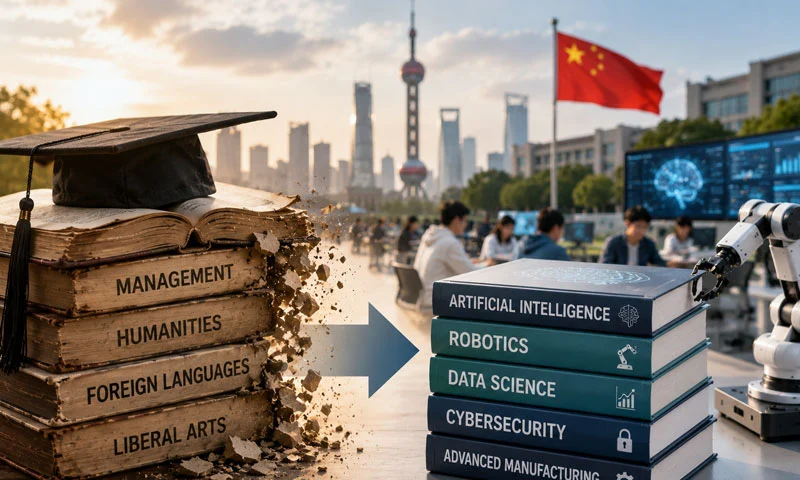
China Is Killing Thousands of University Degrees. Here’s Why
China is undertaking one of the largest overhauls of its higher education system in recent years as universities eliminate thousands of degree programmes and introduce new courses focused on artificial intelligence, robotics and advanced technologies. The changes reflect growing concern that rapid advances in AI are transforming the job market faster than traditional academic programmes can adapt. According to a report by the South China Morning Post, Chinese universities are removing courses considered outdated and replacing them with programmes aligned with Beijing’s long-term economic and technological goals. The move comes as AI increasingly automates tasks in sectors such as finance, consulting, marketing and management. As a result, students are becoming more cautious about investing in degrees that may offer uncertain career prospects. A similar trend has emerged in the United States. Several universities have reportedly reduced tuition fees for MBA programmes in response to weaker demand and growing concerns about the future value of traditional business qualifications. China, however, is pursuing reforms on a much larger scale. Officials want universities to produce graduates with skills that support national priorities, including artificial intelligence, advanced manufacturing, semiconductor development and robotics. Graduate Job Market Pressures Drive Reform The overhaul also highlights growing challenges in China’s labour market. More students are graduating from universities than ever before, but many struggle to find jobs that match their qualifications. Youth unemployment remains above 16 percent, according to official figures, increasing pressure on policymakers to align education with employer needs. Universities have concentrated many of the cuts in arts, humanities, foreign language and management-related disciplines. Officials and educators argue that these fields have become oversaturated while demand grows for technology-focused expertise. At the same time, institutions are launching programmes designed to support China’s next phase of industrial development. One of the fastest-growing fields is embodied intelligence, which combines artificial intelligence with physical machines such as robots. At least nine Chinese universities have already introduced majors in embodied intelligence as Beijing accelerates efforts to integrate advanced AI systems into factories, logistics networks and other sectors of the economy. More Than 12,000 Programmes Eliminated The current reforms build on a broader restructuring effort that has been underway for several years. Data from China’s Ministry of Education shows universities revoked or suspended approximately 12,200 undergraduate programmes between 2021 and 2025. During the same period, universities introduced around 10,200 new programmes. Overall, more than 30 percent of university programmes underwent some form of adjustment. Despite supporting the direction of the reforms, education experts caution that simply replacing one degree with another may not solve deeper challenges. Many programmes now facing closure were introduced only a few years ago and never had enough time to mature. Experts argue that universities should focus on building flexible education systems that allow students to adapt to changing industry demands throughout their careers. They also recommend greater emphasis on transferable skills, critical thinking and interdisciplinary learning. As competition in artificial intelligence intensifies globally, China’s latest reforms demonstrate how governments are increasingly redesigning higher education to prepare students for an economy shaped by automation, digital technologies and rapid innovation.
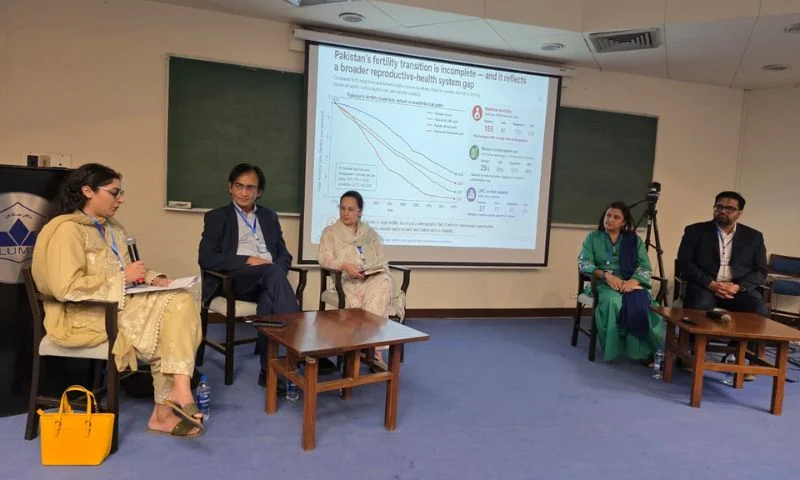
Experts Warn AI Could Deepen Gender Inequality in Pakistan
Experts at a gender and economy conference in Lahore warned that artificial intelligence could either unlock major economic opportunities for women or deepen existing inequalities if Pakistan fails to expand digital education and skills training. The discussion took place during a panel on “Health & Gender” moderated by Warda Riaz at LUMS. Panelists included Fyeza Jehan, Usman Ali, Adnan Khan and M. Farhan Majid. Speakers stressed that women’s economic empowerment depends heavily on education, access to information and bargaining power within society. One panelist said affordable learning opportunities and digital skills programmes could help women overcome structural barriers that continue to limit workforce participation and entrepreneurship. “There is a risk that communities with lower skills will be unable to benefit from new technologies,” the panel noted during the discussion. The experts warned that countries failing to invest in digital capacity-building may fall further behind in productivity and global competitiveness. AI Could Transform Women-Led Businesses The panel highlighted how digital tools and AI systems are rapidly reshaping business operations around the world. Referring to survey findings conducted with the Asher Blair Foundation, speakers said women entrepreneurs from nearly 80 countries showed strong interest in adopting generative AI tools. According to the findings, many women business owners wanted to use AI for accounting, payroll management and routine administrative work. Experts said AI could help women-led enterprises reduce time-consuming manual tasks while improving efficiency and productivity. The panel also referenced estimates suggesting Pakistan’s women-focused digital economy could represent a market worth nearly $500 million. That estimate is linked to Pakistan’s female population of around 73 million, highlighting the scale of untapped economic potential. Pakistan has one of the lowest female labor force participation rates in South Asia. The World Bank estimates female participation remains below 25 percent, despite rising smartphone and internet usage. Digital access for women also remains uneven, particularly in rural areas where internet access, digital literacy and educational opportunities remain limited. Digital Divide Could Hurt Long-Term Growth Experts warned that Pakistan’s weak education indicators and low literacy rates could limit the country’s ability to benefit from AI-driven economic transformation. They argued that unequal access to technology may create broader macroeconomic problems in the future. According to the discussion, economies with lower digital adoption could face slower productivity growth and greater dependence on imports. Meanwhile, digitally advanced economies may continue scaling faster through automation and AI integration. The panelists urged policymakers, educational institutions and private companies to invest urgently in women’s digital education and technology-focused training. They said inclusive access to AI skills would play a critical role in ensuring equitable economic growth across Pakistan. Analysts worldwide have increasingly warned that AI may widen social and economic inequality if governments fail to invest in education and workforce adaptation. For Pakistan, experts said the challenge now lies in ensuring women are not excluded from the next phase of technological and economic change.
