

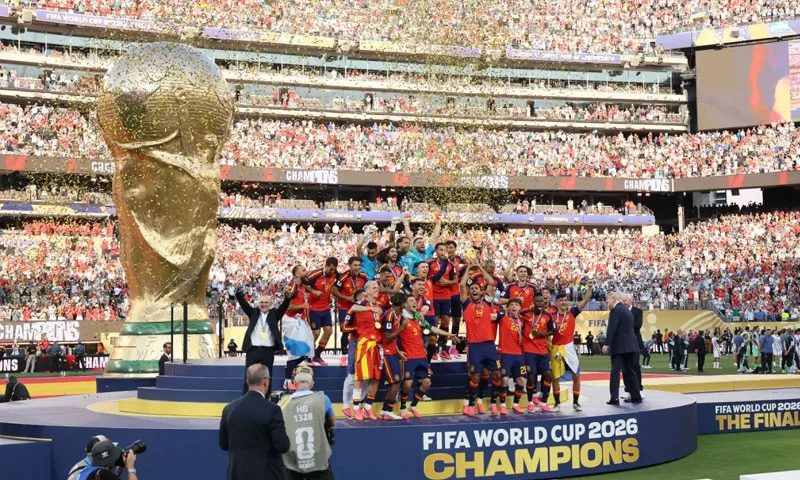
Spain won the 2026 FIFA World Cup on Sunday after Ferran Torres scored a dramatic extra-time winner to secure a 1-0 victory over defending champions Argentina, denying Lionel Messi a dream farewell on football’s biggest stage. Torres struck in the 106th minute at MetLife Stadium in East Rutherford, New Jersey, capping a dominant Spanish performance in front of a crowd of 80,663 that included US President Donald Trump. The victory handed Spain only its second World Cup title, 16 years after lifting the trophy for the first time in South Africa in 2010. Read More: Messi Effect? FIFA World Cup Final Tickets Break US Record For Argentina captain Messi, almost certainly appearing in his final World Cup match at the age of 39, the defeat ended hopes of adding a second World Cup title to his glittering career. Spain’s disciplined defence ensured Argentina failed to register a single shot on target across 120 minutes. Torres Delivers the Decisive Moment Spain controlled possession and created the better chances throughout the contest, but Emiliano Martinez repeatedly frustrated Luis de la Fuente’s side with a string of crucial saves. 🇪🇸 The moment Ferran Torres unleashes a thunderbolt in extra time to send Spain into World Cup final ecstasy! 🏆 The winner that crowned La Roja champions — pure magic in the 106th! pic.twitter.com/CjflwT13aY — FIFA World Cup Stats (@alimo_philip) July 20, 2026 The breakthrough finally arrived after Nico Williams nodded Pedro Porro’s lofted cross into the path of Torres, who hammered an unstoppable finish into the roof of the net. “Ultimately, the goal belongs to 47 million people, not just me or the 26 players,” Torres said after the victory, referring to Spain’s population. “At the end of the day, all finals are tough; when you’re up against Messi, there’s a certain nervousness, but we always believed in our football and in ourselves.” Read More: Pakistan Sets Sights on 4 Lac Overseas Jobs Ahead of FIFA 2034 Earlier in extra time, Williams thought he had opened the scoring, but Slovenian referee Slavko Vincic ruled out his effort for a marginal foul on Nicolas Otamendi. Frustration Boils Over as Argentina Finish With 10 Men The final developed into a fiercely contested encounter marked by several heavy challenges. Alexis Mac Allister escaped an early booking after catching Dani Olmo with a studs-up tackle, while Spain’s Alex Baena also avoided punishment after catching Messi with an elbow. Argentina continued committing cynical fouls as Spain dictated play. Lisandro Martinez eventually received the first yellow card for bringing down Mikel Oyarzabal before leaving injured and making way for Nicolas Otamendi. President Donald J. Trump presents the World Cup Trophy to Spain, the 2026 @FIFAWorldCup Champions! 🏆 pic.twitter.com/SHsoBhYm1b— The White House (@WhiteHouse) July 19, 2026 Enzo Fernandez’s frustration boiled over late in normal time when he received a booking for dissent before seeing a straight red card in stoppage time for a dangerous challenge on Pau Cubarsi. Argentina entered extra time with only 10 men. Despite the numerical disadvantage, Martinez continued to keep Argentina alive with saves from Lamine Yamal, Pedri and Torres before finally being beaten by the Barcelona striker. Spain Complete a New Era of Success Spain’s triumph capped an outstanding tournament built around a young squad featuring Lamine Yamal, Pedri, Nico Williams and Cubarsi, alongside experienced leaders such as Rodri and Dani Olmo. The victory also reinforced Luis de la Fuente’s remarkable record after guiding Spain to UEFA Nations League and European Championship success before conquering the world. Read More: Why a 64 Team World Cup Could Become Reality in 2030 For Messi, the defeat brought an emotional end to a remarkable World Cup journey that included victory in Qatar in 2022. Although Argentina fell short of retaining their crown, the eight-time Ballon d’Or winner leaves the tournament as one of football’s greatest players. Spain, meanwhile, celebrated a deserved victory after dominating the final from start to finish and proving that their new generation is ready to lead world football.
Spain or Argentina: What’s Really at Stake in the World Cup Final?
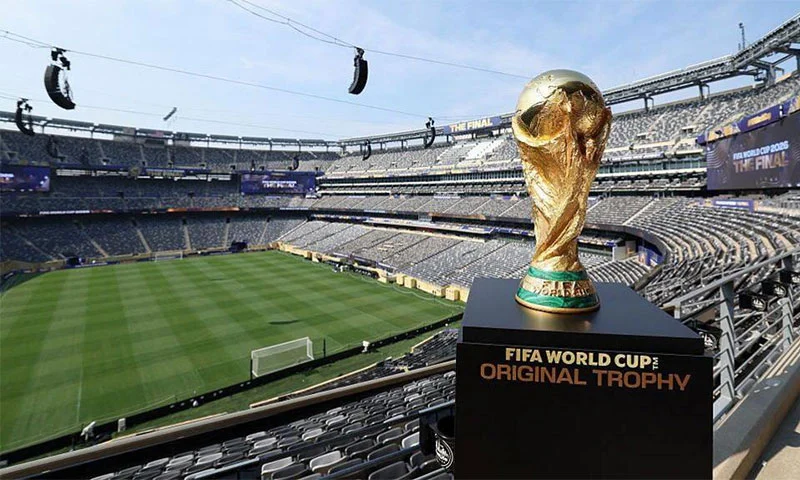
Spain and Argentina will battle for football’s biggest prize on Sunday, but the 2026 FIFA World Cup final will also determine how FIFA’s largest ever financial distribution is shared. FIFA has increased the total financial package for the expanded 48 team tournament to a record $871 million, rewarding all participating national associations for their performances in the United States, Canada and Mexico. The package includes performance based prize money, preparation payments and additional financial support for participating teams. Read More: Messi Effect? FIFA World Cup Final Tickets Break US Record The biggest prize will go to Sunday’s winner at New York New Jersey Stadium in East Rutherford. The champions will receive $50 million, while the runners up will earn $33 million, making victory in the final worth an extra $17 million for either the Royal Spanish Football Federation or the Argentine Football Association. FIFA originally approved a $727 million financial package in December 2025, including $655 million in performance related prize money, representing a 50 percent increase from the 2022 FIFA World Cup in Qatar. However, the governing body raised the overall distribution to $871 million shortly before the tournament after the expanded competition generated stronger than expected commercial revenues. Record Financial Rewards Across Every Stage Every one of the 48 participating nations received a guaranteed payment after qualifying for the tournament. FIFA increased preparation funding from $1.5 million to $2.5 million per team. It also raised the guaranteed participation payment from $9 million to $10 million. In addition, more than $16 million was allocated for delegation costs and increased ticket allocations for participating teams. Those changes pushed the total financial distribution to the record $871 million. The performance payments also increased at every knockout stage. Read More: FIFA’s Ultimate Prize Gets a Luxury Louis Vuitton Journey Teams eliminated between 33rd and 48th place now receive $10 million. Round of 32 teams earn $11 million, Round of 16 participants collect $15 million, and quarterfinalists receive $19 million. The fourth placed team takes home $27 million, while the third placed side earns $29 million. The prize money is paid directly to the national football associations rather than individual players. How much players eventually receive depends on bonus agreements negotiated separately with their respective federations. Neither Spain nor Argentina has publicly disclosed the full details of those arrangements. Clubs Also Cash In Beyond the Final The financial benefits extend well beyond the two finalists. FIFA’s Club Benefits Programme compensates clubs for releasing players to their national teams. Payments depend partly on how long players remain at the tournament and are distributed to clubs that employed them during the qualifying period. For the 2026 World Cup, FIFA increased funding for the programme to a record $355 million, compared with approximately $209 million during the 2022 tournament. Winning the World Cup can also create long term commercial gains. Read More: Messi’s Magic Sends Argentina Past England Into World Cup Final Success often boosts sponsorship opportunities, merchandise sales and the global profile of a national federation. For Argentina, another title would secure back to back World Cup triumphs and further strengthen the commercial appeal of Lionel Messi’s team. Spain, meanwhile, is chasing its first World Cup crown since 2010, with teenage star Lamine Yamal leading a new generation that could open fresh commercial opportunities for the federation and its sponsors. Sunday’s final therefore offers much more than football glory. It also carries one of the richest financial rewards ever seen in international sport.
