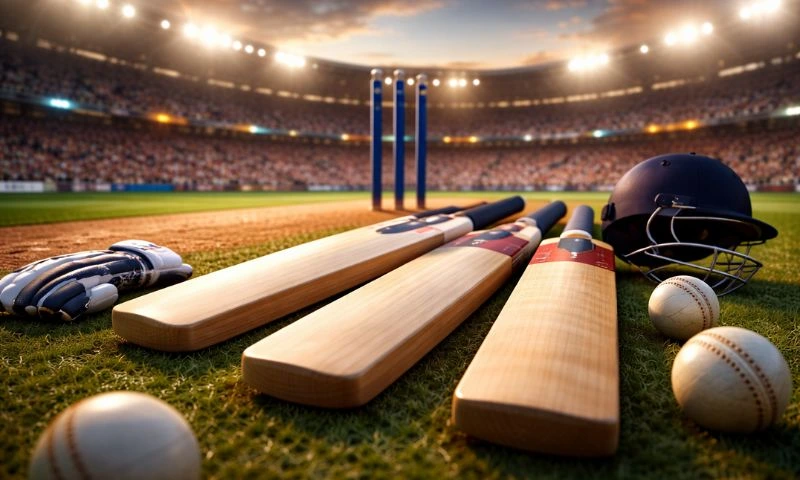
Sri Lankan batter Bhanuka Rajapaksa has triggered a fresh debate in the ICC Men’s T20 World Cup 2026 by suggesting that Indian players use unusually powerful cricket bats that others cannot access. His remarks came amid the global tournament’s opening matches and instantly drew attention across cricket media and social networks. . Rajapaksa, a seasoned Sri Lankan international, made his comments after reflecting on the powerful hitting seen from Indian batters this season. “Indian players have bats that are far superior to the best bats we get. It feels as though a layer of rubber has been applied. I can’t imagine how that’s possible. These bats can’t even be bought by others — all players know this,” he said in an interview quoted by news outlets. His claim implied that the quality or performance of Indian cricket bats appears markedly higher than what other teams use. The statement went viral almost immediately and ignited strong debate among fans and analysts about equipment standards and performance gaps in international cricket. Some observers noted that elite batters often receive premium bats from top manufacturers and sponsors but emphasised that all equipment used in international tournaments must strictly comply with rules set by the ICC. Under ICC regulations, bats in official matches must be made of wood and fall within precise limits on shape, thickness and dimensions. These limits are enforced to preserve fairness and ensure no material advantage arises from equipment. No verified evidence has emerged that Indian players are violating these rules, and neither the Board of Control for Cricket in India (BCCI) nor the ICC has issued a formal response to Rajapaksa’s remarks so far. The comment comes at a tense time in the world of cricket. India’s batters, including several explosive hitters, have produced dominant performances in recent years. Modern cricket bats have also evolved, with thicker edges, elite willow and tailored weight profiles that improve hitting power within legal norms. This evolution often leads to high scoring and longer sixes, especially in T20 cricket. Sri Lanka’s own campaign has seen mixed attention on the field and off it. The team began the T20 World Cup with a solid win over Ireland, but Rajapaksa’s statement overshadowed that victory and shifted discussions toward equipment quality and fairness rather than on-field play. Overall, while no evidence supports accusations of illegal equipment or tampering, the comments underline how equipment and perceptions of advantage can influence narratives during major events like the T20 World Cup. Unless a team files an official complaint, this remains a controversial claim and not an actionable allegation under ICC rules.


