

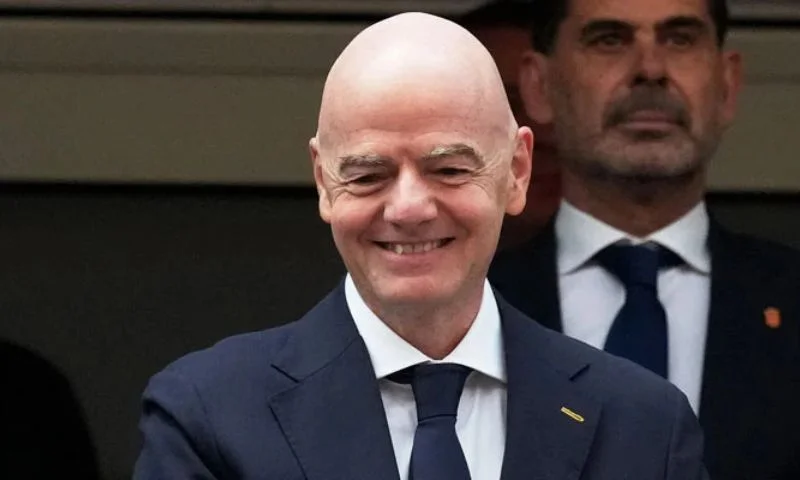
FIFA will examine the possibility of expanding the 2030 FIFA World Cup to 64 teams after the conclusion of the 2026 tournament, President Gianni Infantino has said, arguing that every nation should have the opportunity to dream of playing on football’s biggest stage. Speaking in an interview with Swiss media outlet Bluewin, Infantino said FIFA’s relevant committees will discuss whether increasing the number of participating teams from 48 to 64 is the right next step after what he described as the successful debut of the expanded 48 team format. “That’s definitely an issue that will be examined and discussed in the relevant committees after this World Cup,” Infantino said. The FIFA chief defended the idea by stressing that the World Cup should represent every continent rather than only traditional football powers. “When organising a World Cup, it’s important to organise it for the whole world, not just Europe and South America, but effectively the entire world. Every nation should be allowed to dream of participating in the World Cup. You can see that the quality of the teams is extremely high and it’s getting higher and higher, all over the world. If you don’t give smaller countries a chance to participate in the World Cup, they’ll lack the incentive to keep improving.” FIFA praises 48 team format after strong global performances The 2026 World Cup marked the tournament’s first expansion from 32 to 48 teams, increasing the schedule to 104 matches across the United States, Canada and Mexico. Infantino described the new format as a “huge success” and pointed to the improved performances of teams from outside Europe’s and South America’s traditional football strongholds. “Every team played at a high level. Teams from every continent scored goals and earned at least one point,” he said. “Nine out of 10 African teams reached the knockout stage. At the last World Cup, there were only five teams from Africa. That just goes to show how important it is to include all teams, to give them this opportunity to participate.” Only four teams remain in the current tournament. Argentina, England, France and Spain have reached the semi finals after a month of competition that began with 48 nations. Expansion could reshape the centenary World Cup The 2030 World Cup will celebrate the tournament’s 100th anniversary and will become the first edition staged across multiple continents. Uruguay, Argentina and Paraguay will each host one opening match to commemorate the inaugural 1930 World Cup in Uruguay. Morocco, Portugal and Spain will then stage the remainder of the tournament. If FIFA approves a 64 team format, the three South American hosts could each stage an entire four team group instead of a single opening fixture. A further expansion would add 16 more national teams only four years after the move to 48 participants. Supporters believe it would create more opportunities for developing football nations and accelerate the sport’s global growth. Critics, however, argue that a larger tournament could stretch the calendar, increase travel demands and dilute the quality of qualification. FIFA has not set a timeline for making a final decision. The proposal will first go through the organisation’s committees before any recommendation reaches the FIFA Council for approval.
For the First Time, the FIFA World Cup Gets a Perfect Final Four
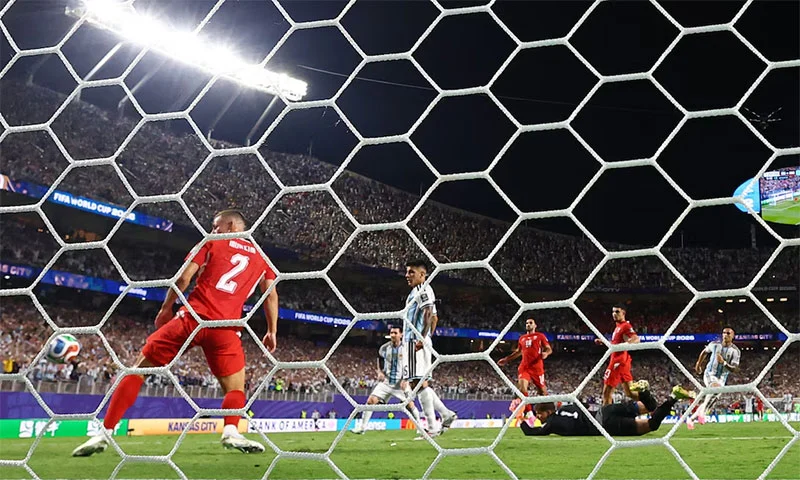
For the first time in FIFA World Cup history, the top four teams in the FIFA world rankings have all reached the semi-finals, with Spain, Argentina, France and England advancing after a tournament format change designed to keep the highest-ranked nations apart until the final stages. Spain, ranked first in the world, will face third-ranked France in Tuesday’s semi-final. Second-ranked Argentina will meet fourth-ranked England on Wednesday. The historic lineup follows a major change introduced by FIFA for the expanded 48-team 2026 World Cup. Before the tournament, FIFA announced that the four highest-ranked teams would be placed in separate pathways of the knockout bracket. The governing body said the move would ensure “competitive balance” by creating “two separate pathways to the semi-finals.” Read More:‘They Wanted Messi’: Egypt Coach Questions Argentina Victory The system meant Spain and Argentina could not meet before the final, while France and England were also separated until at least the semi-finals. However, each team first had to win its group to benefit from the protected pathway. All four successfully topped their groups before progressing through the knockout rounds. Expanded tournament prompted FIFA rethink The adjustment became necessary because the 2026 World Cup expanded from 32 to 48 teams, adding an extra knockout round. Under the previous 32-team format, group winners automatically avoided each other in the Round of 16. Early meetings between top-ranked nations were already uncommon. The new tournament structure created a greater chance that leading teams could meet much earlier in the knockout stage. FIFA responded by introducing a tennis-style seeding system similar to those used at Wimbledon and the UEFA Champions League, where the highest seeds remain separated until the later rounds. Read More: Experts Say the World Cup Is Being Played in Dangerous Heat FIFA explained that the new draw procedure aimed to maintain competitive balance while preserving the possibility of blockbuster matches in the closing stages of the tournament. The governing body had already tested a similar approach during the FIFA Club World Cup, although not every top seed reached the semi-finals. History made after decades of surprises The achievement is particularly notable because several highly ranked teams have suffered early exits in previous World Cups. Belgium entered the 2022 tournament among the world’s top four but failed to reach the knockout stage. Germany exited in the group phase in 2018 despite being one of the highest-ranked teams. Spain suffered the same fate in 2014, Italy in 2010 and France in 2002. Since FIFA introduced its men’s world rankings in 1994, no World Cup has previously produced a semi-final lineup featuring all four highest-ranked teams. Read More: Lionel Messi Makes World Cup History, Scores in 7 Straight Games This year, however, FIFA’s revised draw system combined with strong performances from the tournament favorites to produce exactly the outcome the governing body envisioned. Spain, Argentina, France and England now stand one victory away from the final, guaranteeing that the 2026 World Cup will conclude with one of the world’s top-ranked teams lifting football’s biggest prize.
