

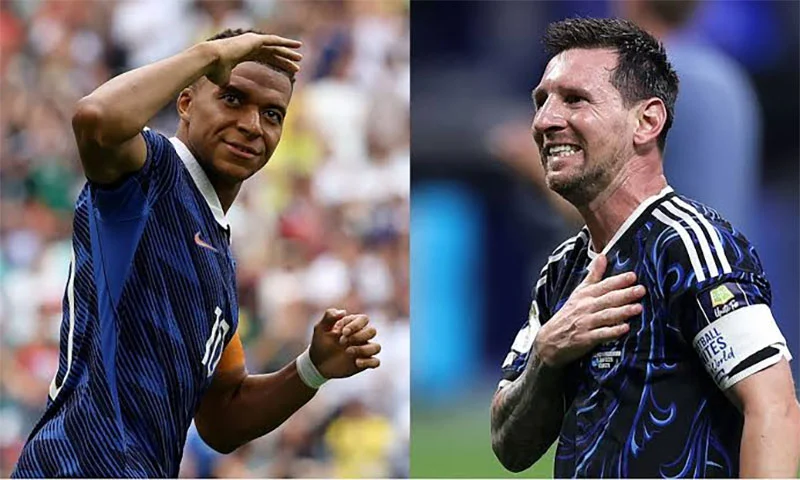
Kylian Mbappe became the highest scorer in FIFA World Cup history on Saturday, but the historic milestone came in a losing cause as France fell 6-4 to England in a thrilling third-place playoff in Miami Gardens, Florida. The French captain scored twice in the second half to take his World Cup tally to 22 goals, moving one ahead of Argentina legend Lionel Messi. However, France’s spirited comeback from a 4-0 halftime deficit fell short as England secured the bronze medal in one of the highest-scoring matches in World Cup history. Read More: Spain or Argentina: What’s Really at Stake in the World Cup Final? Mbappe Sets New Record but Misses the Final Mbappe found the net in the 48th and 66th minutes, breaking the all-time World Cup scoring record that Messi had held with 21 goals. The Real Madrid forward has now scored 22 World Cup goals across three tournaments, including four in 2018, eight in 2022 and 10 in the 2026 edition. Despite reaching another historic landmark, Mbappe admitted the personal achievement offered little comfort after France missed out on the World Cup final. “I’m just trying to help my team score every time,” Mbappe said after the match. “It’s for sure that when you score that many goals in the World Cup, it elevates you to certain levels but I would have liked to not be the top scorer in history and play tomorrow’s (championship) match.” “So, I think it’s good for legacy and when we stop (playing) to say that I was one of those players. But today, it’s not the first thing crossing my mind.” Read More: Messi Effect? FIFA World Cup Final Tickets Break US Record The 27-year-old’s latest achievement adds another chapter to an already remarkable World Cup career. He lifted the trophy with France in 2018 and scored a memorable hat trick in the 2022 final, although Argentina eventually won that match on penalties. Golden Boot Race Still Open Before Final Mbappe’s brace also strengthened his grip on the Golden Boot race. He now leads the tournament with 10 goals, two ahead of Messi, who has eight entering Sunday’s World Cup final against Spain. The final in East Rutherford, New Jersey, gives Messi one last opportunity to close the gap in both the Golden Boot standings and the all-time World Cup scoring chart. A hat trick would see the Argentine reclaim both records. Mbappe also became the first player to score 10 goals in a single World Cup since West Germany legend Gerd Muller achieved the feat in 1970. Read More: FIFA’s Ultimate Prize Gets a Luxury Louis Vuitton Journey France’s record-setting striker was overshadowed by England’s Bukayo Saka, who scored a hat trick as the Three Lions raced into a 4-0 halftime lead. France mounted an impressive second-half rally through Mbappe, Bradley Barcola and Ousmane Dembele, but Jude Bellingham’s stoppage-time goal sealed England’s 6-4 victory. Although Mbappe leaves the tournament without a medal of the color France wanted, he departs having rewritten one of football’s most prestigious records. Whether it stands for long could depend on what Messi produces in the World Cup final.
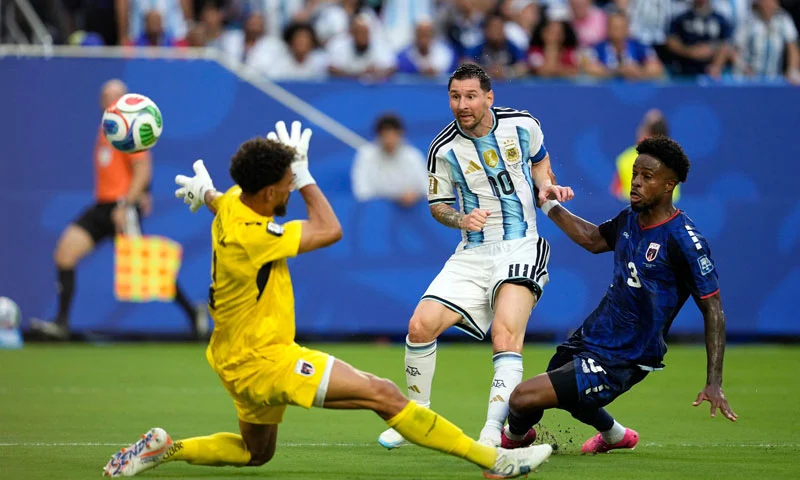
Cape Verde Push Argentina to the Limit as Messi Steals Spotlight
Lionel Messi continued his remarkable World Cup form on Friday with another decisive performance. He scored as Argentina defeated Cape Verde 3-2 after extra time in a tightly contested knockout match. The Argentina captain struck in the 29th minute. That goal marked his 20th World Cup goal. He now leads France’s Kylian Mbappé by two goals in the all time World Cup scoring chart. Messi also extended his record run to eight consecutive World Cup matches with at least one goal. The streak highlights his consistency across multiple tournaments and high pressure knockout games. That control from Lionel Messi is simply out of this world. Then again… so is Messi himself. He’s definitely not from this planet.👽🐐 https://t.co/7hOrU3F4MR— Football Xtra (@FootballXtra365) July 3, 2026 He came close earlier in the match. In the 15th minute, he dragged a left footed shot just wide. Moments later, his free kick was saved comfortably by the goalkeeper. Cape Verde stayed organised in defence during the early stages. Argentina struggled to break them down in the final third. Martinez assist opens the door as Argentina respond The breakthrough came after a precise pass from Lisandro Martínez. He split the defence with a perfectly timed ball into the box. Messi reacted instantly. He stayed onside and controlled the pass. He then lifted a calm finish over the goalkeeper to give Argentina the lead. The goal was his 124th international strike. Only Portugal’s Cristiano Ronaldo remains ahead in the global scoring list with 146 goals. The only player in @FIFAWorldCup history to score in eight successive games… Lionel Messi 👏 pic.twitter.com/yRJCOF0BNT— FIFA (@FIFAcom) July 3, 2026 Messi acknowledged the assist immediately. He pointed toward Martínez as Argentina took control of the match. Cape Verde refused to collapse. They responded with intensity and pushed Argentina into a tense second half. The match became more open and physical as both sides created chances. Momentum swung repeatedly before full time. Neither side managed to secure a winner in regulation time. Extra time drama sends Argentina through The match went into extra time after Cape Verde equalised late in normal play. Argentina eventually found the winning goal to seal a 3-2 victory. The result secured Argentina’s place in the Round of 16. It also extended Messi’s extraordinary World Cup legacy. He now leads the tournament Golden Boot race with seven goals. Kylian Mbappé follows closely with six. Norway’s Erling Haaland and England’s Harry Kane remain in contention with five each. Messi has scored 12 goals across his last eight World Cup appearances. That run underlines his long term impact at the highest level. He finished runner up in the 2022 Golden Boot race with seven goals. He also shared third place in 2014, showing his consistent presence among top scorers. Lionel Messi 🌟#FIFAWorldCup pic.twitter.com/Na1X8ADKgn— FIFA World Cup (@FIFAWorldCup) July 4, 2026 Argentina continue their campaign with confidence. However, they needed extra time to overcome a determined Cape Verde side that tested them throughout the match. Messi’s record now stands as one of the most dominant scoring runs in World Cup history. His performance once again shaped Argentina’s progress on football’s biggest stage.
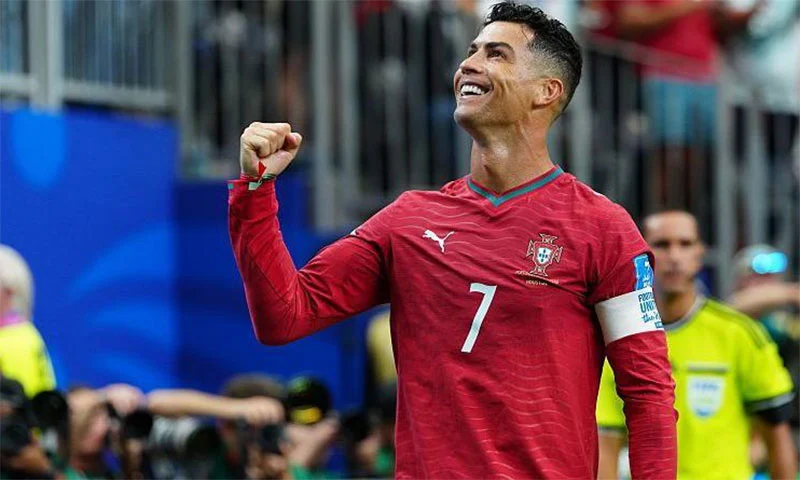
Ronaldo Breaks New Ground in World Cup History at 41
Cristiano Ronaldo etched his name deeper into football history on Tuesday after becoming the first men’s player to score in six different FIFA World Cup campaigns. The Portugal captain reached the milestone during his side’s World Cup clash against Uzbekistan in Houston, finding the net just six minutes into the match. The goal ended weeks of scrutiny surrounding the 41-year-old forward and provided a timely response to critics who questioned his place in Portugal’s attack. Ronaldo reacted quickest inside the penalty area and converted from close range to hand Portugal an early lead. The strike added another remarkable achievement to a career that has already rewritten numerous football records. His first World Cup goal came nearly two decades ago during the 2006 tournament in Germany, when he scored against Iran. Twenty years later, he has now scored in the 2006, 2010, 2014, 2018, 2022 and 2026 editions of football’s biggest tournament. Ronaldo Silences Critics After Difficult Run The historic goal arrived at an important moment for the Portuguese star. Ronaldo entered the Uzbekistan match under pressure after failing to score in Portugal’s opening 1-1 draw against the Democratic Republic of Congo. That result drew criticism from fans and pundits, with many questioning whether the veteran striker could still make the difference on the biggest stage. 𝐂𝐫𝐢𝐬𝐭𝐢𝐚𝐧𝐨 𝐑𝐨𝐧𝐚𝐥𝐝𝐨 at his best. 🇵🇹 pic.twitter.com/C9AFikoNW1 — World Cup Xtra (@WorldCupXtraa) June 23, 2026 The match against Congo also extended a difficult run at major international tournaments. Before Tuesday’s game, Ronaldo had gone 10 consecutive appearances at the World Cup and European Championship without scoring a goal. During that period, he registered only one assist. The drought stood in sharp contrast to the recent performances of global stars such as Lionel Messi, Kylian Mbappe, Erling Haaland and Harry Kane. Portugal coach Roberto Martinez defended Ronaldo after the draw with Congo and insisted his experience remained vital to the team’s World Cup ambitions. A Career Defined by Longevity Ronaldo nearly made history even earlier in the match. Just three minutes after kick-off, he narrowly missed connecting with a cross from Nuno Mendes at the far post. The miss left the veteran visibly frustrated. He slapped the turf before quickly refocusing. Three minutes later, he made no mistake. The goal highlighted the extraordinary longevity that has defined Ronaldo’s career. He made his international debut for Portugal in 2003 and has remained a key figure for more than two decades. The former Manchester United, Real Madrid and Juventus forward now plays for Saudi Pro League side Al Nassr. Despite turning 41 this year, Ronaldo continues to produce at the highest level. He scored 28 goals in 30 league appearances for Al Nassr during the most recent season. His latest World Cup milestone further strengthens his status as one of football’s greatest players. Portugal now hopes Ronaldo’s breakthrough goal will spark a deep run in the tournament as the European side pursues its first FIFA World Cup title. For Ronaldo, however, the night in Houston already secured a place in history. No male player has ever scored in six different World Cups. The Portugal captain now stands alone.
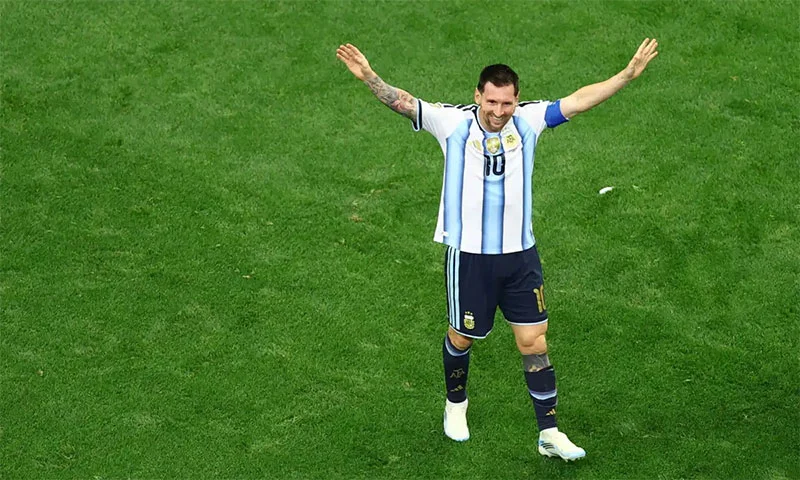
Argentina Advance as Messi Sets New World Cup Scoring Record
Lionel Messi became the highest scorer in FIFA World Cup history on Monday after netting twice in Argentina’s 2-0 victory over Austria, guiding the defending champions into the knockout stage of the 2026 tournament. The Argentina captain scored his 16th and 17th World Cup goals in front of 70,649 spectators at AT&T Stadium in Texas. The brace moved him ahead of former Germany striker Miroslav Klose, who held the previous record with 16 goals. Argentina now advances to the Round of 32 with a match to spare. Lionel Scaloni’s side tops its group after opening the tournament with a 3-0 win over Algeria, where Messi also scored a hat-trick. The 38-year-old celebrated another milestone in a career already filled with records. His latest goals further strengthened his claim as one of football’s greatest players. Messi Misses Early Penalty but Makes History Argentina had a chance to take an early lead after Lautaro Martinez won a penalty. Referee Amin Mohamed awarded the spot kick following a VAR review. Messi stepped up in the ninth minute, but his effort drifted wide of the post. The miss surprised Argentina supporters inside the stadium. Lionel Messi extends his record: 18 @FIFAWorldCup goals! 👏 https://t.co/72Jb5SXlUQ pic.twitter.com/IAPTGfo056— FIFA (@FIFAcom) June 22, 2026 Penalty kicks have remained one of the few blemishes in Messi’s remarkable career. He also missed from the spot during the 2018 World Cup and had another penalty saved against Poland in the 2022 tournament. Despite the setback, Argentina continued to dominate possession. Messi nearly scored in the 19th minute before Austria captain David Alaba made a crucial challenge. Alaba denied him again shortly after the half-hour mark. The defender blocked a goalbound effort with goalkeeper Alexander Schlager out of position. Austria, coached by Ralf Rangnick, spent most of the opening period defending deep. The European side failed to register a shot on target before halftime. Argentina Captain Delivers Again The breakthrough finally arrived in the 38th minute. Facundo Medina delivered a low pass into the penalty area. Thiago Almada cleverly allowed the ball to run through his legs, leaving Messi with a clear sight of goal. The Inter Miami star calmly swept the ball into the net. Argentina supporters erupted as Messi celebrated his record-breaking strike. All the records broken by Lionel Messi today:Most FIFA World Cup finals goals by a football (soccer) player – 18Most FIFA World Cup matches played in by an individual – 28Most matches won by a player at the football (soccer) FIFA World Cup – 18Most minutes played in the…— Guinness World Records (@GWR) June 22, 2026 The goal carried extra emotional weight. Reports later revealed that Messi’s father is recovering from an undisclosed health issue. Messi had already equalled Klose’s record with his hat-trick against Algeria. Monday’s opener moved him into sole possession of first place on the all-time World Cup scoring chart. Austria attempted to respond after the break, but Argentina controlled large portions of the match. Goalkeeper Emiliano Martinez faced little danger throughout the second half. Messi sealed the victory deep into stoppage time. Following a scramble inside the penalty area, he navigated past several defenders before forcing the ball over the line. The second goal ended Austrian hopes and confirmed Argentina’s place in the knockout rounds. Argentina will now focus on securing first place in the group, while Austria must regroup quickly to keep its qualification hopes alive. For Messi, the night added another chapter to an extraordinary international career. The World Cup champion now stands alone at the top of football’s biggest scoring list.
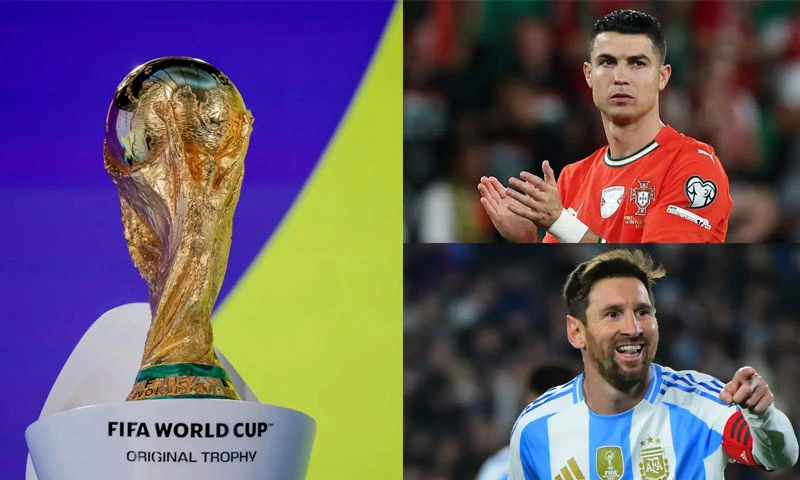
Meet the Eight Players Over 40 Heading to the FIFA World Cup
The 2026 FIFA World Cup will feature a record number of players aged 40 or older, highlighting how elite footballers continue to extend their careers through fitness, nutrition and sports science. Eight players aged 40 and above will compete in the tournament across Canada, Mexico and the United States. That total exceeds the combined number from the previous 22 World Cups. The list includes Cristiano Ronaldo, Luka Modric, Edin Dzeko, Manuel Neuer and Guillermo Ochoa. Their presence challenges the idea that top-level football belongs only to younger players. Portugal captain Ronaldo, now 41, will make history as the first player to appear in six FIFA World Cups. Mexico goalkeeper Ochoa, 40, will also reach that milestone. Argentina captain Lionel Messi, who turns 39 later this month, remains one of football’s most influential figures. He led Argentina to World Cup glory in Qatar and now aims to add another chapter to his remarkable career. Veteran Stars Chasing More History Ronaldo arrives with a record few players can match. He has scored in each of the five World Cups he has played. Portugal coach Roberto Martinez believes experience remains Ronaldo’s greatest asset. “None have lived what he has in the number of decisive games he’s played over his career,” Martinez said. “He also brings experience in decisive moments that nobody else in the squad can match.” Croatia’s Modric and Bosnia and Herzegovina’s Dzeko also have an opportunity to make history. Both players could join a very exclusive group of over-40 World Cup goalscorers. Only Cameroon’s Roger Milla has achieved that feat. He scored at the age of 42 during the 1994 World Cup in the United States and remains the oldest scorer in tournament history. More than three decades later, his record still stands. Goalkeepers Continue to Defy Age Scotland goalkeeper Craig Gordon will be the oldest player at the tournament. At 43, he could become the second-oldest player ever to appear in a World Cup match. Only Egypt’s Essam El Hadary ranks ahead of him. The Egyptian goalkeeper played at 45 during the 2018 World Cup in Russia. Gordon is likely to serve as backup to Angus Gunn. However, even a single appearance would secure his place in the record books. Germany’s Manuel Neuer, who helped his country win the 2014 World Cup, hopes to recover from a calf injury before Germany’s opening match against Curaçao. Cape Verde’s Vozinha and Uruguay’s Fernando Muslera, who turns 40 during the tournament, complete the group of veteran players. Recent injuries have affected both Messi and Ronaldo. Even so, neither player’s legacy faces any threat. Their achievements already rank among the greatest in football history. The 2026 World Cup now offers one more opportunity for football’s elder statesmen to prove they can still perform on the sport’s biggest stage.
