

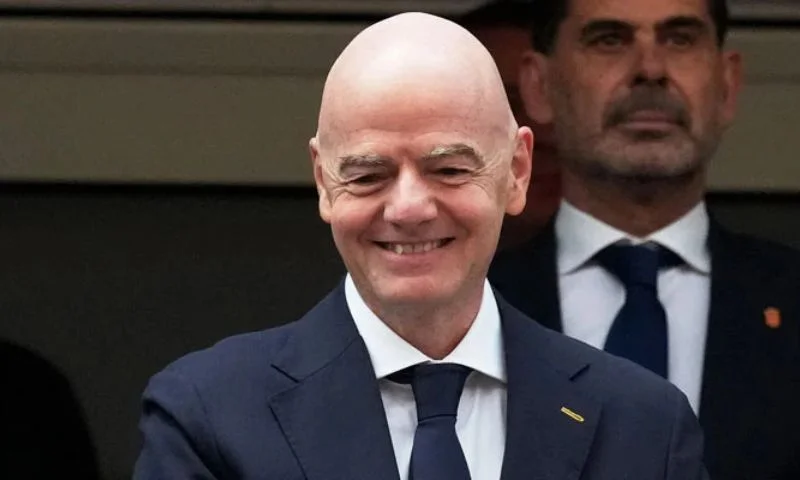
FIFA will examine the possibility of expanding the 2030 FIFA World Cup to 64 teams after the conclusion of the 2026 tournament, President Gianni Infantino has said, arguing that every nation should have the opportunity to dream of playing on football’s biggest stage. Speaking in an interview with Swiss media outlet Bluewin, Infantino said FIFA’s relevant committees will discuss whether increasing the number of participating teams from 48 to 64 is the right next step after what he described as the successful debut of the expanded 48 team format. “That’s definitely an issue that will be examined and discussed in the relevant committees after this World Cup,” Infantino said. The FIFA chief defended the idea by stressing that the World Cup should represent every continent rather than only traditional football powers. “When organising a World Cup, it’s important to organise it for the whole world, not just Europe and South America, but effectively the entire world. Every nation should be allowed to dream of participating in the World Cup. You can see that the quality of the teams is extremely high and it’s getting higher and higher, all over the world. If you don’t give smaller countries a chance to participate in the World Cup, they’ll lack the incentive to keep improving.” FIFA praises 48 team format after strong global performances The 2026 World Cup marked the tournament’s first expansion from 32 to 48 teams, increasing the schedule to 104 matches across the United States, Canada and Mexico. Infantino described the new format as a “huge success” and pointed to the improved performances of teams from outside Europe’s and South America’s traditional football strongholds. “Every team played at a high level. Teams from every continent scored goals and earned at least one point,” he said. “Nine out of 10 African teams reached the knockout stage. At the last World Cup, there were only five teams from Africa. That just goes to show how important it is to include all teams, to give them this opportunity to participate.” Only four teams remain in the current tournament. Argentina, England, France and Spain have reached the semi finals after a month of competition that began with 48 nations. Expansion could reshape the centenary World Cup The 2030 World Cup will celebrate the tournament’s 100th anniversary and will become the first edition staged across multiple continents. Uruguay, Argentina and Paraguay will each host one opening match to commemorate the inaugural 1930 World Cup in Uruguay. Morocco, Portugal and Spain will then stage the remainder of the tournament. If FIFA approves a 64 team format, the three South American hosts could each stage an entire four team group instead of a single opening fixture. A further expansion would add 16 more national teams only four years after the move to 48 participants. Supporters believe it would create more opportunities for developing football nations and accelerate the sport’s global growth. Critics, however, argue that a larger tournament could stretch the calendar, increase travel demands and dilute the quality of qualification. FIFA has not set a timeline for making a final decision. The proposal will first go through the organisation’s committees before any recommendation reaches the FIFA Council for approval.
NASA Took FIFA’s New World Cup Ball to Space. Here’s Why
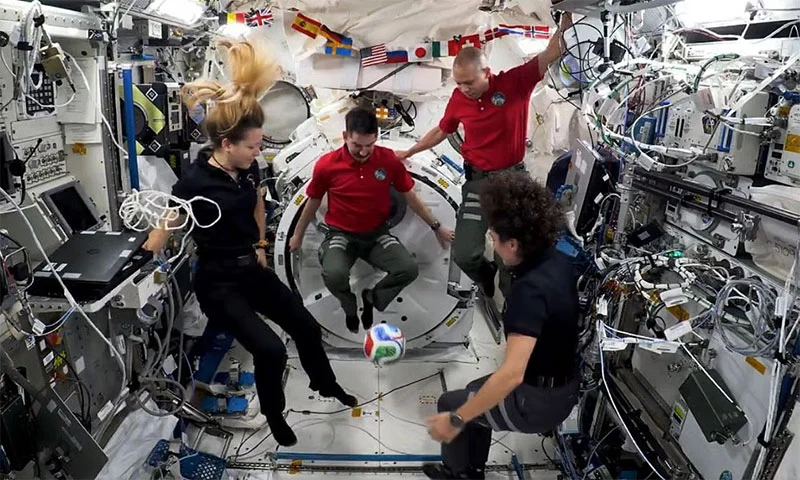
The official ball of the 2026 FIFA World Cup has already achieved something no player can claim before the tournament begins. Astronauts aboard the International Space Station tested Adidas’ Trionda football in space to study how balance and movement affect performance. The experiment formed part of a scientific project designed to better understand how footballs behave under unique conditions. NASA shared images from the tests on Instagram and explained that astronauts recreated a study first conducted in 2019. The agency said the exercise showed how small differences in balance can change the way a football moves. “The official FIFA World Cup ball went to space,” NASA said. According to the agency, sports engineers carefully adjust a ball’s balance and centre of mass to ensure consistent performance on the pitch. NASA Studies Football in Microgravity Astronauts used the Trionda ball to observe its movement in microgravity. The experiment allowed researchers to examine how balance influences flight and motion without the effects of Earth’s gravity. NASA said the findings could help scientists better understand how modern football technology influences performance. The official FIFA World Cup ball went to space! We're working to inspire the next generation by showing how space exploration inspires innovation in sports science — and everyday life. Learn more: https://t.co/CWbI8MFDtp pic.twitter.com/ebJtkpD5uM— NASA (@NASA) June 20, 2026 “Helping to improve the beautiful game is just one of the ways NASA science done on the International Space Station makes life better for people on Earth,” the agency said. Researchers often use the ISS to conduct experiments that would be difficult to perform on Earth. Microgravity allows scientists to isolate variables and study movement with greater precision. The project also highlighted the growing role of technology and data analysis in modern football. Trionda Brings New Technology to World Cup Adidas developed Trionda for the 2026 FIFA World Cup, which the United States, Canada and Mexico will jointly host. According to FIFA, the name Trionda comes from a Spanish phrase meaning “three waves”. The name reflects the tournament’s three host nations. The ball combines red, green and blue colours. Its design also includes symbols linked to each host country. A maple leaf represents Canada. An eagle represents Mexico. A star represents the United States. Adidas equipped the ball with several advanced features. Deep seams help improve flight stability. Textured details help players maintain control during wet conditions. The ball also includes connected-ball technology. A built-in 500Hz motion sensor sends real-time movement data to the Video Assistant Referee system. Officials can use that information to assist with offside decisions and other key incidents during matches. FIFA and Adidas describe Trionda as one of the most extensively tested World Cup balls ever produced. Now, before a single match has kicked off, the ball has already completed a journey beyond Earth and into space.
Mexico Fans Erupt as Hosts Secure Historic World Cup Milestone
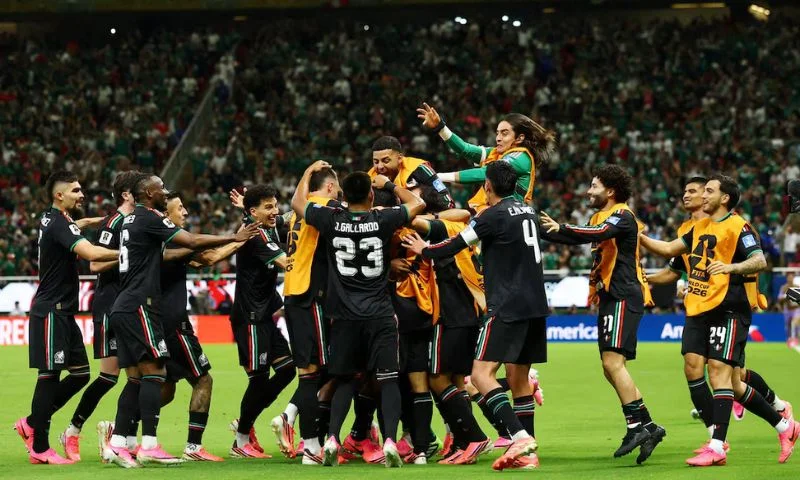
Co-hosts Mexico became the first nation to secure a place in the knockout rounds of the 2026 FIFA World Cup after a hard-fought 1-0 victory over South Korea at a packed Guadalajara Stadium on Thursday. Luis Romo scored the decisive goal early in the second half as Mexico maintained their perfect start to the tournament and booked a place in the last 32 with one group match still to play. The victory also guaranteed Mexico top spot in Group A. Javier Aguirre’s side now has six points from two matches after opening their campaign with a 2-0 win over South Africa. Finishing first means Mexico will remain on home soil for the next round and will face one of the tournament’s best third-placed teams in Mexico City. South Korea remain second in the group with three points, while South Africa and the Czech Republic each have one point following their 1-1 draw earlier on Thursday. Both teams entered the contest knowing that a win would secure qualification, creating a tense atmosphere inside one of the tournament’s most vibrant venues. Goalkeeping Error Decides Tight Contest South Korea created the first major moment of the match after 15 minutes. Captain Son Heung-min lifted the ball over goalkeeper Raul Rangel, only for Edson Alvarez to clear spectacularly off the goal line with an overhead kick. Although the assistant referee later raised the flag for offside, television replays suggested the decision was extremely close. Mexico gradually grew into the game. Julian Quinones, who scored the opening goal of the World Cup against South Africa, forced goalkeeper Kim Seung-gyu into an impressive save with a powerful header. Despite enjoying more possession during the first half, South Korea struggled to create clear-cut opportunities. The lack of attacking threat frustrated neither side more than the Mexican supporters, who responded with jeers at the halftime whistle. The breakthrough arrived five minutes after the restart. Kim rushed out to claim a high ball but collided with one of his own defenders. The ball spilled loose inside the penalty area and Romo reacted quickest, calmly poking it into an empty net. The goal sparked wild celebrations among the home crowd and shifted the momentum firmly in Mexico’s favour. Rangel Preserves Historic Victory South Korea coach Hong Myung-bo responded by introducing Wolverhampton Wanderers forward Hwang Hee-chan and surprisingly withdrawing veteran star Son before the hour mark. The change failed to produce an immediate impact. However, South Korea pushed hard in the closing stages and nearly rescued a point. Guadalajara-born goalkeeper Raul Rangel emerged as Mexico’s hero. He produced a superb double save in the dying minutes to preserve the lead and send the home fans into celebration. Mexico have now reached the knockout rounds of every World Cup they have hosted, reinforcing their reputation as one of the tournament’s most consistent performers on home soil. They will conclude their group campaign against the Czech Republic, while South Korea face South Africa in a crucial match that could determine the second qualification spot from Group A.
FIFA’s Massive World Cup 2026 Twist Changes Opening Ceremony Tradition Forever
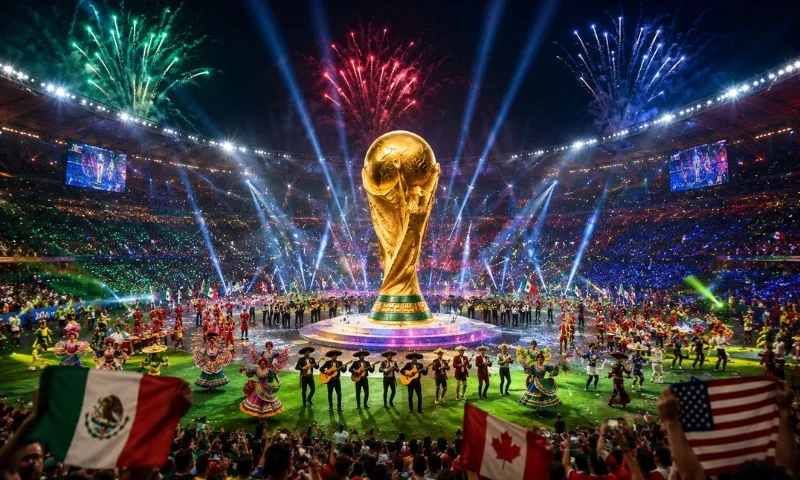
FIFA 2026 will stage separate opening ceremonies in Mexico, Canada and the United States before each host nation plays its first World Cup match. The move adds a fresh cultural element to the 2026 FIFA World Cup, which will become the biggest tournament in football history. The competition begins on June 11 at Estadio Azteca in Mexico City. The famous venue will become the first stadium to host opening matches at three FIFA World Cups after previously staging the 1970 and 1986 openers. Estadio Azteca FIFA confirmed that Grammy Award-winning Mexican band Mana will headline the Mexico City ceremony. Singers Alejandro Fernandez and Belinda will also perform. The organization said the show will celebrate Mexican heritage through music and dance. FIFA added that the concert will include Indigenous and “modern folkloric” performers. The opening match in Mexico City is expected to attract huge global attention. Fans will also return to the renovated Azteca Stadium, one of football’s most historic venues. The stadium hosted Diego Maradona’s legendary “Hand of God” goal and his famous solo strike against England during the 1986 World Cup. Canada and US Plan Star-Studded Shows Canada will stage its ceremony before the country’s opening group-stage match against Bosnia and Herzegovina in Toronto on June 12. FIFA announced performances by Alanis Morissette, Michael Buble, Alessia Cara and William Prince. Los Angeles-based DJ Sanjoy will also appear during the event. FIFA said a “mosaic-inspired reimagining of the FIFA World Cup Trophy will reflect Canada’s diversity and community.” Later that day, the United States will host its own ceremony before the US team faces Paraguay in Los Angeles. Pop star Katy Perry will headline the event. Rapper Future will also perform. The lineup includes Brazilian singer Anitta, Thai rapper LISA, Nigerian artist Rema and South African Grammy winner Tyla. FIFA described the US show as a production focused on “delivering a high-energy spectacle that reflects the scale, ambition and cultural power of the tournament itself.” Biggest FIFA World Cup Ever The 2026 tournament will feature 48 teams instead of 32. FIFA expects record-breaking attendance and television audiences across North America. The tournament also marks only the second time that multiple countries will co-host the World Cup. South Korea and Japan jointly hosted the 2002 edition, with South Korea staging the opening ceremony. FIFA President Gianni Infantino has described the 2026 tournament as a landmark event for global football because of its expanded format and cross-border hosting model. The final will take place at MetLife Stadium on July 19, 2026.
