

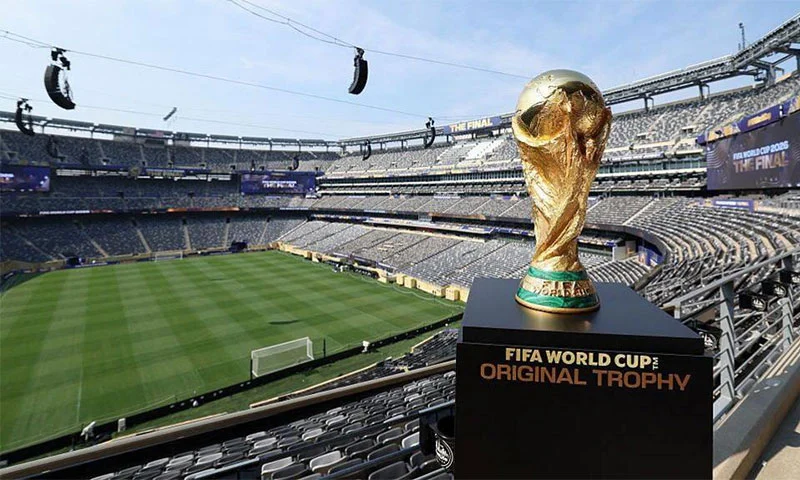
Spain and Argentina will battle for football’s biggest prize on Sunday, but the 2026 FIFA World Cup final will also determine how FIFA’s largest ever financial distribution is shared. FIFA has increased the total financial package for the expanded 48 team tournament to a record $871 million, rewarding all participating national associations for their performances in the United States, Canada and Mexico. The package includes performance based prize money, preparation payments and additional financial support for participating teams. Read More: Messi Effect? FIFA World Cup Final Tickets Break US Record The biggest prize will go to Sunday’s winner at New York New Jersey Stadium in East Rutherford. The champions will receive $50 million, while the runners up will earn $33 million, making victory in the final worth an extra $17 million for either the Royal Spanish Football Federation or the Argentine Football Association. FIFA originally approved a $727 million financial package in December 2025, including $655 million in performance related prize money, representing a 50 percent increase from the 2022 FIFA World Cup in Qatar. However, the governing body raised the overall distribution to $871 million shortly before the tournament after the expanded competition generated stronger than expected commercial revenues. Record Financial Rewards Across Every Stage Every one of the 48 participating nations received a guaranteed payment after qualifying for the tournament. FIFA increased preparation funding from $1.5 million to $2.5 million per team. It also raised the guaranteed participation payment from $9 million to $10 million. In addition, more than $16 million was allocated for delegation costs and increased ticket allocations for participating teams. Those changes pushed the total financial distribution to the record $871 million. The performance payments also increased at every knockout stage. Read More: FIFA’s Ultimate Prize Gets a Luxury Louis Vuitton Journey Teams eliminated between 33rd and 48th place now receive $10 million. Round of 32 teams earn $11 million, Round of 16 participants collect $15 million, and quarterfinalists receive $19 million. The fourth placed team takes home $27 million, while the third placed side earns $29 million. The prize money is paid directly to the national football associations rather than individual players. How much players eventually receive depends on bonus agreements negotiated separately with their respective federations. Neither Spain nor Argentina has publicly disclosed the full details of those arrangements. Clubs Also Cash In Beyond the Final The financial benefits extend well beyond the two finalists. FIFA’s Club Benefits Programme compensates clubs for releasing players to their national teams. Payments depend partly on how long players remain at the tournament and are distributed to clubs that employed them during the qualifying period. For the 2026 World Cup, FIFA increased funding for the programme to a record $355 million, compared with approximately $209 million during the 2022 tournament. Winning the World Cup can also create long term commercial gains. Read More: Messi’s Magic Sends Argentina Past England Into World Cup Final Success often boosts sponsorship opportunities, merchandise sales and the global profile of a national federation. For Argentina, another title would secure back to back World Cup triumphs and further strengthen the commercial appeal of Lionel Messi’s team. Spain, meanwhile, is chasing its first World Cup crown since 2010, with teenage star Lamine Yamal leading a new generation that could open fresh commercial opportunities for the federation and its sponsors. Sunday’s final therefore offers much more than football glory. It also carries one of the richest financial rewards ever seen in international sport.
FIFA Just Made the 2026 World Cup Richer Than Ever Before
FIFA has turned the 2026 World Cup into the richest tournament in football history, with prize money rising by about 50 percent compared to the 2022 edition in Qatar. The expanded tournament, which will be hosted by the United States, Canada and Mexico, will feature 48 teams and 104 matches. It will also distribute a record $727 million among participating nations, according to figures approved by the FIFA Council. Of that amount, $655 million will be paid as performance-based prize money. The biggest reward will go to the eventual champions. FIFA has confirmed that the winning federation will receive $50 million, the largest prize ever awarded to a World Cup winner. The runners-up will earn $33 million, while the third and fourth-placed teams will receive $29 million and $27 million respectively. As a result, the final weekend of the tournament could mean a difference of millions of dollars for the remaining contenders. The increase reflects FIFA’s growing revenues and the commercial strength of the world’s most watched sporting event. FIFA expects the 2023-2026 cycle to generate record income, helping fund larger payments to participating nations and development programs around the world. Every Stage Carries Major Financial Rewards Teams that reach the quarterfinals will each receive $19 million. Meanwhile, nations that advance to the round of 16 will collect $15 million. A place in the newly introduced round of 32 guarantees $11 million. Even countries that fail to progress beyond the group stage will not leave empty-handed. FIFA has allocated $9 million to each group-stage team. In addition, every qualified nation will receive a separate preparation payment of $1.5 million. This means all 48 participants are guaranteed at least $10.5 million simply for reaching the tournament. For smaller football nations, those figures could transform the future of the sport. Football associations often use World Cup earnings to build academies, improve stadiums, expand coaching programs and support women’s football initiatives. Furthermore, the expanded format creates new opportunities for countries that rarely qualify for the tournament. More nations will have access to substantial funding, helping narrow the development gap between football’s traditional powers and emerging teams. Financial Windfall Beyond the Pitch The official prize money represents only part of the financial picture. Successful teams can also benefit from sponsorship agreements, commercial bonuses, broadcasting incentives and player-related endorsement deals. FIFA President Gianni Infantino described the financial package as groundbreaking for global football. “The FIFA World Cup 2026 will also be groundbreaking in terms of its financial contribution to the global football community,” Infantino said when FIFA approved the record funding structure. The tournament will run from June 11 to July 19, 2026, across North America. By the time the final whistle blows, FIFA’s biggest World Cup could also become its most financially significant. For many nations, the rewards may continue long after the trophy has been lifted.
