

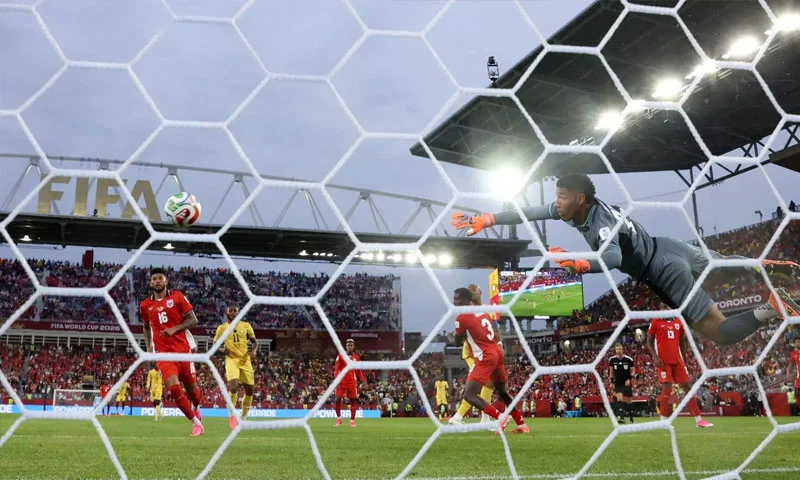
The race for the knockout stage of the 2026 FIFA World Cup is gathering pace, with co-hosts Mexico and the United States becoming the first two teams to secure places in the round of 32 as the expanded tournament begins to take shape. The tournament’s new 48-team format has added a fresh layer of complexity to qualification scenarios. For the first time, eight of the 12 third-placed teams will also advance, making projections more difficult and keeping hopes alive for many nations heading into the final group-stage matches. According to FIFA regulations, teams level on points are first separated by head-to-head results before overall goal difference and goals scored come into play. The revised format has already created a series of high-stakes battles across multiple groups. Mexico became the first nation to book its place in the knockout rounds after defeating South Korea 1-0 in Guadalajara. The victory also secured top spot in Group A with one game remaining. The Mexicans will now face a third-placed team in the round of 32. The United States followed shortly afterwards. The Americans sealed qualification with a 2-0 victory over Australia after opening their campaign with a historic win against Paraguay. Türkiye’s defeat to Paraguay confirmed the United States as Group D winners and simultaneously eliminated Türkiye from the competition. At the other end of the standings, Haiti and Türkiye became the first teams officially eliminated from the tournament. Haiti’s defeat to Brazil ended its hopes of progression, while Türkiye’s results left no mathematical path to the knockout stage. Heavyweights Close In on Qualification Several traditional football powers now stand on the brink of qualification. Brazil tops Group C after defeating Haiti and can secure first place with a victory over Scotland. Morocco also sits in a strong position and can guarantee a top-two finish with a win or draw in its final group match. Germany strengthened its position in Group E with a dominant 7-1 victory over Curaçao. A win against Ivory Coast could send the four-time champions into the knockout rounds. Ivory Coast also remains well placed after defeating Ecuador. France and Norway have similarly placed themselves in commanding positions in Group I. Wins in their upcoming matches would secure progression and set up a final group-stage showdown for first place. Kylian Mbappé and Erling Haaland have already played key roles in their teams’ strong starts. Argentina and Austria could also qualify during the next round of fixtures. The two teams meet in a crucial Group J clash where victory would likely secure passage to the last 32. Expanded Format Keeps More Teams Alive The introduction of the round of 32 has ensured that many teams remain in contention despite mixed starts. Paraguay, Scotland and several other nations still hold realistic hopes of advancing as some of the tournament’s best third-placed teams. Goal difference could prove decisive in many groups. Groups G and H remain completely open after both opening matches in each group ended in draws. None of the teams in those groups can qualify or be eliminated after Matchweek Two, ensuring a dramatic finish. In Group K, Colombia could secure qualification with a win over Congo DR. Portugal, led by Cristiano Ronaldo, remains under pressure after a surprise draw against Congo DR in its opening match. England and Ghana also have an opportunity to qualify when they meet in Group L. The winner of that contest will secure a place in the knockout rounds, adding further significance to one of the tournament’s most anticipated fixtures. With several groups still finely balanced, the final round of matches is expected to determine not only the remaining automatic qualifiers but also the eight third-placed teams that will advance under FIFA’s expanded World Cup format.
Italy Knocked Out Again: Miss Third Straight World Cup After Penalty Shock
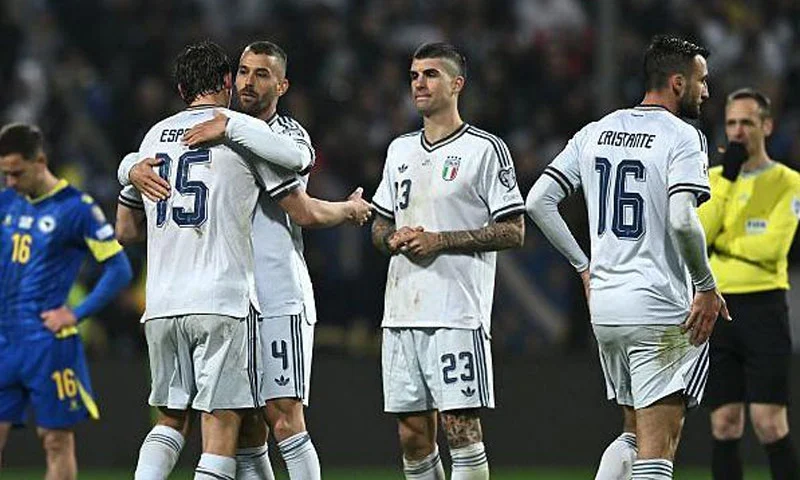
Italy’s World Cup nightmare continues as the four-time champions failed to qualify for a third consecutive tournament, losing to Bosnia and Herzegovina on penalties in a dramatic European play-off clash. The defeat marks one of the darkest chapters in Italian football history, extending a shocking run of absences from the world’s biggest tournament. Heartbreak in the Play-Off Final The match ended level after regular and extra time, forcing the contest into a tense penalty shootout where Bosnia held their nerve to secure qualification. Italy, who dominated large spells of the game, were unable to convert their chances into a decisive lead. Their failure in front of goal ultimately proved costly as the tie slipped into penalties. In the shootout, Bosnia were clinical, while Italy faltered under pressure, missing crucial spot-kicks that sealed their fate. Historic Low for Italy This result means Italy will miss the World Cup for the third consecutive time, a situation almost unimaginable for a nation with such a rich footballing legacy. The Azzurri last lifted the World Cup in 2006, but since then, their fortunes have declined sharply: Failed to qualify for 2018 World Cup Missed out again in 2022 Now eliminated from 2026 qualification The latest setback raises serious questions about the direction of Italian football and its ability to rebuild at the highest level. Bosnia Celebrate Historic Qualification For Bosnia and Herzegovina, the victory represents a historic achievement. Winning under immense pressure, the team displayed composure and resilience throughout the match and especially during the penalty shootout. Their qualification adds another milestone to their football journey and highlights the growing competitiveness of European football. Reaction and Fallout The defeat has triggered widespread criticism in Italy, with fans and analysts questioning team selection, tactics, and overall management. Italy’s struggles in major qualifiers have often been linked to: Lack of consistency in squad development Tactical uncertainty Over-reliance on aging players Football experts believe structural changes may now be necessary to revive the national team. Italy’s absence will be a major talking point heading into the World Cup, as one of the sport’s most historic teams will once again be missing from the global stage. At the same time, Bosnia’s qualification reflects a shift in European football, where emerging teams are increasingly capable of challenging traditional giants.
