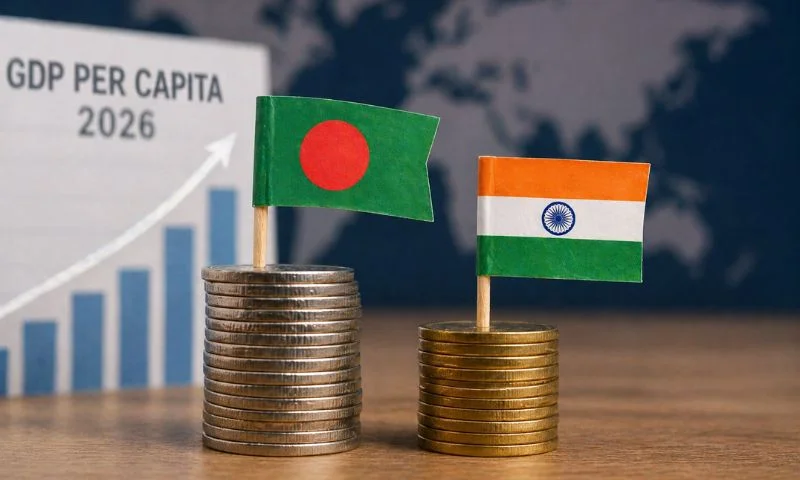
Bangladesh has overtaken India in the latest global rankings of GDP per capita, underlining a shift in relative living standards between the two neighbouring economies. According to the International Monetary Fund World Economic Outlook released in April 2026, Bangladesh’s GDP per capita stands at around $2,910, placing it 148th globally. India, by comparison, ranks lower at 150th with a per capita income of about $2,810. The difference may appear small, but economists say it reflects broader structural trends. GDP per capita measures the average economic output per person and offers a clearer picture of individual prosperity than total economic size. Analysts note that while India remains one of the world’s largest economies overall, its vast population dilutes income levels when measured on a per-person basis. Why GDP Per Capita Matters Experts often prefer GDP per capita adjusted for purchasing power parity as a better indicator of everyday economic well-being. It accounts for population size and cost of living, providing a more realistic comparison between countries. Bangladesh’s steady gains in recent years have come from consistent growth in manufacturing, exports and remittance inflows. The country has also benefited from improvements in social indicators and industrial productivity. Read More: Global Shift: Women Becoming Key Earners in Modern Economy India, on the other hand, continues to post strong aggregate growth but faces challenges in distributing that growth evenly across its population. Economists say this gap explains why it ranks higher in total GDP but lower in per capita terms. The IMF projects global economic growth at about 3.9 percent in 2026, though it warns that uncertainty remains due to geopolitical tensions and financial pressures. Global Context and Shifting Rankings The rankings highlight a broader trend where smaller or more balanced economies often outperform larger nations in per capita measures. Countries with strong export sectors and controlled population growth tend to climb faster in such metrics. While Bangladesh’s lead over India remains narrow, the development carries symbolic importance in South Asia. It reflects how economic progress at the household level can diverge from headline growth figures. Read More: “Not just diplomacy, Pakistan’s role added over $3tn to global wealth” Analysts caution that per capita rankings can fluctuate due to currency movements, inflation and demographic changes. However, they agree that the latest data signals meaningful progress for Bangladesh in raising income levels. The comparison is likely to fuel policy debates in both countries about inclusive growth, productivity and income distribution in the years ahead.


