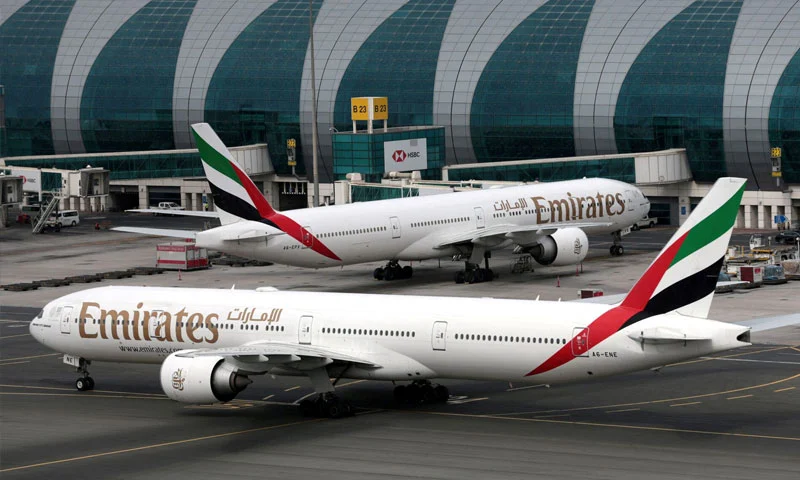
Emirates Airline reported a record annual profit on Thursday as strong global travel demand helped the Dubai carrier overcome disruptions caused by military activity in the Gulf during the final month of its fiscal year. The airline said profit for the year ending March 2026 climbed more than 3 per cent to Dh19.7 billion ($5.4 billion), marking the strongest financial performance in its history. Revenue rose 2 per cent to Dh130.9 billion as the airline increased capacity across key international routes to meet surging passenger demand. Read More: Airlines’ Busiest Summer Holiday Season Under Pressure as Fuel Costs Soar “This is the best profit performance in the airline’s history,” Emirates said in a statement, adding that it retained its position as the “world’s most profitable airline”. The wider Emirates Group, which includes airport services company dnata, also reported strong growth. Group profits after tax increased 3 per cent to Dh21 billion during 2025-26, while revenue reached Dh150.5 billion. Gulf conflict disrupted operations in final month Emirates chairman and chief executive Sheikh Ahmed bin Saeed Al Maktoum said the airline experienced strong business conditions for most of the fiscal year before regional conflict disrupted air traffic in late February. “For the first 11 months of 2025-26, the picture across the group was very positive. Strong demand for our products and services was driving revenue,” Sheikh Ahmed said. “On 28 February, military activity massively disrupted global commercial air traffic in the Gulf region, including in the UAE.” The disruption followed heightened military tensions around the Gulf region that forced airlines to reroute flights and temporarily suspend some operations. Several carriers adjusted schedules because of airspace restrictions and safety concerns. Sheikh Ahmed credited Dubai’s aviation infrastructure and crisis response systems for helping Emirates maintain operations during the disruption. Read More: Spirit Airlines Prepares to Shut Down After Years of Losses “We are fortunate to be based in Dubai, where years of infrastructure investments and a cohesive aviation ecosystem has enabled the government to quickly secure safe corridors for commercial flights,” he said. He added that Emirates and dnata had “gradually restored operations” at Dubai International Airport, commonly known as DXB. “Although we are still operating at a lower passenger capacity than pre-disruption, cargo operations have ramped up to support the movement of essential goods into and through the UAE,” Sheikh Ahmed said. Strong demand boosts airline industry recovery Emirates benefited from continued growth in long-haul international travel, especially across Asia, Europe and the Middle East. Industry analysts say major Gulf carriers have continued to outperform many global rivals because of strong transit traffic through Dubai, Doha and Abu Dhabi. The airline also expanded operations during the year by adding more flights and restoring routes that had faced limitations during previous global disruptions. Read More: World’s Safest Airlines 2026: Full List of Top 25 Full-Service and Budget Carriers Dubai International Airport remained among the world’s busiest hubs for international passengers, reinforcing the emirate’s position as a global aviation and tourism centre. Analysts expect Emirates to continue investing heavily in fleet expansion and premium travel services as competition intensifies among Gulf carriers.


