

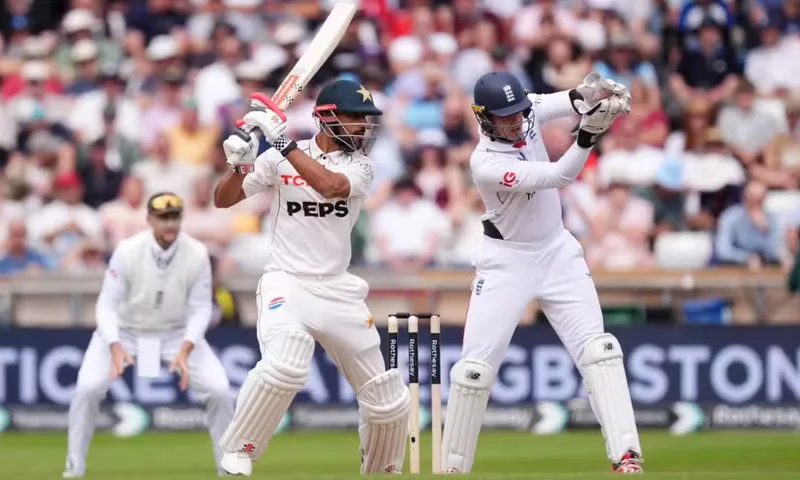
Pakistan’s Test campaign in England began with a damaging setback as the tourists suffered an innings and 103-run defeat at Headingley, setting several unwanted records in the process. England wrapped up the first Test inside three days to take a 1-0 lead in the three-match series. Pakistan arrived in England after drawing their two-Test series in the West Indies 1-1, but their batting struggled badly against the home pace attack. England Dominate After Pakistan Collapse Pakistan’s first innings lasted only 48.1 overs. Ollie Robinson claimed 5-51 and Josh Tongue took 5-46 as the visitors were dismissed for 171. Abdullah Shafique top-scored with 61, while Imam-ul-Haq made 42. England then took firm control by scoring 409, giving themselves a first-innings lead of 238 runs. Read More: Which Teams Will Play Cricket at LA28? ICC Reveals the Full Plan England’s batting depth proved decisive. Harry Brook struck 91, Jordan Cox made 72, Joe Root scored 66 and Dan Lawrence added 51. Pakistan left-arm spinner Ali Usman provided one of the few bright moments with 5-92. Khurram Shahzad added three wickets, but England still built a commanding advantage. Pakistan’s 135 Joins Unwanted Batting List Pakistan needed 238 runs simply to make England bat again. Instead, their second innings collapsed for 135 in only 37.3 overs. Mohammad Rizwan offered the strongest resistance with 41, while Shan Masood scored 29. Robinson, Tongue and Jofra Archer took three wickets each. The 135 became Pakistan’s sixth-lowest Test total in England since 2000. Their five lower scores during that period were 72 at Edgbaston in 2010, 74 at Lord’s in 2010, 80 at Trent Bridge in 2010, 119 at Old Trafford in 2006 and 134 at Headingley in 2018. The latest collapse also left Pakistan with back-to-back innings defeats at Headingley, following their innings-and-55-run loss there in 2018. England’s pace bowlers claimed all 20 Pakistan wickets across the match, underlining the scale of the batting failure. Defeat Ranks Among England’s Biggest Against Pakistan The margin of defeat added another unwanted mark. England’s innings-and-103-run victory became their sixth-biggest innings win over Pakistan. England’s larger innings victories came by 225 runs at Lord’s in 2010, 129 at Trent Bridge in 1954, 120 at Old Trafford in 2006, 120 at Lord’s in 1978 and 117 at Headingley in 1962. The Headingley defeat was also Pakistan’s heaviest innings loss to England since the 2010 Lord’s Test. Read More: Bangladesh Stun Australia to Register First Test Win Down Under Stand-in captain Salman Ali Agha accepted that Pakistan had been second best. “England have outplayed us and it is fair to say. We have made many mistakes.” He also called for a response before the second Test, saying, “We need to eradicate mistakes and come back stronger.” Pakistan will now turn their attention to Lord’s, where the second Test begins on August 27. The defeat also pushed Pakistan to the bottom of the ICC World Test Championship standings with a points percentage of 19.05.

Starc Becomes Most Successful Left-Arm Bowler in Test History
Australia fast bowler Mitchell Starc has become the most successful left-arm bowler in Test cricket history after claiming his 434th wicket against Bangladesh in Darwin. The 36-year-old reached the landmark on Thursday during the opening Test at Marrara Stadium. Starc dismissed Bangladesh opener Shadman Islam for 20 in the ninth over of the visitors’ first innings. Nathan Lyon completed the catch at cover point after Shadman sent a leading edge into the field. Starc entered the match level with former Sri Lanka spinner Rangana Herath on 433 Test wickets. His breakthrough moved him clear at the top among all left-arm bowlers to have played Test cricket. Starc moves alongside Kapil Dev The wicket took Starc to 434 scalps from 106 Tests. That also moved him level with Indian great Kapil Dev in joint 11th place among the leading wicket-takers in Test history. Kapil took 434 wickets across 131 Tests between 1978 and 1994. Starc now needs six more wickets to move beyond South African pace legend Dale Steyn and enter the all-time top 10. Steyn finished his Test career with 439 wickets from 93 matches. The Australian’s latest record further strengthens his standing among the finest fast bowlers of the modern era. Starc made his international debut against India in October 2010 at the age of 20. Cricket Australia says he announced himself early in his career with a four-wicket haul in only his second international appearance. Landmark arrives on difficult day for Australia Starc’s milestone provided Australia with one of the few highlights on a challenging opening day in Darwin. Bangladesh dismissed Australia for 198 after captain Pat Cummins won the toss and elected to bat. It was Australia’s lowest Test innings total against Bangladesh. Hasan Mahmud led the visitors’ attack with career-best figures of 6 for 55, while Steve Smith top-scored for Australia with 71. Bangladesh then reached 96 for one by stumps. Tanzid Hasan remained unbeaten on 32 and Mominul Haque finished on 35 not out. Their unbroken 60-run partnership left Bangladesh only 102 runs behind Australia’s first-innings total. The match is also Bangladesh’s first Test in Australia in 23 years. The two-match series continues with the second Test in Mackay from August 22. A decorated career across formats Starc has built an exceptional record across international cricket. In ODIs, he has taken 247 wickets from 130 matches at an average of 23.58. He was part of Australia’s ODI World Cup-winning teams in 2015 and 2023. Starc also helped Australia win the 2021 T20 World Cup and the 2023 World Test Championship, giving him winners’ medals from all three major ICC men’s global formats. Having already passed Herath, Starc’s next target is now clear. Another six wickets would take him to 440 and lift him past Steyn into the top 10 Test wicket-takers of all time.
New Zealand Cricket Loses One of Its Greatest Ever Players
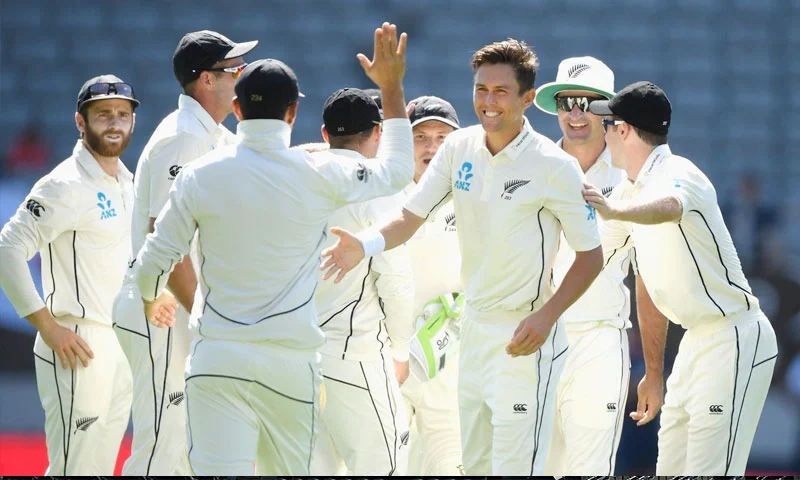
Kane Williamson has announced his retirement from international cricket with immediate effect, bringing an end to one of the most successful careers in New Zealand’s sporting history. The 35-year-old batter made the decision during New Zealand’s ongoing Test tour of England. The Lord’s Test has now become his final international appearance. New Zealand currently trail the series 1-0 after losing the opening match. Williamson confirmed the news in a statement released by New Zealand Cricket. “I’ve thought about it for a while, but over the last few days it’s become clear now is the right time,” Williamson said. “I’ve always felt a strong drive and hunger for international cricket, and I take pride in knowing I’ve given it my all in every match I’ve played for New Zealand.” “Continuing with anything less wouldn’t be right and I feel fortunate to step away on my own terms.” The former captain added that he remains optimistic about the future of New Zealand cricket. “I leave feeling optimistic about where this group is heading. There’s a huge amount of talent, and a real desire to do something special with this New Zealand team.” “It’s a team I love, and I feel incredibly fortunate to have been part of it for so long. It will continue to be dear to my heart.” Williamson’s retirement means he will not take part in the 2027 ICC Cricket World Cup, which will be hosted by South Africa, Zimbabwe and Namibia. A Career Defined by Runs and Leadership Williamson debuted in ODI cricket against India in August 2010 and scored a century on his Test debut against the same opposition in Ahmedabad three months later. He finishes as New Zealand’s highest run-scorer across all formats with 19,346 international runs and 48 centuries. His Test record stands among the finest in modern cricket. He scored 9,515 runs in 110 Tests at an average of 54.06, including 33 centuries and 38 half-centuries. In ODIs, Williamson amassed 7,256 runs in 175 matches at an average of 48.69. He also struck 15 centuries and 47 fifties. Across T20 internationals, he remained one of New Zealand’s most dependable performers and captains. His leadership record is equally impressive. Williamson captained New Zealand in 40 Tests, 91 ODIs and 75 T20Is. Under his leadership, New Zealand reached the 2019 ODI World Cup final, where he won the Player of the Tournament award. The Black Caps also reached the final of the 2021 T20 World Cup. However, his greatest achievement came in June 2021. Williamson led New Zealand to victory in the inaugural ICC World Test Championship final against India in Southampton. He scored 49 and an unbeaten 52 as New Zealand secured the title. Tributes Pour In for a Modern Great New Zealand head coach Rob Walter praised Williamson’s contribution to the game. “Kane’s always put the team first and although we’re disappointed to see him go, we’re happy to know he’s content and at peace with his decision. An incredible player, awesome teammate, a wonderful leader and a fantastic ambassador for our sport.” Former captain Sir Richard Hadlee also paid tribute to Williamson’s legacy. “Kane’s been a wonderful player and has been a fine leader,” Hadlee said. “He’s been an unflappable leader and the architect of some of our greatest moments in cricket. I commend him and thank him for everything he has contributed to cricket and wish him a happy retirement.” Williamson retires as New Zealand’s sixth-most capped men’s player, a four-time Sir Richard Hadlee Medal winner and the ICC Men’s Test Player of the Year for 2019. His calm leadership, technical excellence and consistency ensured his place among the finest batters of his generation.
New Stadium, Bigger Tournament: ODI World Cup 2027 Takes Shape
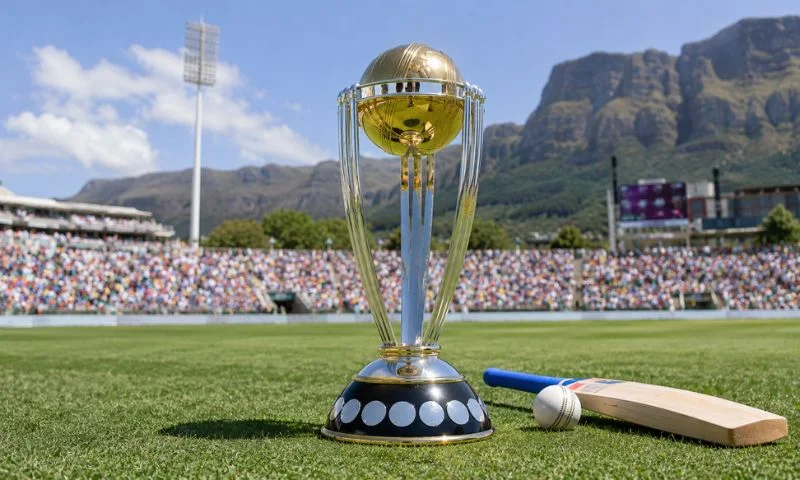
The International Cricket Council (ICC) has provisionally scheduled the 2027 Men’s ODI World Cup from October 4 to November 21, marking the return of cricket’s flagship 50-over event to Africa for the first time in nearly a quarter century. According to details discussed at the ICC Board meeting in Ahmedabad in May, the tournament will take place across South Africa, Zimbabwe and Namibia. The governing body is expected to formally approve the schedule and operational details at its Annual General Meeting in Edinburgh in July. The event will feature 14 teams and 54 matches, restoring the larger format last used before the previous two editions were reduced to 10 teams. South Africa is expected to host the majority of the tournament. Cricket officials anticipate at least 41 matches will take place across eight South African venues. Zimbabwe will likely stage between eight and 10 matches. The country will use three venues instead of the originally planned two. Alongside Harare Sports Club and Queens Sports Club in Bulawayo, Victoria Falls will also host matches. Namibia is expected to host three games. A major addition to Zimbabwe’s preparations is the new Fale Mosi-oa-Tunya International Cricket Stadium in Victoria Falls. Construction is nearing completion and officials expect the venue to host domestic cricket later this year before its formal inauguration in May 2027. South Africa had initially explored plans to open the stadium with an international fixture in August 2026, but organisers have postponed those discussions. Africa Hosts ODI World Cup for First Time Since 2003 The 2027 edition will become the first ODI World Cup held in Africa since the 2003 tournament, which South Africa, Zimbabwe and Kenya jointly hosted. Since then, South Africa has organised several major ICC events, including the 2007 ICC World Twenty20, the 2009 ICC Champions Trophy and the 2023 ICC Women’s T20 World Cup. Zimbabwe and Namibia also successfully co-hosted the ICC Under-19 Men’s Cricket World Cup in 2026. The tournament format will feature two groups of seven teams. The top three sides from each group will progress to the Super Six stage before the knockout rounds. As Full Members of the ICC, South Africa and Zimbabwe qualify automatically. Namibia must secure qualification through the ICC pathway. Wider ICC Decisions Still Await Approval The World Cup will also launch the ICC’s 2027-2031 Future Tours Programme (FTP), which governs bilateral international cricket schedules. Cricket administrators continue to discuss several major issues linked to the new FTP cycle. One key topic is the future structure of the World Test Championship (WTC). ICC officials are considering expanding the competition to include all 12 Full Member nations. Currently, Zimbabwe, Ireland and Afghanistan do not participate in the WTC. Officials are also debating whether standalone Test matches should count toward WTC standings. Sources indicate the ICC could take a final decision on both matters during the Edinburgh AGM. Once members approve the framework, officials will finalise the full FTP schedule later this year. For now, attention turns to the 2027 ODI World Cup, a tournament that promises to bring cricket’s biggest prize back to African soil and showcase the sport across three nations with growing ambitions on the global stage.
England Could Host Pakistan for Five Tests After Decades
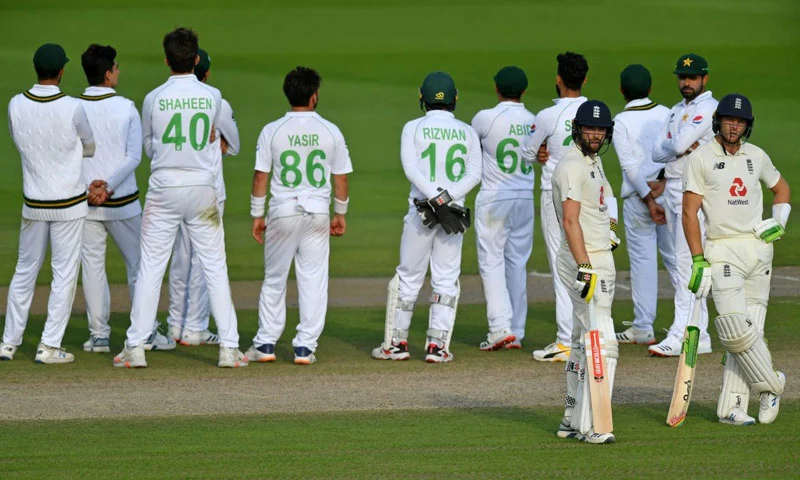
The England and Wales Cricket Board is preparing a major shift in its Test cricket strategy, with Pakistan emerging as a possible opponent for a rare five-match series in England. The plan forms part of the ECB’s broader push to host more long-form home series while reducing the length of some overseas tours. The changes could begin in the next cycle of the International Cricket Council World Test Championship. British media reports said the ECB has already discussed future five-Test series with South Africa and Pakistan. If approved, Pakistan would play a five-Test series in England for the first time in decades. England and Pakistan last contested a five-match Test series in England in 1992. The ECB’s new strategy comes as the ICC considers expanding the World Test Championship to all 12 Test-playing nations. Ireland and Zimbabwe could join a single WTC division under the proposal. One-off Tests may receive WTC status The ICC also plans to give one-off Test matches official WTC status. Current rules require at least a two-match series for championship points. The change could allow England to play its first Test match in Zimbabwe since the 1996-97 tour. The ECB strongly backs the idea of one-Test series. Officials believe smaller cricket nations would benefit from more opportunities to host major teams. At the same time, England wants to stage more commercially attractive home Test series. Internal ECB research found that Test cricket remains England’s most popular cricket format across all age groups. The board now wants to follow the model used by Australia and India. Both countries regularly host five-Test series against leading opponents. The ECB has already proposed a five-Test tour to South Africa in 2032. It also hopes to repeat the arrangement in 2036. Pakistan could become the alternative if talks with South Africa fail. Shorter overseas tours under discussion While England wants larger home Test series, the ECB accepts that lengthy overseas tours struggle financially in several markets. Future tours to Sri Lanka and Bangladesh may shrink to a single Test match. England would then play additional white-ball games during those tours. Broadcasters and sponsors generate stronger revenue from limited-overs cricket in those countries. Under the ICC working group’s proposed WTC format, each of the 12 teams would play 12 Test matches against at least eight opponents during a two-year cycle. The top two teams would meet in the WTC final every two years at Lord’s Cricket Ground. The venue will host the final until 2031. The proposed format would not force every nation to face all other teams. That flexibility would give cricket boards greater control over scheduling and commercial planning. The ICC board is expected to discuss the proposals later this month. Officials delayed one earlier meeting because of tensions in the Middle East, where the ICC operates from Dubai. Although the next Future Tours Programme runs from 2027 to 2031, the ECB wants to finalize much of England’s schedule through 2036. Officials believe long-term planning will strengthen future broadcast negotiations and improve financial stability.
