


The extreme heat and humidity affecting large parts of the United States during the 2026 FIFA World Cup would have been “virtually impossible” without human driven climate change, a new scientific study has found. The research, released on Friday by the World Weather Attribution (WWA) group, says climate change has dramatically increased the severity of the current heat wave across the central and eastern United States and southern Canada. “On America’s 250th birthday, our study gives a clear reality check,” said Theodore Keeping, an extreme weather and wildfire researcher at Imperial College London who co-authored the study. “The climate the country has today is fundamentally different to the one it had when the Founding Fathers signed the Declaration of Independence.” The findings come as the United States celebrates Independence Day and hosts several FIFA World Cup matches under dangerous weather conditions. Scientists said a strong “heat dome” has trapped hot, humid air over a vast region. Heat domes occur naturally. However, climate change now makes them much more intense. Many cities have recorded temperatures above 100 degrees Fahrenheit, or 38 degrees Celsius. High humidity has made the heat feel even more dangerous. Researchers say climate change made the event far more likely Instead of using air temperature alone, researchers measured heat stress through Wet Bulb Globe Temperature, or WBGT. The index combines temperature, humidity, wind and sunlight to measure health risks. The team compared today’s climate with a world that had no human caused warming. Researchers said greenhouse gas emissions have already increased global temperatures by about 1.4 degrees Celsius since the pre industrial era. The results showed a dramatic difference. Without climate change, forecast WBGT levels would have been almost impossible. Scientists estimated such conditions would appear only once every 5,000 years. Even today, researchers estimate the event happens only once every 200 years. They also noted uncertainty because of the event’s exceptional intensity. The team also tested whether the developing El Nino influenced the heat wave. Instead, El Nino produced a slight cooling effect across northeastern North America. Researchers concluded it did not drive the extreme weather. Player safety concerns grow ahead of key World Cup matches The study has renewed concerns about player and fan safety during the tournament. The July 4 World Cup match between France and Paraguay in Philadelphia could begin with WBGT levels above 82 degrees Fahrenheit. FIFPRO, the global players’ union, says organisers should delay matches when heat stress reaches unsafe levels for players and spectators. FIFA has already introduced mandatory cooling breaks during matches. Officials have also increased access to drinking water and shaded areas at stadiums. Climate experts, however, say those steps alone will not solve the growing problem. Earlier WWA research found climate change has increased the number of World Cup matches likely to face dangerous heat compared with the 1994 tournament in the United States. Scientists estimated that 26 matches could reach WBGT levels of at least 26 degrees Celsius. Several games may exceed the 28 degree threshold where FIFPRO recommends postponements. Researchers say future tournaments will face similar risks unless countries reduce greenhouse gas emissions and sports bodies strengthen heat safety measures.
FIFA Makes Surprise U-Turn on Water Bottles Ahead of World Cup
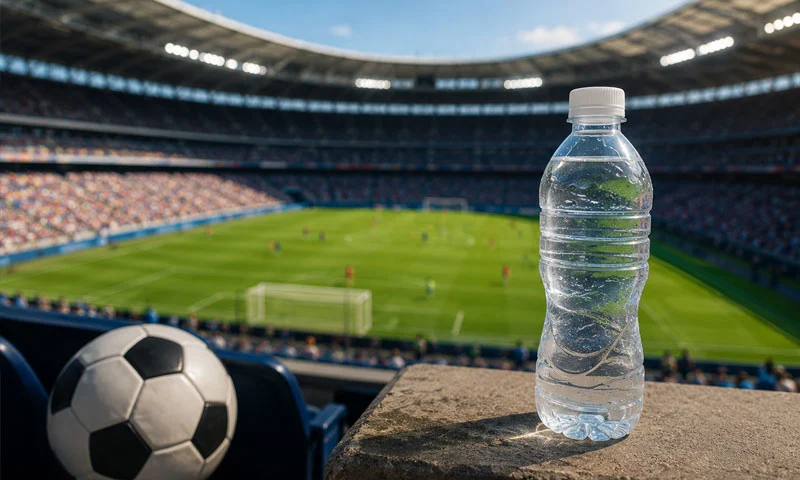
FIFA has relaxed its controversial World Cup water bottle policy. Fans can now bring one factory-sealed disposable plastic water bottle into stadiums during the 2026 FIFA World Cup. The decision came days after criticism of FIFA’s ban on reusable water bottles. Many supporters and health experts raised concerns about hydration during a summer tournament expected to feature extreme temperatures. In a video posted on FIFA’s official X account, World Cup chief operating officer Heimo Schirgi explained the updated rule. “All fans will be permitted to bring in one, soft, plastic 20 ounces (590ml), factory sealed disposable water bottle into any FIFA World Cup 2026 match in the USA and Canada,” Schirgi said. FIFA described the announcement as a clarification. However, the move eases restrictions announced earlier this week. Safety Concerns Drive Policy Earlier this week, FIFA updated its stadium code of conduct and banned reusable water bottles. The organisation defended the move on security grounds. “Fifa made the decision to prohibit bottles to prevent risk and injury to players and attendees,” FIFA said. The governing body noted that many World Cup venues already enforce similar restrictions. All fans will be permitted to bring in one, soft, plastic, 20 ounces (590ml), factory sealed disposable water bottle into any FIFA World Cup 2026 match in the USA and Canada. ✅As FIFA World Cup 2026 Chief Operating Officer, Heimo Schirgi, explains, fans will not be permitted… pic.twitter.com/ePEHq9oalJ— FIFA (@FIFAcom) June 5, 2026 “Outside bottles are already prohibited at several of these venues for safety considerations, and Fifa is applying this consideration across its tournament stadiums,” the statement added. Despite Friday’s change, FIFA continues to prohibit reusable containers. Schirgi said, “fans will not be permitted to bring in hard sided, reusable water bottles due to safety and security reasons.” He also displayed examples of permitted and prohibited bottles. Under the revised rules, fans may carry only one soft plastic disposable bottle that remains factory sealed upon entry. Heat Risks Remain in Focus The debate has intensified because experts continue to warn about extreme temperatures during the tournament. The United States, Canada and Mexico will host the 2026 World Cup. The competition will feature a record 48 teams and 104 matches. Last month, the World Weather Attribution research group released a report on tournament conditions. Researchers estimated that 26 matches could take place in conditions where the Wet Bulb Globe Temperature exceeds 26 degrees Celsius. The Wet Bulb Globe Temperature, or WBGT, measures heat stress on the human body. It combines temperature, humidity, sunlight and wind into a single reading. Fans raised similar concerns during last year’s FIFA Club World Cup in the United States. Many complained about intense heat inside stadiums. Organisers also prohibited outside water bottles during that tournament. FIFA says it will provide hydration stations, cooling tents, misting stations and fans throughout venue areas. The organisation also says bottled water inside stadiums will remain priced similarly to other events held at each venue. As preparations continue for the largest World Cup in history, FIFA faces growing pressure to balance security requirements with fan comfort and safety.
