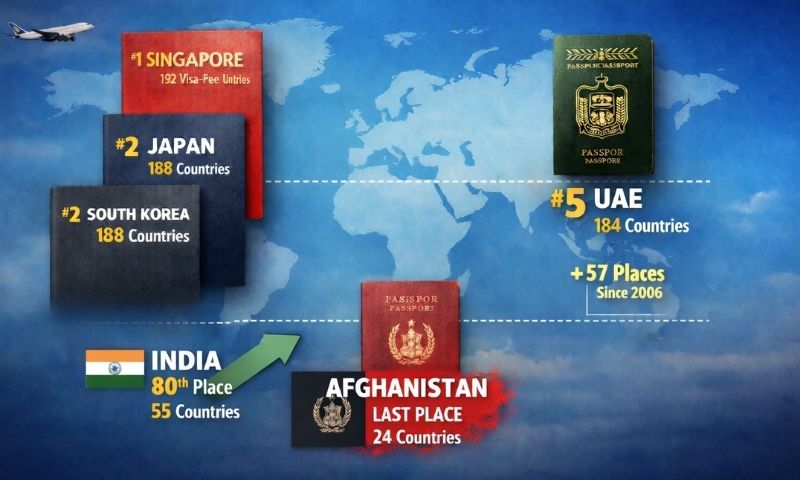
The latest 2026 Henley Passport Index has once again reshaped the global travel hierarchy, highlighting which passports offer the greatest freedom and which continue to lag behind. At the very top of the rankings is Singapore, which retained its position as the world’s strongest passport. Singaporean citizens can now travel to 192 destinations visa-free, underscoring the country’s deep diplomatic reach and consistent global engagement. Tied closely behind are Japan and South Korea, which jointly hold second place. Passport holders from both countries enjoy visa-free or visa-on-arrival access to 188 destinations, reflecting Asia’s growing dominance in global mobility rankings. Europe continues to hold a strong presence in the upper tier. According to the index, Denmark, Luxembourg, Spain, Sweden, and Switzerland are among the top-ranked countries, each providing access to 186 destinations or more without requiring advance visas. These rankings reflect long-standing travel agreements and extensive international cooperation. One of the most notable stories in the 2026 index is the rise of the United Arab Emirates. Ranked fifth globally, the UAE passport now grants visa-free access to 184 destinations. Gulf News noted that the UAE has climbed 57 places since 2006, marking one of the fastest and most sustained improvements ever recorded by the index. At the opposite end of the scale, Afghanistan remains ranked last. Afghan passport holders can travel to just 24 destinations without a visa, highlighting the sharp disparity in global travel freedom. The report underscores a widening gap between the most and least powerful passports. In 2026, the difference between the top-ranked passport and the lowest now stands at 168 destinations, illustrating a growing inequality in international mobility. Commenting on the findings, Henley & Partners chairman Christian H. Kaelin said passport strength has become a defining factor in opportunity and access. He noted that “passport privilege plays a decisive role in shaping opportunity, security, and economic participation.” Beyond tourism, passport strength affects business mobility, education options, and long-term economic prospects. The 2026 rankings show that while some countries continue to expand travel freedom for their citizens, others remain locked out of much of the world. As nations pursue new visa agreements and diplomatic ties, future rankings may shift again. For now, the 2026 index makes one reality clear: where you can go still depends heavily on the passport you hold.

