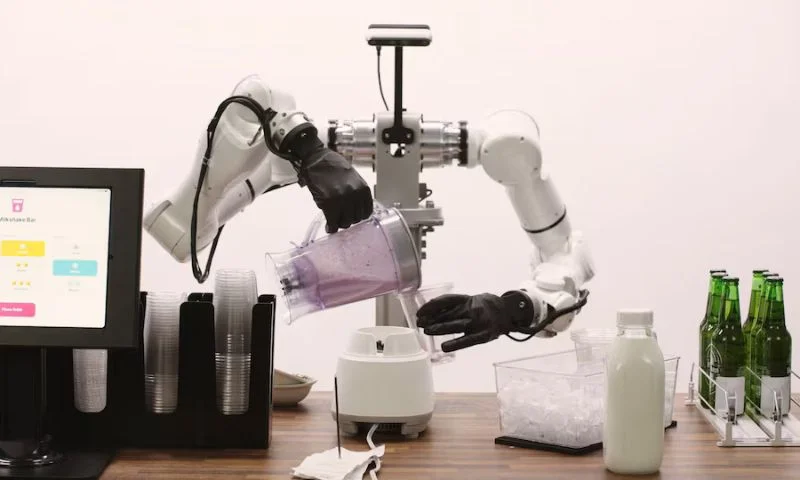
A French robotics startup has launched a new artificial intelligence model designed to make robots more adaptable across industries, alongside a human like robotic hand capable of performing complex tasks. Genesis AI, backed by former Eric Schmidt and telecom investor Xavier Niel, said its GENE 26.5 model can operate a range of robots, including machines built by other manufacturers. The company, co founded by former Mistral researcher Theophile Gervet, is in advanced talks with potential customers in France, Germany and Italy, according to Reuters. Europe at the centre of AI robotics push Genesis AI launched its platform at a time when Europe seeks to rebuild its industrial base and reduce dependence on Asian manufacturing hubs. The company said it is prioritising European markets for both talent and demand. “There were two big reasons. The first one was the talent base,” Gervet told Reuters. “The second reason was the industrial base as a market for us.” The startup targets sectors such as automotive, electronics, pharmaceuticals and logistics. These industries increasingly require robots capable of handling delicate or variable tasks that traditional machines struggle to perform. Read More: Japan Airlines Tests Humanoid Robots to Take Over Cargo Jobs at Tokyo Airport Genesis said its AI model allows robots to adapt to different environments and workflows, reducing the need for extensive reprogramming. The company is also building large scale robotics datasets by collecting real world motion data from industrial workers using sensor equipped gloves. Founded in early 2025, Genesis AI raised $105 million in its first funding round, matching one of the largest seed investments in France. Backers include Bpifrance. Industry demand continues to rise. German firm Schaeffler recently said it expects its robotics order book to reach hundreds of millions of euros by 2030, reflecting strong growth in automation. Human like robotic hand targets complex tasks Alongside its AI model, Genesis unveiled a robotic hand designed to replicate human anatomy more closely than standard industrial grippers. In demonstrations shared with Reuters, the hand performed tasks such as chopping tomatoes, cracking eggs, solving a Rubik’s Cube and even playing the piano. The design enables more direct transfer of human motion to machines, improving precision and flexibility. The launch places Genesis in direct competition with China’s Linkerbot, which is targeting a multi billion dollar valuation as demand grows for advanced robotic manipulation systems. Both companies focus on improving dexterity in machines, a key limitation in current industrial robotics. Analysts say breakthroughs in this area could transform manufacturing, logistics and healthcare operations. Read More: When AI Goes Wrong: Robot Scares Diners Mid-Performance Genesis expects to raise additional funding as it scales operations but said a public listing remains premature. Executives indicated that commercial partnerships will likely run between three and five years, depending on client needs, as companies integrate AI driven robotics into existing production systems. The company declined to disclose specific customers but confirmed it is already signing agreements with industrial partners.


