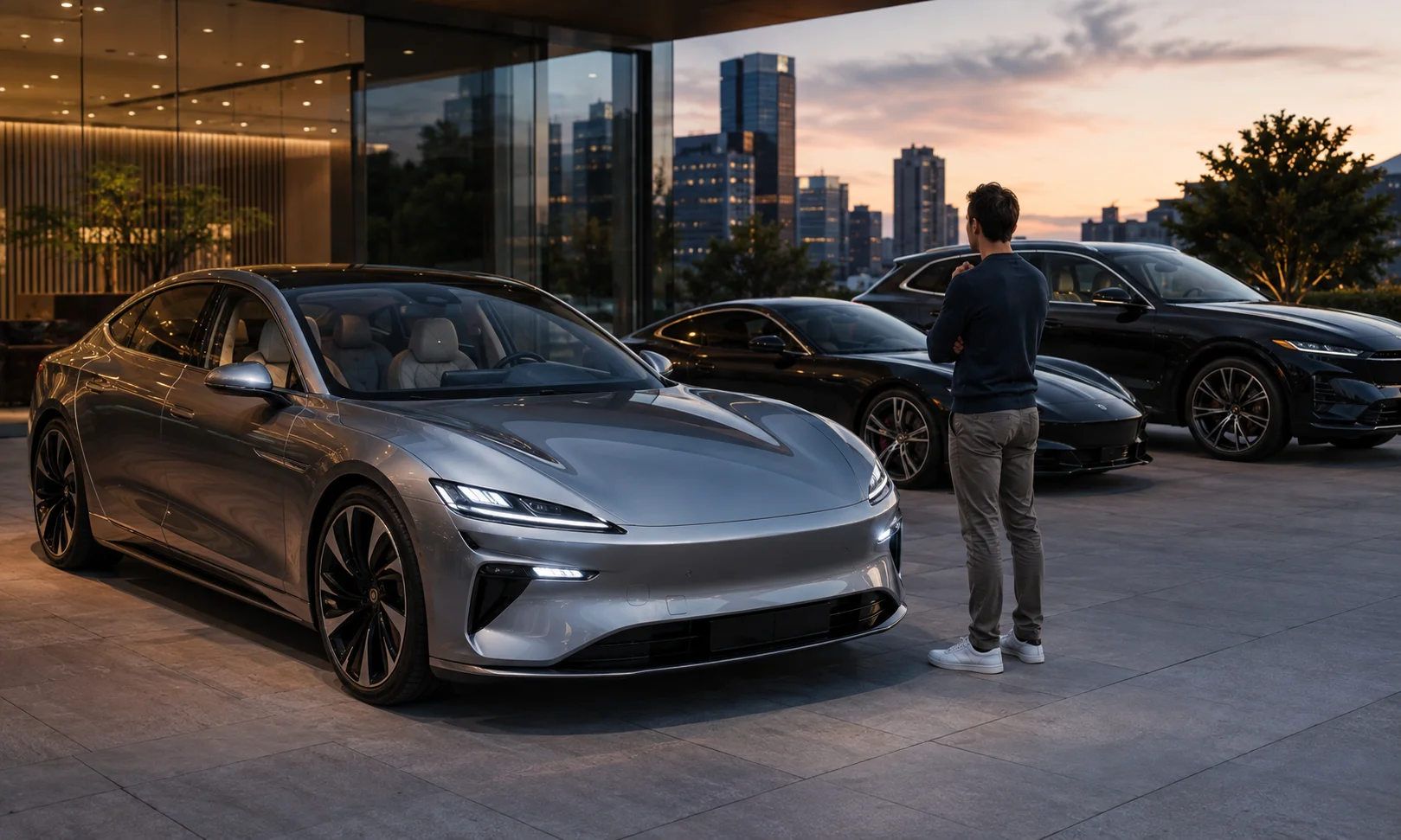
Chinese carmakers are rapidly closing the performance gap with Porsche, Ferrari and BMW, raising a harder question for the global auto industry. Can technology and extreme performance create the same desire as decades of luxury heritage? The Yangwang U9 Xtreme offers perhaps the clearest example. BYD’s electric hypercar reached 496.22 km/h at Germany’s Papenburg test track in September 2025. It later completed the Nürburgring Nordschleife in 6:59.157, becoming the first production EV to break the seven-minute barrier. The U9 Xtreme uses four electric motors, a 1,200-volt platform and nearly 3,000 horsepower. Yet technical dominance has not automatically translated into luxury-market dominance. Performance records are only part of the battle DMARGE reported that Yangwang sold just 945 vehicles across its entire range during the first quarter of 2026. That contrasts sharply with the attention generated by the U9 Xtreme’s records. Xiaomi has demonstrated the same engineering potential. Its production SU7 Ultra recorded a 7:04.957 Nürburgring lap, setting a record for its category. The bigger challenge lies in brand value and emotional appeal. Read More: Ferrari’s First Electric Supercar Gets Futuristic Cabin and 1,000+ HP Industry commentator Mark Rainford told DMARGE that age plays an important role in Chinese buying habits. Older customers still tend to trust established foreign brands because they remember a much weaker domestic auto industry. “There’s a lot of horror stories of cars going downhill and the brakes failing,” Rainford said. Younger buyers, however, have grown up during China’s rapid technological rise. They show greater confidence in local manufacturers and place more value on software, screens and connected features. Chinese luxury brands target a new generation That shift is already hurting traditional manufacturers. Reuters reported that German brands have lost significant ground in China as local companies introduce premium vehicles with advanced technology at lower prices. BMW, Mercedes-Benz and Porsche have all faced weaker Chinese sales. Chinese manufacturers increasingly define luxury through technology and practicality. Large three-row SUVs offer entertainment screens, sophisticated cabin systems and integration with connected home devices. Rainford argues that established European brands still hold an advantage in consistency and refinement. “You can get in a Mercedes and you know you’re going to get what you’re going to get. But in a BYD, you’re never quite sure. Some examples will do it really well and some won’t.” China is now chasing emotion as well as numbers Chinese manufacturers are also exploring traditional performance-car ingredients. Great Wall Motor used the 2026 Beijing Auto Show to reveal its GF supercar project. The programme centres on a mid-engine architecture and an in-house 4.0-litre twin-turbo V8 with hybrid assistance. Former McLaren engineer Adam Thomson is involved in the development. The move suggests Chinese companies no longer see acceleration, software and specifications as enough. Read More: BMW Plans 8,000 Job Cuts by End of 2027 as Costs Rise At the same time, global competition continues to intensify. Chinese manufacturers are expanding overseas as domestic conditions become more difficult. Reuters reported that Chinese vehicle exports jumped 88.2% year on year in July 2026. The industry’s next battle may therefore have less to do with horsepower. Chinese manufacturers have already shown they can challenge Europe on measurable performance. The tougher task is building the heritage, consistency and emotional connection that make buyers choose a Ferrari, Porsche or BMW even when another car looks better on paper.