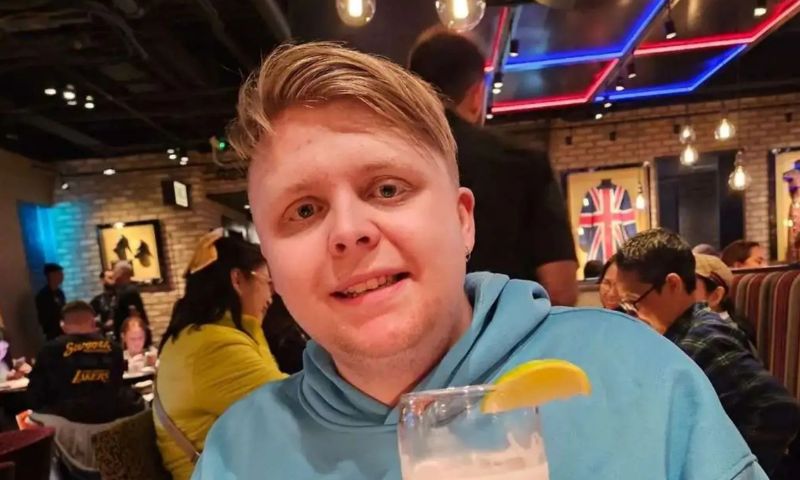
A rare and heartbreaking story out of the United Kingdom has drawn global attention to the devastating reality of dementia. Andre Yarham, just 24 years old, has died after battling an aggressive and uncommon form of dementia known as frontotemporal dementia (FTD), a condition typically seen in people aged 45 to 65. His family has donated his brain to medical research in hopes of shedding light on this cruel disease and helping others in the future. Andre, from Dereham in Norfolk, England, was first noticed to have concerning symptoms at just 22 years old when his mother, Samantha Fairbairn, observed sudden memory lapses, behaviour changes, and slower movement. Doctors initially did not expect such a diagnosis in someone so young. However, clinical scans revealed that his brain was already showing the shrinkage typically seen in a 70-year-old, prompting immediate further tests at Addenbrooke’s Hospital in Cambridge. Frontotemporal dementia affects the frontal and temporal lobes of the brain, leading to changes in behaviour, personality, language, and movement over time. Unlike Alzheimer’s disease, which often first impacts memory, FTD can show up in more subtle ways — irritability, impulsivity, and loss of social awareness — before progressing rapidly. In Andre’s case, the disease advanced quickly. Within months of diagnosis, he began to lose speech and struggled with basic tasks. His mother became his full-time caregiver, supporting him with daily needs. As his condition worsened, Andre was moved into full-time care in September 2025 when his family found it too difficult to manage at home. His health declined further after he developed an infection in December. Andre spent several weeks in hospital before being transferred to Priscilla Bacon Lodge Hospice, where he passed away peacefully on 27 December 2025, surrounded by loved ones. Despite the deep sadness, the family’s decision to donate Andre’s brain to scientific research has sparked hope. His mother explained to the BBC and other outlets that if his donation helps even one other family gain more time with a loved one, it would have been worthwhile. Researchers hope the tissue will offer insight into early-onset dementia mechanisms and help develop better treatments for rare cases like his. Experts stress that young-onset dementia — defined as dementia occurring before age 65 — is rare but possible. According to dementia organisations, early signs can be behavioural or cognitive, and families should consult medical professionals when unusual symptoms appear. Andre’s story has highlighted both the severity of FTD and the urgent need for more research into conditions that can strike the young. His legacy may contribute significantly to future scientific progress.


