


Pakistan’s freelance sector has recorded a strong surge in earnings, bringing in $856 million during the first nine months of the current fiscal year, reflecting a 50% increase compared to the same period last year, according to official data. The sharp rise highlights the growing importance of freelancing as a key contributor to Pakistan’s digital economy and foreign exchange inflows, as more young professionals tap into global online markets. Rapid Growth in Digital Workforce Data from the State Bank of Pakistan shows that freelance earnings increased from $567 million in the previous year to $856 million, marking a significant jump of nearly $289 million. Industry experts say the growth reflects rising global demand for digital services and the increasing participation of Pakistani youth in freelance platforms. Pakistan is already among the top freelancing countries globally, with estimates suggesting over 2.3 million freelancers are currently working across various sectors including software development, graphic design, content writing and digital marketing. Officials note that training programmes, government initiatives and private sector efforts have helped expand the talent pool, enabling more individuals to access international clients and generate income in foreign currency. Challenges Remain Despite Strong Performance Despite the impressive growth, the sector continues to face structural challenges, including inconsistent internet connectivity and power outages, which can disrupt workflow and limit productivity. Experts warn that addressing these issues is critical if Pakistan aims to sustain and accelerate its digital growth momentum. “There is a huge opportunity for Pakistan to expand its freelance exports further, but infrastructure improvements will be key,” an industry analyst said. There have also been calls to introduce more reliable internet solutions and policy support to ensure freelancers can compete effectively in global markets. Positive Outlook for Pakistan’s Digital Future The strong performance of the freelance sector is being seen as a positive sign for Pakistan’s broader economic outlook, particularly at a time when the country is seeking to diversify its export base. Government institutions such as the Ministry of IT and the Pakistan Software Export Board are working to strengthen the freelance ecosystem through skill development, certifications and global outreach programmes. Experts believe that with the rollout of faster internet technologies and continued investment in digital skills, freelance earnings could grow further in the coming years. The sector’s expansion also points to a shift in Pakistan’s economic model, where digital services are emerging as a reliable and scalable source of income. As global demand for remote work continues to rise, Pakistan’s growing freelance workforce is well-positioned to capitalise on new opportunities and contribute significantly to economic stability.
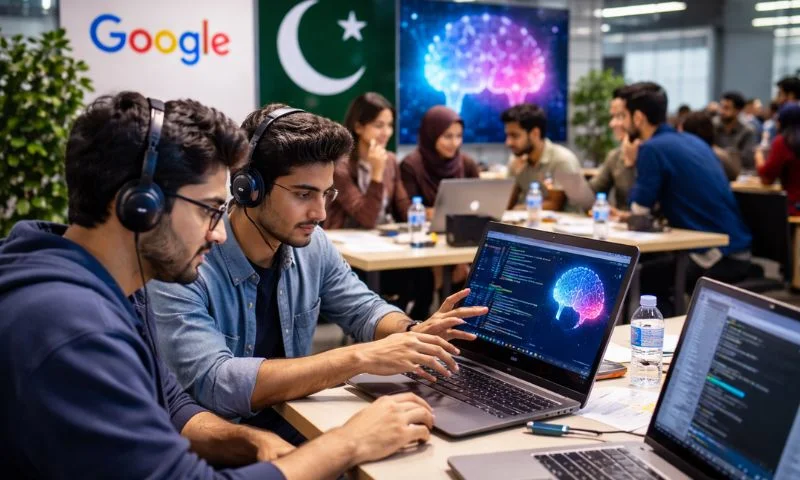
Google, Pakistan Team Up for AI Programme with Rs2.5 Million Reward
Pakistan has launched a nationwide artificial intelligence training initiative in collaboration with Google, offering a prize pool of Rs2.5 million as part of efforts to equip young people with advanced digital skills and accelerate the country’s transition to an AI-driven economy. The programme, titled AI Seekho 2026, has been introduced through a partnership involving Google for Developers, the Ministry of Information Technology and Telecommunication, telecom operators and local tech organisations. Officials say the initiative aims to provide free access to advanced AI tools, training modules and cloud resources, lowering barriers for students, developers and professionals seeking to enter the rapidly evolving field. Focus on skills and innovation The programme is structured in multiple phases, beginning with an online learning challenge where participants will gain hands-on experience in generative AI and application development. Participants will be required to build functional solutions in categories such as mobile applications and games using platforms like Google AI Studio. A second phase will include physical hackathons in major cities including Karachi, Lahore and Islamabad, where selected participants will develop projects and compete for a prize pool worth Rs2.5 million. Organisers describe the initiative as a shift toward “vibe coding,” a modern approach that enables developers to create applications using natural language prompts and AI-assisted workflows. Push toward an AI-driven economy Federal IT Minister Shaza Fatima said the programme reflects a broader national strategy to transition from a service-based economy to one powered by innovation and digital products. “Our vision is to shift from a legacy service economy to an AI-powered, product-based economy,” she said, adding that artificial intelligence is being prioritised to equip young Pakistanis with globally competitive skills. With nearly 65 per cent of the population under the age of 35, policymakers see AI training as a critical pathway for employment generation and economic growth. Industry experts say such initiatives could help bridge the digital skills gap and position Pakistan as a competitive player in global technology markets. Multi-partner collaboration The programme is supported by a network of partners, including Google Developer Groups and Google Developer Experts, which will provide mentorship, training and community engagement. Participants will also receive free cloud credits and access to development platforms, enabling them to build and test applications without financial constraints. Analysts note that partnerships between global tech firms and local institutions are increasingly shaping the digital landscape in emerging markets, where access to tools and training remains uneven. Opportunities and challenges While the initiative has been widely welcomed, experts caution that sustained impact will depend on long-term investment in education, infrastructure and policy support. Pakistan has made progress in expanding internet access and digital services, but challenges remain in areas such as digital literacy, funding and industry integration. At the same time, the global demand for AI skills continues to surge, creating opportunities for countries that can rapidly train and deploy talent. Outlook The launch of AI Seekho 2026 highlights a growing recognition of artificial intelligence as a key driver of economic transformation. If successfully implemented, the programme could help create a new generation of developers, entrepreneurs and innovators, contributing to Pakistan’s ambitions of becoming a technology-driven economy. As global competition intensifies, initiatives like this may play a critical role in shaping the country’s future workforce and digital ecosystem.
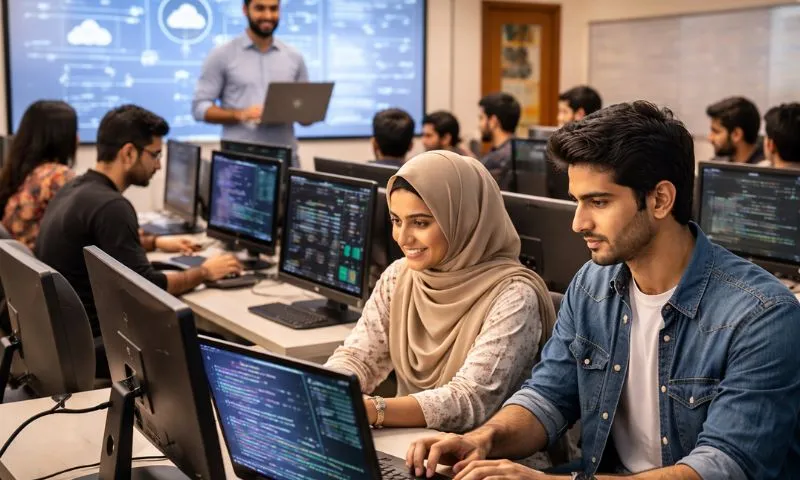
Sindh Allocates Rs900m to Train 35,000 Students in Modern IT Skills
The Sindh government has taken a major step to boost digital skills and employment opportunities for youth by allocating Rs900 million to train 35,000 students in modern Information Technology (IT) competencies. The decision came during a meeting of the Sindh Cabinet’s Sub-Committee on Finance in Karachi on January 26, 2026, chaired by the local government minister Syed Nasir Hussain Shah. Under the People’s Information Technology Programme, funds will support students from three major universities — Institute of Business Administration (IBA), NED University of Engineering & Technology, and Mehran University of Engineering & Technology — to gain in-demand digital skills that can improve their employability. The programme is part of a wider push in Pakistan to prepare young professionals for the digital economy. In recent years, both federal and provincial governments have expanded initiatives to train youth in fields such as artificial intelligence, cybersecurity, cloud computing, and digital marketing. Such efforts align with broader national goals like the Prime Minister’s Youth Programme — launched to empower young Pakistanis with skills, jobs, and business opportunities — and similar public–private training partnerships that help local talent connect with global tech markets. “No delay or negligence in public welfare projects would be tolerated,” Syed Nasir Hussain Shah told reporters at the conclusion of the meeting, underscoring his government’s commitment to education and youth development. The financial boost comes as Pakistan faces high youth unemployment. According to the Pakistan Bureau of Statistics, a large share of university graduates struggle to find jobs that match their qualifications. Experts say modern IT skills can help bridge that gap and make young professionals competitive both locally and globally. The Sindh initiative is also complementary to existing programmes at the federal level. Earlier, the federal government announced plans to provide IT certifications to 500,000 young people and expand training opportunities nationwide. The planned training under the Rs900m allocation will not only help students learn technical skills but may also include support for entrepreneurship and freelancing — areas where a growing number of young Pakistanis already generate income online. Online platforms like DigiSkills.pk have shown that structured digital training can significantly enhance job prospects and income-generating opportunities. By equipping students with practical and modern IT skills, the Sindh government hopes to create a more digitally capable workforce, ready to meet the demands of a fast-changing economy and contribute to Pakistan’s long-term growth.
