

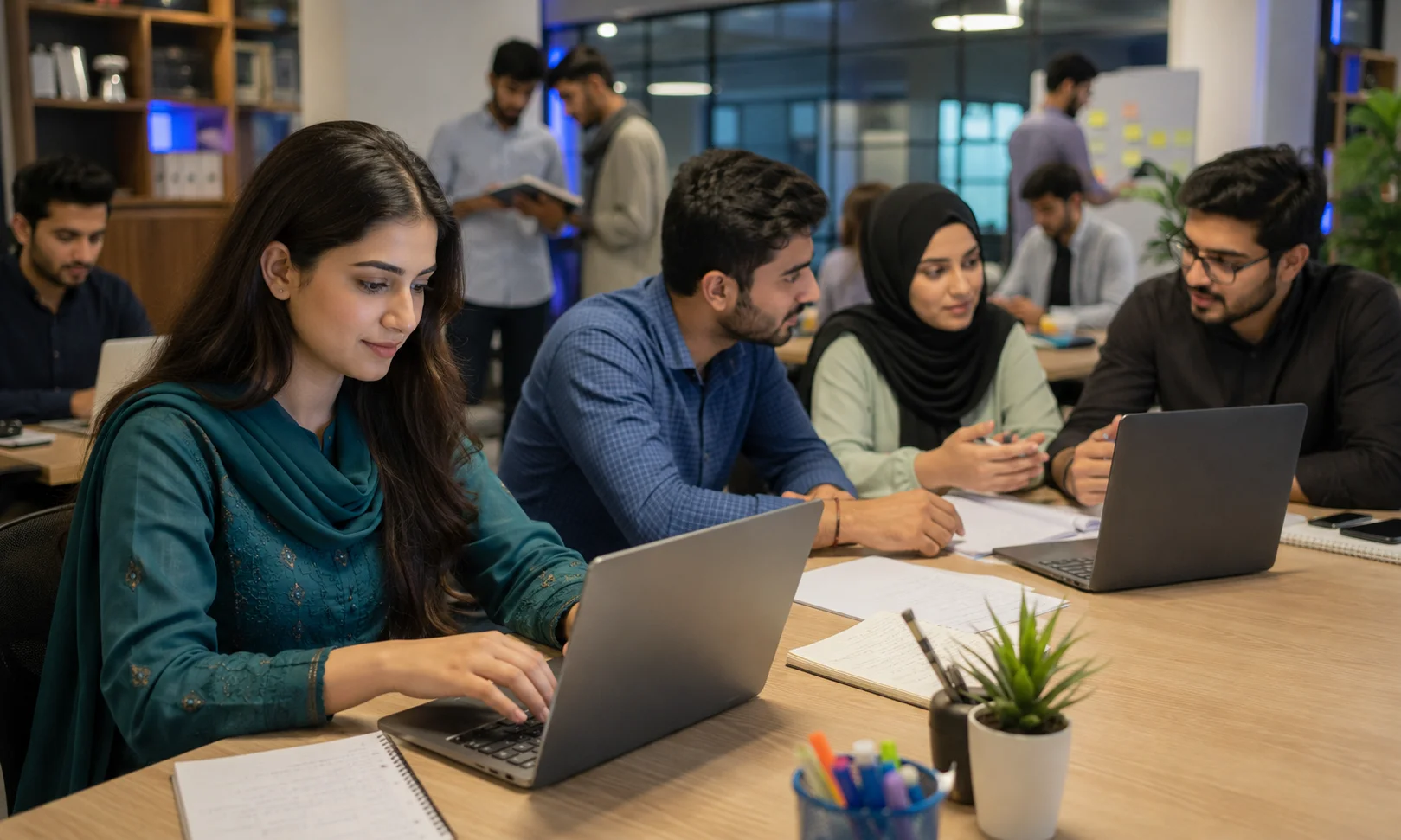
Prime Minister Shehbaz Sharif has launched Pakistan’s first National Youth Employment Policy, introducing quotas for women and startups while expanding education, skills and technology programmes for young people. Speaking at an International Youth Day ceremony on Wednesday, Shehbaz said Pakistan must give talented and deserving students equal educational opportunities. He linked the goal to Quaid-e-Azam Muhammad Ali Jinnah’s vision and said denying such opportunities would leave the sacrifices behind Pakistan’s creation unfulfilled. Women and startups get dedicated quotas Under the policy, 35 percent of the labour force quota will go to women. The government will also reserve 10 percent of the annual quota for young startups to encourage entrepreneurship and innovation. “Under the policy, there will be a mandatory 35 percent quota for women in the entire labor force,” Shehbaz said. “Therefore, I announce that every year we will allocate a 10 percent quota for startups,” he added. Read More; US Youth Turn to Digital Detox to Improve Sleep and Reduce Anxiety The prime minister said Pakistan could not compete with developed countries unless young people gained modern technical knowledge. He identified artificial intelligence, information technology and technology-driven skills as key priorities. “We will not let our youth lag behind in the journey of development,” he said. Education, China training and technology push Shehbaz pledged all available resources to support youth after quality education and training. He also called for ending disparities between wealthy and poor families in access to good education. He recalled launching Daanish Schools in Punjab as chief minister. The government is now expanding the network into backward and far-flung areas to serve talented, underprivileged students. The government has allocated substantial funds for youth in the current fiscal budget. Shehbaz said it had sent 1,000 agricultural graduates to China at government expense for modern technology training. More merit-based batches will go to China for AI and IT education. The government is also establishing a technology-focused Daanish University in Islamabad. It will begin its academic session next year and admit deserving and talented students on merit. Shehbaz said the government had distributed 700,000 laptops among students on merit. Another 250,000 high achievers will receive Chromebooks this year. “The future is not something you wait for, the future is something you build, now go and build it,” he told the youth. Digital employment platform targets new ideas Power Minister Sardar Awais Ahmad Khan Leghari said the initiative would create opportunities for young people with ideas that could benefit the power sector. He said Pakistan previously lacked institutional support to nurture useful innovation and research. The first National Employment Digital Platform will provide a springboard for such ideas. Leghari said Rs30 million would go to winning participants annually. The government has also set aside Rs1 billion over three years to adopt promising ideas. Read More: Prime Minister’s Youth Programme Chairman Rana Mashhood Ahmed Khan highlighted the Daanish education system and Punjab Educational Endowment Fund. He said Shehbaz’s vision could lead Pakistan towards progress, prosperity and peace. The prime minister formally inaugurated the employment policy and presented awards to outstanding young people. He said the nation had high expectations from its youth and linked Pakistan’s future to education, skills and equal opportunity.
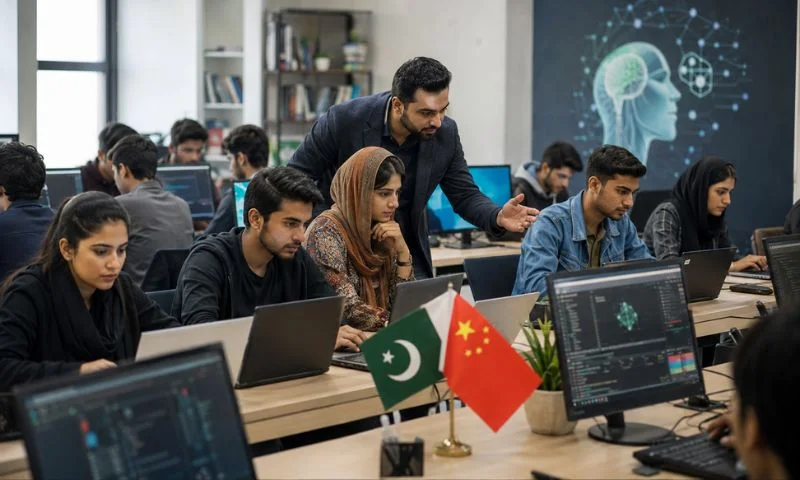
China to Help Build Pakistan’s Next Generation of Tech Talent
China will train up to 300,000 Pakistani youths in digital skills annually, Planning Minister Ahsan Iqbal has announced. He said the programme would strengthen Pakistan’s technology sector and expand its knowledge economy. Iqbal made the announcement during a discussion with Lahore Chamber of Commerce and Industry President Faheemur Rehman Saigol. The session took place at the 3rd LCCI IT Freelancing Awards 2026 late on Saturday night. “Pakistan has emerged as the fourth-largest freelancing country in the world and the talent and capabilities of its youth are playing a vital role in expanding the digital economy and boosting exports,” Iqbal said. He argued that large offices and heavy investment no longer guarantee success. Instead, knowledge, practical skills and access to technology have become the most valuable assets. Pakistani youths, he added, are serving global clients while earning valuable foreign exchange. Freelancers urged to embrace AI Saigol urged freelancers and IT professionals to adopt artificial intelligence and emerging technologies. He said this was essential for remaining competitive in fast-changing global markets. The LCCI president said public-private cooperation could turn Pakistan into a major regional digital economy hub. He called innovation, IT and the digital economy central pillars of the Uraan Pakistan vision. Local freelancers, he added, could help turn that vision into reality. Read More: PM Shehbaz Wants 100% Digital Remittances. Why It Matters The announcement comes as Pakistan’s technology exports reached a record $4.6 billion in fiscal year 2025-26. This represented annual growth of about 21 percent. June exports alone reached $416 million, according to State Bank data reported by Dawn. The government targets $10 billion in IT exports by fiscal year 2028-29 under Uraan Pakistan. Punjab promises payment reforms and AI investment Punjab Finance Minister Mian Mujtaba Shujaur Rehman praised LCCI for recognising talented Pakistani freelancers. He said freelancing had become a major economic pillar, generating millions of dollars in foreign exchange each year. “Pakistani freelancers are, in fact, digital ambassadors of the country who are projecting a positive image of Pakistan on the global stage,” he said. Rehman said Punjab understands the need for internationally accepted payment systems and a strong digital financial ecosystem. The province is working with the federal government and Special Investment Facilitation Council to remove international payment barriers. Its objective is to provide freelancers with secure, fast and convenient channels for receiving earnings. He reiterated Punjab’s commitment to business-friendly policies, transparency and predictable economic measures. He also pledged support for digital services exports and other foreign exchange earners. According to Rehman, Punjab is investing in digital infrastructure, technology parks, IT zones and innovation hubs. These projects aim to create employment and entrepreneurial opportunities for young people. He said Punjab was the first province to launch large-scale AI initiatives. It now wants to become Pakistan’s centre for AI, innovation and digital entrepreneurship. The government’s vision extends beyond producing successful freelancers, he added. It also seeks to develop AI professionals, startup founders and global technology leaders.
