


Prime Minister Shehbaz Sharif has launched Pakistan’s first National Youth Employment Policy, introducing quotas for women and startups while expanding education, skills and technology programmes for young people. Speaking at an International Youth Day ceremony on Wednesday, Shehbaz said Pakistan must give talented and deserving students equal educational opportunities. He linked the goal to Quaid-e-Azam Muhammad Ali Jinnah’s vision and said denying such opportunities would leave the sacrifices behind Pakistan’s creation unfulfilled. Women and startups get dedicated quotas Under the policy, 35 percent of the labour force quota will go to women. The government will also reserve 10 percent of the annual quota for young startups to encourage entrepreneurship and innovation. “Under the policy, there will be a mandatory 35 percent quota for women in the entire labor force,” Shehbaz said. “Therefore, I announce that every year we will allocate a 10 percent quota for startups,” he added. Read More; US Youth Turn to Digital Detox to Improve Sleep and Reduce Anxiety The prime minister said Pakistan could not compete with developed countries unless young people gained modern technical knowledge. He identified artificial intelligence, information technology and technology-driven skills as key priorities. “We will not let our youth lag behind in the journey of development,” he said. Education, China training and technology push Shehbaz pledged all available resources to support youth after quality education and training. He also called for ending disparities between wealthy and poor families in access to good education. He recalled launching Daanish Schools in Punjab as chief minister. The government is now expanding the network into backward and far-flung areas to serve talented, underprivileged students. The government has allocated substantial funds for youth in the current fiscal budget. Shehbaz said it had sent 1,000 agricultural graduates to China at government expense for modern technology training. More merit-based batches will go to China for AI and IT education. The government is also establishing a technology-focused Daanish University in Islamabad. It will begin its academic session next year and admit deserving and talented students on merit. Shehbaz said the government had distributed 700,000 laptops among students on merit. Another 250,000 high achievers will receive Chromebooks this year. “The future is not something you wait for, the future is something you build, now go and build it,” he told the youth. Digital employment platform targets new ideas Power Minister Sardar Awais Ahmad Khan Leghari said the initiative would create opportunities for young people with ideas that could benefit the power sector. He said Pakistan previously lacked institutional support to nurture useful innovation and research. The first National Employment Digital Platform will provide a springboard for such ideas. Leghari said Rs30 million would go to winning participants annually. The government has also set aside Rs1 billion over three years to adopt promising ideas. Read More: Prime Minister’s Youth Programme Chairman Rana Mashhood Ahmed Khan highlighted the Daanish education system and Punjab Educational Endowment Fund. He said Shehbaz’s vision could lead Pakistan towards progress, prosperity and peace. The prime minister formally inaugurated the employment policy and presented awards to outstanding young people. He said the nation had high expectations from its youth and linked Pakistan’s future to education, skills and equal opportunity.
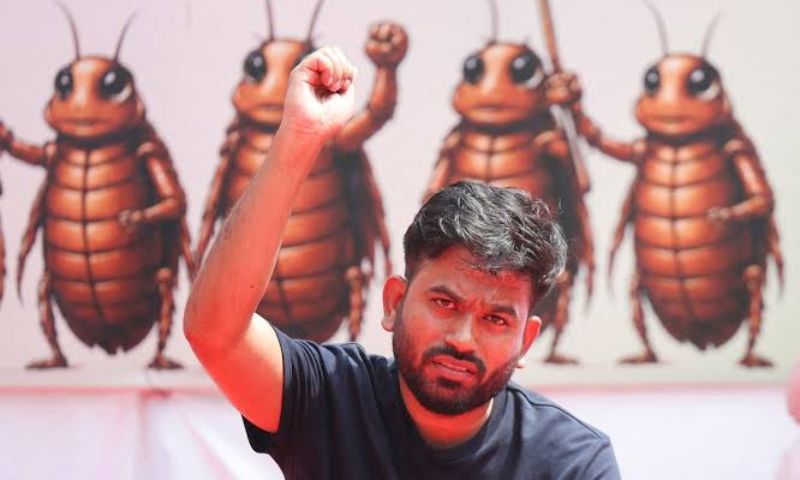
From Viral Meme to Political Victory: Inside India’s Cockroach Janta Party
India’s Cockroach Janta Party turned an internet joke into one of the country’s most powerful youth protest movements. Its campaign forced Union Education Minister Dharmendra Pradhan to resign after weeks of demonstrations over alleged examination leaks and failures in the education system. Pradhan announced his resignation on July 25, 2026. Protesters had made his removal their central demand. The decision marked a rare concession by Prime Minister Narendra Modi’s government during a nationwide agitation led largely by students and young professionals. The immediate crisis began after allegations of a paper leak in the May 3 NEET undergraduate medical entrance examination. About two million students took the test before authorities cancelled the results and arranged a retest. Investigators later handed the case to the Central Bureau of Investigation. Officials also discussed computer-based testing for future examinations. The controversy deepened anger over competitive tests, student distress, unemployment and limited opportunities for young Indians. From a Courtroom Remark to a National Movement The movement’s unusual name came from comments by Chief Justice of India Surya Kant during a Supreme Court hearing in May. Reports said he compared some unemployed young people entering media, social activism and other fields to “cockroaches.” He later said media outlets had misrepresented him. He explained that his criticism targeted people who entered professions with fake qualifications. Political communications strategist Abhijeet Dipke responded on May 16 with six words: “What if all cockroaches come together?” The post went viral and inspired the Cockroach Janta Party, or CJP. The group used humour as a political weapon and adopted the cockroach as a symbol of resilience. It described itself as the “voice of the lazy and unemployed.” The phrase turned an insult into a shared identity for frustrated young people. Dipke, 30, had worked with the Aam Aadmi Party’s social media team. He later moved to Boston to study public relations. As the campaign gathered pace, he returned to India and became its most recognisable organiser at Delhi’s Jantar Mantar. Reuters reported that the CJP’s Instagram following reached 25 million. Organisers used memes, AI-generated images, short videos, livestreams and satire to mobilise supporters. Their strategy transformed digital anger into major gatherings across Delhi, Mumbai, Kolkata and other cities. Memes, Hunger Strikes and Street Pressure The CJP held its first major physical demonstration at Jantar Mantar on June 6. Protesters wore cockroach masks and demanded exam reforms, accountability for alleged paper leaks and Pradhan’s resignation. Education reformer Sonam Wangchuk joined the campaign on June 28 and began an indefinite hunger strike. Wangchuk founded the Students’ Educational and Cultural Movement of Ladakh and received the Ramon Magsaysay Award in 2018. Many people also know him as an inspiration for the character Rancho in the Bollywood film 3 Idiots. His fast lasted 26 days and brought wider attention to the movement. He survived on salt and water before his health deteriorated. Doctors admitted him to hospital on July 18. Wangchuk ended the strike on July 23 after government representatives offered assurances on education accountability and relief for affected families. Read More: Viral Video Reveals Disgusting Indian Hotel Practices The demonstrations intensified during a July 20 march towards Parliament. Police used tear gas and batons to disperse protesters, leaving several students injured. The crackdown increased public anger and strengthened demands for action against officers accused of excessive force. CJP continued nationwide demonstrations on July 24. Talks remained stuck because its leaders called Pradhan’s resignation “non-negotiable.” The movement also demanded ₹1 crore for each family of students who allegedly died after examination-related distress. It sought the withdrawal of cases against protesters and action over police violence. Resignation Ends Protest After Government Accepts Demands Pradhan resigned before the next decisive round of negotiations. In his statement, he said: “Considering the situation that has arisen at Jantar Mantar and across the country, so that anti-national forces do not take advantage of this situation … I have sent my resignation letter to the Prime Minister.” Celebrations erupted at Jantar Mantar after the announcement. CJP supporters danced, distributed sweets and raised patriotic slogans. The movement called the resignation a “victory of democracy.” Before the final agreement, Dipke told protesters: “This is democracy. He has resigned. We have two more demands. We won’t go like this.” Later talks changed the situation. Health Minister J.P. Nadda said the government had accepted all demands. These included examination reforms, compensation for affected families and withdrawal of police cases against protesters. Authorities also restored mobile internet around the protest area and reopened nearby metro stations. “The Cockroach Janta Party declares that we withdraw the agitation in good faith,” CJP spokesperson Saurav Das said. Another spokesperson, Ashutosh Ranka, asked supporters to leave peacefully after the agreement. The CJP episode showed how quickly online humour can become organised political pressure. A sarcastic post created a decentralised youth movement, brought thousands onto the streets and delivered a major political setback to the Modi government.
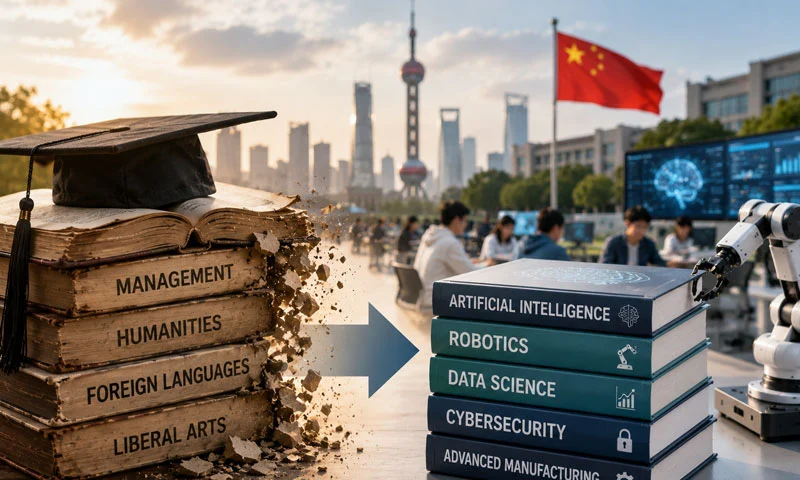
China Is Killing Thousands of University Degrees. Here’s Why
China is undertaking one of the largest overhauls of its higher education system in recent years as universities eliminate thousands of degree programmes and introduce new courses focused on artificial intelligence, robotics and advanced technologies. The changes reflect growing concern that rapid advances in AI are transforming the job market faster than traditional academic programmes can adapt. According to a report by the South China Morning Post, Chinese universities are removing courses considered outdated and replacing them with programmes aligned with Beijing’s long-term economic and technological goals. The move comes as AI increasingly automates tasks in sectors such as finance, consulting, marketing and management. As a result, students are becoming more cautious about investing in degrees that may offer uncertain career prospects. A similar trend has emerged in the United States. Several universities have reportedly reduced tuition fees for MBA programmes in response to weaker demand and growing concerns about the future value of traditional business qualifications. China, however, is pursuing reforms on a much larger scale. Officials want universities to produce graduates with skills that support national priorities, including artificial intelligence, advanced manufacturing, semiconductor development and robotics. Graduate Job Market Pressures Drive Reform The overhaul also highlights growing challenges in China’s labour market. More students are graduating from universities than ever before, but many struggle to find jobs that match their qualifications. Youth unemployment remains above 16 percent, according to official figures, increasing pressure on policymakers to align education with employer needs. Universities have concentrated many of the cuts in arts, humanities, foreign language and management-related disciplines. Officials and educators argue that these fields have become oversaturated while demand grows for technology-focused expertise. At the same time, institutions are launching programmes designed to support China’s next phase of industrial development. One of the fastest-growing fields is embodied intelligence, which combines artificial intelligence with physical machines such as robots. At least nine Chinese universities have already introduced majors in embodied intelligence as Beijing accelerates efforts to integrate advanced AI systems into factories, logistics networks and other sectors of the economy. More Than 12,000 Programmes Eliminated The current reforms build on a broader restructuring effort that has been underway for several years. Data from China’s Ministry of Education shows universities revoked or suspended approximately 12,200 undergraduate programmes between 2021 and 2025. During the same period, universities introduced around 10,200 new programmes. Overall, more than 30 percent of university programmes underwent some form of adjustment. Despite supporting the direction of the reforms, education experts caution that simply replacing one degree with another may not solve deeper challenges. Many programmes now facing closure were introduced only a few years ago and never had enough time to mature. Experts argue that universities should focus on building flexible education systems that allow students to adapt to changing industry demands throughout their careers. They also recommend greater emphasis on transferable skills, critical thinking and interdisciplinary learning. As competition in artificial intelligence intensifies globally, China’s latest reforms demonstrate how governments are increasingly redesigning higher education to prepare students for an economy shaped by automation, digital technologies and rapid innovation.
