


Pakistan’s Federal Board of Revenue has set an earnings benchmark of Rs195 ($0.71) per 1,000 YouTube views for taxing monetized content. The mechanism also counts gifts and free products received in exchange for posts. The figure estimates earnings, rather than the tax payable. Existing Income Tax Ordinance provisions determine the applicable tax. The September 23 notification follows draft rules issued in April. It allows expense deductions up to 30 percent of revenue. FBR’s resident procedure, SRO 1641(I)/2026, also permits revisions to the benchmark. An FBR official told Arab News on Tuesday that views alone would not trigger the estimate. Content must generate income. “Once it is clear that the content is monetized, the formula multiplies Rs195 by the ‘total number of views in 1000s’,” the official said. Read More: FBR to Start Deducting 5% Tax From Social Media Revenue The official requested anonymity because he lacked authorization to speak to the media. Explaining the benchmark, he said: “This figure of PKR195 was used because our research and interactions with people making monetized content in Pakistan lead us to this figure. This is the below average amount normal Pakistani content fetches per 1000 views on YouTube across different types of content and different types of content creators.” Lower earnings require evidence The procedure uses whichever is higher: the view-based estimate or actual remuneration, including payments in kind. Creators on other platforms would declare their total remuneration for the relevant period. However, creators can challenge an estimate exceeding their earnings. “If a person is of the view that the total remuneration received is less than the threshold prescribed… the person is required to demonstrate evidence to this effect to the satisfaction of the Commissioner,” the notification read, according to Arab News. Evidence can include platform revenue reports, payout statements matching bank credits, withholding certificates, and sponsorship or goods-related contracts and invoices. “The tax commissioner can also ask a creator to provide access to their social media dashboard under relevant legal provisions,” the official said. Gifts count as income “Payment in kind counts,” he said. Free products or gifts supplied in return for content can therefore make a post “paid.” Creators should retain monetization-off or zero-earnings reports, payout statements and bank records to establish that posts earned nothing. Records should also demonstrate the absence of sponsorships, brand deals or gifted products. Quarterly payments and audience thresholds Creators must pay quarterly advance income tax and separately declare earnings in their annual returns. Commissioners can correct under-declarations and recover outstanding amounts. Read More: New FBR Rule Hits Digital Creators With 5% to 10% Tax The resident procedure covers income from interactions with users in Pakistan. It sets no minimum audience threshold, the official said. “Non-residents are covered only above 50,000 users in Pakistan in a tax year, or 12,250 in a quarter,” he added. Business Recorder separately reported that SRO 1642(I)/2026 governs qualifying non-residents’ Pakistan-source income from user interactions. This distinguishes their procedure from the resident rules.

YouTube Doubles Monetisation Requirements for New Creators
YouTube will make it harder for new creators to qualify for advertising and YouTube Premium revenue sharing from February 1, 2027, after announcing a major overhaul of Partner Program entry thresholds. New applicants seeking the ad-revenue tier will need at least 1,000 subscribers plus either 8,000 qualified public watch hours in the previous 365 days or 20 million qualified Shorts views in 90 days. YouTube confirmed the change on August 10. Existing partners will not lose access simply because they fall below the new entry bar. Monetisation thresholds double for new creators The current requirement is 1,000 subscribers and either 4,000 qualified watch hours in 12 months or 10 million qualified Shorts views in 90 days. The February change doubles both audience thresholds while leaving the subscriber requirement unchanged. “This update won’t impact creators already in YPP,” YouTube said in its official announcement. Read More: Google Slashes YouTube Premium Price by 50% for Eligible Users YouTube defines qualified watch hours as viewing time from public long-form videos. Hours from private, unlisted or deleted videos do not count. Watch time generated by ad campaigns and Shorts also does not contribute toward the long-form threshold. Qualified Shorts views must come from public Shorts appearing in the Shorts Feed. YouTube says the platform now records more than 200 billion daily Shorts views. Users also watch over one billion hours of YouTube content on television screens each day. Shorts creators face separate revenue rule YouTube is also changing how Shorts revenue is distributed. From February 1, creators will need 10 million qualified Shorts views during the previous 90 days to receive ad and subscription revenue sharing from Shorts. Channels that drop below that level will remain inside YPP and can continue earning from eligible long-form content. Shorts revenue sharing will resume automatically if their 90-day total rises above 10 million again. Read More: End of Endless Scrolling? YouTube Adds Option to Remove Shorts YouTube plans additional incentives for creators below that threshold. The company cited potential bonuses linked to YouTube Shopping, brand deals and starting or growing trends, although it has not released full details. The lower entry thresholds for fan funding and selected Shopping features will remain unchanged. In eligible markets, creators can currently access that level with 500 subscribers, three public uploads in 90 days and either 3,000 watch hours or three million Shorts views. Premium Lite expansion adds another earning stream YouTube is also expanding Premium Lite to every country where YouTube Premium is offered. The company says creators will share revenue generated from those subscriptions based on member watch time and views. YouTube said the Premium Lite revenue pool will represent 60% of net subscription revenue, while the Premium pool will represent 30%. Creators receive a 55% revenue share for long-form videos and 45% for Shorts from the relevant distribution. The new YPP terms take effect on February 1, 2027. For aspiring creators, reaching advertising revenue eligibility will require far more viewing activity than under the current system.
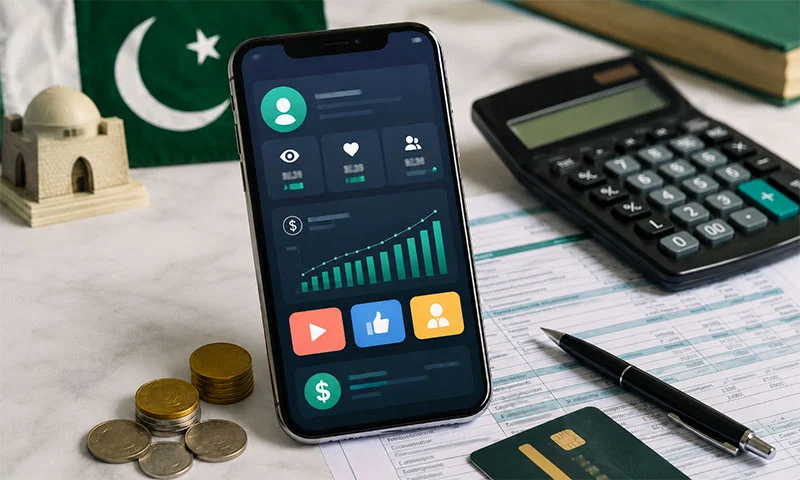
New FBR Rule Hits Digital Creators With 5% to 10% Tax
Pakistan’s Federal Board of Revenue (FBR) has introduced a 10% withholding tax on social media earnings received by digital content creators and influencers who do not appear on the Active Taxpayers List. The new rates took effect from July 1, 2026, under changes introduced through the Finance Act 2026. The FBR’s latest Withholding Income Tax Rate Card for Tax Year 2027 confirms two rates under Section 154B. Creators appearing on the ATL face a 5% deduction, while non-ATL creators face a 10% rate. Read More: FBR Targets Social Media Income as New Tax Rules Emerge in Pakistan The new provision is titled “Withholding tax on revenues received from social media platforms.” It covers income earned through platforms such as YouTube, Facebook, Instagram and TikTok, as well as similar digital services. Banks to Deduct Tax When Payments Arrive Under Section 154B, banking and non-banking financial institutions must deduct the tax when social media revenue reaches a creator’s account. The law also covers payments routed through online payment providers and other digital financial platforms. For example, an ATL-listed creator receiving Rs100,000 in qualifying social media revenue would face Rs5,000 in withholding tax. A creator outside the ATL would face Rs10,000 on the same amount. For resident taxpayers, the law treats the deduction as minimum tax. For a non-resident without a permanent establishment in Pakistan, it operates as final tax. The measure expands Pakistan’s tax framework into the fast-growing creator economy. It also creates a financial incentive for influencers, YouTubers and other online earners to remain on the ATL. Read More: NCCIA Takes Notice of Social Media Campaign Against easypaisa FBR says appearing on the ATL already gives taxpayers access to lower withholding rates across several types of transactions. The social media provision now extends that filer advantage to digital creator earnings. The official FBR rate card is updated up to June 30, 2026 under the Finance Act 2026 and applies to Tax Year 2027. This corrects reports suggesting the new card itself remains applicable only through June 30, 2026. Foreign Card Payments Also Get New Rates The Finance Act 2026 has separately changed withholding tax on amounts remitted abroad through credit, debit and prepaid cards. Under Section 236Y, taxpayers appearing on the ATL now face a 0.5% withholding rate on such transactions. The rate doubles to 1% for people outside the ATL. This provision is separate from the tax on creator earnings. Section 154B applies when creators receive social media revenue, while Section 236Y covers money sent abroad through payment cards. Read More: Pakistan EV Tax 2026: Which Electric Vehicles Will Be Taxed and Which Remain Exempt? The Finance Act 2026 came into force on July 1 unless a provision specified otherwise. The new social media withholding regime therefore applies to qualifying payments received from that date. The change means Pakistani creators now face a clear tax deduction at the banking stage. Those outside the ATL will effectively pay twice the withholding rate applied to listed taxpayers.
