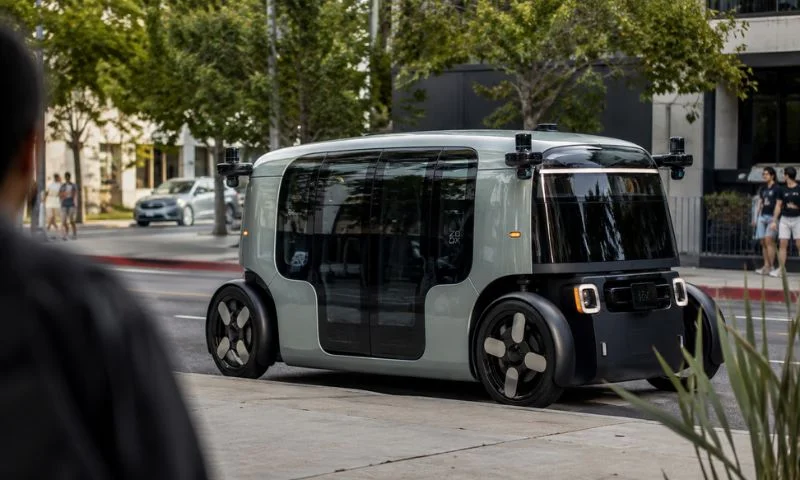
The US AV industry is moving in two directions as federal regulators accelerate deployment and local officials seek stronger safeguards. The National Highway Traffic Safety Administration granted Amazon-owned Zoox an exemption from eight federal safety standards. The decision lets Zoox commercially deploy up to 2,500 purpose-built robotaxis annually for two years. Paid rides will begin in Las Vegas. NHTSA also launched a three-year, $5 million partnership with SAE Industry Technologies Consortia. The programme will support the first federal AV performance standards. Officials also plan to streamline exemptions and update guidance on emergency response and post-crash behaviour. Emergency Failures Intensify Safety Debate The federal push comes as Waymo and other operators face scrutiny over emergency incidents. San Francisco Mayor Daniel Lurie sought tougher rules after Waymo vehicles stalled in heavy July 4 traffic. Some lost power and blocked key streets. Representative Kevin Mullin introduced the AV Emergency Response Coordination Act on July 28. It would require standard emergency protocols, a 24-hour hotline and national minimum safety rules. Officials could also issue geofence notices to keep robotaxis away from dangerous areas. Read More: Uber, Lucid & Nuro Unveil Futuristic Robotaxi Set to Hit Streets in 2026 “We have seen disturbing, and frankly, an unacceptable number of incidents where autonomous vehicles inadvertently interfere with emergency responders,” Mullin said. His office cited vehicles blocking ambulances and fire trucks, entering crime scenes and missing flares, smoke or traffic cones. Waymo has started restoring freeway routes after a pause of more than two months. It updated scene recognition and routing after at least 13 vehicles entered closed construction areas. The company recalled nearly 4,000 robotaxis in June, with no reported injuries or crashes. Mobility Investment and Expansion Continue Saudi Prince Al Waleed bin Talal bought more than 19 million Lucid shares, or about 5 percent. The Boring Company entered talks to raise $4 billion at a $20 billion valuation. Toronto fleet-data company Terminal raised $20 million in a Battery Ventures-led Series A. Intact Private Capital, Penske, Y Combinator and Wayfinder Ventures also participated. Alaska Airlines chief Ben Minicucci joined Lyft’s board. Walmart and Wing launched drone delivery in Central Florida, while Flytrex partnered with Nash. DoorDash is developing its own aircraft for a future service inside its app. Ferrari reached its annual Luce sales target in two months. Florida will use $200 million in federal charging funds for 32 eVTOL landing pads. Rivian spinoff Also plans to begin delayed e-bike deliveries next week. Read More: AI Startup Records Every Corner of Homes to Train Future Robots London is becoming a robotaxi battleground. Baidu began testing with Lyft and Freenow before public rides planned for 2027. Waymo started supervised tests in April. Uber and Wayve aim to launch this year. Tesla reportedly considered selling its China business before a possible SpaceX merger, while producing its 10 millionth EV. TechCrunch and Hudson Labs also found that GM and Ford discuss EVs less often than before the pandemic, despite keeping new models. The week showed a sector gaining money, markets and federal support while safety failures keep pressure on operators.


