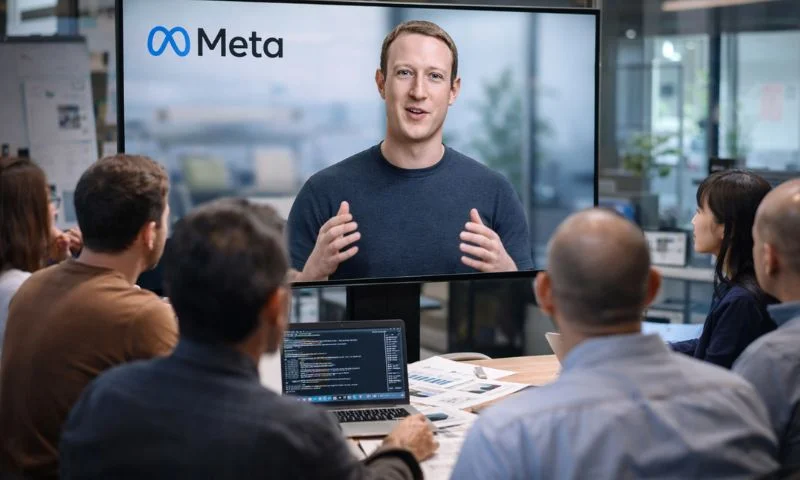
Meta is developing an artificial intelligence-powered version of its chief executive Mark Zuckerberg, designed to interact with employees and replicate his communication style, as part of the company’s aggressive push into AI-driven operations. According to multiple reports, the project involves creating a photorealistic digital avatar of Zuckerberg that mirrors his voice, tone and mannerisms, allowing staff to engage with a virtual version of the CEO even when he is not physically present. AI-powered leadership tool The initiative is aimed at improving internal communication across Meta’s global workforce, which numbers in the tens of thousands. The virtual avatar is expected to respond to employee queries, share company strategy insights and simulate Zuckerberg’s public messaging. The system is being trained on the CEO’s past statements, presentations and decision-making patterns to reflect his thinking. The idea, as described in reports, is to allow employees to “ask your CEO a question anytime” through a digital interface, potentially reducing communication gaps within the organisation. Zuckerberg himself is said to be closely involved in the development, reflecting his hands-on approach to Meta’s expanding artificial intelligence strategy. Part of broader AI transformation The project comes as Meta Platforms accelerates its pivot toward artificial intelligence, investing billions of dollars in new models, infrastructure and talent acquisition. In recent months, the company has restructured teams around AI-focused workflows and launched initiatives aimed at boosting productivity through automation and machine learning tools. Meta has also been developing advanced AI systems and large language models under its research division, positioning itself in direct competition with companies such as OpenAI, Google and Anthropic. Analysts say the creation of a digital CEO avatar reflects a broader trend in the tech industry, where companies are experimenting with AI-driven agents to streamline decision-making and reduce reliance on traditional management structures. Mixed reactions and concerns While the technology could enhance accessibility and efficiency, it has also raised concerns among employees and observers about authenticity, oversight and the future of leadership roles. Some critics argue that replacing direct human interaction with AI simulations could blur lines between real and artificial communication, potentially affecting workplace culture and trust. Others point to ethical questions surrounding the use of AI to replicate real individuals, particularly in high-level decision-making contexts. Despite these concerns, Meta appears committed to expanding the role of AI across its operations, with Zuckerberg previously stating that future systems could enable individuals and organisations to rely on personal AI agents for complex tasks. Future implications The development signals a shift toward what some experts describe as “AI-mediated leadership,” where digital replicas of executives could handle routine communication, leaving human leaders to focus on strategic decisions. If successful, the model could extend beyond Meta, with companies potentially creating AI versions of executives, influencers and public figures to scale communication and engagement. However, the long-term impact remains uncertain, as organisations weigh the benefits of efficiency against concerns about transparency and human connection. For now, Meta’s experiment highlights how rapidly artificial intelligence is reshaping not only products and platforms but also the very structure of corporate leadership.