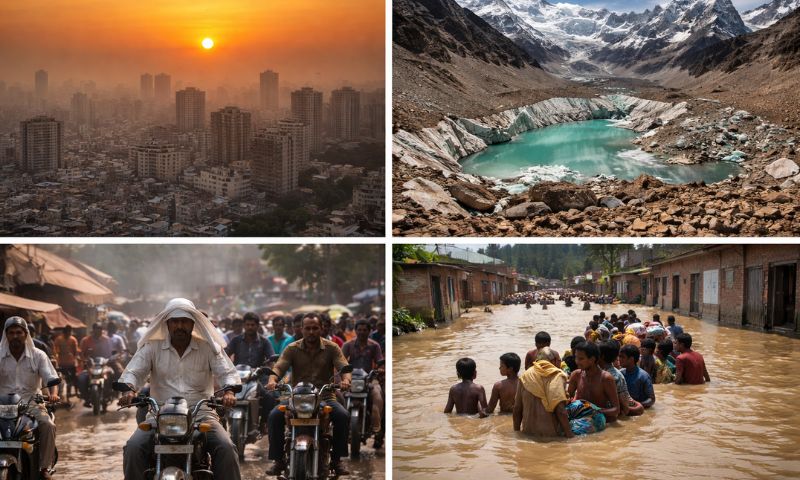
South Asia is home to nearly a quarter of the world’s population, many of whom live in dense cities, farm-dependent rural areas, or flood-prone river basins. Scientists increasingly describe the region as a global climate hotspot because warming here combines extreme heat, volatile rainfall, fragile infrastructure, and high population exposure. Together, these factors turn climate change into a daily lifestyle issue rather than a distant environmental concern.
A Region Already Running Hot
South Asia’s climate starts from a warm baseline. Much of the region experiences long summers, high humidity, and intense solar exposure. As global temperatures rise, that baseline pushes closer to dangerous thresholds.
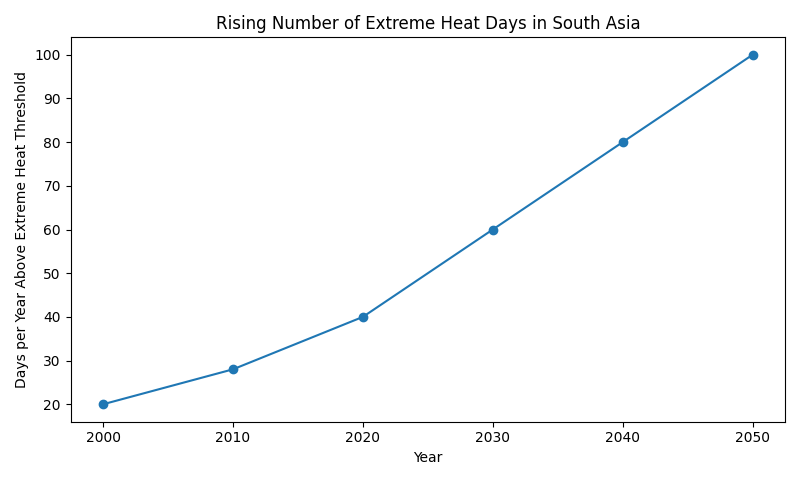
According to the Intergovernmental Panel on Climate Change (IPCC), large parts of South Asia are projected to face severe heat stress in coming decades. In some areas, heat combined with humidity approaches wet-bulb levels that make it difficult for the human body to cool itself safely. Even healthy people struggle under these conditions, especially without access to cooling or shade.
The Monsoon Is Becoming More Unpredictable
Climate risk in South Asia is not only about heat. The region depends heavily on the annual monsoon, which supports agriculture, drinking water, and hydropower. Warming air holds more moisture, increasing the likelihood of shorter but more intense rainfall events.
Scientists warn that this shift leads to flash floods, landslides, and urban flooding, even while dry spells persist between storms. Reporting cited by AP News notes that warming is already amplifying rainfall extremes across South Asia, raising disaster risks in both cities and mountain regions.
Melting Glaciers and Downstream Risk
South Asia sits downstream of the Hindu Kush–Himalaya range, often called Asia’s “water towers.” These glaciers feed major rivers such as the Indus, Ganges, and Brahmaputra. Rising temperatures are altering snowmelt patterns and increasing the formation of unstable glacial lakes.
When heavy rain coincides with rapid melt, valleys face heightened flood risk. Scientists warn that these combined hazards make climate impacts harder to predict and manage across the region.
Cities That Trap Heat
Urban growth magnifies climate stress. South Asia is urbanizing rapidly, often without climate-resilient planning. Concrete, asphalt, and limited green cover trap heat, creating urban heat islands.
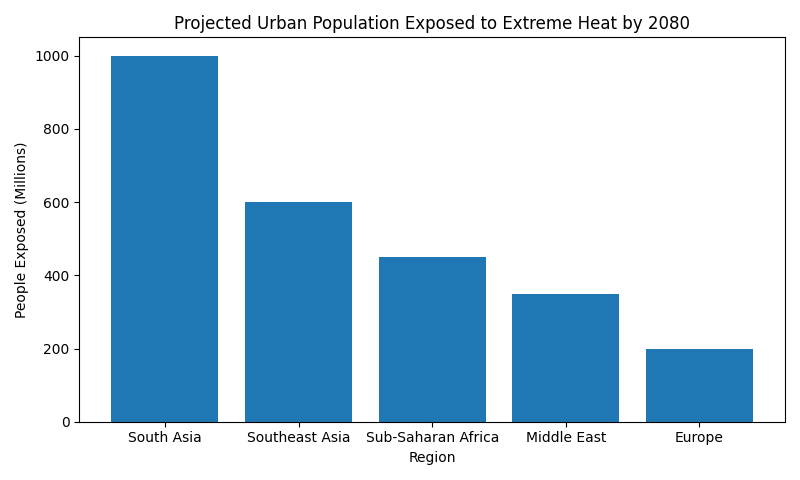
The IPCC estimates that by 2080, between 940 million and 1.1 billion urban residents in South and Southeast Asia could be exposed to extreme heat lasting more than 30 days each year. Low-income communities, which often lack insulation, reliable electricity, or green space, face the greatest risk.
When Climate Hits the Economy
Extreme heat and erratic weather also carry economic costs. Lost work hours, crop damage, and health impacts quickly translate into slower growth.
A Reuters report citing a World Bank assessment found that heat stress in Bangladesh caused economic losses equivalent to about 0.4% of GDP in 2024, mainly due to reduced labor productivity. Similar dynamics affect other South Asian economies where millions work outdoors or in non-climate-controlled environments.
Hundreds of Millions Living in Climate “Hotspots”
The World Bank estimates that more than 800 million people in South Asia live in areas projected to become climate hotspots. These are places where warming temperatures and shifting rainfall patterns threaten living standards through water scarcity, lower crop yields, and health risks.
A Disaster-Heavy Region
Climate-driven disasters are already frequent. According to the World Meteorological Organization, Asia remained the world’s most disaster-affected region in 2023. Floods and storms caused the highest casualties and economic losses, while heatwaves intensified across South Asia.
How Climate Change Enters Everyday Life
For many people, climate change is no longer abstract. In South Asia, it shows up as:
Harder commutes during heat and smog
Higher food prices after climate-damaged harvests
School closures due to floods or extreme heat
Longer power outages during summer demand spikes
These disruptions reshape daily routines, work hours, travel plans, and household budgets.
Why South Asia Feels Climate Change First
South Asia’s hotspot status comes down to three forces working together:
High exposure: Large populations in floodplains, heat-prone cities, and coastal zones
High dependence: Economies tied to agriculture, monsoons, and outdoor labor
Limited buffers: Gaps in housing quality, health access, and urban planning
As the IPCC and regional studies warn, without faster adaptation, the region is likely to face more hot days, heavier rainfall, and rising social and economic costs in the years ahead.