


Employees arriving at Arrowhead Stadium on Christmas Day expected business as usual. What they didn’t expect was a heartfelt gesture that turned a routine shift into a moment they’ll never forget. Following the Kansas City Chiefs’ final regular-season home game, Taylor Swift and Travis Kelce quietly surprised stadium staff with generous cash gifts—personally delivered, no cameras, no announcements. The story came to light after Robyn Gentry, a catering attendant at Arrowhead, shared her experience in a Facebook group called Taylor Swift’s Vault. As first reported by The Independent, Gentry described seeing Swift and Kelce walking through the stadium alongside Kelce’s mother, Donna Kelce, escorted by security. According to Gentry, Swift stopped to thank staff members one by one for working on Christmas Day. When Swift reached her, she offered warm holiday wishes and handed over a small envelope. Swift and Kelce continued on before Gentry opened it. Inside was $600. “My whole paycheck for two weeks,” Gentry wrote. “I had just spent that much on Christmas for eight kids. I immediately started crying.” The moment meant so much that she later framed one of the $100 bills as a keepsake. Gentry said she shared the story simply to celebrate kindness. “Taylor and Travis are beautifully kind people,” she wrote. “It’s very true—just incredible and very kind.” The gesture fits a familiar pattern for Swift, who has repeatedly made headlines for generously rewarding the people behind the scenes. During her record-breaking Eras Tour, Swift reportedly gave out $197 million in bonuses to crew members—an act highlighted in her Disney+ docuseries The End of an Era. According to People, everyone from truck drivers to caterers received handwritten notes and financial bonuses. In the series, Swift explains why it matters: when the tour succeeds, the people who make it possible should share in that success. As ABC News reported, Swift has said setting that precedent was deeply important to her. For Arrowhead’s Christmas Day staff, it wasn’t about celebrity—it was about being seen, thanked, and valued. And that, more than the money, is what made the moment unforgettable.
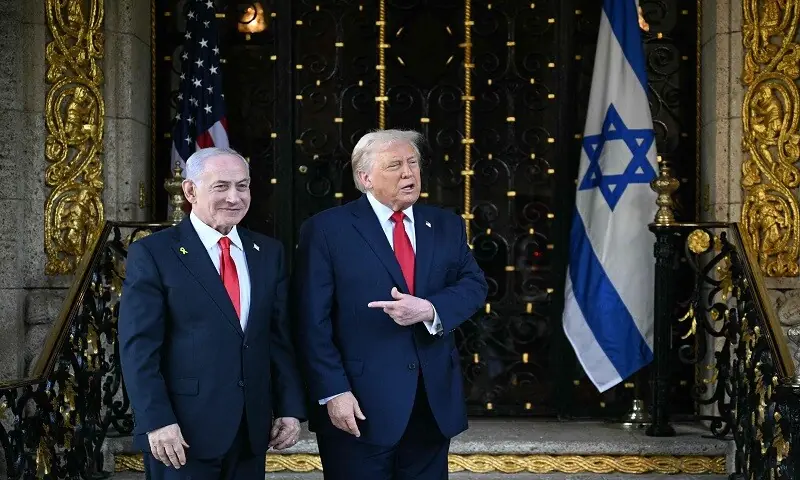
Netanyahu Meets Trump in Florida as Gaza Ceasefire and Iran Tensions Take Center Stage
Israeli Prime Minister Benjamin Netanyahu arrived in Florida on Monday for high-stakes talks with US President Donald Trump, as Washington presses for progress on the fragile Gaza ceasefire while Israel seeks to refocus attention on Iran. The meeting, held at Trump’s Mar-a-Lago residence, comes amid growing concern within the White House that both Israel and Hamas are delaying the second phase of the Gaza truce agreed last year. US officials believe the next stage is critical to preventing a renewed escalation in the war-ravaged enclave. According to sources familiar with the talks, Trump intends to push Netanyahu to move forward with phase two of the agreement, which includes Israel’s military withdrawal from Gaza, the establishment of a temporary technocratic Palestinian authority, and the deployment of an international stabilization force. Netanyahu, however, is expected to use the meeting to emphasize what he describes as the growing threat from Iran. Israeli officials say he will urge Washington to maintain pressure on Tehran and consider further action against its missile and nuclear capabilities. Ahead of his meeting with Trump, Netanyahu held separate discussions with US Secretary of State Marco Rubio and Defense Secretary Pete Hegseth. His office said the talks focused on Gaza’s future security framework and regional threats. Israeli government spokesperson Shosh Bedrosian said Netanyahu would insist that Gaza must be fully demilitarized and that Hamas be stripped of its weapons — a demand the group has repeatedly rejected. Hamas’s armed wing, the Ezzedine al-Qassam Brigades, reiterated on Monday that it would not surrender its arms while Israeli occupation continues. In a video statement, the group also confirmed the death of its longtime spokesperson, Abu Obeida, months after Israel said he was killed in an airstrike. The Gaza ceasefire, brokered with international mediation, is considered one of the major foreign-policy achievements of Trump’s return to the White House. The first phase led to the release of nearly all Israeli hostages taken during Hamas’s October 7, 2023 attack, while Israel scaled back major military operations. Despite this, mutual accusations of ceasefire violations persist. Israeli strikes have continued in parts of Gaza, while negotiations on governance and security arrangements have stalled. Reports suggest Trump hopes to announce a Gaza transitional plan as early as January, potentially unveiling it at the World Economic Forum in Davos. However, US officials are said to be increasingly frustrated with Netanyahu’s reluctance to commit publicly to the roadmap. Analysts say tensions are also rising over Iran. While Israel argues Tehran is rebuilding its missile capabilities, some US experts believe the issue is being amplified to justify renewed confrontation. Iran has dismissed reports of imminent conflict as psychological warfare and warned that any new attack would trigger severe retaliation. As diplomacy intensifies, the outcome of the Trump-Netanyahu talks could prove decisive for both Gaza’s future and the broader stability of the Middle East.
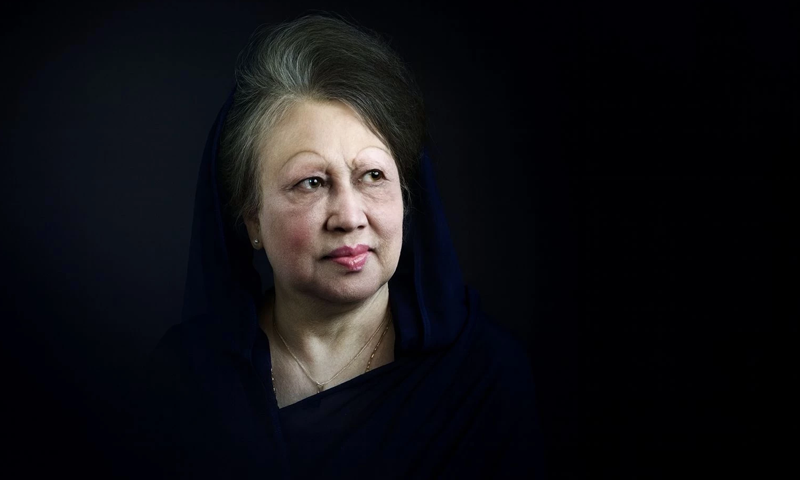
End of an Era: Bangladesh’s First Woman Prime Minister Khaleda Zia, Dies at 80
Khaleda Zia, Bangladesh’s first woman prime minister and one of the most influential — and divisive — figures in the country’s modern political history, has died at the age of 80 after a long illness, her party confirmed on Tuesday. In a statement, the Bangladesh Nationalist Party (BNP) said Khaleda passed away at 6:00am local time at Evercare Hospital in Dhaka, where she had been receiving treatment since late November. The party described her as a “national leader” and called on supporters to pray for her soul. Medical officials said Khaleda had been suffering from multiple serious health conditions, including advanced liver cirrhosis, diabetes, arthritis, and chronic heart and chest complications. Her death marks the end of a political era defined by her intense rivalry with longtime opponent Sheikh Hasina. For more than three decades, the two leaders — famously dubbed the “battling begums” — dominated Bangladeshi politics, shaping its democratic struggles, street movements, and repeated cycles of confrontation. Bangladesh’s interim leader Muhammad Yunus expressed deep sorrow, calling Khaleda “a symbol of the democratic movement” and saying the nation had lost a guardian figure at a critical moment in its history. Condolences also poured in from abroad. Indian Prime Minister Narendra Modi said Khaleda’s contributions to Bangladesh’s development and regional relations would be remembered, while Pakistan’s Prime Minister Shehbaz Sharif described her as a friend of Pakistan and extended sympathy to the Bangladeshi people. Born in 1946 in Dinajpur, then part of East Bengal, Khaleda entered politics after tragedy reshaped her life. She was married at a young age to army officer Ziaur Rahman, who later became president and founded the BNP. His assassination during a failed coup in 1981 thrust Khaleda into national leadership. Initially underestimated, she emerged as a powerful political force, helping lead the movement that toppled military ruler Hussain Muhammad Ershad in 1990. The following year, she won Bangladesh’s first widely recognised free election, becoming prime minister with the backing of the Islamist party Jamaat-e-Islami. During her terms in office, Khaleda oversaw the restoration of parliamentary democracy, promoted foreign investment, and expanded access to primary education. She returned to power again in 2001 but remained a polarising figure, admired by loyalists and criticised for confrontational politics and corruption allegations. In later years, Khaleda faced imprisonment and house arrest following convictions she said were politically motivated. She was released after Hasina’s removal from power in 2024 and was later acquitted by the Supreme Court. Her son, Tarique Rahman, is now set to lead the BNP into the February 12 general election, potentially extending the Zia family’s political legacy. The BNP announced seven days of national mourning, with funeral arrangements to be shared later.
