


Indus Hospital & Health Network has announced a career opportunity for an experienced Head of Procurement at its Supply Chain Campus, Korangi, as part of its ongoing efforts to strengthen operational efficiency and support future growth. The role is designed for a senior supply chain professional who will be responsible for developing and executing strategic and operational procurement plans aligned with the hospital’s expanding healthcare services. The selected candidate will play a critical role in ensuring that the organisation has the right resources in place to support both current operations and long-term expansion. Key responsibilities include establishing procurement policies, organisational structures, and procedures to ensure effective purchasing, receiving, storage, delivery, and material accountability systems. The Head of Procurement will also maintain strong coordination with vendors and service providers, monitor market trends related to pricing, availability, quality, and delivery, and oversee workforce planning, task allocation, and equipment utilisation within the supply chain function. The position further involves determining fiscal requirements and preparing budgetary recommendations to support procurement and supply chain operations across the network. Given the scale of operations at Indus Hospital, the role demands strong leadership, analytical skills, and the ability to manage complex procurement and compliance processes. Candidates applying for the role should hold a Master’s degree in Supply Chain Management, while relevant professional certifications will be considered an added advantage. Applicants must have 10 to 15 years of experience, with extensive exposure to procurement, imports, and regulatory compliance in large-scale organisations. Advanced Excel skills, strong reporting capabilities, and analytical expertise are essential for success in this role. Indus Hospital & Health Network has reiterated its commitment to maintaining a safe and ethical work environment. The organisation maintains a zero-tolerance policy toward Sexual Exploitation and Abuse, and all shortlisted candidates will undergo rigorous background checks and control processes. Interested professionals can apply online through the official careers portal. The submission deadline is January 10, 2026.
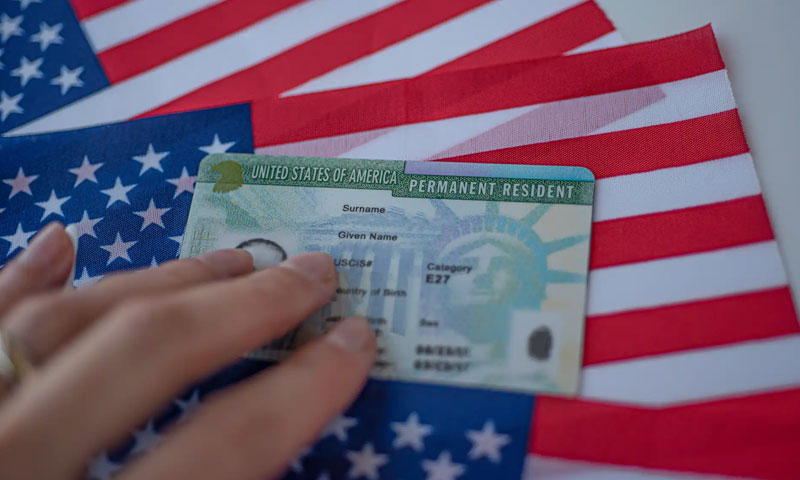
Marriage to a US citizen is no longer a guaranteed route to a Green Card
A Permanent Resident Card commonly known as a Green Card allows immigrants to live and work permanently in the United States and places them on the pathway to eventual citizenship. While Green Card holders do not enjoy all the rights of US citizens, they are entitled to many key legal and social protections. For decades, marriage to a US citizen has been viewed as one of the most reliable ways to secure permanent residency. Under US immigration law, the spouse of an American citizen qualifies as an “immediate relative”, making them eligible to apply for a Green Card through the US Citizenship and Immigration Services (USCIS). However, immigration attorney Brad Bernstein says that legal marriage alone is no longer sufficient. Speaking in a recent social media video, Bernstein—who has more than three decades of experience and practices at the Law Offices of Spar & Bernstein—said marriage-based applications are now being examined far more aggressively. Authorities, he explained, are focused less on marriage certificates and more on whether couples genuinely live as spouses. “Being married does not get you a Green Card,” Bernstein said. “Living together gets you a Green Card.” Cohabitation under intense scrutiny Bernstein cautioned that couples who are married but live separately face a high risk of denial. According to him, USCIS officers give little weight to explanations such as work, education, finances or convenience. “Immigration officers don’t care why you live apart,” he said. “They only care whether you actually share a home as husband and wife.” Under current enforcement practices, a marriage is considered bona fide only if the couple maintains a shared residence and daily life together. Failure to do so, Bernstein warned, often triggers deeper investigations, tougher interviews and, in many cases, outright rejection of the application. “If spouses are not living together full-time, the case is already in trouble,” he said, urging applicants in such situations to seek legal advice before filing. How USCIS assesses ‘good faith’ marriages USCIS evaluates marriage-based Green Card cases by examining the “totality of the relationship,” rather than relying solely on documents or addresses. Officers look for evidence that the marriage was entered into in good faith, with a genuine intent to build a life together. Under USCIS policy, a marriage may be legally valid yet still denied if officials determine that the couple had no real intention to live together and entered the union primarily to bypass immigration laws. Part of a broader immigration crackdown The tougher approach reflects wider immigration measures under President Donald Trump, whose administration has tightened several legal immigration pathways. These steps have included suspending the Diversity Visa Lottery, which previously offered up to 50,000 visas annually to applicants from underrepresented countries. USCIS has also shortened the validity period of work permits for Green Card applicants to 18 months and ordered a sweeping review of permanent residency holders from 19 countries previously labelled “countries of concern.” The increased oversight follows a series of violent incidents involving Green Card holders, which the administration has cited as justification for stricter enforcement. For prospective applicants, immigration experts say the message is clear: marriage alone is no longer enough. Proving a shared life—under one roof—has become central to securing a marriage-based Green Card.
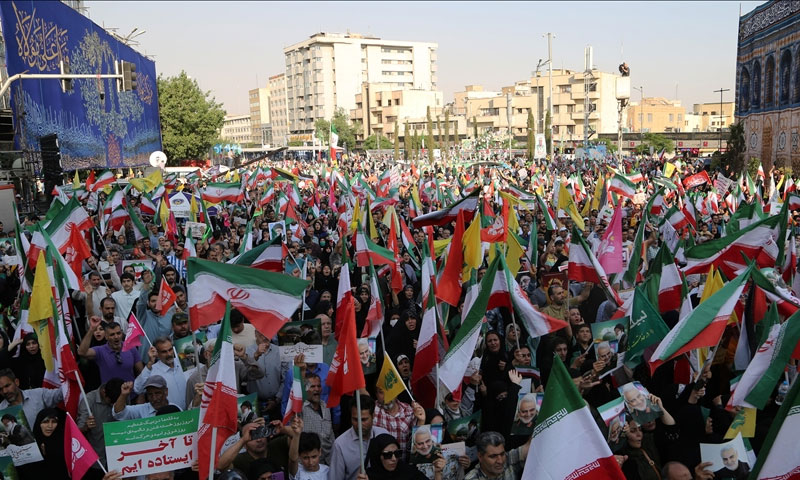
At Least Six Dead as Cost-of-Living Protests Spread Across Iran
At least six people have been killed as demonstrations against soaring living costs widened across Iran, according to Iranian media and officials. The deadliest incident was reported in the city of Azna, in Lorestan province, where clashes during protests left at least three people dead and 17 others injured, the semiofficial Fars News Agency said on Thursday. Azna lies about 300 kilometres southwest of Tehran. Videos circulating online from the area appeared to show fires burning in the streets and the sound of gunfire as protesters chanted slogans accusing officials of being “shameless”. Earlier reports said two people were killed during demonstrations in Lordegan, a city in Chaharmahal and Bakhtiari province, around 470 kilometres south of the capital. According to Fars, some protesters threw stones at government buildings, banks and a mosque, prompting police to respond with tear gas. State television also reported that a member of the security forces was killed overnight in the western city of Kouhdasht. Officials said the 21-year-old belonged to the Basij, a paramilitary force linked to the Islamic Revolutionary Guard Corps. The unrest follows a wave of anger over a sharp fall in Iran’s currency and rapidly rising prices. Shopkeepers began protesting earlier this week, with demonstrations later spreading to Tehran and other major cities. Students from at least 10 universities joined the protests on Tuesday, giving the movement fresh momentum. Iran’s economy has been under severe strain, with inflation hovering around 40 percent amid long-standing Western sanctions. Tensions have been further heightened after recent air strikes by Israel and the United States targeted Iran’s nuclear facilities and senior military figures. President Masoud Pezeshkian has attempted to defuse the situation by acknowledging protesters’ grievances. Speaking on state television, he said people’s demands over livelihoods were legitimate and urged the government to act quickly to ease economic pressure. Government spokesperson Fatemeh Mohajerani said authorities would hold direct talks with representatives of trade unions and merchants, though no timetable was announced. At the same time, officials warned that any attempt to turn economic protests into violence or sabotage would be met with a firm legal response. Iran last witnessed mass nationwide demonstrations in 2022 and 2023 following the death of Mahsa Amini, who died in police custody after being arrested for allegedly violating the country’s dress code. While the current protests began peacefully, the growing death toll underscores the volatility of public anger over Iran’s deepening economic crisis.
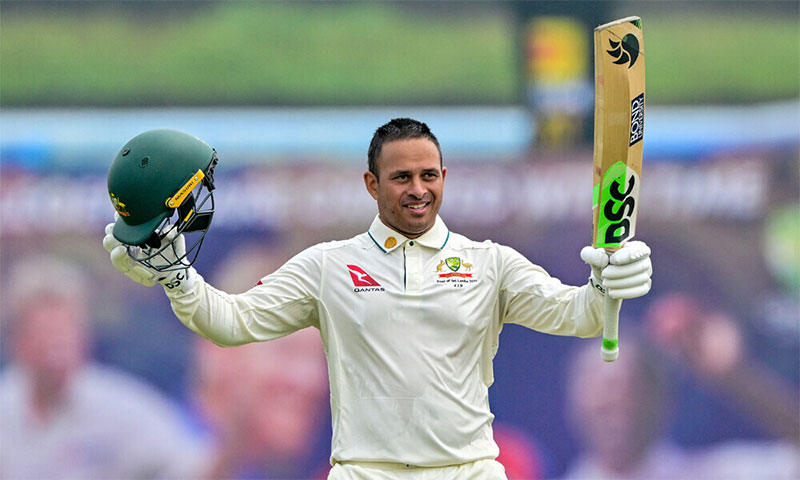
From SCG Debut to SCG Farewell: Usman Khawaja Announces Test Retirement
Usman Khawaja has confirmed he will retire from international cricket at the conclusion of the final Test of the Ashes series in Sydney, bringing an end to a remarkable and often hard-fought Test career. The 39-year-old left-hander will play his final international match at the Sydney Cricket Ground, finishing with 87 Test appearances, 6,206 runs and 16 centuries to his name. Speaking to reporters with his family present, Khawaja said the decision had been weighing on him throughout the series. He admitted he entered the Ashes with a strong sense that this would likely be his farewell tour, even though he kept the option of continuing open until recently. Khawaja said discussions with his wife Rachel helped him reach clarity, while Australia head coach Andrew McDonald had continued to back him, even considering plans for future tours. Ultimately, however, he felt the time was right to step aside, especially after a difficult start to the series and being left out of the Adelaide Test initially. Reflecting on the criticism he faced over the past two years, Khawaja pushed back against suggestions that he had overstayed his welcome. He revealed that he had openly told team management he would retire immediately if they felt it was best for the team, but was repeatedly encouraged to continue due to his value in major assignments, including the World Test Championship and overseas tours. Although his international career will conclude in Sydney, Khawaja is not stepping away from cricket entirely. He confirmed he will continue playing domestic cricket, featuring in the Big Bash League for Brisbane Heat and aiming to represent Queensland in the Sheffield Shield later this summer. The SCG holds deep significance for Khawaja. It was the venue of his Test debut against England in 2011 and later the ground where his career was revived more than a decade later with twin centuries during the 2021–22 Ashes after a surprise recall. Khawaja’s journey has been defined by resilience. After early struggles to secure a permanent spot, he reinvented himself multiple times, overcoming repeated omissions, particularly on the subcontinent. His career-defining phase came after a recall in Sydney, from which he went on to average over 60 across nearly two years, play a key role in Australia’s return to Pakistan, and dominate bowling attacks in England and India. Cricket Australia praised his impact both on and off the field, highlighting not only his elegant batting but also his leadership and contributions beyond the game. As Australia prepares for life after Khawaja, questions remain over the future of the opening combination, but his departure marks the end of one of the most inspiring late-career resurgences in modern Australian cricket.
