

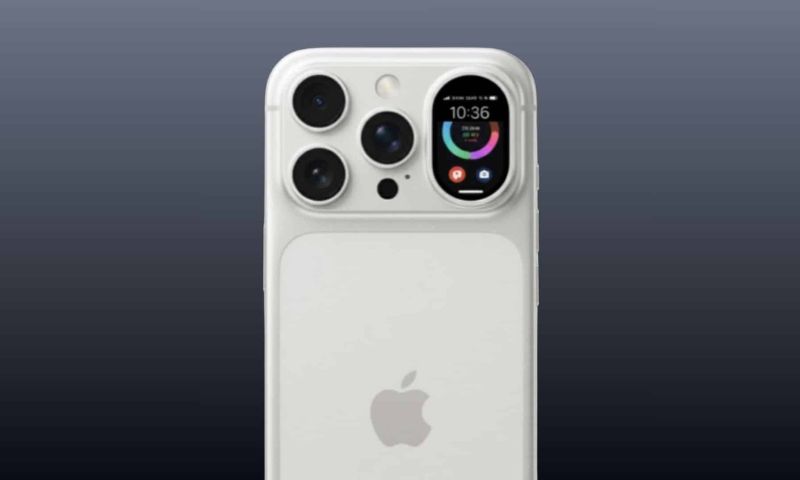
Apple fans may need to wait a little longer than expected before they get their hands on the full iPhone 18 series. Recent reports suggest a significant shift in Apple’s 2026 product roadmap, with the standard iPhone 18 possibly delayed until 2027, while the Pro models arrive on schedule in 2026. This staggered launch plan could change how buyers and investors see Apple’s next generation of smartphones. Industry analysts believe the decision stems from Apple’s desire to focus on Premium features first. Sources say the Pro models — known internally as the iPhone 18 Pro and iPhone 18 Pro Max — will launch by fall 2026, carrying the latest upgrades in performance, display technology, and camera systems. Meanwhile, the standard iPhone 18, traditionally the mass-market model, may be pushed to early 2027. Why such a split rollout? There are several theories. One says Apple wants to capitalize early on high-end consumer demand, especially while competitors like Samsung and Google have slowed their flagship cycles. Another view points to supply chain realities. Engineers reportedly need more time to perfect advanced features for the standard model without disrupting Apple’s tight quality standards. For buyers, this split could mean a longer wait for the price-friendly iPhone 18, even as Pro fans get premium hardware sooner. The delayed standard launch might also affect carrier promotions and trade-in cycles that depend on annual refresh schedules. Industry watchers say Apple may be trying to avoid overlapping launches that cannibalize sales from year to year. Investors are watching closely. Apple’s stock often reacts to product timing signals, especially when expectations are high for annual upgrades. Delays in flagship releases can impact quarterly revenue forecasts, and analysts will be listening for official word from Apple in upcoming earnings calls. Despite the uncertainty, one thing remains clear: Apple is aligning its launch strategy with broader market trends and internal priorities. If the new timeline holds, Apple could reshape how smartphone generations are rolled out. The result might be a longer gap between releases — but with more compelling upgrades for those who wait.
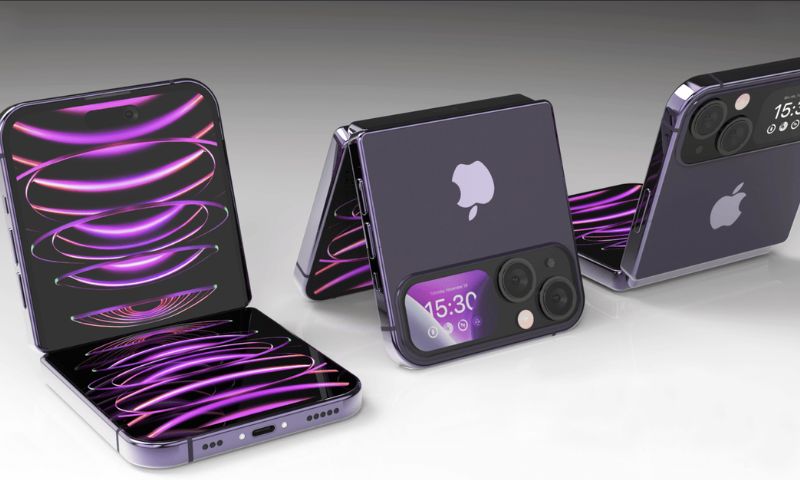
iPhone Fold Could Cost $2,500 — Worth It? Here’s What the Specs Say
Apple’s first foldable iPhone could redefine what users expect from premium smartphones. After years of leaks and speculation, recent reports suggest the device — widely referred to as the iPhone Fold or iPhone 18 Fold — is shaping up for a 2026 launch alongside the iPhone 18 Pro models. This long-awaited phone may finally usher Apple into the foldable market, joining rivals like Samsung and Google with its own unique twist. Rumors point to a book-style design similar to the Galaxy Z Fold series. The phone is expected to fold outwardly along a central hinge, giving users a compact device when closed and a large tablet-like screen when open. Early reports suggest the inner screen will measure around 7.7–7.8 inches, while the outer display will be roughly 5.3–5.5 inches which is perfect for quick tasks like messaging when folded. One of the biggest talking points is how Apple might tackle the crease problem that still plagues many foldables. Leak sources say Apple is working toward a near crease-free screen using advanced display technology and clever hinge engineering. If true, this could set a new benchmark for foldable durability and aesthetics. But groundbreaking design often comes at a cost. Analysts predict the iPhone Fold will be one of Apple’s most expensive phones ever, with a price tag likely in the $2,000–$2,500 USD range. That premium pricing reflects not just the innovation involved but also Apple’s strategy to position this device as a top-tier flagship product. Beyond size and price, the foldable iPhone could introduce software and multitasking upgrades tailored to its large internal display. Reports suggest Apple is building code into iOS that takes advantage of split-screen work, adaptable app layouts, and new productivity tools, something competitors have only recently begun developing. If Apple succeeds, the iPhone Fold could reshape the foldable market and lure customers who have so far held off on bigger, thicker foldables from other brands. With a likely September 2026 debut alongside the iPhone 18 Pro lineup, Apple might finally make foldable technology mainstream.
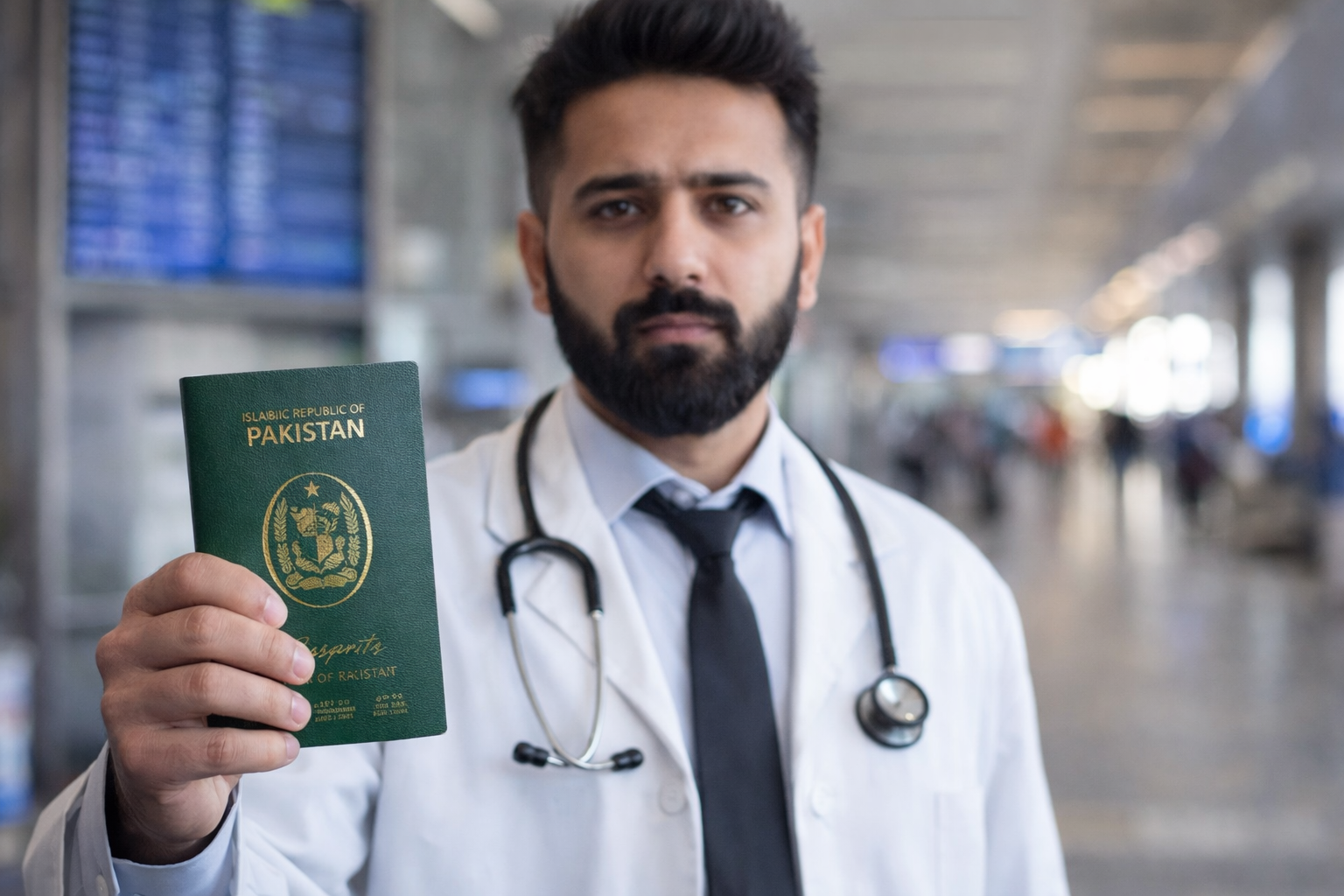
Better Salary vs Better Life: The Real Reason Doctors Are Migrating
Pakistan’s doctor drain in 2025 didn’t feel like a slow leak. It felt like a steady exit line. One snapshot shows why. Official emigration figures reported that 172,144 Pakistanis left for overseas jobs in Jan–Mar 2025—and the professional list included 849 doctors in just that quarter. Add another headline number: 1,061 Pakistani doctors secured US residency positions in 2025, which PMDC and major Pakistani outlets called a record. So what’s pulling doctors out? Pay matters, but it’s not the full story. In 2025, governments tried to ease pressure with raises and allowances. The federal government notified an Ad-hoc Relief Allowance (10%) for employees, and the budget cycle also carried a 10% salary increase narrative in public reporting. For many junior doctors, though, inflation eats raises fast. A pay bump can feel like a bandage on a deeper wound. That deeper wound is working conditions. Talk to young doctors and the themes repeat: brutal shifts, overloaded wards, weak security, slow promotions, and little respect. In Khyber Pakhtunkhwa, the finance department even issued a formal notification about enhancing house officer stipends, showing that provinces know the pain point. But money doesn’t stop a midnight assault, a broken supply chain, or a senior who treats trainees like disposable labor. Violence and fear remain a tipping point. A Dawn report described doctors demanding implementation of the KP law meant to prevent violence in healthcare facilities, saying the government passed protections but failed to enforce them fully. When a workplace feels unsafe, “better pay” loses to “better life.” So what’s actually working? The small wins come from fixes that change daily reality: safer hospitals, predictable duty hours, functioning equipment, and fair training pathways. Pay helps most when it comes with dignity—clear contracts, timely salaries, and growth that doesn’t depend on connections. Pakistan doesn’t just need retention packages. It needs retention environments. Until hospitals feel safe and humane, the passport will keep looking like the fastest promotion letter.
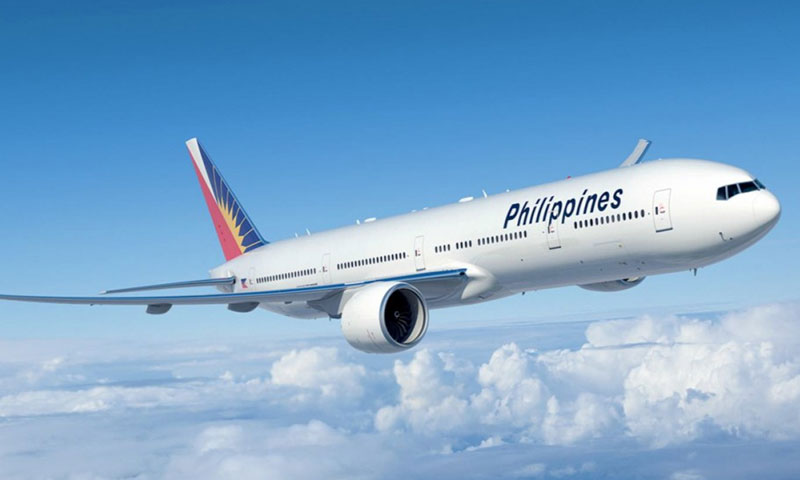
Philippine Airlines Turns Flight Safety Into a Telenovela — and the Internet Is Loving It
Philippine Airlines has found an unexpected way to make passengers actually watch an in-flight safety video: by turning it into a full-blown drama. Titled “Care That Comes From the Heart,” the airline’s new safety video made its debut aboard its first Airbus A350-1000, delivered on December 22, 2025, before being released online on December 31. Within just four days, the video crossed 200,000 views on YouTube, proving that safety instructions can go viral when storytelling takes center stage. Produced in a mix of Filipino and English, with English subtitles throughout, the video immediately signals that this is not a routine pre-flight briefing. Its thumbnail alone hints at something unusual, teasing drama rather than demonstrations. A love story at 35,000 feet The video opens with a standard cabin crew greeting, but quickly shifts to a visually rich hacienda-style setting, inspired by traditional Philippine estates with Spanish colonial influence. What follows is a melodramatic tale straight out of a classic “novela.” Viewers are introduced to Anton, a poor estate worker, and Luisa, a young woman from a wealthy family. Their forbidden romance forms the emotional core of the story. The plot thickens when Luisa is pressured into an arranged marriage with Diego, a wealthy suitor backed by her family. As the drama unfolds, flight safety instructions appear at unexpected moments. When Diego offers to vape instead of smoke, a flight attendant abruptly intervenes to remind him that smoking and vaping are prohibited. Later, when Anton storms into the church to stop the wedding, the calm voice of the cabin crew announces, “Should there be a rapid change in cabin pressure…” as oxygen masks descend and the stunned wedding guests dutifully put them on. Humor through surreal contrast These deliberate anachronisms — mixing 19th-century-style drama with modern aviation rules — are what viewers say make the video memorable. Life vests appear during emotionally charged scenes, and safety demonstrations interrupt heartbreak and confrontation, creating moments that are both absurd and hilarious. The reaction online has been overwhelmingly positive. In Esquire Magazine, award-winning writer Christa I. De La Cruz famously wrote, “I Finally Watched an In-Flight Safety Video All the Way to the End.” YouTube comments echo that sentiment, with viewers pointing out scenes where characters argue passionately while wearing life jackets. A carefully crafted production The 6-minute-25-second video is co-presented by Mastercard, created in collaboration with BBDO Guerrero, produced by Arcade Film Factory, and directed by Marius Talumpas. Together, the team transformed mandatory safety instructions into entertainment that holds attention without compromising clarity. For Philippine Airlines, the success of the video shows that safety messages do not have to be ignored. Sometimes, all it takes is a compelling story — and a little drama — to keep passengers watching until the very end.

Security Shock in Cincinnati as US Vice President JD Vance’s Home Is Targeted
A security scare unfolded early Monday morning outside the Cincinnati residence of US Vice President JD Vance, prompting a swift response from local police and the US Secret Service. Authorities confirmed that a suspect has been taken into custody following reports of suspicious activity and property damage. The incident occurred shortly after midnight in the East Walnut Hills neighbourhood, where law enforcement officers were dispatched after receiving reports of a possible break-in. According to officials, responding officers observed an individual running eastbound near the vice president’s home, triggering an immediate search of the area. When police arrived at the property, they discovered multiple shattered windows, raising concerns about a potential intrusion. Officers quickly secured the scene, and a suspect was arrested nearby soon afterward. Authorities have not yet disclosed the individual’s identity, motive, or the specific charges that may be filed. Officials stressed that the investigation remains active, and further details will be released once more information is confirmed. Vance and family were not home Vice President Vance and his family were not present at the residence at the time of the incident. According to reports, Vance departed Cincinnati on Sunday afternoon. Notably, the city had recently lifted road closures and security checkpoints around the property before the incident occurred. 🧐Un terroriste de gauche à brisé des fenêtres de la maison de JD Vance dans l’Ohio Heureusement, sa famille n’était PAS là. La gauche ne s’arrêterapas, jamais.pic.twitter.com/YR5NuLfQIR — ⚜ France for Trump ⚜ (@VirginiePerez15) January 5, 2026 Investigators are still working to determine whether the suspect managed to enter the home. While broken windows were clearly visible, authorities said there is no confirmed evidence yet that the house was breached beyond the exterior damage. Secret Service response The US Secret Service joined Cincinnati police officers at the scene and assisted with securing the property and conducting the initial investigation. After several hours, Secret Service agents left the area, while local police continued monitoring and inspecting the home throughout the morning. Residents in the neighbourhood reported a heavy police presence, with patrol vehicles and police tape surrounding the property as investigators worked. Neighbours and passersby gathered at a distance, watching developments unfold. Investigation ongoing Cincinnati officials have so far released limited information. They confirmed that a suspect is in custody but declined to comment on whether the incident was politically motivated or a random act of vandalism. Authorities said they are collecting evidence and reviewing security footage. Police indicated that an official update is expected later in the day as investigators assess the full extent of the damage and clarify what occurred.
From Hybrids to SUVs: How Hyundai and Kia Plan to Grow This Year
South Korea’s leading automakers Hyundai Motor and Kia have announced a combined global sales target of 7.51 million vehicles for the current year, aiming for measured growth amid shifting demand for electric and hybrid models. Under the plan, Hyundai is targeting sales of 4.16 million units, while Kia aims to sell 3.35 million vehicles worldwide. Of the total, the companies expect 1.27 million vehicles to be sold in South Korea and 6.23 million units in overseas markets. The target represents a 3.2 percent increase from last year’s combined global sales of 7.27 million vehicles, signaling cautious optimism as the industry navigates slowing electric vehicle demand, trade uncertainties, and regional market differences. In 2025, Hyundai sold 4.14 million vehicles globally, a marginal 0.1 percent decline from the previous year. Kia, however, recorded its best-ever annual performance, selling 3.14 million units, up 2 percent year-on-year. Both automakers said the growth push will rely heavily on hybrid electric vehicles, expanded eco-friendly model lineups, and increased production at overseas manufacturing facilities to better align supply with local demand. Despite challenges such as tariffs and geopolitical uncertainty, Hyundai said it strengthened its position in key global markets, particularly North America, by broadening its range of environmentally friendly vehicles. The company added that new overseas production bases would improve supply chain flexibility and responsiveness. Strong performance in the US market The United States remains a critical growth engine for the group. Hyundai Motor Group — which includes Hyundai, Kia, and luxury brand Genesis — posted its strongest-ever US sales performance last year. Combined US sales reached 1.83 million vehicles, a 7.5 percent increase year-on-year and the highest figure since the group entered the American market. By brand, Hyundai sold 901,686 vehicles, surpassing the 900,000 mark for the first time. Kia recorded 852,155 units, up 7 percent, while Genesis sales rose 9.8 percent to 82,331 vehicles. Industry analysts attributed the gains to a strategic pivot toward hybrids and sport utility vehicles, which helped offset weaker demand for fully electric vehicles and mitigate tariff-related pressures. Eco-friendly vehicle sales in the US climbed sharply. Hyundai and Kia sold 434,725 eco-friendly vehicles, a 25.5 percent increase from the previous year. Hybrid vehicles accounted for 331,023 units, marking a record high. “Hyundai closed 2025 on a high note, achieving our fifth consecutive year of record retail sales,” said Randy Parker, adding that the company also delivered its best-ever December performance. As global demand evolves, Hyundai and Kia appear focused on flexibility — balancing electrification ambitions with strong hybrid offerings to sustain growth across diverse markets.

Ancient Space History: What Makes Comet 3I/ATLAS So Special
Astronomers around the world are buzzing after new research suggested that Comet 3I/ATLAS may be far older than our Sun, possibly dating back nearly 14 billion years. If confirmed, that would make it one of the oldest known objects ever observed passing through our solar system and a rare visitor from interstellar space. Comet 3I/ATLAS was first detected by the ATLAS sky survey, a system designed to spot near-Earth objects early. What quickly set this comet apart was its unusual trajectory. Scientists noticed that it did not follow a path typical of objects born within our solar system. Instead, its steep angle and extreme speed strongly suggest it originated outside the Sun’s gravitational family, making it only the third confirmed interstellar object observed after ʻOumuamua and 2I/Borisov. Recent modeling has gone a step further. Some researchers now believe the comet may have formed before the Sun itself, in the early days of the Milky Way. That bold claim has drawn attention—and caution. Experts stress that the “14-billion-year” estimate refers to the age of the material inside the comet, not the moment it became a solid object. In simple terms, parts of Comet 3I/ATLAS may contain ancient cosmic matter created soon after the universe began. The idea sparked public curiosity, including speculation about alien signals. However, scientists working with NASA have firmly ruled that out. Data from deep-space monitoring and NASA’s Europa Clipper instruments detected no artificial signals, confirming the comet is a natural object. Researchers say this clarity is important, as misinformation often spreads quickly around interstellar discoveries. Beyond headlines, Comet 3I/ATLAS offers real scientific value. Studying such objects helps astronomers understand how planets and stars formed across the galaxy. Interstellar comets act like time capsules, preserving chemistry from distant star systems that may no longer exist. Each one provides clues about how common certain elements are beyond our own neighborhood. Scientists caution that more observations are needed before making firm claims about its age. Still, Comet 3I/ATLAS stands as a reminder of how small and how connected our solar system is within the vast universe. Every rare visitor like this pushes humanity a step closer to understanding where we came from and how the cosmos evolved.
Pakistan’s Stock Market Hits Historic High – KSE-100 Soars Past 181,000
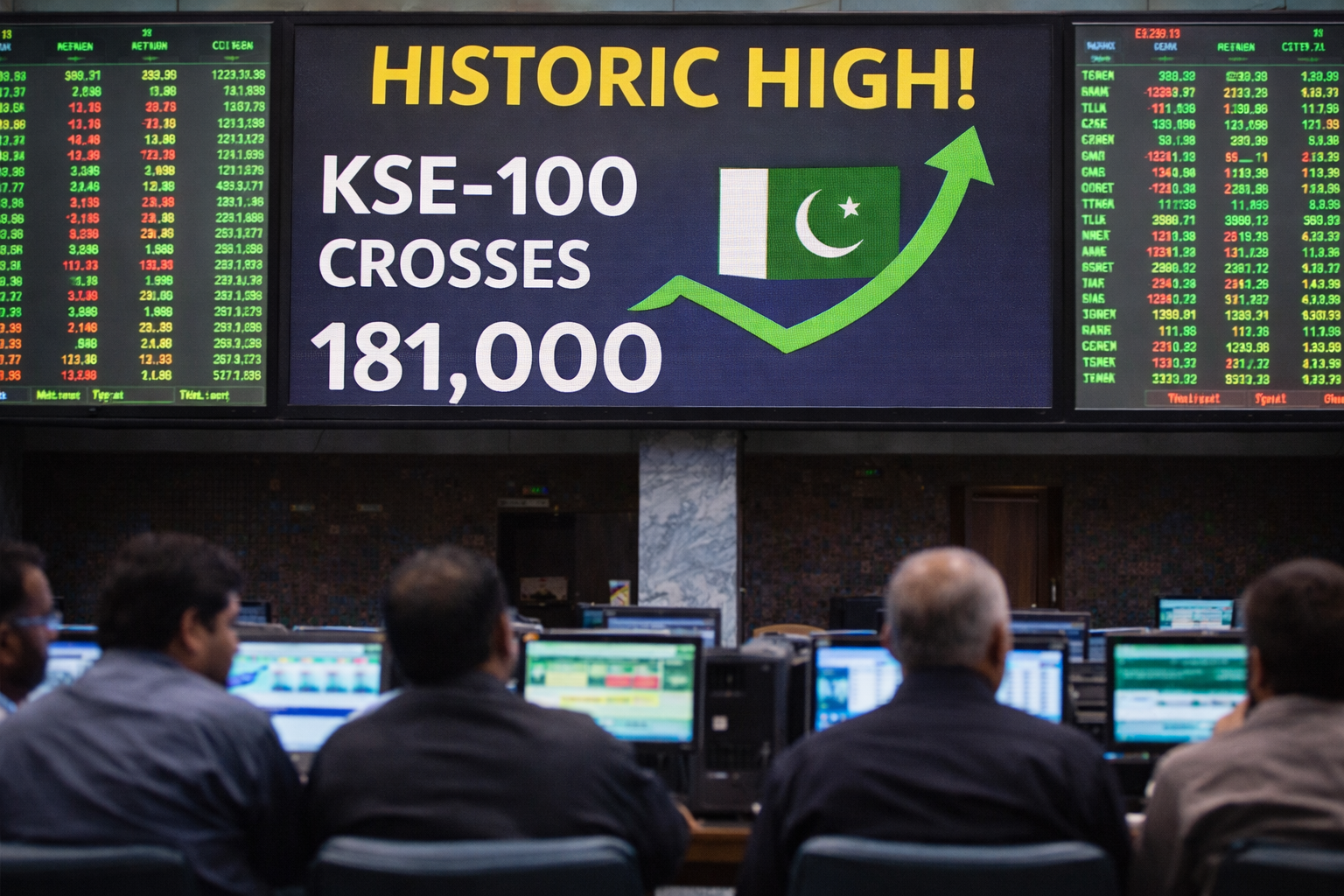
Pakistan’s stock market opened the week on a powerful note as the KSE-100 Index surged past the 181,000-point mark, setting a new all-time high in early trading. The strong start reflects growing investor confidence, driven by steady buying across major sectors and optimism around the broader economic outlook. Market activity remained upbeat from the opening bell, with banking, oil and gas, cement, and power stocks leading the rally. Analysts noted that buying interest was widespread, suggesting participation from both institutional investors and retail traders. The index’s rapid climb past a major psychological level added momentum and reinforced the bullish mood on the trading floor. Several factors appear to be fueling the surge. Expectations of improved corporate earnings have played a key role, especially among large-cap companies with strong balance sheets. Investors are also reacting positively to signs of macroeconomic stability, including easing inflation pressures and a relatively stable exchange rate. These indicators have helped reduce uncertainty and improve risk appetite. Another contributor has been the expectation that Pakistan could see stronger capital inflows if economic reforms stay on track. Market observers say investors are closely watching fiscal discipline, monetary policy signals, and progress on external financing. Any clarity in these areas often reflects quickly in equity prices. According to market analysts, the KSE-100’s performance also highlights a shift toward value-based investing, with traders favoring stocks that offer consistent dividends and long-term growth potential. This trend has helped sustain gains rather than limit them to short-term speculation. Despite the celebratory mood, experts urge caution. Stock markets can change direction quickly, especially if global conditions turn volatile. Developments related to interest rates, energy prices, and geopolitical tensions could still influence sentiment. Investors are advised to stay informed and avoid emotional decision-making. For now, the record-breaking move sends a strong signal. Crossing 181,000 points underscores renewed faith in Pakistan’s equity market and positions it as one of the more closely watched emerging markets in the region. If momentum holds, analysts believe the market could continue testing new highs in the near term.
Pakistani Graduate Rehab Asad Shaikh Sues LSE After Marking Error Changed Her Academic Future
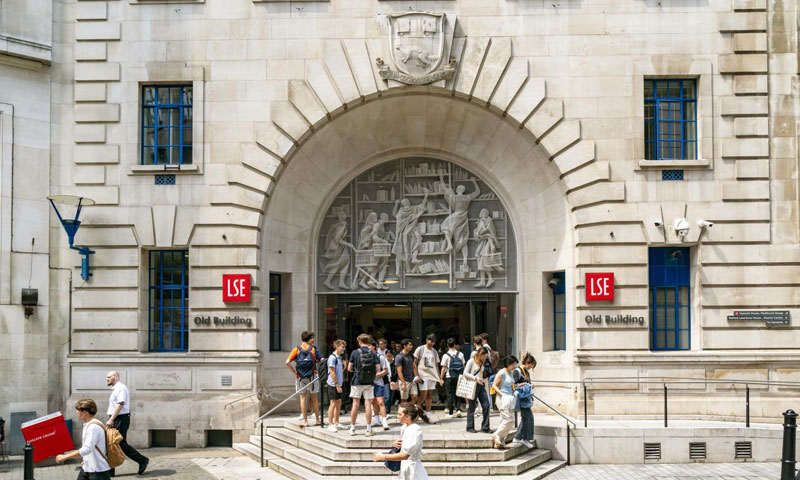
A Pakistani student has launched legal proceedings against London School of Economics and Political Science, alleging that a flawed marking process during her undergraduate degree cost her a crucial academic opportunity and caused lasting personal and professional harm. Rehab Asad Shaikh, originally from Khairpur Gambat in Sindh, is seeking compensation and formal acknowledgment from LSE after her undergraduate dissertation was initially awarded a low mark under exceptional circumstances — a decision that later proved to be significantly wrong. Shaikh moved to the UK in 2020 after graduating from Karachi Grammar School. She completed her undergraduate studies in policy-related disciplines at LSE in 2023. Her ambition at the time was to pursue an MPhil at University of Cambridge. However, her plans were disrupted when her final dissertation received a mark of 57, narrowly missing the threshold required for competitive MPhil admissions. The marking took place during the nationwide UK Marking and Assessment Boycott in 2023. As a result, Shaikh’s dissertation was assessed by a single examiner, rather than the standard double-marking process designed to ensure quality control and fairness. Believing the process had placed her at a disadvantage compared to her peers, Shaikh pursued every available channel for redress. She filed academic appeals, submitted formal complaints, and eventually escalated her case to the Office of the Independent Adjudicator, the body that oversees student complaints against UK universities. After more than two years, LSE agreed to re-mark her dissertation. The result was dramatic: her score rose from 57 to 72, a rare 15-point increase. Despite this correction, LSE concluded that no fault had occurred and that Shaikh had suffered no material disadvantage. The university rejected claims of harm, describing the stress, delays, and lost opportunities she experienced as “self-reported” and “not compelling.” Shaikh strongly disputes that assessment. She told that the original mark directly affected her academic choices, forcing her to abandon her Cambridge plans and instead pursue a master’s degree at University of Oxford, where she later completed a programme in Modern South Asian Studies. Following the re-mark, her transcript briefly indicated she had been awarded a departmental academic prize, only for the recognition to be withdrawn hours later and then reinstated after further correspondence. Shaikh says the episode illustrates how institutions can minimise the emotional impact of their actions. Now employed in a senior role within a UK government ministry, Shaikh believes her career trajectory might have been different had the original error not occurred. “My case is not just about a mark,” she said. “It’s about accountability, transparency, and whether universities take student welfare seriously when things go wrong.” She added that since speaking publicly, other students have come forward with similar experiences involving long delays, opaque procedures, and limited empathy once students leave an institution. “A 15-point mark change is extraordinary,” she said. “A two-and-a-half-year wait is damaging. The real question is whether the system is equipped to respond fairly — and humanely — when students challenge outcomes.”
From Trash to Treasure: How a Hospital Team Recovered Priceless Rings
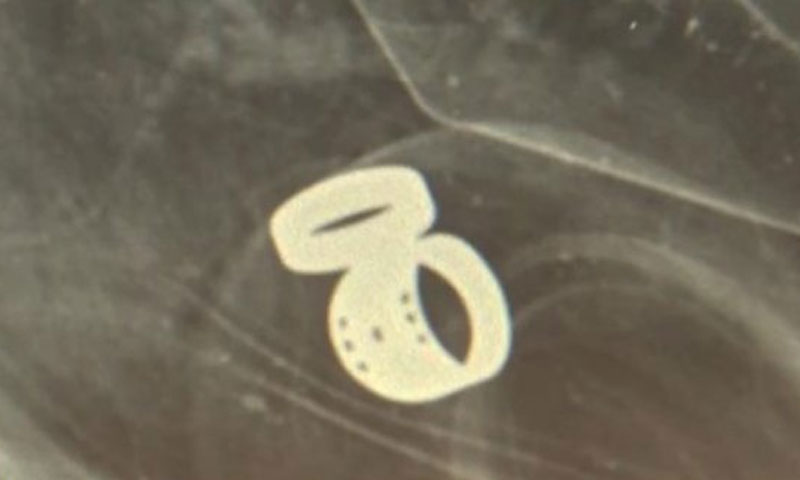
What began as a heartbreaking mistake at an Iowa hospital ended in relief and gratitude, thanks to the determination of medical staff and an unusual use of technology. Susan Sinnwell had visited Grundy County Memorial Hospital for an X-ray of her hand when she unknowingly threw away a napkin containing her grandparents’ wedding rings — priceless family heirlooms with deep sentimental value. Sinnwell only realized what had happened the following day. Looking back, she recalled a small moment that suddenly made sense. “When I tossed the napkin into the trash, it made a strange sound,” she told Iowa’s News Now. “I noticed it, but I never imagined the rings were inside.” By the time hospital staff were alerted, the situation looked grim. The trash had already been collected, mixed with several days’ worth of waste, and compressed. Still, the hospital’s maintenance team decided to try. Workers began manually searching through 50 to 60 garbage bags, using a metal detector in hopes of locating the rings. After hours of effort, the search came up empty. Just when hope seemed to fade, Craig Buskohl, the hospital’s imaging manager, proposed an unconventional solution: using a portable X-ray machine. The search moved to the hospital’s ambulance bay, where Buskohl carefully X-rayed sections of the compacted trash. After about 45 minutes and 35 X-ray images, the rings finally appeared on screen. “It was incredibly rewarding,” Buskohl said. “To be honest, I wasn’t sure we’d find them — but we did.” The discovery brought instant relief to Sinnwell, who later expressed deep gratitude to the hospital staff. “From the moment I connected with the team, I felt reassured,” she said. “Their calm, caring approach meant everything to me.” The rings were safely returned, closing a story that highlighted not just modern medical tools, but teamwork, compassion, and a willingness to go the extra mile for a patient.
