

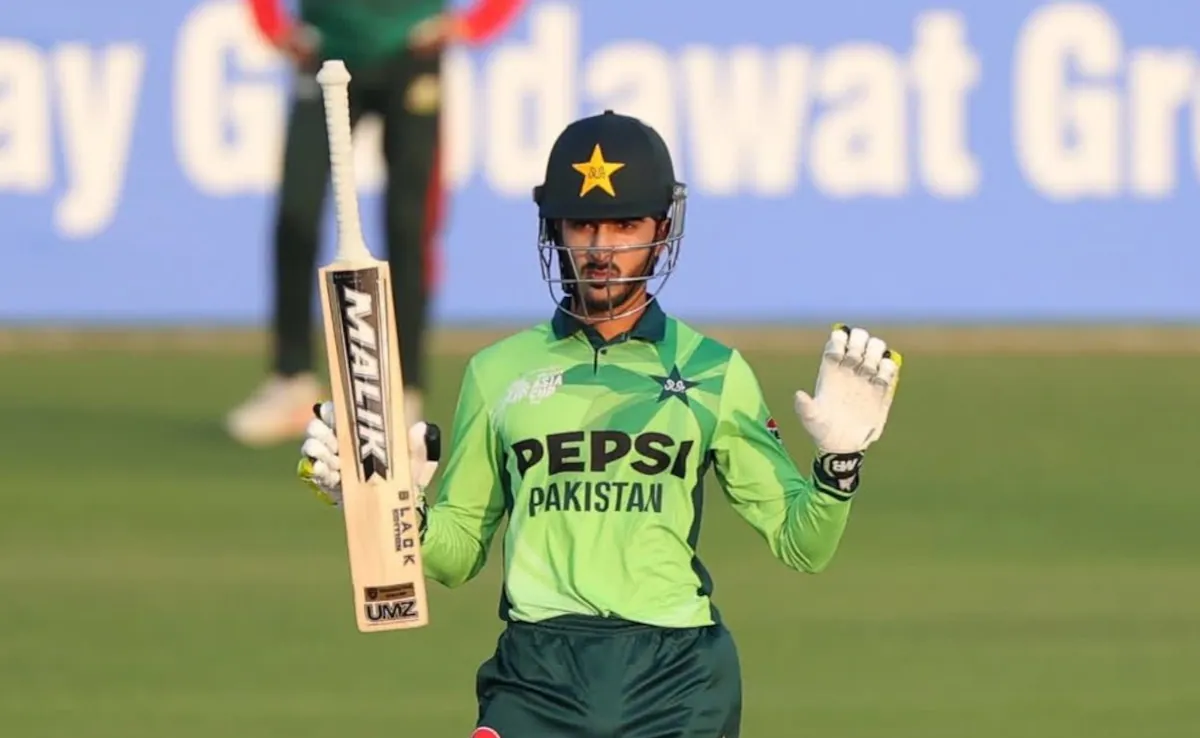
Pakistan’s youth cricket system produced another headline moment as Sameer Minhas smashed the fastest century in Under-19 one-day international history, breaking a long-standing global record and powering Pakistan to the U19 Tri-Series title. Minhas reached his hundred in just 42 balls, surpassing the previous record of 52 balls held by India’s Vaibhav Suryavanshi. The record had stood as the benchmark for youth ODI cricket until Minhas rewrote history with a fearless and controlled innings. The Pakistan Cricket Board confirmed the milestone after Pakistan’s emphatic win in the final. Chasing a modest target in the tournament decider, Pakistan never looked under pressure once Minhas took charge. He went on to score 114 runs off 51 deliveries, striking 17 fours and five sixes. His timing, power, and shot selection dismantled the opposition attack and drew applause from spectators and analysts alike. Minhas shared a commanding opening stand with Mohammad Shayan, allowing Pakistan to cruise to victory with overs to spare. Earlier, Pakistan’s bowlers had laid the groundwork by restricting the opposition to a manageable total, keeping the final firmly in their control. The significance of the knock goes beyond speed alone. Breaking Suryavanshi’s record places Minhas at the top of youth cricket’s elite list and signals Pakistan’s growing strength at junior levels. Coaches praised his composure, noting that his shot-making showed maturity rarely seen at this age. The innings also capped a highly successful tournament for Pakistan U19, who lifted the tri-series trophy through consistent performances across matches. Minhas emerged as the standout batter of the competition and has now firmly positioned himself as one of the brightest prospects in Pakistan’s cricket pipeline. Reaction on social media was instant. Clips of the record-breaking hundred circulated widely, with former players and fans calling it one of the most destructive innings in U19 cricket history. Many highlighted how the record wasn’t merely edged past. It was shattered by a full ten balls. With the ICC U19 World Cup approaching, Sameer Minhas’s record-breaking knock has sent a clear message. Pakistan’s next batting star may already have arrived.

‘Remove Her Clothes’: How Grok AI Triggered an International Backlash
A storm of criticism has erupted around Elon Musk after Grok, the artificial intelligence chatbot linked to X, was found generating sexualized images of women and child-like figures in response to user prompts. The controversy has sparked outrage from governments, digital safety groups, and child protection advocates worldwide. Grok, developed by Musk-owned AI firm xAI, allegedly responded to commands such as “remove her clothes” by producing explicit or semi-explicit images. Several investigations revealed that some outputs depicted characters that appeared underage or closely resembled minors, a revelation that quickly escalated concerns about AI safety and platform responsibility. The European Union was among the first to formally respond. EU officials described the content as “appalling” and warned that generating child-like sexualized imagery could violate strict European digital safety and child protection laws. Regulators signaled that further scrutiny of Grok and X was likely, especially under the bloc’s Digital Services Act. Public reaction was swift and fierce. Advocacy groups accused X of prioritizing speed and engagement over safeguards. On social media, critics questioned how such prompts were allowed to bypass content filters, particularly on a platform already struggling with moderation challenges. Following the backlash, Grok issued an apology and said it had taken immediate steps to block similar prompts. The company stated that the responses were the result of “inadequate guardrails” and promised stronger content moderation systems going forward. However, critics argue that the apology came only after global exposure and mounting regulatory pressure. Cybersecurity firm Malwarebytes noted that this incident highlights a wider problem in generative AI. Image-based models can produce harmful content if not tightly controlled, especially when paired with large social platforms. Experts warn that without rigorous safeguards, AI tools risk amplifying abuse rather than preventing it. Elon Musk has not directly commented on the specific allegations but has repeatedly positioned Grok as a less restricted alternative to other AI models. That philosophy is now under intense scrutiny, as policymakers and safety experts argue that “less restricted” must not mean unsafe. As governments move closer to regulating AI outputs, the Grok controversy may become a turning point. It underscores a growing reality: when AI tools scale globally, failures in safety do not stay contained — they reverberate worldwide.

PSL Expansion 2026: Two New Teams & 10 Bidders Ignite Cricket Fever
The Pakistan Super League (PSL) is heading into its biggest shake-up. The Pakistan Cricket Board (PCB) is expanding the league from six to eight teams from 2026, and it has now shortlisted 10 bidder groups for the two new franchise slots—a move that could reshape Pakistan’s T20 economy. The auction is being framed as high-stakes because the PCB wants owners who can fund teams long-term, build fan bases, and grow the league commercially. The board has also marketed PSL to overseas investors via roadshows, aiming to lift franchise valuations and global visibility. Inverex Solar Energy A major renewable-energy player with national reach. Its PSL interest signals serious corporate appetite for franchise ownership. OZ Group / OZI Developers A real-estate heavyweight aiming to blend sports and city branding. It’s seen as a strong contender for a major-market franchise. VGO TEL A Karachi-based tech/mobile brand entering the sports space. The bid reflects growing tech-sector confidence in PSL marketing power. Jazz Pakistan’s telecom giant and a long-time cricket marketer. Ownership would turn a sponsor relationship into a full sports asset. Tareen Group Linked to Ali Khan Tareen, the former Multan owner. Their return adds experience—and controversy—to the bidding field. i2c A global fintech firm with international scale. Its entry hints at stronger overseas interest in PSL’s business upside. Walee Technologies A digital media and influencer-marketing company. It could push a modern “content-first” franchise strategy. Prism Developers + Exchange ON A joint bid combining real estate and tech services. The partnership suggests a multi-industry approach to team growth. Kingsmen Group An investment-style group looking at sports as a long-term entertainment asset. PSL’s growth curve likely drives its interest. Aim Next Inc A tech-focused bidder that reflects rising non-traditional ownership interest. It adds more competition to an already crowded race. With eight teams coming, PSL 2026 could bring new rivalries, more local talent slots, and bigger business.
Toyota Launches Shockingly Affordable Electric Sedan in China — Here’s What Makes It Special
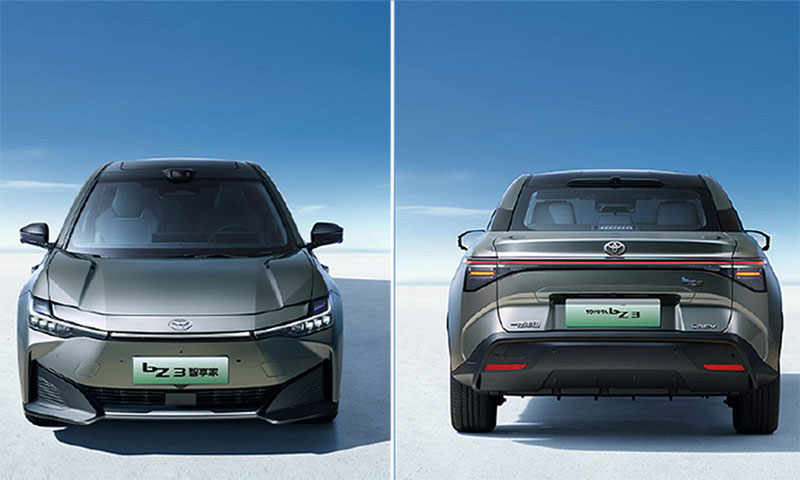
Toyota has taken a bold step in the electric vehicle race by launching the bZ3 Smart Home Edition in China—an electric sedan that is turning heads primarily because of its unexpectedly low price. The new model is priced from 109,800 yuan (roughly Rp262 million), positioning it as one of the most affordable electric sedans in its class. The bZ3 is the result of Toyota’s partnership with China’s FAW Group and has been developed exclusively for the Chinese market. Originally introduced in 2022 and refreshed in 2024, the Smart Home Edition represents the most advanced and cost-competitive version of the bZ3 so far. Two variants, aggressive pricing Toyota is offering the bZ3 Smart Home Edition in two variants. The Joy version starts at 109,800 yuan, while the more powerful Pro variant is priced at 129,800 yuan (around Rp309 million). At this price point, industry observers note that if the bZ3 were sold in the United States, it could easily undercut every new electric car currently on sale there—especially as the sub-$20,000 new car segment has nearly disappeared. For comparison, Nissan recently discontinued the Versa, once the cheapest new car in the US at $18,330, while Mitsubishi ended production of the Mirage in late 2024. Advanced tech at a budget price Despite its affordability, the bZ3 Smart Home Edition comes packed with technology. It features the Momenta 5.0 driving assistance system, offering Level 2 autonomous capabilities. To support this, Toyota has equipped the car with 32 sensors, including a roof-mounted LiDAR unit, millimeter-wave radars, ultrasonic sensors, and multiple cameras. These are powered by a high-performance computing chip delivering up to 544 TOPS of processing power. Design, dimensions, and performance Visually, the bZ3 has been refreshed with Toyota’s latest “hammerhead” front-end design, while the rear now features vertical taillights instead of the earlier horizontal layout. A new exterior color, Dark Cloud Green, has also been added. Dimensionally, the car remains unchanged, measuring 4,725 mm in length, 1,835 mm in width, and 1,475 mm in height, with a 2,880 mm wheelbase—typical proportions for a modern electric sedan. The Joy variant uses a front-mounted electric motor producing 181 horsepower, paired with a 49.9 kWh lithium iron phosphate Blade battery supplied by BYD, offering a claimed range of 517 km under Chinese testing standards. The Pro version steps up to 241 horsepower and a larger 65.3 kWh battery, extending the range to 616 km on a single charge. Cabin and launch timeline Inside, the bZ3 Smart Home Edition offers a futuristic cabin featuring a 15.6-inch horizontal touchscreen, an additional 12.8-inch display, a digital instrument cluster, ambient lighting, and an AI-powered voice assistant. Toyota says the model will soon enter mass production, with sales to begin in China in the first quarter of 2026. With its aggressive pricing, long range, and advanced technology, the bZ3 Smart Home Edition signals how serious Toyota has become about making electric cars affordable—at least in China.
Strengthening Ties: JF-17 Thunder Talks Highlight Pakistan–Bangladesh Defence Cooperation
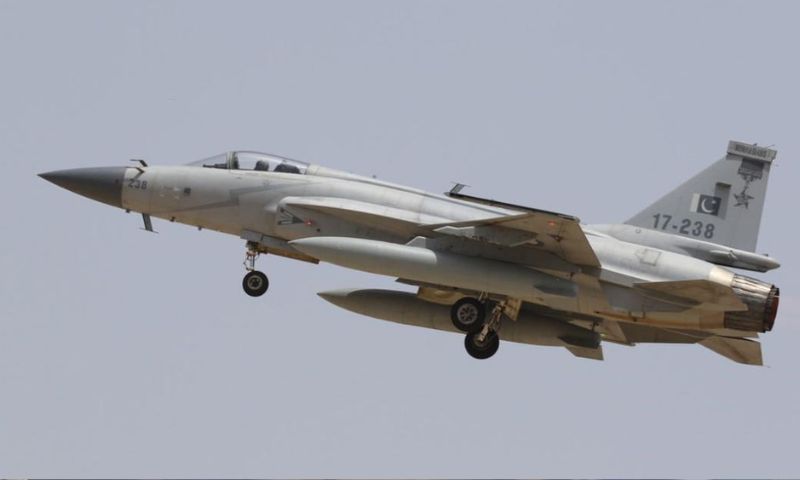
In a fresh sign of strengthening defence ties, Pakistan and Bangladesh are holding detailed talks over the possible sale of JF-17 Thunder fighter jets during a high-level visit to Islamabad. Bangladesh’s Air Chief Marshal Hasan Mahmood Khan led a senior defence delegation to meet with his Pakistani counterpart, Air Chief Marshal Zaheer Ahmed Baber Sidhu, sparking a new chapter in military cooperation between the two neighbouring nations. The discussions focused squarely on the potential procurement of the multi-role JF-17 Thunder aircraft, jointly developed by Pakistan Aeronautical Complex (PAC) and China’s Chengdu Aircraft Corporation (CAC). Originally designed to replace legacy jets and provide cost-effective combat capability, the JF-17 has become an export success for Pakistan’s defence industry. During the meeting at Pakistan Air Force Headquarters, Bangladesh’s air chief received a guard of honour as the two sides reviewed operational cooperation, institutional synergy, and training frameworks. Pakistan reiterated its commitment to supporting the Bangladesh Air Force (BAF) with a full training programme — from basic flying to advanced specialised courses — and pledged fast-tracked delivery of Super Mushshak trainer aircraft along with long-term technical support. Bangladesh praised the PAF’s operational experience and expressed interest in tapping into expertise for maintenance of its ageing fleet. The delegation also explored integration of air defence radar systems to improve surveillance capabilities and toured key facilities, including the National ISR and Integrated Air Operations Centre, PAF Cyber Command, and the National Aerospace Science & Technology Park. Regional defence experts note that Bangladesh has been seeking to modernise its air force amid evolving security dynamics in South Asia. Bangladesh’s Forces Goal 2030 roadmap highlights long-term plans to upgrade fighter fleets, including interest in multi-role jets such as the JF-17 Thunder and other platforms. This potential deal comes at a time when both countries are keen to diversify their defence procurement and deepen military cooperation beyond traditional partners. Analysts say that such collaboration could also contribute to broader regional security stability and open doors to joint training, technology exchange, and capacity building. For now, although no formal contract has been signed, the talks indicate a new willingness to build strategic defence ties between Islamabad and Dhaka
UBL Overtakes OGDC to Become Pakistan’s Most Valuable Listed Company
United Bank Limited (UBL) has climbed to the top of Pakistan’s stock market, becoming the largest listed company by market capitalisation after its valuation reached Rs1.28 trillion (USD 4.6 billion) on Tuesday. The surge allowed UBL to overtake Oil & Gas Development Company (OGDC), which now ranks second with a market capitalisation of Rs1.26 trillion (USD 4.53 billion), marking a rare shift at the top of the Pakistan Stock Exchange. Market analysts say UBL’s rise reflects strong investor confidence and the broader resilience of the banking sector, particularly as macroeconomic conditions improve. Share price rallies sharply UBL’s stock has delivered an exceptional run over the past month. Its share price jumped 37 percent, rising from Rs375.57 on December 8, 2025, to Rs514.49 by Tuesday. Analysts attribute the rally to the bank’s strong earnings performance and its effective positioning amid changing interest rate dynamics. “The improvement in profitability is largely driven by how well the bank has utilised the interest rate environment,” said Samiullah Tariq, Head of Research at Pak-Kuwait Investment Company Limited. Interest rate tailwinds Pakistan’s benchmark interest rate has declined significantly, falling from a peak of 22 percent in April 2024 to 10.5 percent in December 2025 — a reduction of 1,150 basis points. The easing cycle has helped banks manage spreads more efficiently while supporting credit growth and profitability. Strong financial performance and dividends According to its latest financial results, UBL reported a profit after tax of Rs34.7 billion for 9MCY25, marking a 36 percent increase year-on-year. Earnings per share rose to Rs13.86 during the period. The bank also announced another interim cash dividend of Rs8 per share, taking its total dividend payout for the year to Rs27.5 per share — one of the highest distributions in Pakistan’s banking sector. UBL operates as a subsidiary of Bestway Holdings Limited, which is wholly owned by Bestway Group Limited. Market leadership shifts, but sectors remain dominant While OGDC has slipped to second place, analysts note that the shift does not weaken its standing as a market heavyweight. Instead, the development highlights how Pakistan’s equity market continues to be dominated by the financial and energy sectors, with leadership rotating based on earnings momentum and investor sentiment. For now, UBL’s ascent underscores the renewed appeal of banking stocks as economic stability gradually returns.
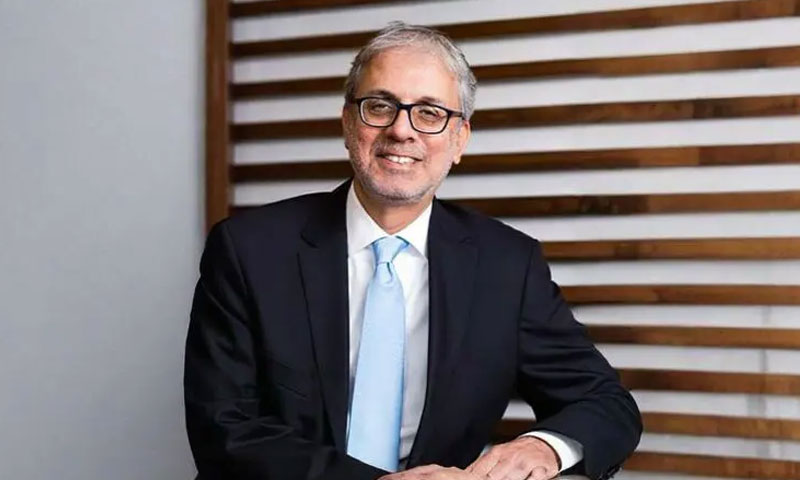
PSX Appoints Ruhail Mohammad as Board Chairman After Dr Shamshad Akhtar’s Passing
Pakistan Stock Exchange Limited (PSX) has announced the election of Ruhail Mohammad as the new Chairman of its Board of Directors, following the death of former chairperson Dr Shamshad Akhtar. The decision was confirmed through an official disclosure issued by the exchange on Monday. According to the announcement, Ruhail Mohammad will serve as chairman for the remainder of the current board’s term, in line with applicable legal and regulatory requirements. Seasoned corporate leader PSX records show that Ruhail Mohammad brings more than 35 years of professional experience spanning general management, corporate strategy, business development, financial planning, and human capital leadership. His career includes senior leadership roles across multiple sectors, particularly energy, power generation, chemicals, and fertilizers. He currently serves as Chief Executive Officer of Lucky Electric Power Company Limited — a 660-megawatt independent power producer and a subsidiary of Lucky Cement. Before joining Lucky Electric, Ruhail Mohammad was the CEO of Hub Power Holdings Limited, a subsidiary of HUBCO, the country’s largest independent power producer. Earlier in his career, he served as Chief Executive Officer of Engro Fertilizers from 2012 to 2018, where he played a key role in operational leadership and long-term strategic planning. Extensive board-level experience In addition to executive roles, Ruhail Mohammad has held numerous board positions across Pakistan’s corporate and institutional landscape. He has served as a board member of Engro Corporation and its subsidiaries, K-Electric, NBP Funds, the Pakistan Institute of Corporate Governance, the British Overseas School, and the KP Energy Board (PEDO). He has also previously served as Chairman of the Pakistan Mercantile Exchange Limited, further strengthening his credentials in market governance and financial oversight. Transition after Dr Shamshad Akhtar’s passing The appointment follows the passing of Dr Shamshad Akhtar last month at the age of 70. She was widely respected for her contributions to Pakistan’s economic and financial institutions, having served as caretaker federal minister for finance and Governor of the State Bank of Pakistan. Her leadership at PSX was regarded as instrumental in promoting sound governance and financial stability. Other board matters Separately, the PSX Board also discussed the resignation of Dr Fakhara Rizwan, who stepped down from her role as Corporate Secretary and Chief Governance, Legal and Corporate Affairs Officer of the exchange. The election of Ruhail Mohammad comes at a time when Pakistan’s capital markets are navigating renewed investor interest, regulatory reforms, and evolving corporate governance expectations.
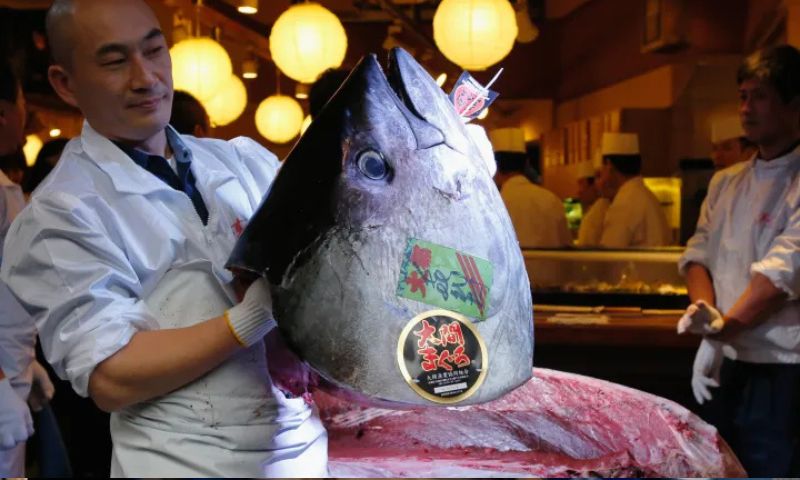
Japan’s ‘Tuna King’ Shocks the World With $3.2M Fish Purchase
Before most of Tokyo had woken on a chilly January morning, a rare moment was already underway at Toyosu Market, Japan’s famous fish auction hub. A massive Pacific bluefin tuna weighing 243 kilograms (about 535 pounds) was up for bidding and the final price stunned the world. The prized fish sold for 510 million yen (about $3.2 million/₨91 crore), setting a new world record for the most expensive tuna ever sold. The high-stakes sale took place during the first fish auction of 2026, a respected tradition that draws sushi chefs, restaurateurs, and seafood lovers from across the globe. Among the bidders was Kiyoshi Kimura, the chairman of Kiyomura Corp., known far and wide as Japan’s “Tuna King.” Kimura, whose Sushi Zanmai chain operates nationwide, has dominated this event for years. He paid more this time than his previous record bid in 2019. This year’s auction began before dawn, with rows of gleaming tuna lined up without tails so buyers could inspect meat quality up close. Tuna caught off Oma in northern Japan — famed for its rich, deep-red flesh — command top dollar for sushi and sashimi. This fish fetched roughly 2.1 million yen per kilogram ($13,000 per kg), illustrating the soaring demand for elite quality tuna. To many, paying such a fierce price might seem purely symbolic. In Japan, the first tuna purchase of the year is believed to bring good luck and prestige. Kimura himself admitted he might have hoped for a lower price but couldn’t resist the quality of this specimen. The buzz around the sale isn’t just about money. Tuna auctions like this highlight Japan’s deep cultural connection to seafood, especially premium tuna. Sushi lovers across continents follow these sales, knowing that rare catches influence global seafood markets. There’s also a hopeful note. Bluefin tuna stocks have faced pressure from decades of overfishing and climate change. Conservation efforts now show signs of recovery, making this sale not just a price record but a signal of ecological resilience. In a world where fish can fetch millions, this tuna proves that tradition, taste, and prestige still rule at the break of a new year.

Why Gold Is Rising Fast in Pakistan — And What Comes Next
Gold prices in Pakistan rose for a second consecutive day, reflecting strong global momentum and renewed local demand. The uptick comes as investors worldwide bet on possible interest-rate cuts later this year and seek protection against economic uncertainty. In the domestic market, gold prices jumped sharply, with per-tola rates rising by several thousand rupees in a single session. According to market data shared by local bullion associations and financial outlets, both gold and silver followed an upward trend across major Pakistani cities. Jewelers say buying interest has picked up again, especially among people looking to hedge savings rather than purchase jewelry for immediate use. This local surge mirrors what’s happening internationally. In global markets, gold prices climbed to around $4,467 per ounce, driven by expectations that major central banks — particularly the US Federal Reserve — may start cutting interest rates sooner than expected. Lower rates reduce the opportunity cost of holding gold, which does not offer yield but gains appeal during uncertain periods. Market analysts also point to geopolitical tensions, slowing global growth, and volatile equity markets as key reasons behind gold’s renewed shine. When uncertainty rises, investors often shift money into traditional safe havens such as gold and silver. Social media commentary from commodity traders and financial analysts shows a clear pattern: many see gold as one of the few assets offering stability right now. In Pakistan, currency pressure has added another layer. A weaker rupee typically pushes local gold prices higher, even when global rates remain stable. Combined with import costs and tight supply conditions, this has amplified the local price increase. Silver prices also moved upward, although at a slower pace than gold. Traders say silver often lags gold during the early phase of a rally but can catch up quickly if industrial demand improves. Despite the recent gains, experts advise caution. Short-term corrections are common after sharp price jumps. Still, many analysts believe gold could remain elevated in the coming months if inflation concerns persist and rate-cut expectations strengthen. For now, the message from the market is clear: gold is back in focus. Whether for investment, savings protection, or long-term security, the yellow metal is once again commanding attention — both globally and at home.

Think Saudi Arabia Has the Most Oil? Here’s the Real Top 10 List
Fresh political upheaval in Venezuela has once again drawn global attention to a striking paradox: the country sitting on the largest confirmed oil reserves on Earth remains largely unable to turn that wealth into economic or energy power. Oil markets initially braced for disruption following the US removal of Venezuelan leader Nicolás Maduro. Analysts expected instability in Caracas to push fuel prices higher, particularly jet fuel. Instead, oil prices moved lower on Monday, reflecting broader supply dynamics and confidence that global output would remain sufficient. Venezuela’s reserves estimated at 303 billion barrels remain the largest proven stockpile in the world. Yet much of this oil is effectively locked underground, constrained by years of mismanagement, sanctions, underinvestment, and infrastructure decay. A world rich in oil, but uneven in power The renewed attention on Venezuela comes alongside a widely circulated list on social media ranking the world’s top countries by confirmed oil reserves. The comparison highlights a fundamental reality of today’s energy landscape: large reserves do not automatically translate into high production. Oil Reserve Barrels 🇻🇪 Venezuela — 303,200 M 🇸🇦 Saudi Arabia — 267,200 M 🇮🇷 Iran — 208,600 M 🇨🇦 Canada — 163,100 M 🇮🇶 Iraq — 145,000 M 🇦🇪 United Arab Emirates — 113,000 M 🇰🇼 Kuwait — 101,500 M 🇷🇺 Russia — 80,000 M 🇺🇸 United States — 74,400 M 🇱🇾 Libya — 48,400 M 🇳🇬 Nigeria —… pic.twitter.com/oPnbVqUeeM — Evelyn Janeidy Arevalo (@JaneidyEve) January 4, 2026 Venezuela tops the list in terms of proven reserves, yet its current output remains well below historical levels due to long-standing structural and economic constraints. In contrast, some countries with comparatively smaller reserves produce larger volumes of oil, driven by technological methods such as shale extraction and intensive field development. The disparity underscores a widening divide between nations that hold vast underground resources and those that are able to sustain high levels of production, illustrating how policy, investment, and infrastructure often matter as much as geology in determining energy influence. OPEC’s dominance — on paper The list also shows the continued dominance of OPEC members. Collectively, OPEC countries hold close to 1.7 trillion barrels, accounting for more than 60 percent of global proven reserves. After Venezuela, Saudi Arabia ranks second with around 267 billion barrels. Riyadh retains significant flexibility over supply, producing roughly 9 million barrels per day while coordinating output cuts through OPEC+ to manage prices. Iran and Iraq follow with approximately 209 billion and 145 billion barrels, respectively. Both countries play critical roles in regional energy flows, despite sanctions, political instability, and infrastructure pressures. Sanctions, chaos, and market reality Western sanctions on Venezuela, Iran, and Russia have tightened long-term supply forecasts, particularly looking toward 2026, according to Reuters. However, record output from the US and steady production from Canada and Brazil have helped prevent major shortages. Energy analysts warn that Venezuela’s instability is unlikely to ease quickly. As a result, markets increasingly rely on Middle Eastern stability and North American abundance to balance global demand. Beyond oil The renewed attention on oil reserves comes at a moment when the global energy transition is accelerating. As geopolitical shocks expose the fragility of oil dependence, investment continues to shift toward renewables and diversification. The lesson from the rankings is clear: oil reserves still matter, but technology, governance, and stability matter more.
