


Burj Khalifa and Jeddah Tower are more than skyscrapers. They are giant receipts for ambition. Dubai’s Burj Khalifa is the rare mega-tower that reached the finish line and then became a business model. It opened in January 2010 and stands 828 metres tall, a record it still holds. Its secret is not just height. It’s the way it survives wind. The tower uses a “buttressed core” structural approach tied to a three-wing layout, which helps it resist twisting and sway at extreme altitude. That engineering stability let Dubai sell the dream confidently: observation decks, a global landmark address, and endless tourism content. Jeddah Tower was designed to go even bigger. The plan is a one-kilometre-class skyscraper, meant to rise at least 173 metres taller than Burj Khalifa, by the same design lineage: Adrian Smith and the team now known as Adrian Smith + Gordon Gill Architecture. The form is also about wind. A tapered, triangular footprint and sloped surfaces aim to reduce wind loads as the tower climbs. But here’s where the stories split: engineering met money. Burj Khalifa’s finances were painful during the global financial crisis, yet the project crossed the line and immediately became Dubai’s most powerful symbol. Jeddah Tower, meanwhile, became famous for stopping. Work stalled after major disruptions, including the period around Saudi Arabia’s anti-corruption crackdown, and the project’s timeline slid for years. Now the tower is trying again. Reporting in the construction press says the build has resumed after a multi-year pause, with expectations moving toward a 2028 completion target. Recent coverage also notes construction progress restarting through 2023–2025 phases, with the core climbing again—proof that the idea isn’t dead, just delayed. So what’s the real comparison? Burj Khalifa shows what happens when ambition gets matched with execution and monetization. Jeddah Tower shows the other truth: the taller you aim, the more you depend on uninterrupted funding, political stability, and contractors who can survive the long haul. One tower is a finished icon. The other is a live test of whether vision can outlast financial reality.

Nicole Kidman and Keith Urban Officially Divorce After 19 Years
After nearly two decades together, Nicole Kidman and Keith Urban have officially ended their marriage. On January 6, 2026, a Tennessee judge signed off on the divorce, legally dissolving one of Hollywood’s most enduring relationships. The “Big Little Lies” star and the Grammy-winning country singer, both 58, first announced their separation in September 2025, when Kidman filed for divorce citing irreconcilable differences. Despite the split, the former couple reached an amicable settlement in just three months. Both Kidman and Urban have waived their rights to child and spousal support. Each will also cover their own legal fees. Sources close to the situation say their decision to forego financial support reflects their strong individual careers — both reportedly earn over $100,000 per month — and a mutual desire to avoid unnecessary drama. Co-Parenting and Custody The divorce agreement includes a clear plan for their two daughters, Sunday Rose (17) and Faith Margaret (15). Kidman will be the primary residential parent, with the girls living with her 306 days per year. Urban will have parenting time for 59 days annually, largely on alternate weekends. The court filing also includes language requiring both parents to “provide a loving, stable, consistent and nurturing relationship” with their children, and not to speak negatively about one another in front of them. Assets and Property Kidman and Urban also agreed to divide their shared assets by mutual agreement, meaning each will keep what they currently possess. This includes property, investments, bank accounts, vehicles, and personal items. Both maintained significant real estate holdings around the globe, including homes in Nashville, Beverly Hills, Sydney, and Manhattan. A Respectful Ending Though the news surprised many fans, observers say the split has been handled with grace and minimal public conflict. The couple met in 2005, married in 2006, and became known for supporting each other’s careers while keeping their private life relatively shielded from headlines. As they move forward separately, both Kidman and Urban appear focused on family stability and respect, showing that even high-profile splits can end without bitterness.

How Pornographic Content Led to 88,000 Website Bans in Pakistan
The Pakistan Telecommunication Authority (PTA) has blocked more than 88,000 illegal website links during 2024 and 2025, reflecting an intensified regulatory drive to curb unlawful and harmful online content across digital platforms. Official figures show that over 88,000 URLs were restricted as part of the regulator’s ongoing efforts to enforce national laws and maintain digital discipline. The largest share of blocked content involved pornographic and obscene material, underscoring the authority’s continued focus on morality-related violations. Obscene and immoral content leads violations During the reporting period, the PTA blocked 38,214 URLs for hosting obscene or immoral material. Officials said such content was targeted to prevent the spread of material considered damaging to public decency and social norms. Another major category involved content related to national security and defence, with 31,313 URLs blocked for material deemed harmful to Pakistan’s security interests. The authority also restricted 7,608 website links for content found to be offensive to the dignity of Islam, while 6,269 URLs were taken down for promoting sectarianism or hate speech, highlighting ongoing concerns over online extremism and incitement. Defamation and court-related violations The report further revealed that 2,498 URLs were blocked for defamation and forgery-related content. An additional 353 links were restricted for hosting material considered contempt of court. Smaller numbers of websites were also blocked for other violations, including 15 URLs linked to proxy services and 1,765 URLs restricted under miscellaneous categories. Social media platforms under scrutiny Social media platforms accounted for a significant portion of the blocked content. TikTok topped the list, with 35,000 URLs restricted. This was followed by Facebook with 25,482 URLs, Instagram with 13,242, and YouTube with 8,586 URLs blocked. Other platforms included X with 2,103 URLs, Likee with 991, and Snack Video with 345 URLs restricted. Only three URLs were blocked on Dailymotion, indicating comparatively lower violations. Strengthening digital oversight PTA officials say the enforcement actions align with the authority’s mandate to promote a safer and more responsible digital environment. The regulator continues to monitor online platforms closely and coordinate with service providers to ensure compliance with Pakistan’s legal and regulatory framework. The scale of blocked content highlights the growing complexity of digital governance, as well as the government’s determination to tackle unlawful online activity amid rapidly expanding internet use.
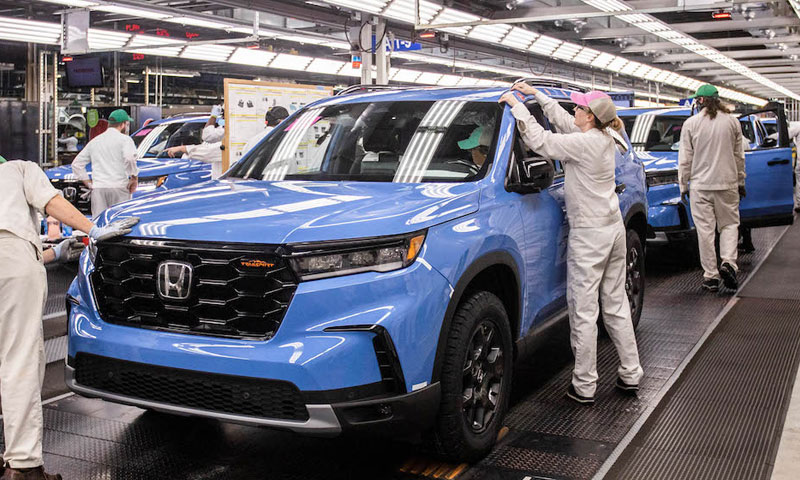
Honda’s China Plants Stay Offline as Semiconductor Supply Remains Unstable
Honda Motor Co. has announced an extended production halt at three of its joint-venture manufacturing plants in China, citing continued shortages of semiconductor chips. The facilities, operated in partnership with Guangzhou Automobile Group (GAC), will now remain idle until January 19, 2026, instead of resuming operations on January 5, according to Reuters. In a statement to Global Times, Honda described the extension as a short-term production adjustment, stressing that the impact on overall output would be “relatively control lable.” The automaker said it expects to make up for lost production later in the year and does not foresee delays in vehicle deliveries to customers. Ongoing chip supply pressures The move highlights the lingering strain on global automotive supply chains, where access to semiconductor chips remains uneven. While the most severe shortages seen during the peak of the COVID-19 pandemic have eased, automakers continue to face intermittent bottlenecks due to delivery delays, logistics disruptions, and uneven recovery among chip suppliers. Honda faced similar challenges earlier in 2025, when it was forced to scale back or temporarily suspend production at several North American plants. Industry analysts note that delays from major semiconductor manufacturers — including firms such as Nexperia — have affected multiple automakers, although Honda has not attributed the China halt to any single supplier. China’s role in Honda’s strategy China remains one of Honda’s most important global markets, with the Guangzhou joint-venture plants playing a key role in supplying vehicles for both domestic buyers and overseas markets. While the prolonged shutdown may temporarily widen the gap between planned and actual production volumes, Honda believes it can recover output once supply conditions stabilize. Longer-term industry response Automotive experts say the situation underscores the need for diversified chip sourcing, stronger supplier coordination, and more flexible production planning. Despite years of adaptation since the pandemic, the semiconductor supply chain remains vulnerable to disruptions — a challenge that continues to test automakers operating in highly competitive global markets. Honda’s decision reflects the delicate balance manufacturers must strike between managing supply constraints and meeting demand, even as the industry works toward more resilient long-term solutions.

Think Twice Before Drinking Water on Flights, New Study Warns
Airline passengers may want to rethink what they drink on board. A new study has warned that water served on many flights could be potentially unhealthy, prompting researchers to advise travelers to stick to bottled water and avoid coffee or tea prepared using aircraft water systems. The findings come from the Center for Food as Medicine & Longevity, which analyzed more than 35,000 water samples collected from 10 major and 11 regional airlines over a three-year period. Based on the results, the nonprofit also recommends avoiding washing hands with airplane tap water and instead using hand sanitizer with at least 60% alcohol. While water quality may not rank high among passengers’ safety concerns, the organization described it as an important public health issue. Drinking contaminated aircraft water, it warned, can lead to gastrointestinal illness and potential exposure to harmful pathogens. What the study found The analysis showed that 2.7% of samples tested positive for total coliform bacteria, an indicator that disease-causing organisms may be present in the water system. More alarmingly, E. coli was detected 32 times across the 21 airlines reviewed. “Testing for coliform bacteria is critical because its presence suggests that pathogens could enter the drinking water supply,” the group said. In the United States, onboard water systems are regulated under the Environmental Protection Agency’s Aircraft Drinking Water Rule (ADWR), introduced in 2011. The rule requires airlines to regularly test water, flush and disinfect tanks multiple times a year, and monitor for contamination. However, the study noted that enforcement is inconsistent and penalties for violations are rarely imposed. Airlines respond Several airlines pushed back against the findings. American Airlines said it is reviewing the study but stressed that its potable water program complies fully with EPA rules and has passed recent audits without violations. JetBlue Airways said it follows EPA, FDA, and FAA standards and primarily serves bottled drinking water onboard.Spirit Airlines said it maintains a comprehensive testing and maintenance program and has improved procedures in recent years. Industry group Airlines for America said passenger and crew safety remains the sector’s top priority, adding that U.S. airlines follow federal guidelines to ensure onboard water safety. Major airlines ranked: best to worst The study scored airlines on a five-point scale, with points deducted for violations such as detecting contaminants in water samples. Delta Air Lines — 5.00 (Grade A) Frontier Airlines — 4.80 (Grade A) Alaska Airlines — 3.85 (Grade B) Allegiant Air — 3.65 (Grade B) Southwest Airlines — 3.30 (Grade C) Hawaiian Airlines — 3.15 (Grade C) United Airlines — 2.70 (Grade C) Spirit Airlines — 2.05 (Grade D) JetBlue Airways — 1.80 (Grade D) American Airlines — 1.75 (Grade D) Regional airlines ranked: best to worst GoJet Airlines — 3.85 (Grade B) Piedmont Airlines — 3.05 (Grade C) Sun Country Airlines — 3.00 (Grade C) Endeavor Air — 2.95 (Grade C) SkyWest Airlines — 2.40 (Grade D) Envoy Air — 2.30 (Grade D) PSA Airlines — 2.25 (Grade D) Air Wisconsin — 2.15 (Grade D) Republic Airways — 2.05 (Grade D) CommuteAir — 1.60 (Grade D) Mesa Airlines — 1.35 (Grade F) What passengers should do Until oversight improves, researchers advise travelers to avoid aircraft tap water entirely—including coffee and tea—and rely on sealed bottled beverages. For hygiene, alcohol-based hand sanitizer is considered safer than washing hands with onboard water. The study concludes that while many airlines meet basic regulatory requirements, stronger enforcement and greater transparency are needed to ensure that something as simple as a glass of water at 35,000 feet does not pose a health risk.

A $1 Billion Citrus Opportunity Awaits Pakistan — But How Can It Be Achieved?
Pakistan’s citrus industry is emerging as a strong contender for major export-led growth, with the capacity to raise annual export earnings to $1 billion within the next six years by modernising production, introducing new citrus varieties, and expanding value-added processing. According to Shoaib Ahmed Basra, Member Board of Directors at the Pakistan Horticulture Export and Development Company (PHDEC) and chairman of its Citrus Export Sub-committee, industry assessments suggest the target is well within reach. He said growers are increasingly shifting towards seedless, early- and late-season citrus varieties, supported by improved orchard management and post-harvest handling practices. Pakistan has already demonstrated its export capability. Citrus exports reached nearly $250 million in 2021, a performance Basra described as evidence of the resilience and strength of local growers and exporters. He noted that adopting internationally preferred varieties would allow Pakistan to move into higher-value global markets, significantly lifting export volumes and returns. A key pillar of this growth strategy is diversification beyond Kinnow. Expanding into mandarins, tangerines, clementines, oranges, lemons, and grapefruit would allow Pakistan to supply international markets throughout the year, rather than being limited to a short seasonal window. Basra stressed that improving quality certification, traceability systems, clean nurseries, and access to imported germplasm would be critical in strengthening Pakistan’s competitiveness in premium markets. He also highlighted the importance of developing dedicated citrus clusters, particularly on virgin land in the Potohar region, to support export-focused, modern cultivation. While diversification is essential, Kinnow remains the backbone of the industry. Pakistan is expecting a record Kinnow harvest of around 2.8 million tonnes this season, almost double last year’s output. Basra said the surge presents a timely opportunity to expand value-added exports, helping farmers and exporters earn better margins. Processed citrus products—such as juices, concentrates, and packaged beverages—offer especially strong potential due to their longer shelf life and higher global demand. Pakistan already supplies fresh citrus by sea to markets across the Middle East, Indonesia, and the Philippines, while nearby Central Asian countries are becoming increasingly attractive due to proximity and rising consumption. Currently ranked as the world’s 18th-largest citrus exporter, Pakistan’s citrus sector accounts for nearly 30% of total fruit production. Kinnow alone represents about 85% of citrus output and roughly 80% of citrus exports, with production concentrated mainly in Punjab, particularly districts such as Sargodha, Sahiwal, Multan, and Khanewal. With Pakistan producing nearly 90% of the world’s Kinnow supply, the country holds a unique global advantage—one that can now be leveraged to build a more diversified, higher-value, and export-driven citrus economy.

From World Cups to Olympic Gold: The Athletes Who Will Rule 2026
The year 2026 is shaping up to be a landmark moment in global sport. Cricket will be defined by record chases and leadership transitions, football will build toward one of the most watched FIFA World Cups ever, and the Winter Olympics in Milan–Cortina will put elite athletes under intense global focus. Across disciplines, a mix of established icons and fearless young stars will dominate headlines. Cricket: records, rhythm, and rivalry Few stories feel as compelling as Joe Root’s quiet pursuit of history. By 2026, his place among the greatest Test batters ever may no longer be debated, only ranked. Each series adds weight to the conversation around longevity and consistency in modern cricket. From South Asia, Babar Azam remains central to Pakistan’s ambitions. His elegance across formats continues to define Pakistan’s batting identity, while Shaheen Shah Afridi and Jasprit Bumrah represent a fast-bowling era built on pace, skill, and intelligence rather than raw aggression alone. India’s next wave also matters. Shubman Gill and Yashasvi Jaiswal look ready to shape the decade ahead. In white-ball cricket, England’s Harry Brook and Australia’s Travis Head bring a fearless scoring style that keeps bowlers guessing. Football: youth meets superstardom Football in 2026 will orbit the FIFA World Cup, and the stars are already aligning. Kylian Mbappé enters his prime years with the confidence of a global icon. Erling Haaland continues to redefine the modern striker with strength and precision. The younger generation is impossible to ignore. Jude Bellingham has matured into a midfield leader, while Spain’s teenage sensation Lamine Yamal symbolizes how quickly football’s age barrier is disappearing. Add Vinícius Júnior, Jamal Musiala, and Bukayo Saka, and 2026 begins to look like a passing of the torch. Olympics: winter brilliance in Milan–Cortina The 2026 Winter Olympics will spotlight precision, courage, and mental strength. Chloe Kim remains the face of snowboard halfpipe excellence, while Eileen Gu blends technical mastery with star power. In endurance events, Johannes Høsflot Klæbo could dominate the distance races once again. Figure skating fans will also keep a close eye on Japan’s Kaori Sakamoto, whose consistency has made her one of the sport’s most reliable champions. Why 2026 matters What makes 2026 special is not just talent, but timing. Veterans are pushing legacy limits, while younger athletes compete without fear. Across cricket grounds, football stadiums, and icy Olympic venues, 2026 promises moments that will define careers and memories fans will carry for decades.

Saudi Arabia’s 6G Roadmap Is Moving Fast—Pakistan’s 5G Still Isn’t Here
Pakistan talks about 5G like it’s “just around the corner.” Saudi Arabia talks about 6G like it’s a project plan. That contrast has become hard to ignore. In Pakistan, the 5G auction has dragged on because the big decisions keep piling up. Reports from local business media point to a familiar mix: court and regulatory uncertainty, market structure changes like the Telenor–PTCL/Ufone merger, and long debates over pricing and auction terms. Even when timelines are announced, they often come with asterisks—“subject to approvals,” “policy directives,” and “final information memorandum.” Industry voices warn that delays don’t just slow download speeds. They slow the whole digital economy. Pakistan’s own IT export ambitions get harder when networks can’t support modern cloud services, low-latency apps, and reliable connectivity beyond major cities. Now look at Saudi Arabia. The Kingdom is already framing 6G as a national capability, not a telecom upgrade. Saudi policy papers and ecosystem work focus on research, human capital, standards influence, and regulatory preparation—years before commercial rollout. And it’s not just theory. Saudi Arabia’s regulator (CST) recently announced a regional trial in the 7.125–8.4 GHz band, calling it a candidate range for 6G and a step toward shaping future spectrum policy. This is what “aggressive future planning” looks like: test early, build partnerships, then fight for influence in global spectrum and standards forums. So, policy paralysis vs future planning? Pakistan’s problem isn’t talent or demand. It’s execution. A clean auction, realistic reserve prices, and stable regulatory signals would unlock operator investment. Saudi Arabia, meanwhile, is betting that 6G leadership will pay off the way oil once did: by owning the next platform. In a world moving toward IMT-2030, waiting isn’t neutral. It’s expensive.

Manohara Odelia Breaks Silence on Abuse Allegations Against Malaysian Prince
Indonesian model Manohara Odelia has reopened a deeply troubling chapter of her life, alleging that she was coerced into marriage and subjected to abuse while still a minor by a Malaysian royal. Her renewed public statements have reignited debate about consent, power, and how media frames stories involving influential families. Manohara says she was only 16 when she was pressured into marrying Tengku Muhammad Fakhry, a member of Malaysia’s Kelantan royal family. In recent interviews, she rejected the long-used label of “ex-wife,” arguing that it falsely implies consent. “This was not a consensual relationship,” she has stated, adding that the marriage should be understood as coercive and abusive. According to Manohara, her life after the marriage was marked by physical and sexual abuse, isolation, and constant surveillance. She claims she was prevented from contacting family members freely and faced repeated threats. Her account echoes earlier statements made years ago but now comes with renewed urgency, as she calls on international media to correct what she describes as a misleading narrative. The case first drew global attention in 2008 when Manohara escaped from Malaysia to Indonesia with help from her mother. Indonesian authorities at the time treated the matter seriously, and public sympathy grew after visible injuries were reported. Despite the attention, the Malaysian royal family denied wrongdoing, and no conviction followed. What has changed now is the focus on language and accountability. Manohara says media outlets often frame her story through the lens of scandal rather than harm. She argues that describing the situation as a “failed royal marriage” erases the reality of underage coercion and abuse. Human rights advocates say her story highlights a broader issue. When power imbalances exist — especially involving wealth, royalty, or political influence — consent becomes complex and often impossible. Legal experts also note that international laws on child protection leave little ambiguity when minors are involved. Manohara’s decision to speak again comes amid a global reassessment of how societies treat survivors who accuse powerful figures. Her message is direct: accuracy matters, words matter, and silence benefits abusers more than victims. As public discussion grows, her case serves as a reminder that status does not place anyone above scrutiny and that stories involving minors deserve careful, ethical reporting.
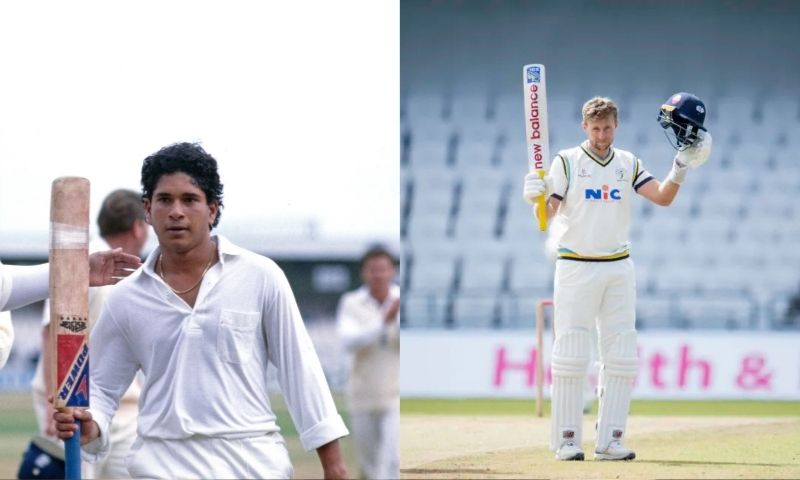
Can Joe Root Break Sachin Tendulkar’s Most Sacred Test Record?
For years, Sachin Tendulkar’s record as the highest run-scorer in Test cricket has felt untouchable. With 15,921 runs across a 24-year career, the mark has stood as the ultimate symbol of longevity and excellence. But now, one name is increasingly part of the conversation: Joe Root. Root’s steady climb continued during the fifth Ashes Test at the SCG, where he crossed another major milestone. According to ESPNcricinfo, the England batter became only the second player after Tendulkar to score more than 3,000 Test runs against Australia, underlining his consistency against elite opposition. That achievement has intensified debate around how far Root can realistically go. Statistically, Root is well ahead of where most greats stood at the same stage. He has already passed legends like Jacques Kallis, Rahul Dravid, and Ricky Ponting in total Test runs. Importantly, he has done so while maintaining a strong average and batting through different eras, conditions, and leadership roles. Age is another key factor. Root is still in his mid-30s and remains England’s most dependable Test batter. Modern fitness standards, lighter domestic workloads, and England’s packed Test calendar all work in his favour. If he plays another four to five years, analysts believe he could realistically add 3,000 to 4,000 more runs. However, the road ahead is not simple. Tendulkar played 200 Tests, a number few modern players approach. Root would need sustained form, consistent selection, and good health across multiple long series. England’s evolving Test strategy, especially their aggressive “Bazball” approach, could also influence how long Root stays at the crease. There is also the mental side. Chasing a record of this scale brings pressure that few athletes ever face. Tendulkar carried that weight for years, often with entire nations watching every innings. Root, by contrast, has so far played with relative freedom, focusing on match impact rather than milestones. Former players remain divided. Some believe Tendulkar’s record will stand because of the sheer volume of cricket required. Others argue that Root’s adaptability, discipline, and hunger make him the most credible challenger yet. For now, the record remains with the Master Blaster. But for the first time in years, it no longer feels completely out of reach.
