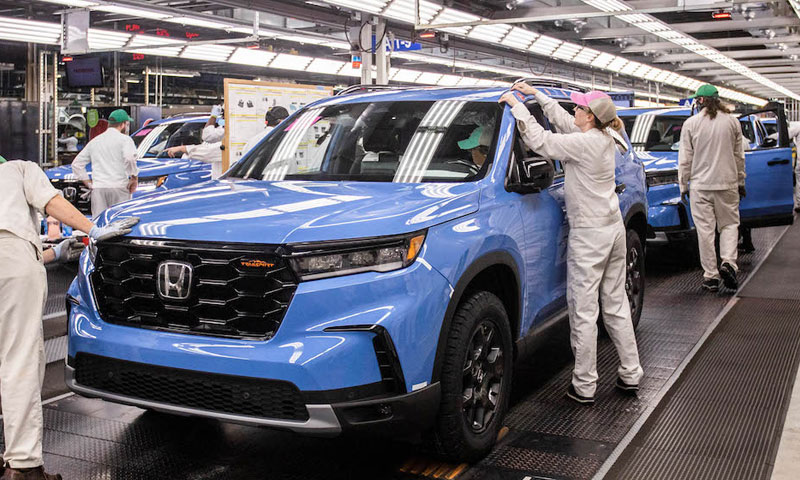
Honda Motor Co. has announced an extended production halt at three of its joint-venture manufacturing plants in China, citing continued shortages of semiconductor chips. The facilities, operated in partnership with Guangzhou Automobile Group (GAC), will now remain idle until January 19, 2026, instead of resuming operations on January 5, according to Reuters.
In a statement to Global Times, Honda described the extension as a short-term production adjustment, stressing that the impact on overall output would be “relatively control
lable.” The automaker said it expects to make up for lost production later in the year and does not foresee delays in vehicle deliveries to customers.
Ongoing chip supply pressures
The move highlights the lingering strain on global automotive supply chains, where access to semiconductor chips remains uneven. While the most severe shortages seen during the peak of the COVID-19 pandemic have eased, automakers continue to face intermittent bottlenecks due to delivery delays, logistics disruptions, and uneven recovery among chip suppliers.
Honda faced similar challenges earlier in 2025, when it was forced to scale back or temporarily suspend production at several North American plants. Industry analysts note that delays from major semiconductor manufacturers — including firms such as Nexperia — have affected multiple automakers, although Honda has not attributed the China halt to any single supplier.
China’s role in Honda’s strategy
China remains one of Honda’s most important global markets, with the Guangzhou joint-venture plants playing a key role in supplying vehicles for both domestic buyers and overseas markets. While the prolonged shutdown may temporarily widen the gap between planned and actual production volumes, Honda believes it can recover output once supply conditions stabilize.
Longer-term industry response
Automotive experts say the situation underscores the need for diversified chip sourcing, stronger supplier coordination, and more flexible production planning. Despite years of adaptation since the pandemic, the semiconductor supply chain remains vulnerable to disruptions — a challenge that continues to test automakers operating in highly competitive global markets.
Honda’s decision reflects the delicate balance manufacturers must strike between managing supply constraints and meeting demand, even as the industry works toward more resilient long-term solutions.