


In Pakistan, love isn’t always defined by proximity. Increasingly, economic choices, career opportunities, and education abroad are creating a growing number of long-distance relationships (LDRs) especially among married couples and young adults navigating modern life. Across the country, thousands of relationships span cities, provinces, and borders. While exact national figures on LDRs are limited, Pakistan’s long history of economic migration offers a clue. A major study notes that many qualified Pakistanis leave the country due to limited job opportunities and economic insecurity. This migration is driven by better work prospects abroad, particularly in the Gulf, Europe, and North America. For Pakistani families, that often translates into long periods of separation. A recent academic study of 400 married Pakistani women whose husbands work overseas found that long-term separation negatively affects marital satisfaction and emotional bonding. In this study, researchers observed a significant negative link between LDRs and marital satisfaction, showing that distance can strain emotional connections. The same research identified trust and resilience as key factors that help couples sustain long-distance commitments. Partners with stronger trust and greater emotional resilience reported better satisfaction, despite physical separation. The phenomenon isn’t new. For decades, millions of Pakistani families have managed relationships across geographical divides. Rural-urban and international migration has left wives and children behind as husbands pursue better incomes abroad. One earlier academic report noted how wives left behind face emotional stress, loneliness, and new responsibilities at home — factors that intensify the challenges of long-distance life. In urban areas, young adults face a different kind of distance challenge. Expanding access to higher education abroad and global job markets means many couples begin relationships online or meet before one partner moves overseas. Social media and communication platforms like WhatsApp and video calling help maintain connections across borders. A study focusing on Pakistani couples in long-distance situations found partners heavily rely on social media communication to sustain emotional bonds and balance separation. Cultural expectations further shape LDR experiences in Pakistan. Traditional norms which prioritize physical proximity and family involvement make long-distance commitments emotionally complicated. Meanwhile, modern dating dynamics and digital communication are exposing younger generations to global relationship norms, which are reshaping how couples manage distance even before marriage. Despite the hardships, many couples now view long-distance relationships as part of modern life. For some, the separation is temporary, a calculated step toward a shared future. For others, regular visits and digital communication help sustain intimacy until they can finally reunite. In both cases, trust, resilience, and clear communication remain crucial.

Viral YouTube Mystery: What’s Behind the 140-Year Blank Video?
A mysterious YouTube video claiming a runtime of more than 140 years has become one of the internet’s strangest viral puzzles, baffling users worldwide and sparking online theories about its meaning and origin. The upload — a completely blank video with no visuals or sound — was posted on January 5, 2026 by a channel named @ShinyWR, and has since amassed millions of views despite offering nothing to see or hear. At first glance, the video’s title shows no words and only a question mark. The listed duration is displayed as “1,234,567:30:00,” which converts to over 140 years. That number far exceeds the lifespan of any human and immediately captured viewers’ curiosity. But when clicked, the video’s playback duration suddenly drops to about 12 hours, raising confusion about whether the century-long length is real or an anomaly. Despite containing nothing but a black screen and silence, the upload has drawn more than 2.8 million views and tens of thousands of comments. Some viewers are simply baffled, while others have taken to social media platforms to share reactions, memes, and speculation. One commenter quipped that this might be “the start of a conspiracy theory people are gonna randomly talk about 10 years later,” while another joked that the video’s lore could become legendary. Part of the mystery stems from the video’s cryptic description, which is written in Arabic characters and widely interpreted by users to mean “Come, meet me in hell.” Screenshots of the description have circulated on platforms like X and Threads, prompting a mix of reactions ranging from humor to unease. Viewers and tech watchers are debating what the upload might represent. Some believe it could be a technical glitch, a test of YouTube’s upload limits, or a deliberate experiment with metadata manipulation. Others think it might be part of an alternate reality game (ARG) or an artistic or conceptual project designed to provoke reaction. It should be noted that YouTube’s documented upload limits normally cap videos at around 12 hours, which makes the claimed 140-year duration even more perplexing. There’s also curiosity around the @ShinyWR channel itself. According to some reports, the account’s profile lists a location that may be linked to North Korea, though this detail has not been independently verified. The same channel has previously uploaded other unusually long videos, including clips lasting hundreds of hours. With no official explanation from YouTube or the uploader, the blank 140-year video remains an internet enigma, a viral curiosity that thrives on silence, ambiguity, and collective speculation.
Pakistan Declares Export Emergency to Transform Economy
Pakistan’s government is preparing to declare an “export emergency” to jump-start the nation’s faltering trade performance and strengthen the economy amid ongoing challenges including slow GDP growth and reliance on foreign financial support. Minister for Planning and Development Ahsan Iqbal outlined the bold plan at a press conference in Islamabad, saying urgent action is needed to transform Pakistan into an export-driven economy. “We will have to transform the entire system and become an export nation on an emergency basis, otherwise, the dependence on the International Monetary Fund (IMF) and friendly countries for financial support would continue,” Iqbal said. Despite a slight increase of about 1 percent in exports during the first four months of the current fiscal year (July-October 2025), growth remains disappointing compared to targets. Officials argue that without urgent reforms, Pakistan cannot break its cycle of external support and widening trade deficits. Under the new strategy, the federal government will create a special export emergency cell at the Prime Minister’s Office. This unit will work with business communities and exporters to address complaints and remove hurdles to growth quickly. A dedicated hotline and rapid response mechanism will help tackle issues that slow down business operations. Ilyas stressed that the plan aims to involve all sectors including agriculture, industry, and services to boost exports by 40 percent within four years and nearly 200 percent by 2035. Part of the proposal includes consulting with the Federation of Pakistan Chambers of Commerce and Industry (FPCCI) and local chambers to ensure district-level challenges are resolved. Iqbal also acknowledged that high energy costs and obligations under the ongoing IMF programme pose challenges, but he said the government hopes to use this period to reform energy and fiscal sectors to support export growth later. Analysts say the “export emergency” moves beyond rhetoric to signal a whole-of-government approach that may encourage investment and improve Pakistan’s global trade position. Without decisive action, critics warn, Pakistan risks repeating past cycles of borrowing and economic instability. Experts familiar with Pakistan’s trade data note that weakening global demand and structural bottlenecks have constrained export growth, especially in textile and agricultural products. As such, businesses are keen to see reforms reduce red tape, streamline export procedures, and improve access to markets. The government’s move comes amid broader economic pressure, including inflation and currency volatility. As policymakers prepare detailed implementation plans next week, exporters and economic stakeholders are watching closely to see whether the emergency strategy translates into real gains for Pakistan’s export industry.
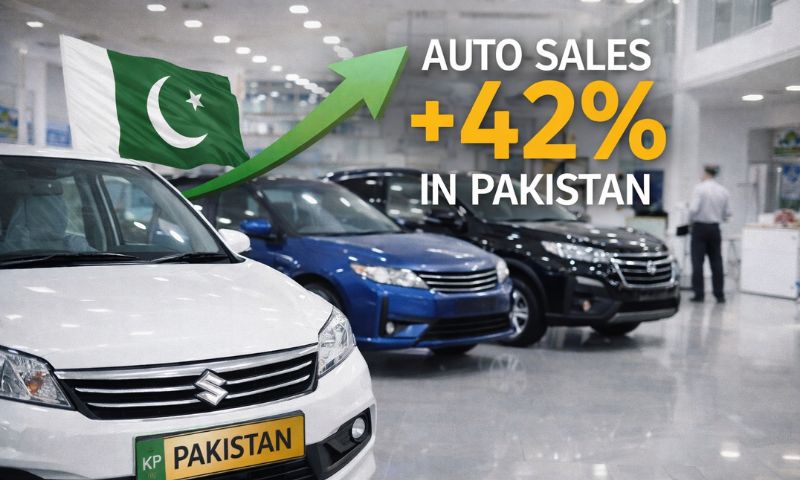
Vehicle Sales in Pakistan Jump as Consumers Return to Showrooms
Pakistan’s automobile market surged again as vehicle sales jumped sharply during the first half of the current fiscal year 2025-26, signaling a strong rebound in the nation’s auto sector. According to data released by the Pakistan Automotive Manufacturers Association (PAMA), total car sales climbed 42% to 65,910 units between July and December 2025 compared with the same period last year. Jeep and pickup sales rose 58% to 22,412 units, while truck and bus sales surged 106% and 52%, respectively. Two- and three-wheeler sales also increased 32% to 921,566 units during this time. Tractor sales, however, dropped 26% to 12,929 units as agricultural demand softened. Industry experts say this growth reflects renewed confidence in Pakistan’s auto sector, which is rebounding after years of slowdown. Analyst Shafiq Ahmed Shaikh described the results as a sign of “major recovery” for the industry. He pointed to factors such as falling interest rates, the removal of import restrictions, attractive discounts from manufacturers, and a wider selection of vehicles available locally. Lower interest rates have played a key role. The State Bank of Pakistan (SBP) cut its policy rate from around 22% in 2024 to about 10.5% by December 2025, making auto loans more affordable and boosting purchases. Observers say this has encouraged buyers who delayed purchases during tight credit conditions earlier in the year. The trend is not limited to the latest six months. PAMA data showed steady growth across the fiscal year, with car sales up 43% through five months of FY2025-26, and earlier quarters also reporting strong year-on-year increases. This continuous rise underscores the auto sector’s resilience as macroeconomic conditions gradually improve and consumer sentiment strengthens. Part of the broader industry recovery has come from new entrants and expanded offerings in the market. Besides established brands like Pak Suzuki Motors, Atlas Honda, and Sazgar, electric vehicle assembler Mega Motor Company has begun delivering EV models locally, pointing to a diversifying automobile landscape in Pakistan. Still, some challenges remain. Tractor sales have lagged due to falling agricultural demand, rising input costs, and a subsidy structure that experts call “misguided”, according to Shaikh. Truck and bus surge data suggests commercial transport demand is returning, but long-term sustainability will depend on continued economic stability and supportive policies. Overall, the latest numbers show Pakistan’s auto sector is regaining steam after a difficult period, boosted by policy support, lower financing costs, and improving consumer confidence. If these trends persist, analysts believe the industry can sustain growth and contribute more significantly to industrial output in the months ahead.
How PostEx Is Fixing Pakistan’s E-Commerce Cash Flow Nightmare
In Pakistan’s fast-growing online marketplace, sellers often struggle to manage cash flow because most customers still pay with cash on delivery (COD). Traditional courier services take weeks to release payments after delivery. This delay forces many small and medium e-commerce shops to wait for revenue they urgently need to restock and grow. PostEx, a Lahore-based fintech and logistics startup, is tackling that problem head-on with an innovative solution that is reshaping the e-commerce ecosystem. Founded in 2020, PostEx combines payment financing with delivery services to help online merchants get paid instantly for their COD orders. Instead of waiting days or weeks for revenue, sellers receive upfront payment soon after their customers place orders. The company’s system blends modern financial technology with logistics to give businesses reliable cash flow so they can focus on scaling operations without worrying about delayed payouts. PostEx’s approach has quickly attracted attention from investors and the market. In August 2024, the company raised $7.3 million in a pre-Series A funding round led by Conjunction Capital and other global investors. The funding will support PostEx’s expansion beyond Pakistan into Gulf Cooperation Council (GCC) countries, including Saudi Arabia and the UAE. Muhammad Omer Khan, the CEO and founder of PostEx, described the core challenge the company aims to solve: “Ecommerce businesses need access to flexible and affordable funding solutions, and our mission at PostEx is to empower online sellers by addressing their most critical challenge: access to the right capital to grow their business through our advanced embedded logistics solution.” PostEx’s services go beyond upfront payments. The company also integrates logistics support through its delivery network. In 2022, it acquired Call Courier, one of Pakistan’s established logistics firms, to strengthen its delivery footprint nationwide. The acquisition helped PostEx serve thousands of merchants across more than 500 cities. Industry observers say PostEx’s hybrid model bridges a critical gap in Pakistan’s e-commerce value chain. By offering financing solutions and reliable deliveries under one platform, PostEx reduces operational hurdles for online shops trying to compete in a market projected to grow rapidly in the coming years. Analysts note that this model could become a blueprint for other emerging markets where COD remains dominant. As PostEx expands its services and enters new regions, its focus on solving real business pain points could help unlock further growth for Pakistan’s digital economy and establish the startup as a leader in embedded fintech innovation.

Google Sparks Outrage: Emails Tell 13-Year-Olds to Drop Parental Controls
Parents around the world are raising serious concerns after Google began emailing children as young as 12 and 13 to inform them they can end parental supervision on their accounts. The controversy erupted after Melissa McKay, president of the Digital Childhood Institute, posted on LinkedIn that Google had messaged her child directly, telling him he was “almost 13” and eligible to remove parental controls from his Google account. Under Google’s current policy, when a child reaches the age of 13 or the local applicable age of consent, the company sends an email notifying them that they can update their account settings. Children then get the choice to continue supervised settings or manage their own account. Parents also receive notice. But McKay and other parents see a deeper problem. They argue that Google is not simply informing families of a policy change. Instead, they say the company is directly engaging with minors about autonomy over their digital life without requiring parental consent. McKay wrote, “A trillion-dollar corporation is directly contacting every child to tell them they are old enough to ‘graduate’ from parental supervision. The email explains how a child can remove those controls themselves, without parental consent or involvement.” Critics describe this as more than a technical detail. They call it a reframing of family authority. One parent commented online that the email created tension at home. Their child asked: “Why don’t you trust me if Apple says it’s fine?” referring to a similar email her daughter received from another tech platform. Some parents warn the move could shift how children view parental boundaries. Another voice on social media wrote that direct messaging to children “blurs a critical boundary between education infrastructure and commercial engagement.” Child safety advocates also point to broader concerns about how parental controls work. Google’s Family Link service is meant to help parents monitor usage, set screen time limits, and manage content for minors. But once a child gets the notification at 13, they can decide to stop supervision entirely, potentially removing protections like SafeSearch filters, app approvals, and location sharing. The debate taps into larger issues of data privacy and children’s online safety, especially when tech companies take roles that traditionally belonged to parents. Critics have even called for government investigations into the practice. As of now, Google has not issued a public statement responding to these concerns.

Why You Yawn When Someone Else Does: The Surprising Brain Trick Behind It
You’re in a meeting. Someone yawns. Within seconds, you feel that same urge to open wide and inhale deeply. But why does seeing someone else yawn make you yawn too? Known as contagious yawning, this phenomenon has puzzled scientists for decades. Although yawning itself is a natural reflex linked to tiredness and boredom, the contagious version may reveal something deeper about how our brains connect with others. Yawning Is More Than Sleepiness Yawning occurs across almost all vertebrate animals and often happens when someone is tired, bored, or stressed. But the contagious kind is different: just observing someone yawn can trigger your own. Some research suggests this happens not only when you see someone yawn, but also when you hear or even think about a yawn. Scientists believe contagious yawning may be linked to the brain’s mirror neuron system—cells that fire both when we perform an action and when we observe someone else doing it. This mirroring mechanism helps us learn through imitation and may be tied to our ability to understand others’ emotions. Dr. Tasha Seiter, a psychologist, explains that contagious yawning “may reflect empathy and nonconscious mimicry in social animals.” In other words, when you see a yawn, your brain unconsciously imitates it, much like it might mimic a smile or frown. Does Empathy Drive Contagion? Many studies have linked contagious yawning with empathy and social bonds. For example, people are more likely to ‘catch’ yawns from friends and family than from strangers, suggesting emotional closeness increases susceptibility. A 2011 study found that social bonding and not gender or nationality best predicted whether someone would yawn after seeing another yawn. However, not all research agrees. Some scientists argue that the connection between empathy and contagious yawning is inconclusive, noting that not everyone yawns when exposed to the stimulus. More Than Just a Reflex Beyond empathy, contagious yawning might have evolutionary roots. Some researchers suggest it helped early humans and social animals synchronize group behavior and maintain alertness—an advantage when watching for danger together. Other findings show that contagious yawning doesn’t just occur between humans. Dogs, great apes, and even some birds may yawn contagiously, pointing to a broad biological pattern with deep social links. Yawning when someone else yawns isn’t just about tiredness. It’s a real, documented phenomenon involving brain networks tied to imitation, social connection, and possibly empathy. Though the full picture isn’t complete, this curious behavior reminds us of how deeply our brains are wired for connection.
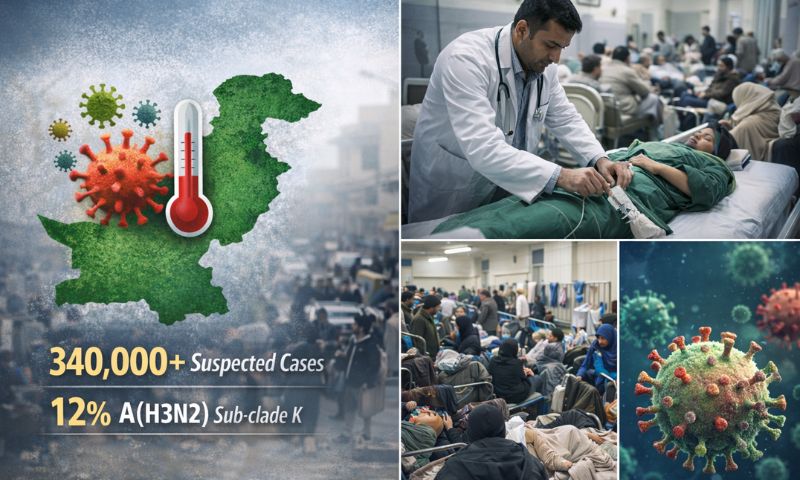
Why Pakistan’s Winter Flu Season Feels Stronger: Early Surge Explained
Pakistan is experiencing an unusually active influenza season this winter, with a noticeable rise in flu cases across major cities. Health experts say this surge is not a brand-new disease but a known virus showing genetic drift that spreads more rapidly than typical seasonal patterns. According to the country’s National Institute of Health (NIH), between epidemiological weeks 44 and 49 (October–November 2025), Pakistan recorded 340,856 suspected influenza-like illness cases. Around 12 percent of tested samples were confirmed as Influenza A(H3N2), driven by a variant known as Sub-clade K. This H3N2 strain has also been reported globally, especially in the South-East Asia region, where it accounted for about 66 percent of all Influenza A cases by late 2025. The World Health Organization (WHO) confirms that influenza activity has risen since October in the northern hemisphere, including Pakistan. Medical specialists in Pakistan warn that the flu season’s early start and wider spread make it feel harsher than usual. Typical symptoms being reported include high fever, severe cough, sore throat, headache, muscle pain, fatigue and, in some cases, shortness of breath — symptoms more intense than common cold infections. Despite media talk about “super flu,” health officials stress there is no evidence this strain causes more severe disease than past seasonal flu viruses. What is unusual is how early and broadly cases are appearing this year. Dr. Rana Safdar, a local infectious disease expert, tells Dawn News that while the current strain differs genetically from the one used in the 2025–26 vaccine, “the vaccine will still reduce the risk of severe illness and hospitalization.” Officials are also urging caution because winter weather because of the cold, foggy mornings and close indoor contact can help respiratory viruses spread more easily. High-risk groups, including young children, the elderly, and people with conditions like diabetes or lung disease, are advised to take extra precautions. Already, hospitals and clinics in Punjab and Sindh report higher than normal patient visits for flu-like symptoms, showing the seasonal wave is well underway. Public health advice emphasizes vaccination, frequent handwashing, healthy diets, and avoiding unnecessary antibiotic use. These simple measures can significantly reduce the severity of illness and prevent hospital overload.
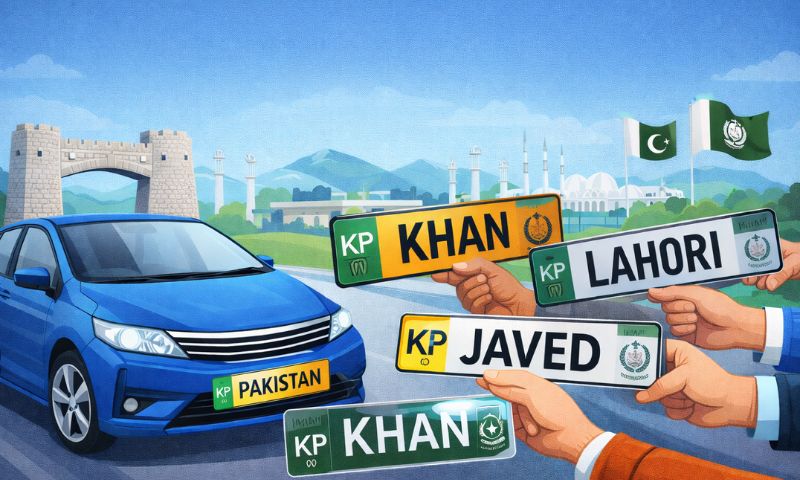
KP Unveils Personalized Number Plate Scheme for Vehicle Owners
The Government of Khyber Pakhtunkhwa (KP) has unveiled a new initiative to let vehicle owners choose specialized and unique number plates under a modernized scheme meant to bring personalization and identity to road vehicles across the province. The plan was approved by the provincial authorities and announced through the Excise, Taxation and Narcotics Control Department after a detailed review of progress and online readiness. Under this system, vehicle owners will be able to obtain custom number plates for both new and existing vehicles with names or identity themes that reflect personal preference. This marks a second major rollout following the earlier introduction of personalized plates in the province. Officials say that early online services will support smoother processing once the scheme launches. At a meeting chaired by Syed Fakhar Jahan, the KP Minister for Excise, Taxation and Narcotics Control, senior officials and members of the Khyber Pakhtunkhwa Information Technology Board (KPITB) discussed the developments and digital readiness for the project. Khalid Ilyas, the Secretary of Excise and Taxation, and other directors also attended the briefing. The move reflects a growing trend among provincial governments to modernize vehicle registration systems and give citizens more choice in how their assets are recognized. Personalized number plates have gained popularity internationally, from luxury markets to everyday motorists who seek distinction on roads. In places like the UK and UAE, such plates have even become collector items or status symbols. While Pakistan’s new KP scheme won’t immediately carry the same global reputation or pricing structure, officials said it will represent a step toward a more citizen-centric digital service. (general background) By integrating online application and issuance platforms, KP aims to reduce bureaucratic hurdles and speed up delivery. This should help vehicle owners avoid long queues, paperwork delays, and multiple visits to excise offices across the province. Local government officials believe that digital facilitation will enhance transparency and reduce the potential for corruption. (analysis based on government digital rollout trends) The decision also comes at a time when Pakistan’s broader fiscal and administrative reforms are under focus. The Federal and provincial governments are adjusting to economic pressures, fluctuating inflation rates, and public calls for improved services in areas like energy, transportation, and taxation. According to recent economic data, inflation has shown signs of easing over recent months, though energy and food prices remain an ongoing concern. For now, vehicle owners across KP are watching closely for an official launch date and application details. Enthusiasts and ordinary motorists alike see the new number plate scheme as a chance to express identity and add personal flair to their vehicles while tapping into improved government digital services.

Celebrity Clash: Alizeh Shah Threatens Legal Action Against Yasir Nawaz
Pakistani TV star Alizeh Shah has issued a stern final warning to veteran actor-director Yasir Nawaz, accusing him of repeatedly dragging her name into public conversations and threatening legal action if it doesn’t stop. Shah claims Nawaz has mentioned her on multiple platforms for over five years, long after their 2020 project together ended. Her statement has sparked a fresh celebrity controversy in Pakistan’s entertainment circles. The conflict stems from an appearance by Yasir and his brother, Danish Nawaz, on Geo Entertainment’s talk show Hasna Mana Hai. During a light-hearted segment, Zulfiqar’s image appeared alongside journalist Waseem Badami. Danish joked he would choose Shah as his hypothetical sister, prompting Yasir to say, “You can make her your sister, I don’t want to.” Shah responded angrily on Instagram, saying the remarks were part of a long pattern. “This is my final warning to Yasir Nawaz to refrain from taking my name on any platform. It has been five years since I worked on a project with him, yet he continues to mention my name on nearly every talk show he appears on,” she wrote. She emphasized she has documented reports and records of every instance she believes amounts to defamation. Shah added that if Nawaz mentions her again on “any future platform,” she will file a defamation lawsuit without further notice.” She also warned that if the mentions continue, she will “disclose to the entire industry the real reasons why he did not like working with me,” and that these revelations “will not reflect well on your image.” The tension goes back to comments Nawaz made about difficulties on the set of Mera Dil Mera Dushman (2020). At the time, he described the experience as frustrating and even regretted taking the project. His wife, Nida Yasir, also shared that he faced challenges during filming. Yasir later expressed regret for publicly naming and shaming Shah, but that did not end the dispute. Fans and celebrities quickly took sides online. Some defended Shah, while others felt Nawaz’s comments were taken out of context. The debate has reignited conversations about professionalism, respect between artists, and how disagreements should be handled in Pakistan’s entertainment industry. Various other media personalities have weighed in, with some criticizing Shah’s tone and others supporting her right to set boundaries. As both stars navigate this latest clash, many in the industry are watching closely to see if the feud will escalate into a legal battle or be resolved behind the scenes. Either way, it shows the growing impact of social media and public image on celebrity relationships in Pakistan.
