


US President Donald Trump has dramatically escalated pressure on Iran, announcing a sweeping new tariff policy aimed not only at Tehran but also at countries that continue to trade with it. In a social media post on Monday, Trump said the United States would impose a 25 percent tariff on any country doing business with Iran while also maintaining commercial ties with the US. He said the measure would take effect immediately, describing it as “final and conclusive,” though he did not clarify which countries would be targeted first. The announcement comes as Iran faces its most serious wave of unrest in years. Protests, initially sparked by economic grievances, have spread nationwide and evolved into a broader challenge to the ruling system that has governed the country since the 1979 Islamic Revolution. According to economic data platform Trading Economics, Iran’s largest trading partners include China, Turkiye, the United Arab Emirates, and Iraq — all nations with varying degrees of trade exposure to the United States. Iranian authorities have responded to the unrest with force and a near-total internet blackout, measures that rights groups say are intended to obscure the true scale of casualties. The Norway-based NGO Iran Human Rights warned that the communications shutdown has made independent verification of deaths and injuries nearly impossible. “The international community has a duty to protect civilian protesters against mass killing by the Islamic republic,” said IHR director Mahmood Amiry-Moghaddam. Despite the crackdown, protests have persisted for more than two weeks, defying heavy security deployments. Iranian officials have blamed foreign powers for inflaming the unrest and have organised mass pro-government rallies in response. On Monday, Iran’s supreme leader Ayatollah Ali Khamenei, who has ruled since 1989, claimed the demonstrations had failed. Speaking on state television, he said large counter-rallies across the country sent a “warning” to the United States and showed that foreign-backed plans had been thwarted. At a rally in Tehran’s Enghelab Square, parliament speaker Mohammad Bagher Ghalibaf accused the US and Israel of waging a “four-front war” against Iran, citing economic, psychological, military and internal security pressures. He warned that any direct attack would provoke a severe response. Meanwhile, Washington signalled that military options remain on the table. The White House said Trump was “unafraid” to use force if necessary, while still prioritising diplomacy. The US State Department also issued a fresh warning to Americans in Iran, urging dual nationals to leave the country using Iranian passports and cautioning that US citizens face a high risk of detention. China swiftly rejected Trump’s tariff threat. A spokesperson for the Chinese embassy in Washington said Beijing opposed “unilateral sanctions and long-arm jurisdiction,” warning that tariff wars benefit no one and vowing to protect China’s interests. Europe, meanwhile, has taken a harder political stance. The European Union said it was considering additional sanctions over Iran’s handling of protests, while the European Parliament banned Iranian diplomats from its premises. French President Emmanuel Macron condemned what he called indiscriminate state violence against protesters. Russia, a key ally of Tehran, criticised what it described as foreign interference in Iran’s internal affairs, signalling deepening geopolitical divisions as the crisis unfolds. With protests ongoing, diplomacy fragile, and economic pressure intensifying, Iran now finds itself facing mounting isolation — and the growing risk of a broader international confrontation.
Meta Appoints Former Trump Adviser Dina Powell McCormick as President and Vice Chairman
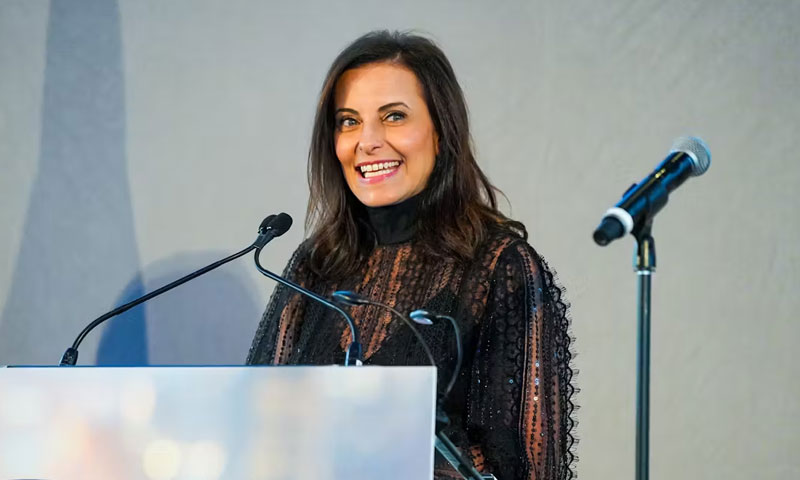
US technology giant Meta has announced a major leadership appointment, naming Dina Powell McCormick as its new President and Vice Chairman, marking a significant expansion of her role within the company. In an official statement released on Monday, Meta said Powell McCormick will join its senior management team after previously serving on the company’s board of directors. The move comes as Meta intensifies its long-term focus on advanced artificial intelligence, large-scale computing infrastructure, and what it describes as the pursuit of “personal superintelligence.” Meta founder and CEO Mark Zuckerberg said Powell McCormick’s global experience and policy background make her a strong fit for the company’s next phase. “Dina’s leadership experience, combined with her deep relationships across governments, finance, and international institutions, positions her uniquely to help guide Meta’s strategy as we scale our most ambitious technologies,” Zuckerberg said. In her new role, Powell McCormick will help shape Meta’s overall strategic direction and oversee execution at the highest level. She will also work closely with teams responsible for compute capacity and infrastructure — areas that have become central to Meta’s AI ambitions. The company added that she will lead efforts to secure new strategic capital partnerships and explore innovative funding models aimed at expanding Meta’s long-term investment capabilities. The appointment drew a public reaction from US President Donald Trump, who congratulated Powell McCormick in a post on his social media platform Truth Social. Calling the decision “a great choice,” Trump praised her past service, saying she had represented his administration “with strength and distinction.” Powell McCormick previously served as deputy national security adviser during Trump’s first term. Earlier in her career, she held senior roles in the George W. Bush administration, including assistant secretary of state and senior White House adviser, building a long résumé spanning diplomacy, national security, and global finance. She stepped down from Meta’s board in December 2025, a move that fueled speculation about a broader operational role — speculation now confirmed with her elevation to one of the company’s top leadership positions. Her appointment underscores Meta’s growing emphasis on blending political, financial, and technological expertise as it positions itself at the forefront of the next wave of artificial intelligence development.

Mbappé, Madrid and a Viral Moment That Changed the Story of the Super Cup Final
A dramatic night in Saudi Arabia delivered more than just silverware for Barcelona — it sparked a new controversy involving Kylian Mbappé and deepened the sense of turmoil surrounding Real Madrid. Barcelona clinched the Spanish Super Cup with a thrilling 3–2 victory over their eternal rivals in Jeddah, powered by a brace from Raphinha and a decisive goal from Robert Lewandowski. While the Catalan side celebrated another Clasico triumph, attention quickly drifted to the events that followed the final whistle. Mbappé, who began the match on the bench as he continued his recovery from a knee sprain, entered the game late but soon found himself under the spotlight for reasons unrelated to football. As Barcelona prepared to lift the trophy, Madrid players were expected to remain on the pitch for the customary guard of honour — a moment often viewed as a symbol of sportsmanship. The way Mbappe orchestrated the players to completely ignore manager Xabi Alonso last night… 🤢 Alonso wanted to line a guard of honour for Barca players, as a sign of respect, but the Madrid players don’t have enough class.No wonder he walked away.. pic.twitter.com/bZqpG0CkIP— Football Away Days (@FBAwayDays) January 12, 2026 Instead, a clip that has since gone viral appears to show Mbappé encouraging teammates to head straight down the tunnel. The footage also suggests he disregarded attempts by then head coach Xabi Alonso to keep the squad on the field for the presentation. Spanish outlet MARCA reported that the French forward “opted not to stay and hastened the team’s exit, avoiding the champions’ ceremony altogether.” The images ignited backlash from Barcelona supporters and reignited debate over Mbappé’s influence within the Madrid dressing room. The timing could hardly have been worse for the Spanish giants. Within hours of the defeat, club president Florentino Pérez pulled the trigger on a major decision, dismissing Alonso and appointing Álvaro Arbeloa as Real Madrid’s new head coach. Before his departure, Alonso had attempted to strike a measured tone, acknowledging the disappointment while praising his team’s effort. But his words did little to stem the growing sense of instability. With a Clasico loss, a viral controversy involving Mbappé, and a sudden managerial shake-up, Real Madrid now face uncomfortable questions. What was meant to be a night of rivalry and spectacle has instead left lasting ripples — and the fallout may linger far beyond Saudi Arabia.
Solar Boom Today, Waste Crisis Tomorrow? The Hidden Challenge of Solar Panels
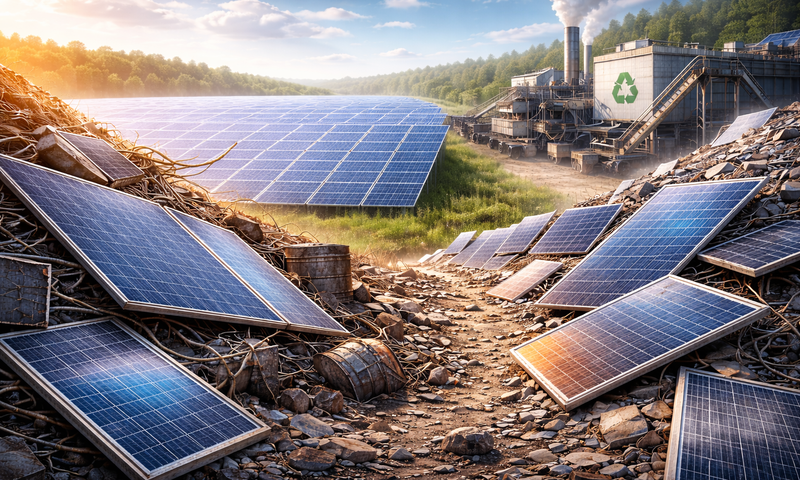
The global shift toward solar energy is accelerating at an unprecedented pace — and Pakistan is no exception. Rising electricity prices, frequent power outages, and falling solar panel costs have pushed households, businesses and industries across the country to embrace rooftop and utility-scale solar power. For millions, solar energy has delivered cheaper, uninterrupted electricity and relief from the national grid. However, experts warn that behind this clean-energy success story lies a slow-building environmental challenge: solar panels do not last forever. Solar panels are not lifetime assets Most solar panels have an operational lifespan of 25 to 30 years. After that, their efficiency drops sharply, making them uneconomical to use. While today’s installations are still relatively new, the first wave of large-scale solar panels installed globally is already approaching retirement. International energy and environmental agencies caution that once these panels reach end-of-life, they become complex electronic waste — bulky, difficult to recycle, and potentially hazardous if dumped improperly. According to global energy assessments, millions of tonnes of solar panel waste are expected to accumulate worldwide over the next two decades. Countries that adopted solar early, including parts of Europe, the United States and East Asia, are already beginning to face disposal and recycling challenges. Why solar panel waste is difficult to manage Solar panels are made from glass, aluminium frames, silicon cells, plastics, and trace amounts of toxic materials such as lead and cadmium. While much of the material is recyclable, the process is neither simple nor cheap. Unlike conventional scrap, solar panels require specialised facilities to safely separate and process their components. Without proper recycling systems, panels risk ending up in landfills, where broken glass and toxic substances can contaminate soil and groundwater. Environmental analysts warn that if unmanaged, today’s green solution could become tomorrow’s e-waste crisis. Pakistan’s growing risk Pakistan’s solar market has expanded rapidly in recent years, with imported panels flooding the market and rooftop systems multiplying across urban and rural areas. Yet, there is currently no comprehensive national policy to handle solar panel waste once these systems reach the end of their life. Experts say Pakistan risks repeating the mistakes seen with plastic waste and electronic scrap, where lack of planning led to environmental and health hazards. Given the scale of current installations, the country could face thousands of tonnes of retired panels in the coming decades. The global response: recycling and regulation Some countries have already started addressing the issue. In parts of the European Union, solar panels are legally classified as electronic waste, making manufacturers responsible for collection and recycling. Dedicated recycling plants can now recover up to 90 percent of panel materials, including glass and aluminium, and reuse silicon for new panels. Researchers are also developing next-generation panels that are easier to recycle and use fewer toxic components. Others are exploring circular economy models, where old panels are refurbished, repurposed, or broken down into raw materials for reuse. In Germany, one of Europe’s largest solar markets, solar panels have been covered under the WEEE framework since 2014. Panel producers must register with a national waste authority and participate in approved recycling schemes. Germany now operates specialised facilities that can recover: Glass and aluminium frames Silicon from solar cells Other reusable materials Recycling rates for solar panels in Germany can exceed 85–90 percent by weight, according to industry and regulatory data. What can be done in Pakistan Energy and environmental experts argue that Pakistan still has time to act — but only if planning begins now. Key recommendations include: Introducing solar waste regulations alongside renewable energy policies Encouraging producer responsibility, making importers and manufacturers part of recycling solutions Investing in local solar recycling facilities Promoting research into panel reuse and second-life applications Raising public awareness that solar panels are not permanent assets A choice before the crisis Solar energy remains a vital tool in reducing carbon emissions and easing Pakistan’s energy crisis. But specialists stress that sustainability does not end at installation. Without foresight, the panels powering homes today could become an environmental burden tomorrow. With proper policy, technology, and regulation, however, solar waste can be transformed into a managed resource rather than a looming crisis.
