


Scroll any feed and you’ll find a new “system” for getting things done: time-blocking, Pomodoro timers, two-minute rules, and app stacks that promise laser focus. The obsession makes sense. Work feels busier than ever. But the bigger question is harder: are we actually becoming more productive—or just more organized about being overwhelmed? On the economy level, productivity gains exist, but they look uneven and often modest. The OECD notes that labour productivity growth across OECD countries has been relatively subdued in recent years, even as workplaces digitize. In the US, official data and reporting show productivity can spike in some quarters, but analysts also warn against reading every jump as a permanent “new era” of output. Inside offices, the daily experience tells a different story: many workers spend large chunks of time on work about work. Asana’s Anatomy of Work reporting says 60% of a person’s time at work goes to coordination rather than skilled tasks, and estimates that, over a year, the average knowledge worker spends 103 hours in unnecessary meetings, 209 hours on duplicative work, and 352 hours talking about work. Then there’s the distraction problem. Microsoft’s Work Trend Index reporting on the “infinite workday” says Microsoft 365 users face interruptions constantly—its telemetry suggests employees are interrupted every two minutes by meetings, email, or notifications. Another Microsoft report says the average employee receives 117 emails and 153 Teams messages daily, which helps explain why “focus time” can feel like a myth. Research on interruptions has warned about this for years. In a Gallup interview, UC Irvine professor Gloria Mark explained that interrupted work often does resume, but it returns slowly—“resumed, on average, in 23 minutes and 15 seconds.” That’s a productivity tax no hack can fully erase if the environment keeps pulling attention away. So where do productivity hacks fit? Many of them work best as guardrails, not magic. Time-blocking helps only if teams protect calendars. Inbox rules help only if workplaces stop expecting instant replies. And “one more app” helps only if it reduces steps instead of adding them. In other words, productivity isn’t just personal discipline anymore. It’s also a systems issue. Until workplaces cut busywork and reduce interruptions, many people won’t feel “more productive”—even if their to-do lists look prettier.

Why You Dream of Falling: The Surprising Science Behind the Drop
Have you ever jolted awake from a dream where you were plummeting through air? You are not alone. Dreams of falling are among the most common dream experiences worldwide, and researchers say they reveal fascinating insights about the sleeping brain and our waking emotions. Dreams occur mainly during rapid eye movement (REM) sleep, a stage when the brain becomes highly active while the body remains still. In REM sleep, the brain’s nerve cells spontaneously fire in patterns unrelated to the outside world, creating vivid scenes that feel real. Falling dreams often hit hard. That sudden drop sensation followed by a startled wake-up is so common that scientists studying REM sleep say these dreams likely reflect how the brain processes balance and emotional states. Many of these dreams appear to tap into the vestibular system, a part of our inner ear that helps us sense gravity and balance. When the vestibular signals fire during dreams, they may produce vivid sensations of falling or flying. But there’s more to the story than neural firing. What Falling Dreams Might Mean Psychologists believe falling dreams can mirror emotional stress. According to experts, these dreams often appear when people feel overwhelmed, insecure, or as if they are losing control in their lives. “‘Falling dreams typically reflect feelings of fear, stress, or losing control,’” write sleep specialists, linking them to anxiety and instability. Other interpretations focus on emotional conflicts. Studies show that individuals who experience negative emotions or psychological stress often report more distressing dreams, including falling or failing scenarios. These dreams may act like an internal alert system, indicating unresolved worries or life pressures that haven’t been dealt with during waking hours. While earlier psychologists like Sigmund Freud linked dream symbols to deep unconscious desires, modern science places more emphasis on brain function and emotional regulation. Dreams are not random noise; they may serve as a rehearsal space for emotions and a way to process daily experiences and stresses. Why We Wake Up Suddenly That heart-racing snap awake isn’t just dramatic. As the brain builds the dream scene—especially involving falling—some parts of the nervous system can activate in ways that trigger a wake response. It’s a protective mechanism tied to the brain’s monitoring of balance and body states. Dreaming of falling isn’t just odd. It’s a window into how your brain processes emotion, stress, and physical sensations when you sleep. These dreams may be unsettling, but they also reflect the brain’s rich and complex activity during REM sleep and its ways of preparing you for life’s ups and downs.
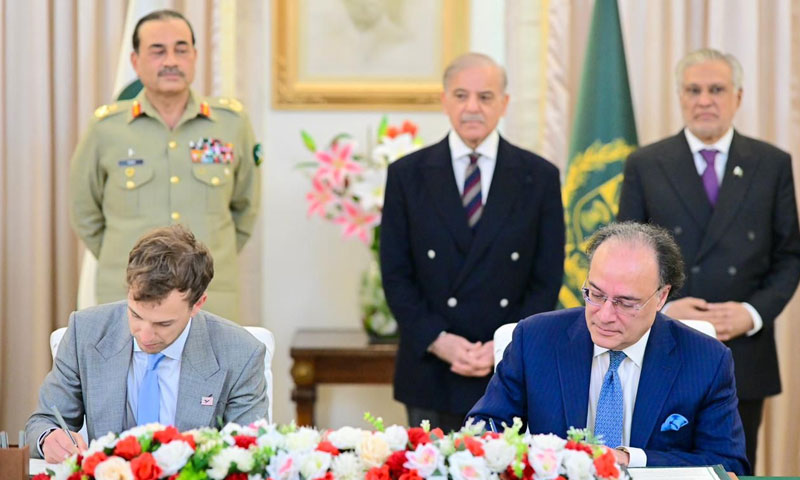
Pakistan Signs Deal with Trump-Linked Crypto Firm to Explore Stablecoin Payments
Pakistan has taken a significant step toward modernising its digital payments landscape by signing an agreement with a company linked to World Liberty Financial, the crypto venture associated with the family of US President Donald Trump. In an official statement issued on Wednesday, the Pakistan Virtual Asset Regulatory Authority confirmed it had signed a memorandum of understanding (MoU) with SC Financial Technologies, which it described as an affiliated entity of World Liberty Financial. The agreement is aimed at initiating dialogue and technical cooperation on what regulators termed “emerging digital payment architectures,” with a particular focus on cross-border transactions. Early Partnership with a Sovereign State The MoU marks one of the first publicly disclosed partnerships between World Liberty Financial and a sovereign country, following the platform’s launch in September 2024. The development also comes at a time of improving diplomatic and economic engagement between Pakistan and the United States. Under the agreement, SC Financial Technologies will work with the State Bank of Pakistan to explore the integration of its USD1 stablecoin into a regulated digital payments framework. According to a source familiar with the discussions, the stablecoin would operate alongside Pakistan’s planned digital currency infrastructure, rather than replacing it. Visit by World Liberty Leadership The announcement coincided with a visit to Pakistan by Zach Witkoff, the co-founder and chief executive of World Liberty Financial and CEO of SC Financial Technologies. Witkoff is the son of Steve Witkoff, a senior US diplomatic figure. During his visit, Witkoff met with senior Pakistani officials to discuss digital payment systems, cross-border settlement mechanisms, and foreign exchange processes, according to the regulator. Today, World Liberty Financial signed an MoU with the Ministry of Finance to explore innovation in digital finance, particularly the use of stablecoins for cross-border transactions, signalling growing global interest in Pakistan as a key market for digital assets. pic.twitter.com/rYzbfHYysd— Pakistan Virtual Assets Regulatory Authority (@PakistanVARA) January 14, 2026 Photographs released by PVARA showed Witkoff attending the MoU signing ceremony alongside Asim Munir, Prime Minister Shehbaz Sharif, and Finance Minister Muhammad Aurangzeb. Government Stresses Regulation and Stability Finance Minister Aurangzeb said Pakistan’s engagement with international crypto firms is guided by a cautious but forward-looking approach. “Our focus is to stay ahead of the curve by engaging with credible global players, understanding new financial models, and ensuring that innovation, where explored, is aligned with regulation, stability, and national interest,” he said. Global Context of Stablecoins Stablecoins — digital assets typically pegged to the US dollar — have grown rapidly in recent years as governments and financial institutions explore faster and cheaper alternatives to traditional payment systems. In the United States, regulatory changes introduced under President Trump have been widely viewed as favourable to the crypto industry, prompting increased interest from global investors and governments alike. World Liberty Financial has also drawn attention for its commercial success. According to media reports, the platform contributed to a sharp rise in income for the Trump Organization in the first half of last year, including revenue linked to overseas entities. In another high-profile transaction, Abu Dhabi–based investment firm MGX used the World Liberty stablecoin in May to acquire a $2 billion equity stake in Binance, the world’s largest cryptocurrency exchange. Pakistan’s Digital Currency Push Pakistan has been steadily advancing its digital finance agenda as it looks to reduce cash dependency and improve the efficiency of cross-border payments, particularly remittances — a critical source of foreign exchange for the country. In July, the central bank governor confirmed that Pakistan is preparing to launch a pilot digital currency programme and is finalising legislation to regulate virtual assets, signaling a broader shift toward a regulated digital financial ecosystem.

From Cloud to Pocket: How AI Processing Is Moving Away From Data Centres
For more than a decade, the global digital economy has been built around a simple assumption: bigger data centres mean better technology. Vast warehouses packed with servers have powered everything from video streaming and online banking to artificial intelligence. But that model is now facing its most serious challenge yet. The question gaining traction across the tech world is no longer whether data centres will grow — but whether they will remain the centre of AI at all. A Challenge from the Pocket The debate was recently reignited by Aravind Srinivas, chief executive of AI company Perplexity, who argued that the dominance of large data centres could one day be undercut by something far smaller: the smartphone. Speaking on a podcast, Srinivas suggested that as artificial intelligence becomes more efficient and personalised, powerful AI tools could run directly on consumer devices. Instead of constantly sending data back and forth to distant servers, processing could happen locally — on phones, laptops, routers, or even set-top boxes. This would represent a fundamental shift away from the centralised computing model that currently defines AI. Early Signs of a Shift The idea is no longer theoretical. Apple’s latest devices already process some AI tasks directly on-device through Apple Intelligence, using specialised chips to improve speed and privacy. Microsoft has followed a similar path with Copilot+ laptops, which include built-in AI processing capabilities. Yet these remain premium products. Most consumer hardware still lacks the power needed to run advanced AI locally, meaning large data centres remain essential — for now. The Scale of the Data Centre Machine Today’s data centres are enormous operations. Often covering the size of multiple football fields, they house thousands of servers performing everything from cloud storage to AI training. Almost every online service relies on them in some way. Tech giants continue to double down on this infrastructure. Billions of dollars are being invested globally, with around 100 new data centres currently planned or under construction in the UK alone. Their energy consumption is vast, and environmental concerns are growing. Nvidia chief executive Jensen Huang has described these facilities as “AI factories”, arguing that rapid advances in artificial intelligence would not be possible without them. The Case for Smaller, Localised Alternatives Despite the investment surge, a quieter counter-movement is taking shape. Instead of fewer data centres, some experts envision many smaller ones. Consultants and engineers argue that compact “edge” data centres located close to population centres could reduce latency, improve efficiency, and cut energy waste. Some experimental projects already exist — from small data centres heating public swimming pools to household-sized units warming private homes. The idea is simple: if computing generates heat, why waste it? Advocates say future cities could integrate small data centres into public buildings, housing estates, or unused commercial spaces, linking them into networks when large-scale processing is required. Even Space Is Being Considered Others are looking far beyond city limits. Companies are exploring the possibility of placing compact data centres in orbit, where cooling and energy efficiency could be improved. While still experimental, the idea reflects growing discomfort with the ever-expanding footprint of ground-based mega facilities. Is the “Bigger Is Better” Model Cracking? For years, the AI industry believed that scaling was everything — more data, more computing power, better results. But that assumption is now being questioned. As AI models become more specialised, they may require less brute-force computing. Critics argue that not every AI system needs the vast capabilities of today’s large language models. A tool designed for medical diagnosis, for example, does not also need to generate poetry or pop lyrics. If AI becomes smaller, smarter, and more targeted, the pressure to centralise everything inside massive data centres could ease. A Gradual Shift, Not a Collapse Few experts believe large data centres will disappear anytime soon. Demand for cloud services and AI continues to grow. But their role may evolve — from being the sole engine of AI to one component in a far more distributed system. The future may not belong exclusively to either giant data centres or handheld devices, but to a hybrid world where processing happens wherever it makes the most sense. And in that world, the dominance of the mega data centre may no longer be guaranteed.

Ishaq Dar Calls for Policy Continuity to Restore Investor Confidence in Pakistan
Islamabad witnessed a strong call for policy stability and economic confidence as Deputy Prime Minister and Foreign Minister Senator Muhammad Ishaq Dar addressed the Pakistan Policy Dialogue: “Correcting Course: Pakistan’s Economic Reset.” Speaking as chief guest, Dar emphasized that Pakistan’s economic revival depends on continuity, institutional strength, and governance reforms that extend beyond political cycles. “Resetting and correcting course is about strengthening the foundations of the economy itself,” Dar said. “This requires responsible governance, consistent policies, and institutions that operate with continuity beyond political cycles.” He stressed the need for a technology-enabled approach to governance to improve public service delivery and ensure policies translate into measurable outcomes. Highlighting Pakistan’s diplomatic outreach, Dar said, “All diplomatic efforts are geared towards helping business boost exports and create mutual partnerships based on economic interests.” The Dialogue brought together senior policymakers, business leaders, and development experts at a critical moment for Pakistan’s economy. The event was organized by the Policy Research and Advisory Council (PRAC) in collaboration with the Corporate Pakistan Group (CPG) and Nutshell Group, with the Ministry of Commerce and TDAP as founding partners. Bank Alfalah and BankIslami supported the Dialogue as platinum and gold partners. The inaugural session, “Resetting Pakistan’s Economic Direction,” featured key cabinet members and economic thinkers. Federal Minister for Planning Ahsan Iqbal stressed the importance of productivity, exports, and long-term development. “Compared to 1947, Pakistan has progressed, but globally it still lags behind peers,” he noted, calling for a future-focused approach rooted in education, health, and political stability. Finance Minister Senator Muhammad Aurangzeb outlined reform priorities, saying, “Achieving sustainable growth for a USD 3 trillion economy requires addressing rapid population growth and climate risks.” He also highlighted the need to formalize emerging sectors like crypto and blockchain to harness youth-driven innovation. Climate Change Minister Dr. Musadik Malik called for broader inclusion, stating, “Until you democratize capital and empower new entrants, nothing will change.” Adviser to the Prime Minister Muhammad Ali underscored privatization, pointing to strained public resources and lack of inclusion as key challenges. Former SBP Governor Dr. Ishrat Husain urged a shift toward services exports, saying technology has changed global growth patterns, while PRAC Chairman Muhammad Younus Dagha highlighted recent macroeconomic gains and warned that future resilience depends on human capital and AI-ready skills. Panel discussions focused on digital inclusion, green growth, and macroeconomic competitiveness, with speakers advocating cashless payments, climate financing tools, and tariff reforms. The closing session emphasized collaboration between the state and private sector, with business leaders calling for structural reforms to sustain 5–6% annual growth. The Dialogue concluded with consensus on strengthening partnerships to support Pakistan’s economic reset through evidence-based policy and long-term vision.

Elon Musk Confirms Tesla’s Full Self-Driving Will Be Subscription-Only in 2026
Tesla CEO Elon Musk announced a significant change to how the electric car maker sells its Full Self-Driving (FSD) software, confirming that beginning February 14, 2026, the system will be offered only on a monthly subscription basis. The move marks a strategic shift in pricing that could reshape how customers access Tesla’s semi-autonomous driving technology. Currently in the United States, Tesla owners can either purchase FSD with a one-time payment of $8,000 or subscribe to the software for about $99 per month. After February 14, Tesla will eliminate the option to buy the software outright, offering access only via a recurring subscription. The FSD package, which Tesla now refers to as “FSD (Supervised)”, adds advanced driver-assistance capabilities beyond the standard Autopilot system. Together, these systems help with tasks such as lane changes, traffic signal response, navigation on city streets, and more complex driving maneuvers. However, drivers must remain attentive and ready to take control at all times. Musk took to the social media platform X to confirm the move. In his post, he stated plainly that “Tesla will stop selling FSD after Feb 14. FSD will only be available as a monthly subscription thereafter.” The shift comes amid ongoing debate around FSD’s capabilities and safety. The U.S. National Highway Traffic Safety Administration (NHTSA) has investigated millions of Tesla vehicles equipped with FSD due to safety concerns and reports of crashes. Critics argue that Tesla’s branding sometimes gives the impression that vehicles drive independently, while regulators emphasize that the software still requires human oversight. Tesla followers and industry observers have long discussed the subscription model, noting it could make access to FSD more flexible for owners who don’t want to pay high upfront costs. In fact, Tesla has offered subscription options for FSD for several years, originally at higher monthly prices such as $199 before lowering it to its current rate to boost adoption. Still, the transition to subscription-only FSD could affect long-term ownership costs. Buyers who previously preferred to own the software outright will now face recurring charges that add up over time. For some enthusiasts, the change may raise questions about value, while others may see it as a more affordable way to try advanced driving features without a big upfront investment. Tesla’s broader strategy emphasizes software revenue as a growing part of its business model. Recurring subscriptions provide predictable income and may help the company balance fluctuations in car sales. As the technology continues to evolve, Musk has maintained that autonomous driving remains central to Tesla’s long-term vision—even if fully autonomous Level 5 driving has yet to be achieved. This pricing update will take effect just ahead of Valentine’s Day in 2026, making it a notable milestone for Tesla owners and the EV industry at large.

“Never Experienced This Before”: World No. 3 Anders Antonsen Quits India Open Over Delhi’s Air
Denmark’s men’s singles world number three Anders Antonsen has withdrawn from the ongoing India Open, citing what he described as “extreme” air pollution in the Indian capital — a decision that will cost him a $5,000 fine under Badminton World Federation (BWF) regulations. Antonsen announced his withdrawal in a detailed statement on Instagram, where he explained that continuing to compete in the prevailing conditions posed serious health risks. “Many is curious to why I have pulled out of the India Open for the third consecutive year. Due to the extreme pollution in Delhi at the moment I don’t thinks it’s a place to host a badminton tournament. Crossing my fingers that it will be better in the Summer when the World Championships will take place in Delhi. As a result BWF once again has fined me 5000 USD,” Antonsen wrote on his Instagram story. Accepts Fine but Prioritises Health Under BWF tournament rules, players who withdraw after the draw has been made are subject to financial penalties. Antonsen confirmed he would accept a $5,000 fine, stating that the cost was secondary to protecting his long-term well-being. The Danish shuttler, a former World Championship silver medallist and one of the tournament’s top seeds, was widely seen as a strong title contender before his exit. Antonsen also referenced fellow Danish player Mia Blichfeldt, saying she had also been affected by the poor air quality in Delhi. “Mia has also been struggling with the conditions,” he noted, highlighting that the issue was not limited to one athlete but was impacting players more broadly. Renewed Focus on Delhi’s Air Quality The withdrawal has once again drawn international attention to Delhi’s persistent air pollution problem. The city frequently ranks among the world’s most polluted, with hazardous levels of particulate matter caused by traffic emissions, industrial pollution, construction dust, and seasonal factors. Medical experts warn that high pollution levels can severely affect lung function — a critical concern for elite badminton players, whose sport demands intense cardiovascular exertion and rapid recovery. Wider Debate on Athlete Safety Antonsen’s decision has reignited debate over whether international sporting events should proceed in cities facing severe environmental conditions. In recent years, athletes across multiple sports have raised concerns about competing in polluted environments, arguing that air quality should be treated as a core safety issue rather than a secondary concern. As the India Open continues, the withdrawal of one of its biggest stars stands as a stark reminder that environmental conditions can directly influence participation, performance, and the credibility of global sporting events.

Bahawalpur Introduces Electric Buses With Free Travel for Students
Bahawalpur has joined Pakistan’s growing list of cities adopting clean and affordable public transport with the launch of a new electric bus service. The initiative aims to reduce pollution, improve urban mobility, and ease daily travel costs especially for students and senior citizens. Under the new service, students and elderly passengers can travel for free, making public transport more accessible for groups that rely heavily on daily commuting. City officials say the move is part of a broader effort to promote inclusive mobility while encouraging residents to shift away from fuel-based transport. The electric buses operate under the Punjab government’s green transport program, which focuses on reducing emissions and modernizing public transit in mid-sized cities. Unlike diesel buses, electric vehicles produce no tailpipe emissions and run more quietly, helping improve air quality in densely populated areas. Each bus is fully air-conditioned, designed for comfort, and equipped with modern safety features. The buses also offer smoother rides and lower noise levels, making them a practical alternative to traditional wagons and minibuses commonly used in the city. The routes have been planned to connect residential neighborhoods with educational institutions, markets, and commercial centers. This includes access to major colleges and universities, allowing students to commute without depending on costly private transport or overcrowded alternatives. Officials involved in the project say free student travel is meant to support education by reducing the financial burden on families. Rising fuel prices and transport fares have made daily travel difficult for many households, particularly in smaller cities like Bahawalpur. The electric bus service also supports Punjab’s wider climate goals. Transport experts note that road traffic is a major source of urban pollution. Shifting even a portion of daily commuters to electric buses can significantly reduce carbon emissions over time. Similar electric bus services are being rolled out across several other cities in Punjab as part of a province-wide expansion. Authorities say these projects are designed not just for major metropolitan centers, but also for historically underserved regions. Residents in Bahawalpur have welcomed the launch, especially students who now have a reliable and cost-free option for daily travel. Many commuters believe the service will help reduce traffic congestion while improving the overall quality of public transport in the city. With cleaner technology, social benefits, and modern infrastructure, Bahawalpur’s electric bus service represents a step toward a more sustainable and people-friendly transport system. If managed well, officials say it could become a model for similar cities across Pakistan.
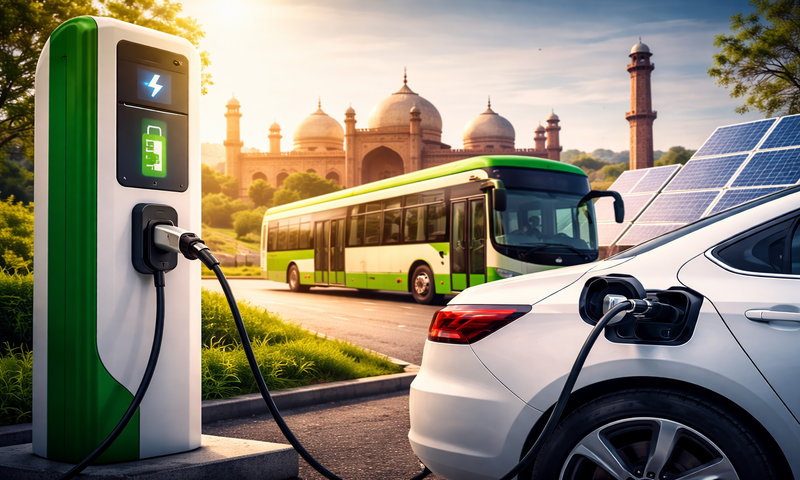
No More Petrol Cars for Punjab Government: What the New Policy Means
In a major policy shift aimed at tackling rising air pollution, the Punjab government has decided to completely ban the purchase of petrol and diesel vehicles for government departments, allowing only electric or hybrid vehicles for future procurement. The decision marks one of the province’s most significant steps toward promoting environmentally friendly transport and reducing emissions. Vehicles assigned to field duties have been exempted from the ban due to operational requirements, officials confirmed. The provincial administration has also indicated that a new Electric Vehicle (EV) Policy for Punjab is expected to be announced soon, which will outline incentives, infrastructure development, and regulatory reforms to accelerate the transition toward clean mobility. Electric Charging Now Mandatory for New Petrol Pumps In another major move, the government has made the installation of electric vehicle charging units mandatory for all new petrol pumps seeking operational approval. According to the Chief Secretary, no new petrol pump will be allowed to operate without installing an electric charging facility, linking traditional fuel infrastructure directly with the province’s clean energy goals. Officials said that 170 new petrol pumps across 31 cities have already received No Objection Certificates (NOCs) through the provincial e-Biz portal, all subject to the condition that EV charging units must be installed. City-wise approvals include: Faisalabad: 29 petrol pumps Lahore: 14 Bahawalpur: 10 Khanewal & Bahawalnagar: 9 each Rawalpindi & Jhang: 8 each Toba Tek Singh, Mianwali, Kasur & Chiniot: 7 each Authorities stressed that the expansion of fuel stations must now go hand in hand with electric charging infrastructure to prepare for a cleaner transport ecosystem. Pollution a Growing Threat to Punjab The policy shift comes amid mounting concern over worsening air quality in Punjab. According to the World Health Organization, air pollution is one of the leading environmental health risks globally, contributing to millions of premature deaths each year. Pakistan, particularly urban centers in Punjab, regularly ranks among the regions with the highest levels of particulate pollution. Independent assessments by global development institutions have repeatedly warned that deteriorating air quality in Pakistan is not only a public health crisis but also an economic threat, increasing healthcare costs, reducing worker productivity, and shortening life expectancy. Punjab’s major cities, including Lahore and Faisalabad, frequently experience severe smog episodes during winter months, largely driven by vehicle emissions, industrial activity, and fossil fuel consumption. Green Energy as a Policy Priority Senior officials emphasized that promoting green energy and electric mobility has become a top provincial priority. The upcoming EV policy is expected to address both public and private sector adoption, while mandatory charging stations aim to reduce range anxiety and encourage wider use of electric vehicles. With these measures, Punjab positions itself as one of the first provinces in Pakistan to take concrete regulatory action linking transport reform with environmental protection.

How Much Sugar Is Too Much? Doctors Finally Agree on the Limits
Sugar is one of the most debated ingredients in modern diets. It provides quick energy, yet excess intake especially through drinks and processed foods can quietly increase the risk of weight gain, tooth decay, and heart disease. Health experts today focus less on banning sugar entirely and more on how much, what type, and how often it is consumed. What actually counts as sugar? Not all sugars are the same. Naturally occurring sugars are found in foods like whole fruits and plain milk. These come packaged with fiber, protein, or nutrients that slow digestion. The main concern is free or added sugars. These include sugar added during cooking or food manufacturing, as well as sugars found in honey, syrups, fruit juices, and concentrates. The World Health Organization (WHO) urges people to cut back specifically on free sugars because they add calories without providing fullness or essential nutrients. When sugar actually helps the body Despite its bad reputation, sugar plays a real role in certain situations. Glucose, a basic form of sugar, is a key fuel for the brain and muscles. Doctors use fast-acting sugar to treat low blood sugar (hypoglycemia). The American Diabetes Association recommends the “15–15 rule”: consume 15 grams of fast-acting carbohydrates, wait 15 minutes, then recheck blood sugar. Sugar can also support endurance exercise. Sports medicine guidelines often recommend 30 to 60 grams of carbohydrates per hour during workouts lasting longer than one hour to delay fatigue and support performance. Where sugar becomes a health risk Most health problems linked to sugar come from high intake of added sugars, especially through sweetened drinks. The WHO links excess free sugar to unhealthy weight gain and recommends keeping it below 10% of daily calories, with added benefits seen below 5%. Dental experts warn that sugar fuels tooth decay. The American Dental Association explains that oral bacteria feed on sugars and release acids that damage tooth enamel. Large studies also connect sugar-sweetened beverages to higher risks of heart disease and metabolic problems, mainly because they add calories without reducing hunger. How much sugar is too much? Health authorities agree on one clear message: less is better. WHO: Free sugars under 10% of calories; ideally under 5% US Dietary Guidelines: Added sugars under 10% of calories (none for children under two) American Heart Association: About 36 grams per day for men and 25 grams for women Practical ways to cut sugar without crashing Experts say the biggest gains come from small habit changes: Cut sugary drinks first, including sodas and packaged juices Read labels for “added sugars” Choose whole fruit instead of juice Keep sweets occasional, not daily If you have diabetes, follow medical advice instead of self-experiments The bottom line Sugar is not poison, but added and free sugars are where most harm occurs. When they quietly add up in drinks and ultra-processed foods, health risks rise. The safest, expert-backed approach is moderation—keep added sugars low, enjoy sweets occasionally, and rely on whole foods for daily energy.
