

Islamabad-based fintech SadaPay has taken a bold step by appointing Nadeem Hussain as its strategic advisor. The move marks a major milestone for the company as it pushes to expand its role in Pakistan’s fast-growing digital finance space. The company announced the appointment on LinkedIn, saying simply: “Nadeem Hussain is joining us as a strategic advisor!” In this new role, Hussain will help shape SadaPay’s long-term strategy, identify growth opportunities, build partnerships, and advise on risk and governance as the fintech scales. For SadaPay, this is a strategic move to strengthen its leadership as competition in Pakistan’s fintech landscape intensifies. The company, which was founded in 2019, aims to simplify digital banking, expand its user base, and elevate its product offerings amid rising demand for mobile and online financial solutions. Hussain’s appointment comes as SadaPay prepares for a new phase of growth. The company recently highlighted its mission to eliminate banking complexity and deliver modern financial services that are accessible to everyday users. With millions of Pakistanis still underserved by traditional banks, the fintech says it seeks to bridge this gap with intuitive digital tools. What makes this advisory role noteworthy is Hussain’s track record. He is the founder of Tameer Microfinance Bank, which later became part of Telenor Microfinance Bank — an institution credited with pioneering mobile financial services in Pakistan. One of his most significant achievements is the launch of EasyPaisa, now one of the largest branchless and mobile banking platforms in the world. Through his investment platform Planet N Group, Hussain supports startups in fintech, e-commerce, healthcare tech, and other sectors across emerging markets. His deep experience scaling digital financial services is expected to help SadaPay build strategic partnerships and strengthen its governance framework. Industry experts say that bringing such a seasoned leader on board signals SadaPay’s serious intent to compete with incumbents and innovate at pace in the digital banking sector. As fintech players expand beyond basic payments into lending, savings, and business services, strategic guidance becomes even more crucial. Hussain’s role at SadaPay could also help the company navigate regulatory and risk challenges common in financial services. With higher standards of risk management now needed to support rapid user growth, his advisory input may be especially valuable. As Pakistan’s fintech ecosystem continues to evolve, this appointment highlights how experienced leadership can shape the direction of digital banking innovation. For SadaPay, the move offers a chance to sharpen its competitive edge and unlock new opportunities for growth in 2026 and beyond.
Internet Disruption Likely Across Pakistan on January 15: What We Know So Far
Internet users across Pakistan may experience slow speeds and service disruptions on January 15, as scheduled maintenance work is set to take place on one of the country’s international submarine internet cables. The advisory was issued by major internet service providers, including Nayatel, which informed customers that an unavoidable maintenance activity will begin at around 2:00 PM and could continue for up to eight hours, potentially affecting connectivity nationwide. In a notification shared with subscribers, Nayatel said the work involves one of Pakistan’s submarine cables — critical infrastructure that carries international internet traffic into the country. While the company did not specify which cable is undergoing maintenance or the exact location of the issue, it warned that users may face noticeable internet slowness during the repair window. When to Expect Slow Internet According to the advisory, disruptions are expected during peak usage hours: Date: Thursday, January 15, 2026 Time: Approximately 2:00 PM to 10:00 PM During this period, users may encounter slower browsing speeds, buffering while streaming videos, higher latency in online gaming, and interruptions in video calls or large data transfers. Why Submarine Cable Maintenance Matters Submarine cables form the backbone of Pakistan’s international internet connectivity. Any maintenance or fault at the upstream provider level often requires traffic to be rerouted through alternate links. While this prevents a complete outage, it can lead to congestion, increased latency, and reduced speeds for end users. ISPs typically attempt to manage traffic during such periods, but limitations in available backup capacity mean that some level of disruption is often unavoidable. Recent Context Raises Concerns The planned maintenance comes shortly after a major internet slowdown earlier this month. On January 1, 2026, users across Pakistan reported widespread connectivity issues caused by problems at an upstream internet provider. That disruption lasted for more than 48 hours, impacting businesses, freelancers, and digital services nationwide. If internet speeds are again affected on January 15, it would mark the second instance in two weeks of degraded connectivity — highlighting Pakistan’s heavy reliance on a limited number of international submarine cables. What Users Should Do Internet service providers have advised customers to plan critical online tasks accordingly. While a complete blackout is not expected, users relying on stable connections for work, education, or business operations may want to schedule essential activities outside the affected hours where possible. ISPs say services should gradually stabilize once maintenance work is completed.
Passport Privilege: Here Are the Best and Worst Passports for Global Travel in 2026
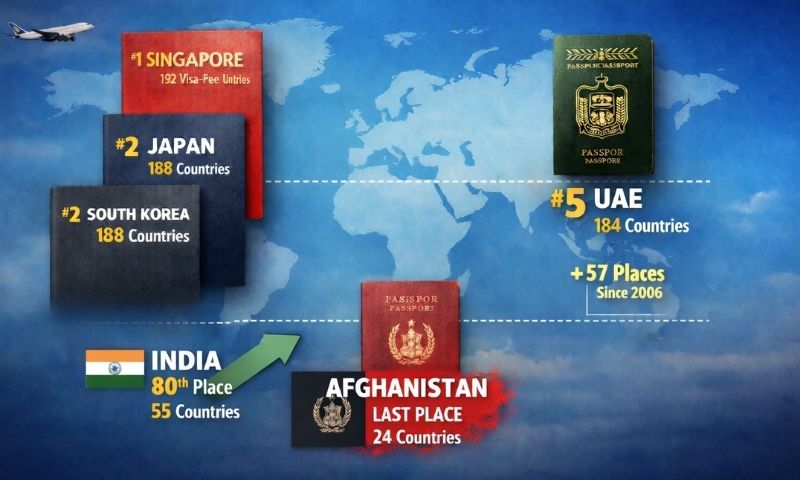
The latest 2026 Henley Passport Index has once again reshaped the global travel hierarchy, highlighting which passports offer the greatest freedom and which continue to lag behind. At the very top of the rankings is Singapore, which retained its position as the world’s strongest passport. Singaporean citizens can now travel to 192 destinations visa-free, underscoring the country’s deep diplomatic reach and consistent global engagement. Tied closely behind are Japan and South Korea, which jointly hold second place. Passport holders from both countries enjoy visa-free or visa-on-arrival access to 188 destinations, reflecting Asia’s growing dominance in global mobility rankings. Europe continues to hold a strong presence in the upper tier. According to the index, Denmark, Luxembourg, Spain, Sweden, and Switzerland are among the top-ranked countries, each providing access to 186 destinations or more without requiring advance visas. These rankings reflect long-standing travel agreements and extensive international cooperation. One of the most notable stories in the 2026 index is the rise of the United Arab Emirates. Ranked fifth globally, the UAE passport now grants visa-free access to 184 destinations. Gulf News noted that the UAE has climbed 57 places since 2006, marking one of the fastest and most sustained improvements ever recorded by the index. At the opposite end of the scale, Afghanistan remains ranked last. Afghan passport holders can travel to just 24 destinations without a visa, highlighting the sharp disparity in global travel freedom. The report underscores a widening gap between the most and least powerful passports. In 2026, the difference between the top-ranked passport and the lowest now stands at 168 destinations, illustrating a growing inequality in international mobility. Commenting on the findings, Henley & Partners chairman Christian H. Kaelin said passport strength has become a defining factor in opportunity and access. He noted that “passport privilege plays a decisive role in shaping opportunity, security, and economic participation.” Beyond tourism, passport strength affects business mobility, education options, and long-term economic prospects. The 2026 rankings show that while some countries continue to expand travel freedom for their citizens, others remain locked out of much of the world. As nations pursue new visa agreements and diplomatic ties, future rankings may shift again. For now, the 2026 index makes one reality clear: where you can go still depends heavily on the passport you hold.
From Fighter Jet to Economic Asset: How JF-17 Is Redefining Pakistan’s Global Standing
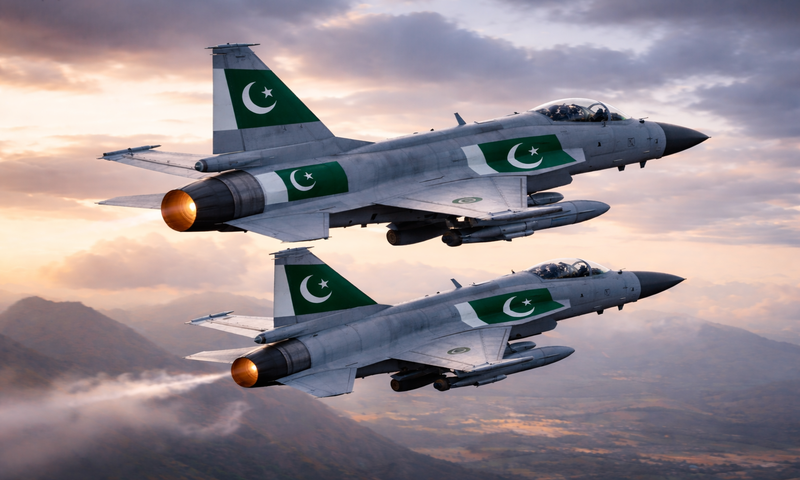
For years, the JF-17 Thunder has been a central pillar of Pakistan’s air defence strategy. But following the military confrontation with India in May last year, the aircraft’s relevance has expanded well beyond national security. Today, the JF-17 is increasingly viewed as a tool of diplomacy, industrial growth, and economic opportunity — reshaping how Pakistan is perceived on the global stage. Developed and manufactured at Pakistan Aeronautical Complex in collaboration with China, the JF-17 represents one of Pakistan’s most advanced indigenous defence projects. Its growing visibility during recent regional tensions brought renewed international attention to the platform, particularly among countries seeking affordable yet capable combat aircraft. Major International Interest and Negotiations 1. BangladeshPakistan and Bangladesh have engaged in discussions over a potential defense pact that would include the sale of JF-17 fighters. This development follows improved diplomatic relations and could be one of the first export deals if finalized. 2. Saudi ArabiaPakistan and Saudi Arabia are reportedly in talks to potentially convert roughly $2 billion in Saudi loans into a JF-17 purchase deal, deepening defense cooperation between the two nations. While not formally concluded, the talks point to a strategic bond being reinforced around this aircraft. 3. IndonesiaOfficials from both Pakistan and Indonesia are advancing negotiations that could include the sale of over 40 JF-17 jets alongside Pakistani drones — part of Indonesia’s effort to modernize its air force. These discussions are described as progressing, though no final contract has been signed yet. 4. IraqRecent meetings between the air chiefs of Pakistan and Iraq have reportedly included expressions of interest by Iraq in acquiring JF-17 fighters along with support aircraft, signaling a widening defense relationship. 5. Libya and SudanPakistan has already concluded a major arms deal with Libya valued at around $4 billion, and is close to finalizing a $1.5 billion deal with Sudan that could include JF-17 fighters alongside other defense systems. 6. Other Potential OperatorsHistorical sources show that countries such as Nigeria and Myanmar already operate JF-17 aircraft, and various other nations have been reported in past years as potential future customers. What makes the JF-17 attractive is not just its operational capability, but the flexibility Pakistan offers in training, maintenance, and long-term support. Defence analysts note that many developing air forces are under pressure to modernize without relying heavily on costly Western platforms or restrictive procurement conditions. In this space, Pakistan has positioned itself as a credible and pragmatic partner. JF-17 talks confirmed with multiple countries, minister avoids naming them Pakistan’s Minister for Defence Production Raza Hayat Haraj has confirmed that any future export of the JF-17 Thunder fighter jet will require approval from China, as the aircraft is jointly developed by the two countries. Speaking in an interview with BBC Urdu, Haraj said Pakistan is currently engaged in discussions with several countries interested in acquiring the multirole combat aircraft. However, he declined to disclose the names of potential buyers, stressing that such negotiations remain confidential until formal agreements are reached. Beyond Defence: An Economic Opportunity The growing demand for the JF-17 carries significant economic implications for Pakistan. Defence exports are increasingly being viewed by policymakers as a potential source of foreign exchange at a time when the country is seeking to stabilise its economy and reduce reliance on external borrowing. Aircraft manufacturing, maintenance, and upgrades generate skilled employment, support local supply chains, and strengthen Pakistan’s industrial base. Each potential export deal also opens doors for ancillary services — including pilot training, technical support, spare parts, and long-term maintenance contracts — creating sustained economic value rather than one-time sales. Importantly, defence production anchored within Pakistan helps retain technological expertise at home, while enhancing the country’s bargaining power in international partnerships. Analysts argue that successful export programmes like the JF-17 can gradually shift Pakistan from being seen solely as a security-dependent state to one with tangible industrial and manufacturing credentials. Strategic Significance for Pakistan The JF-17’s expanding footprint is also reinforcing Pakistan’s strategic relevance. Defence cooperation often translates into deeper diplomatic ties, particularly with countries in Africa, Southeast Asia, and the Middle East that are diversifying their security partnerships. By offering a combat-proven, cost-effective fighter platform backed by local production, Pakistan is carving out a niche in a competitive global defence market. This not only strengthens bilateral relations but also places Islamabad in conversations traditionally dominated by larger arms exporters. A Symbol of Capability and Confidence From a national perspective, the JF-17 Thunder has evolved into more than a fighter jet. It represents Pakistan’s ability to design, manufacture, and export complex military systems — an achievement that carries both symbolic and practical weight. As interest continues to grow, the aircraft stands at the intersection of defence readiness and economic ambition. For Pakistan, the success of the JF-17 is increasingly tied not just to air superiority, but to broader goals of industrial resilience, strategic influence, and economic recovery.
