


The HBL Pakistan Super League (HBL PSL) has unveiled a series of major reforms ahead of its 11th edition, marking a significant step in the League’s evolution as it looks to enhance competitiveness, transparency, and commercial growth. In a historic shift after a decade of operations, HBL PSL 11 will adopt a Player Auction Model, replacing the traditional Player Draft system. The move represents one of the most substantial structural changes in the League’s history and is aimed at creating greater competitive balance among franchises, increasing transparency in player selection, and offering enhanced earning opportunities for players. Key Changes to Player Recruitment Under the revised player acquisition framework, franchises will now be allowed to retain a maximum of four players, with only one player permitted per category. This marks a significant reduction from the previous model, under which franchises could retain up to eight players from their squads, along with additional provisions such as Mentors, Brand Ambassadors, and the Right to Match (RTM) option, which allowed teams to retain a ninth player during the Player Draft. For HBL PSL 11, the rules governing Mentors, Brand Ambassadors, and RTM have been completely abolished, simplifying the player retention structure and placing greater emphasis on the auction process. Newly inducted franchises will be given the opportunity to select and retain four players from the available player pool before the Player Auction takes place, ensuring competitive parity as new teams enter the League. Additionally, each franchise will be allowed one direct signing of a foreign player who did not feature in the previous season, HBL PSL X. This provision is designed to enable teams to inject fresh international talent into their squads and broaden the League’s global appeal. Increased Salary Cap Signals Commercial Growth Further strengthening the League’s competitive and commercial outlook, the player salary purse has been increased to USD 1.6 million per franchise. The increase reflects HBL PSL’s growing financial strength and its commitment to attracting top-tier domestic and international cricketers while rewarding player performance at the highest level. League officials said the reforms are part of a broader strategy to ensure long-term sustainability, maintain competitive balance, and align the HBL PSL with global best practices in franchise-based cricket. Season 11 to Begin in March 2026 HBL PSL 11 is scheduled to commence on 26 March 2026, with Faisalabad added as an additional venue for the upcoming season. The inclusion of Faisalabad marks the city’s return to top-tier cricket and further expands the League’s national footprint, reinforcing its commitment to taking elite cricket to more regions across Pakistan. More Details to Follow The Pakistan Super League management confirmed that further information regarding the Player Auction process, timelines, and operational guidelines will be announced in due course. The latest set of reforms underline the League’s ambition to build on its success while continuing to promote cricketing excellence, deepen fan engagement, and elevate the HBL PSL to new heights on the global stage.
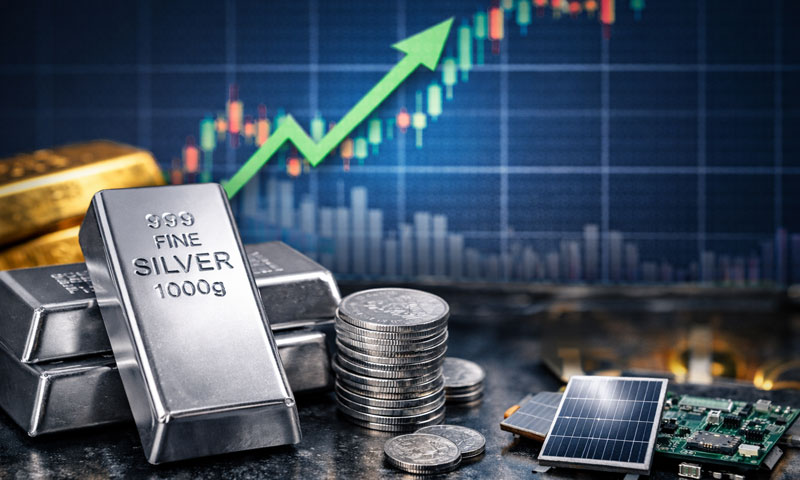
Silver Price Surge: Global Demand, Supply Pressures and What Comes Next
As gold prices continue to rise across international markets, silver has also entered a strong upward cycle, drawing renewed attention from investors, analysts, and industrial users. Traditionally viewed as both a precious and industrial metal, silver’s recent performance reflects a convergence of structural supply constraints, rising industrial demand, and evolving global economic conditions. Silver Gains Momentum Alongside Gold Over the past year, silver prices have risen sharply, broadly tracking gold’s rally while also benefiting from dynamics unique to its own market. Analysts note that silver historically tends to lag gold during the early phase of precious-metal rallies but can accelerate later due to its smaller market size and heavier exposure to industrial demand. Market indicators show that silver reached multi-year highs in early 2026, supported by sustained investor interest and continued demand from manufacturing and technology sectors. This price strength has revived debate over whether silver is entering a longer-term structural uptrend rather than a short-lived speculative phase. Persistent Supply Constraints Remain a Key Driver One of the most significant forces supporting silver prices is a prolonged imbalance between supply and demand. Global mine production has struggled to expand at the pace required to meet rising consumption for several consecutive years. Unlike gold, where large above-ground stocks exist and can re-enter the market, a substantial portion of silver supply is consumed in industrial processes and becomes difficult or uneconomical to recover. Industry assessments indicate that bringing new silver mining projects online requires long development timelines, regulatory approvals, and significant capital investment. As a result, output growth is expected to remain limited in the near term, reinforcing supply-side pressure on prices. Industrial Demand Provides Structural Price Support Silver’s role as a critical industrial metal distinguishes it from other precious metals. A large share of global demand originates from electronics, solar photovoltaic systems, electric vehicles, medical equipment, and advanced manufacturing. The expansion of renewable energy infrastructure has been particularly influential. Solar panels rely on silver for high-efficiency electrical conductivity, and global solar deployment has continued to grow as countries pursue long-term energy transition goals. Analysts widely agree that this industrial demand creates a durable base for silver prices, even during periods when investment demand softens. Investor Interest and Safe-Haven Appeal Alongside industrial consumption, investment demand for silver has increased. Heightened geopolitical uncertainty, concerns over currency stability, and shifting expectations around interest-rate policy have encouraged investors to diversify into precious metals. Silver-backed exchange-traded products and physical bullion purchases have recorded steady inflows, underscoring silver’s dual identity as both an industrial input and a financial hedge. However, market participants caution that silver typically exhibits greater price volatility than gold, as it responds simultaneously to financial sentiment and industrial economic cycles. What Forecasts Indicate About Silver’s Future Forecasts for silver prices vary among institutions, reflecting different assumptions regarding global growth, monetary policy, and industrial expansion. Most mainstream outlooks suggest that silver prices are likely to remain elevated through 2026 relative to historical averages, supported by supply constraints and steady industrial demand. More optimistic scenarios emphasize the potential for further gains if supply deficits persist and demand from clean energy and technology sectors continues to expand. At the same time, analysts stress that rapid price advances are often followed by consolidation phases, particularly if global financial conditions tighten or economic growth slows. When Could the Rally Lose Momentum? Market analysts identify several factors that could moderate silver’s upward trend. A sustained increase in real interest rates, a stronger US dollar, or a slowdown in industrial production could reduce demand and trigger price corrections. Nonetheless, many assessments suggest that any pullbacks may be limited as long as structural demand from renewable energy, electronics, and advanced manufacturing remains intact. Silver’s current trajectory reflects more than short-term market enthusiasm. Persistent supply limitations, expanding industrial usage, and renewed investor participation have reshaped the metal’s fundamentals. While price volatility is likely to remain a feature of the market, most credible analyses indicate that silver’s longer-term outlook is underpinned by structural factors rather than temporary trends. As global economic and energy transitions continue, silver is expected to remain a closely watched indicator of both industrial activity and investor sentiment within the broader commodities landscape.
