


Pakistani cricket veteran Shoaib Malik has announced his retirement from the HBL Pakistan Super League (PSL), ending a remarkable ten-year run in the country’s premier T20 franchise competition. Malik’s decision brings the curtain down on a long chapter in Pakistan’s T20 cricket history, as one of the league’s most experienced and consistent performers steps away from the field. Malik took to his social media platforms to share the news, reflecting on the memories and relationships he built over a decade. “I cherish every single moment and friendship I have made on and off the field throughout my 10 years of the Pakistan Super League as a player,” he wrote. “It’s time to call it a day. However, my passion and motivation to serve for the betterment of cricket will always stay. Thank you PSL.” Since the PSL began in 2016, Malik has been a constant presence. He represented four different franchises — Karachi Kings, Multan Sultans, Peshawar Zalmi and Quetta Gladiators — adapting to new roles while remaining an influential figure in the middle order. His final appearance came for the Quetta Gladiators in PSL 2025. Statistically, Malik leaves behind a legacy few can match. In 92 PSL matches, he amassed 2,350 runs at an average of 33.09, ranking him among the top run-scorers in league history. His all-round contributions extended beyond batting, with 17 wickets and steady off-spin bowling providing depth and flexibility to his teams. Malik’s global T20 record underscores his durability and success over more than two decades. He ranks among the top run-scorers in T20 cricket worldwide, with more than 13,500 runs and 83 half-centuries at a strike rate above 125, a testament to his adaptability across leagues and conditions. His retirement from PSL comes as the league enters its 11th season, the first to expand to eight teams and shift to a player auction model. The evolving tournament format and competitive environment mean Malik’s steady presence will be missed by fans and teammates alike. Over his PSL journey, Malik bridged the league’s early years in the UAE to its full return to Pakistan, witnessing rising stars and international legends alike. His leadership, experience and calm under pressure made him a mentor figure in dressing rooms and a favorite among many supporters. While Malik’s playing days in the PSL are now over, his statement suggested this is not a complete farewell to cricket. With coaching opportunities and mentorship roles common for former greats, many expect Malik to remain involved in the game he has served for decades.

Pakistan Auto Market Gets New Hybrid Option as Sazgar Opens TANK-500 Bookings
Sazgar Engineering Works Limited on Tuesday announced that it will begin bookings for its Completely Knocked Down (CKD) models of the TANK-500 Hi4-T 4×4 2.0L Turbo Automatic from January 26, marking another step in the company’s expansion into the new energy vehicle segment. The development was shared through a formal notice submitted to the Pakistan Stock Exchange (PSX). According to the notice, the TANK-500 CKD models will be offered in both Plug-in Hybrid Electric Vehicle (PHEV) and Hybrid Electric Vehicle (HEV) variants, giving customers multiple powertrain options. “The prices and booking details shall be announced by the company through electronic and social media today evening,” the company said in its disclosure. A plug-in hybrid electric vehicle combines a conventional petrol engine with a larger battery pack compared to standard hybrids. This allows the vehicle to operate solely on electric power for a limited range before switching to hybrid mode, where both the engine and electric motor work together. Previously, in September last year, Sazgar had announced plans to introduce its upcoming PHEV models — TANK-500 and CANNON — by March 31, 2026, as part of its broader strategy to strengthen its presence in the New Energy Vehicle (NEV) market. At the time, the company noted that Pakistan’s auto sector was showing signs of recovery and gradually regaining momentum after a prolonged slowdown. “This resurgence is creating opportunities for auto assemblers to expand their product portfolios across multiple categories, including petrol, hybrid, plug-in hybrid, and electric vehicles,” the company had said. Sazgar further stated that it remains committed to launching NEVs equipped with advanced technologies and modern features, in line with the government’s policy framework aimed at promoting cleaner and more efficient transportation solutions.
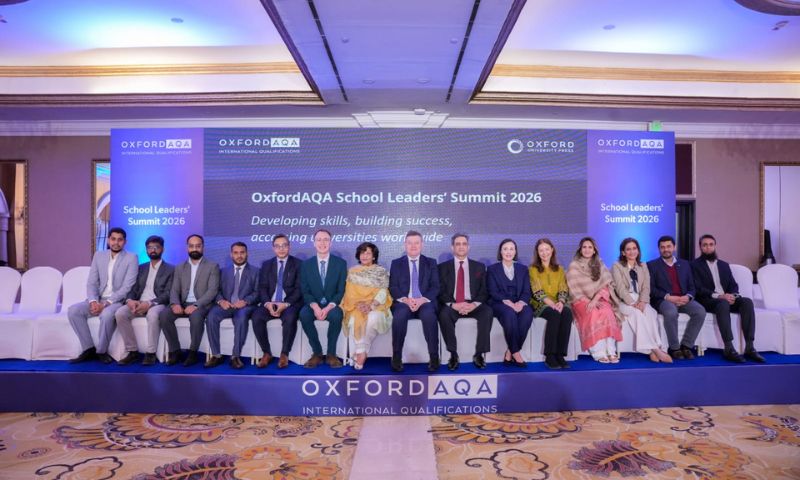
OxfordAQA School Leaders’ Summit 2026 Focuses on Future-Ready Skills and Ethical AI
OxfordAQA, a partnership between Oxford University Press and AQA, convened the OxfordAQA School Leaders’ Summit 2026 in Karachi, bringing together more than 100 senior education leaders, policymakers, school heads, and practitioners from across Pakistan. Held under the global theme “Develop skills, build success, access universities worldwide,” the Summit focused on how education systems must evolve to equip learners with future-ready skills while protecting academic integrity in an increasingly digital and AI-driven learning environment. Discussions centered on the global shift toward competence-based education, ethical assessment practices, and international progression pathways. Speakers emphasized that skills such as critical thinking, adaptability, and the real-world application of knowledge are becoming as important as subject content in preparing students for higher education, employment, and responsible citizenship. Opening the Summit, Arshad Saeed Husain, Managing Director of Oxford University Press Pakistan, highlighted the need to rethink traditional learning outcomes:“Future-ready education goes beyond content delivery. It demands a shift towards competencies, critical thinking, and application; skills that empower learners to thrive in a rapidly changing world.” Reflecting on OxfordAQA’s expanding engagement in Pakistan, Andrew Coombe, Managing Director of OxfordAQA, said:“It has been a pleasure to return to Pakistan once again. I am excited about the opportunities OxfordAQA brings to students here, equipping them with the skills and knowledge essential for success in a rapidly changing world.”He added that the School Leaders’ Summit reflects OxfordAQA’s commitment to re-centering education around skills that support higher education, employment, and global citizenship, while ensuring fairness and integrity as technology reshapes learning and assessment. Jennifer Duggan, Head of Qualifications at OxfordAQA, underscored the value of collaboration with local educators:“Working alongside Pakistan’s educational leaders has been a privilege. Their vision and dedication align perfectly with OxfordAQA’s mission to empower learners with the future-ready skills our world needs.” A keynote address by Dr. Alexandra Tomescu, Generative AI Specialist at Oxford University Press, explored “Balancing Innovation and Integrity: How AI Is Changing the Educational Landscape.” She stressed the ethical use of AI in classrooms and assessments:“I am excited about the transformative role AI can play in Pakistan’s international schools. It is critical that this technology is used ethically and responsibly, supporting teachers and students while safeguarding trust and integrity in learning.”She also noted that despite rapid technological advances, critical thinking, creativity, and human ingenuity remain essential. The Summit also examined skills-based assessment and global university access through insights from Shahnaz Wazir Ali, educationist and social sector development policy specialist, and Matt MacGregor, Professional Development Lead at OxfordAQA. Reflecting on his experience, MacGregor said:“I am deeply grateful for how warmly OxfordAQA has been welcomed in Pakistan. Encountering the passion, sincerity, and openness of educators here has been inspiring. Their commitment to excellence and eagerness to embrace new ideas create a powerful environment for collaboration.” Representing OxfordAQA’s work in Pakistan, Salma Adil noted:“OxfordAQA supports Pakistani schools in delivering internationally benchmarked qualifications while remaining locally relevant. The strong focus on skills, fairness, and progression resonates deeply with educators across the country.” The Summit concluded with a panel discussion on “Empowering Students with Future-Focused Skills,” followed by an overview of the Oxford International Programme. Continuing sessions in Lahore and Islamabad will further strengthen OxfordAQA’s engagement with Pakistan’s education community and advance skills-based learning nationwide.
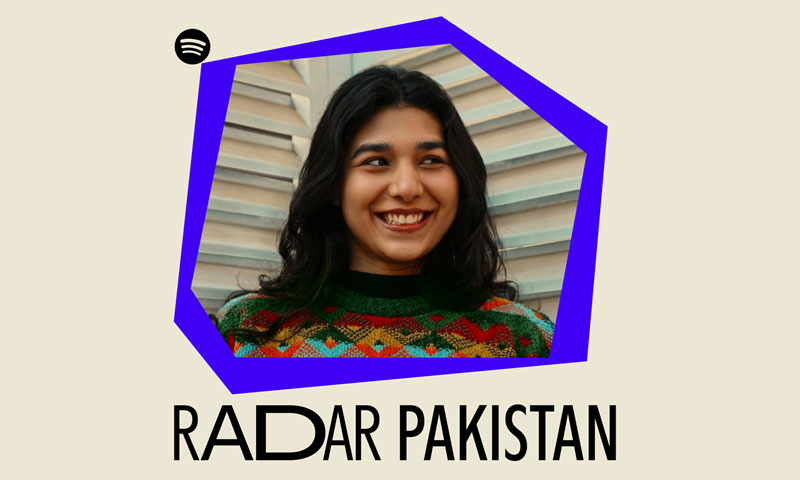
From Pakistan to the World: Spotify Backs Shae Gill as RADAR Pakistan’s Featured Artist for 2026
Spotify has spotlighted rising Pakistani singer Shae Gill as its RADAR Pakistan Artist for 2026, recognising her as one of the country’s most compelling emerging voices with growing global appeal. Known for her distinctive vocals and ability to seamlessly blend contemporary sounds with traditional influences, Shae Gill has steadily built a strong listener base both at home and abroad. Her selection for RADAR Pakistan marks a significant milestone in her evolving musical journey. To celebrate the recognition, Spotify is highlighting Shae Gill’s latest release, “Insecurity,” a powerful Punjabi track that explores themes of vulnerability and self-reflection. Since its release, the song has garnered more than 256,000 streams, resonating strongly with audiences for its emotional depth and lyrical honesty. As part of the RADAR programme, Spotify will also showcase Shae Gill’s personal and artistic evolution through a special mini-docuseries, offering fans an inside look at her creative process and growth as a solo artist. The series forms part of Spotify’s global artist development initiative aimed at amplifying emerging talent at pivotal moments in their careers. Over the past month, Shae Gill’s music has gained traction beyond Pakistan, with some of her top streamed markets including the United States, United Kingdom, Bangladesh, and Canada, reflecting her expanding international footprint. Her 2025 releases, including “Gila” and “Staring At Me,” have further strengthened her reputation as an artist bringing a fresh perspective to modern melodies while maintaining a strong cultural connection. Reflecting on her selection, Shae Gill expressed gratitude for the recognition. “It’s great being chosen as a Spotify RADAR artist—I have so much appreciation for what they do. This year has been full of learning, and I hope that continues for many years to come, as I’m always striving to improve. I’m focusing on creating solo tracks and am excited to find my voice and sound as an artist, and to connect with the people who relate to it,” she said. Rutaba Yaqub, Spotify’s Artist & Label Partnerships Manager for Pakistan and the UAE, said Shae Gill’s journey as a solo artist is entering an exciting new phase. “By introducing the world to her solo, original tracks, Shae’s journey is taking an exciting new turn. With songs like ‘Insecurity,’ listeners get to experience her vocals and melodies truly shining through. RADAR is designed to give artists the boost they need at key moments of creative momentum, and that’s exactly what we aim to do with Shae Gill,” she noted. RADAR Pakistan is part of Spotify’s global RADAR programme, which supports emerging artists by providing increased visibility, strategic promotion, and access to long-term growth opportunities. Active in 183 countries and having supported more than 1,000 artists worldwide, the programme continues to spotlight homegrown talent while connecting their music with audiences across borders.
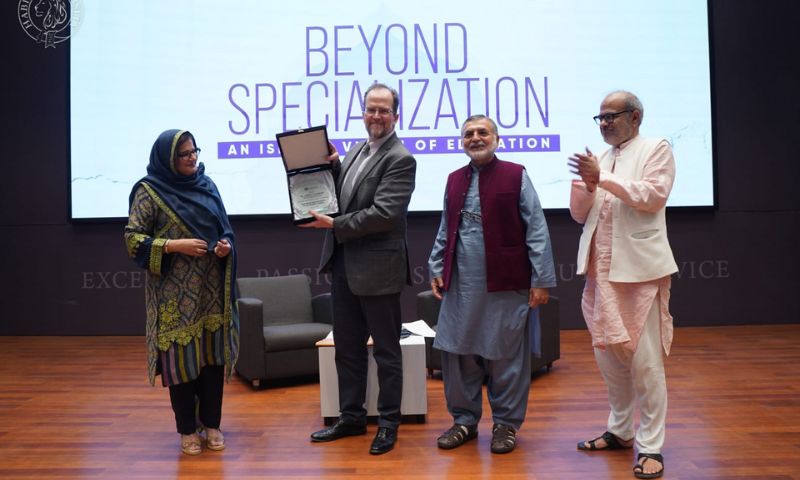
Habib University Hosts Dr. Joseph Lumbard on Ethics, Knowledge, and the Crisis in Modern Education
Knowledge, in the Islamic tradition, is not something humans manufacture but something that forms and transforms them. That was the central theme of a thought-provoking lecture delivered by Dr. Joseph E. B. Lumbard at Habib University on Friday, as part of the university’s flagship Reshaping Philanthropy in the Islamic World Lecture Series. “Nowhere in the Islamic tradition is knowledge understood as a human production. In fact, we can say quite the opposite. That dedication to knowledge produces us as regards to both individuals and societies. We do not, as is too often assumed in modern parlance, produce knowledge. Rather, we transmit knowledge through knowledge. We cultivate knowledge through tarbiyah. We discover truth through kashf. We verify truth through tahqeeq. And we recognize truth through ma’rifah.” Dr. Lumbard delivered “Beyond Specialization: An Islamic Vision of Education,” the third public lecture in the series, drawing a wide audience of Karachi-based intellectuals, civil society leaders, academics, students, and faculty. His address explored how Islamic knowledge traditions can help respond to the growing challenges confronting modern higher education. An American Muslim scholar and Associate Professor of Qur’anic Studies at Hamad Bin Khalifa University, Dr. Lumbard’s work spans Qur’anic studies, Sufism, and Islamic philosophy. His academic career includes teaching roles in Cairo, Boston, and Sharjah, as well as service as Advisor for Interfaith Affairs to the Jordanian Royal Court under King Abdullah II. In his lecture, Dr. Lumbard warned of what he described as an intellectual crisis in contemporary academia, arguing that modern education has fragmented knowledge into isolated disciplines, often detached from ethical purpose and spiritual meaning. Drawing on Islamic intellectual history, he advocated an educational vision that prioritizes moral formation and intellectual integration over narrow technical specialization. He also addressed the impact of modern technology on human cognition and learning: “Increasing reliance upon technology creates a world where the very tools many now use to access information ensure that the human faculties required for knowledge act ever more rapidly. Study upon study has shown the cognitive declines associated with excessive social media immersion and now with the cognitive offloading through regular use of artificial intelligence. Once heralded as great tools of enlightenment, the computer, the internet, the cell phone, and now artificial intelligence drift further from these vaunted objectives as we humans succumb ever more to our basest desires.” The lecture connected these concerns to philanthropy and institution-building, urging a reconsideration of how higher education can serve society in a more holistic and responsible way. Introducing the lecture series, Dr. Nauman Naqvi, Associate Professor in Habib University’s Comparative Humanities Program, emphasized the need to rethink philanthropy as a long-term investment in ethical leadership and knowledge institutions rather than short-term charitable relief: “Habib University’s Reshaping Philanthropy in the Islamic World initiative is grounded in a critical intellectual and moral concern. While generosity in Muslim societies remains deep, the direction of that generosity has increasingly drifted away from long term institution building, particularly in higher education, where sustained social transformation is made possible. Historically, Islamic philanthropy was not conceived as episodic or reactive charity alone.” He added: “Habib is reviving an Islamic tradition of philanthropy rooted in institution-building, intellectual growth, and lasting public good; reshaping giving beyond charity toward aspiration, and placing higher education at the heart of Pakistan’s future.” The session concluded with an engaged Q&A, where participants raised questions on ethics, the relevance of Islamic intellectual traditions today, and institutional challenges facing higher education in Muslim societies. Habib University’s Reshaping Philanthropy in the Islamic World Lecture Series seeks to address a critical gap by exploring how Islamic traditions of giving can be reoriented toward building enduring institutions of knowledge—positioning education as a moral, social, and civilizational investment for the future.

Cellular Subscriber Base Jumps to 200.5 Million in Pakistan by End of 2025
Pakistan’s mobile sector closed 2025 on a strong note, with the country’s total cellular subscriber base crossing the 200 million mark in December, according to official figures released by the Pakistan Telecommunication Authority (PTA). PTA data shows that total mobile subscribers increased from 196.58 million at the end of November to 200.55 million by the end of December, reflecting a net addition of nearly four million users within a single month. Mobile teledensity — which measures the number of cellular connections per 100 people — rose from 79 percent in November to 80 percent in December. Meanwhile, overall teledensity climbed from 79.94 percent to 81.33 percent during the same period, indicating broader access to telecom services nationwide. The number of 3G and 4G subscribers also recorded steady growth. Combined users of next-generation mobile services increased from 148.19 million in November to 150.59 million by the end of December, adding more than 2.39 million new users in one month. As a result, the penetration rate of Next Generation Mobile Services (NGMS) rose from 59.46 percent to 60.32 percent, underlining continued consumer migration toward faster mobile internet services. Among telecom operators, Jazz maintained a zero 3G user base, while its 4G subscribers increased from 55 million in November to 55.52 million in December. Zong also recorded growth in its 4G segment, with subscriptions rising from 41.56 million to 42.35 million over the month. However, its 3G users declined slightly from 1.676 million to 1.654 million. At Telenor Pakistan, the 3G subscriber base fell from 0.932 million to 0.888 million, while 4G users increased from 26.92 million to 27.42 million by the end of December. Similarly, Ufone reported a decline in 3G users, which dropped from 1.114 million to 1.073 million. In contrast, its 4G subscriber base grew from 19.08 million in November to 19.71 million in December. The latest figures highlight Pakistan’s accelerating shift away from legacy 3G services toward faster 4G connectivity, as overall mobile adoption and data usage continue to expand.

The Surprising Reason Food Feels Tastier at Night
Many people find that food seems much more tempting and flavorful after the sun goes down. Whether it’s that midnight chocolate bar, warm snacks after dinner, or the irresistible pull of late-night pizza, there’s real science behind the phenomenon. Researchers say it is more than just willpower—or lack of it. The way our body and brain function at night plays a major role in how food tastes and how much we crave it. Your Body’s Internal Clock Plays a Role A key reason food may taste better at night ties back to the circadian rhythm, our natural internal clock that controls sleep, hunger, and metabolism over a 24-hour cycle. Circadian rhythms help the body anticipate and adjust to daily changes like light, activity, and even eating patterns. These rhythms also influence appetite and hunger cues, which peak in the evening hours before the overnight fast. This biological drive may prompt people to feel hungrier and more receptive to pleasurable foods at night. Scientists found that the body’s intrinsic circadian evening peak in appetite encourages larger meals before sleep, while hunger declines later during the night. This mechanism may be evolutionary, helping humans eat enough before a long fast during sleep. Sleep and Taste Perception Are Connected Another important factor is sleep quality and duration. Research shows that insufficient sleep alters how the brain responds to food. When people are sleep-deprived, the brain’s reward centers become more active when thinking about tasty food, and the areas that evaluate healthiness become less active. This neural shift makes high-calorie, palatable foods feel more desirable at night. Additionally, lack of sleep may change how strongly we perceive sweetness and other flavors. Some studies suggest that after poor sleep, people prefer stronger sweet tastes, which can make snacks and desserts seem more delicious than they did earlier in the day. Mood and Smell Also Matter Food enjoyment isn’t just about taste buds. Smell and mood affect flavor perception, and these, too, fluctuate over the day. Changes in mood or evening relaxation may enhance how aromas register, making late-night foods seem richer and more satisfying. Internal Signals Amplify Cravings Researchers also observe that hormones tied to hunger, like ghrelin, rise in the evening. Higher ghrelin levels can increase appetite and heighten food reward value, which makes food seem more appealing and tastier at night. Food may taste better at night due to a combination of circadian hunger signals, sleep effects on taste and reward systems, mood influences, and hormonal changes. These biological and psychological factors work together, making evening eating feel extra satisfying even when we are not truly hungry.

ChatGPT at Work vs Gemini in Workspace: Which Strategy Actually Scales?
CIOs aren’t split on whether AI matters. They’re split on where to standardize: OpenAI’s “bring ChatGPT to work” approach, or Google’s “put Gemini inside what you already use.” OpenAI’s enterprise push leans on a simple advantage: many employees already know ChatGPT. OpenAI says it now has more than 1 million business customers and 7 million “ChatGPT for Work” seats, with ChatGPT Enterprise seats growing quickly year over year. For CIOs, that familiarity can shrink pilots and speed adoption. Teams don’t need weeks of training to get value. Security is the next selling point. OpenAI states it doesn’t train on customer data by default for ChatGPT Enterprise/Business/Edu and the API, and it highlights encryption and SOC 2 commitments for Enterprise. That messaging resonates with regulated industries that need clear boundaries around prompts, files, and outputs. Google’s Gemini business story is different. It’s less about a new destination and more about a new layer across Gmail, Docs, Sheets, Meet, and Google Cloud. Google’s Workspace materials emphasize that customer data isn’t used to train Gemini models or for ads, and admins can apply governance controls like DLP. In many enterprises, that “already in the suite” integration is the real killer feature. If your workforce lives in Workspace, Gemini becomes a low-friction rollout. Then there’s the platform buyer. Google Cloud positions Vertex AI as the build-and-govern layer, with Gemini models available for enterprise development, agents, and tooling. That appeals to CIOs who want custom workflows, stronger centralized policy, and one vendor for cloud + AI. So who’s “winning” corporate adoption? The data points suggest OpenAI is capturing a big share of day-to-day spend. One recent Ramp analysis reported OpenAI leading enterprise AI provider share in its dataset, with spending hitting a record high in late 2025. But Google has a different kind of leverage: distribution through its app ecosystem and cloud footprint. For some CIOs, that’s safer than adding another major vendor. Why the split? OpenAI often wins when companies want fast productivity gains and a best-in-class chat experience. Google wins when companies want AI embedded in existing workflows, with familiar enterprise controls. In 2026, the “winner” may be whichever platform proves it can scale from clever demos to audited, repeatable business processes.

Mike Hesson Unconvinced, Haris Rauf Set to Miss T20 World Cup 2026
Fast bowler Haris Rauf is likely to miss out on selection for Pakistan’s squad for the ICC T20 World Cup 2026, scheduled to be held from February 7 to March 8 across India and Sri Lanka. According to Geo News, Rauf is not expected to be included in the 15-member squad being finalised for the marquee tournament. The right-arm pacer last represented Pakistan in the T20 format during the Asia Cup 2025 final against India and has not featured in the team since. Reports further revealed that Pakistan head coach Mike Hesson is not in favour of Rauf’s selection following his costly outing in the Asia Cup final in September 2025. In that match, Rauf conceded 50 runs in 3.4 overs without claiming a wicket, as India chased down a modest 147-run target in 19.4 overs to lift the trophy. Despite being Pakistan’s most prolific wicket-taker in T20 internationals — with 133 wickets in 94 matches — Rauf’s recent form and economy rate in high-pressure games have reportedly raised concerns within the team management. The pacer is currently playing in Australia’s Big Bash League, where he is representing the Melbourne Stars. Meanwhile, consultations are ongoing regarding Pakistan’s final squad for the T20 World Cup and the upcoming home T20I series against Australia. The Pakistan Cricket Board has already submitted a preliminary list of players to the International Cricket Council, although changes can still be made without ICC approval until January 31. Sources indicate that the probable squad includes captain Salman Ali Agha, Sahibzada Farhan, Saim Ayub, Fakhar Zaman, Shadab Khan, Babar Azam, Faheem Ashraf, Mohammad Nawaz, Usman Khan, and Abrar Ahmed. Other players under consideration are Shaheen Shah Afridi, Naseem Shah, Salman Mirza, and Khawaja Nafay. Abdul Samad, Mohammad Wasim Jr, and Usman Tariq are expected to be named among the reserve players. Pakistan have been placed in Group A alongside India, the United States, the Netherlands, and Namibia. All of Pakistan’s group-stage matches will be played in Sri Lanka. The Men in Green will begin their World Cup campaign against the Netherlands on February 7 in Colombo, followed by matches against the USA on February 10, arch-rivals India on February 15, and Namibia on February 18. Pakistan’s Super Eight fixtures, if qualified, will be held in Colombo and Kandy.
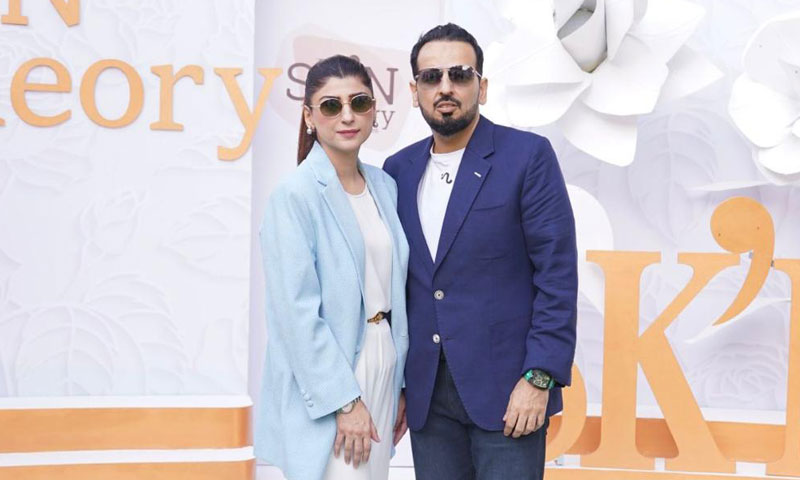
Aesthetic Physician Saba Jerjees Brings Science-Backed Skincare to Karachi
A new chapter in Pakistan’s aesthetic and dermatological landscape began on January 18 as Sk’n Theory, a premium skincare clinic founded by renowned aesthetic physician Dr. Saba Jerjees, officially launched in Karachi with an exclusive, star-studded evening event. The launch marked the arrival of a skincare destination that brings together medical expertise, dermatological science, and modern innovation under one roof. Located in uptown Karachi, Sk’n Theory is guided by the belief that skincare is never one-size-fits-all. Instead, the clinic focuses on personalized, evidence-based treatments designed to address a wide range of skin concerns, tones, and textures. Speaking at the opening, Dr. Saba Jerjees outlined the vision behind the brand, describing Sk’n Theory as a step toward redefining skincare standards in Pakistan. “Sk’n Theory is Pakistan’s first-of-its-kind skin clinic, redefining skincare through setting a gold standard of modern, science-backed treatments. We are here to offer a new, elevated experience in aesthetic excellence,” she said. The high-profile launch was attended by prominent figures from the fashion, beauty, media, and wellness industries, alongside actors, influencers, and members of the press. The gathering reflected the strong interest surrounding the clinic’s arrival and its promise of dermatologist-led, results-driven care. During the event, guests were introduced to Sk’n Theory’s core treatment offerings, which emphasize skin health, repair, and long-term results. The clinic’s newly launched services focus on longevity, anti-aging solutions, and IV wellness therapies, all formulated with carefully selected active ingredients and backed by clinical expertise. Designed with a minimal yet refined aesthetic, Sk’n Theory places strong emphasis on transparency, efficacy, and patient education. Rather than promoting fleeting beauty trends, the clinic encourages individuals to understand their skin and invest in treatments rooted in science and long-term care. With its official debut in Karachi, Sk’n Theory aims to raise the bar for aesthetic medicine in Pakistan, positioning itself as a destination where luxury meets medical credibility, and where skincare is approached as both a science and a personalized journey.
