

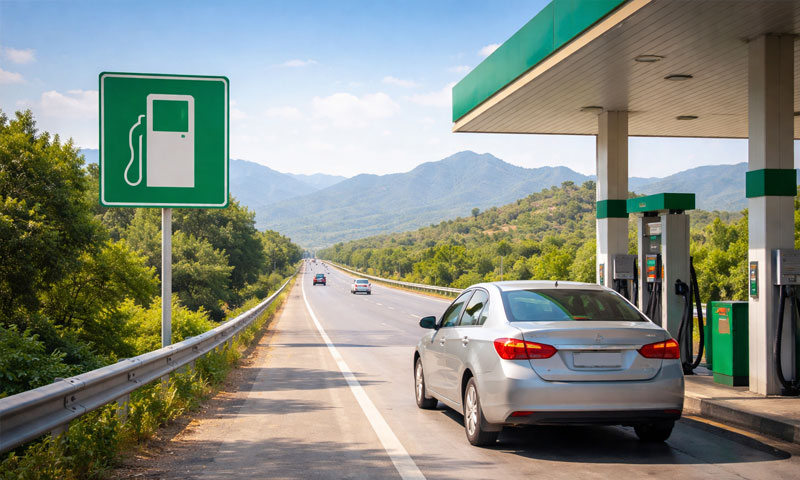
Finding a reliable petrol pump during long journeys has become a growing concern for travellers and transporters across Pakistan. To address this issue, the federal government has launched a new mobile application, Raahguzar, aimed at helping users locate registered and authorized fuel stations nationwide. The initiative has been rolled out by the Petroleum Division as part of broader reforms to improve transparency, curb illegal fuel practices, and modernize the country’s petroleum supply chain. The Raahguzar app provides verified information about legally approved petrol pumps, allowing consumers to distinguish between authorized outlets and unregistered stations. Officials say this will not only make travel easier but also protect consumers from fuel adulteration and quantity fraud. The launch of the app is part of a wider effort to accelerate structural reforms in the petroleum sector. As part of these measures, the government is introducing a modern track-and-trace system to tackle fuel smuggling at petrol pumps and across the entire supply chain. For enhanced monitoring of oil transportation, a joint track-and-trace system has been developed in collaboration with the Oil and Gas Regulatory Authority and the Punjab Information Technology Board. Under this system, fuel tankers, storage terminals, and retail outlets are being digitally connected through an integrated network. The Petroleum Division has also announced plans to install automatic tank gauges and digital nozzles at petrol pumps. These technologies are intended to ensure accurate measurement of fuel quantity and improve monitoring of fuel quality at the retail level. In addition, the Directorate General of Petroleum Concessions is set to introduce a new online portal aimed at increasing transparency in the bidding process for oil and gas exploration and production blocks. The statement further revealed that an Explosives Track-and-Trace System has already been made operational. The system enables real-time monitoring of the explosives supply chain, with two phases of the project completed so far. To strengthen enforcement against illegal petroleum trade, amendments have also been introduced to the Petroleum Act, 1934. These changes include provisions for heavy fines and confiscation of petroleum products involved in illegal sale or transportation, signaling a tougher stance by the government against violations in the sector.
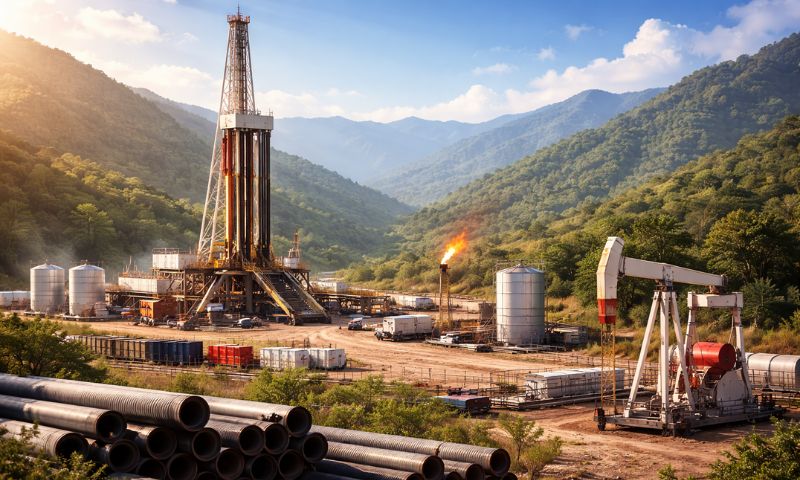
Major Oil & Gas Discovery in Khyber Pakhtunkhwa: What It Means for Pakistan’s Energy Supply
Pakistan’s leading energy explorer, Oil and Gas Development Company Limited (OGDCL), has announced another major oil and gas discovery in the province of Khyber Pakhtunkhwa — a development that experts say could help reduce the country’s energy import burden and strengthen domestic supply. The discovery comes from the Baragzai X-01 (Slant) exploratory well in the Nashpa Block, located in the Kohat District. OGDCL made the announcement in a regulatory notice to the Pakistan Stock Exchange (PSX). The well, drilled deep into the earth reaching significant formations including Kingriali and Datta, yielded both oil and natural gas, marking a valuable find for Pakistan’s energy sector. Officials said this discovery will contribute to closing the energy supply–demand gap using indigenous resources. The company described the discovery as “significant” and part of its ongoing exploration strategy to tap new reserves across the country. Khyber Pakhtunkhwa, especially the Kohat Plateau, has seen consistent hydrocarbon potential, with several discoveries in recent years. OGDCL and partners have earlier recorded gas, condensate, and hydrocarbon finds in the region, proving that the area holds long-term promise. Industry analysts say this latest find could boost investor confidence in Pakistan’s upstream sector. Local production of oil and gas improves energy security, reduces reliance on costly imported fuels, and supports industrial growth. With Pakistan importing large volumes of petroleum products and LNG, any increase in domestic production has direct economic benefit. This discovery follows recent exploration success by Pakistan Petroleum Limited (PPL), which also confirmed a new gas find at its Bilitang-1 well in nearby Kohat. That well tested gas from the Lockhart formation, showing promising flow rates and raising hopes of further development in the region. Experts view these back-to-back finds as validation of renewed exploration efforts in Khyber Pakhtunkhwa. OGDCL, which began operations in 1961 and remains the largest state-owned oil and gas exploration and production company in Pakistan, covers significant acreage across major hydrocarbon basins including Sindh, Balochistan, Punjab, and Khyber Pakhtunkhwa. Despite ongoing energy challenges, Pakistan has made steady progress in recent years, with several fields producing gas and oil. Fields like Tal Block and other discoveries have kept supplies flowing to domestic markets. The new Baragzai X-01 find now adds to this growing base of domestic hydrocarbons, potentially helping meet local demand and improving supply resilience for years to come.

Pakistan Cuts Taxes on Used iPhones, Samsung and Google Phones
Pakistan’s Federal Board of Revenue (FBR) has announced a major update to customs valuation rules for used mobile phones, a move that could lower costs for importers and local buyers. The Directorate General of Customs Valuation in Karachi recently issued Valuation Ruling No. 2035 of 2026, adjusting customs values for 62 types of used branded phones including Apple, Samsung, and Google Pixel models. Under the new ruling, customs officials determined fresh values for used mobile phones imported in commercial quantities without packing or accessories. The revision was necessary because the previous valuation was more than a year and a half old and no longer reflected current international market prices. Customs authorities explained that older models of used phones have significantly depreciated, making past valuation figures unrealistic and prone to frequent disputes between importers and tax authorities. The updated list includes popular Apple iPhone variants and many Samsung Galaxy models, along with Google Pixel devices that are widely traded in Pakistan’s used phone market. Most importantly for consumers, the new values affect the Pakistan Telecommunication Authority (PTA) tax, which is calculated on customs valuation. By setting fixed and fair valuations, the FBR aims to reduce the total tax burden on imported used smartphones. This adjustment helps lower the overall landed cost and makes legal imports more affordable. Customs officials also clarified an important condition: to qualify under the new valuation, used phones must have been activated at least six months before export to Pakistan. This rule helps prevent misuse, such as declaring new phones as used solely to benefit from lower tax rates, and enhances market transparency. Market observers expect the update to affect pricing across the used smartphone market, especially for high-demand brands. Industry insiders told local outlets that iPhone and Galaxy devices’ prices in secondary markets could fall noticeably after the new valuations take effect, as lower import taxes eventually filter down to street pricing. The ruling comes as Pakistan’s mobile sector continues to grow, with demand for both new and refurbished devices high among consumers seeking cost-effective options. Used phones often serve middle-income buyers and students seeking premium features without the steep price tag of brand new devices. Previously, customs authorities have similarly revised values for new phone imports, including detailed valuations for iPhone models under separate valuation rulings to align with market trends. By aligning customs values with real-world prices and tightening verification rules, Pakistan’s taxation system may now promote fairer trade practices, reduce grey imports, and improve compliance with import regulations.

Why Pakistan’s Middle Class Is Turning to DealCart for Smart Shopping
Karachi-based DealCart is emerging as a major force in Pakistan’s e-commerce landscape, responding to the country’s rising cost of living and shifting shopping habits. Founded in 2022, this social commerce startup is changing how many families buy everyday necessities by offering lower prices, free delivery, and an engaging buying experience through its mobile app. In a country where many households spend more than 40% of their income on groceries and basic goods, DealCart aims to ease that burden. The company sources products directly from manufacturers and works with local brands to offer competitive prices that often beat traditional market rates and supermarket chains. One of DealCart’s standout features is its group-buying model. Through the app, customers can team up with friends, family, or other users to make bulk purchases. When a group reaches a certain size within a set period, customers unlock deeper discounts. This model not only helps shoppers save money, it also leverages Pakistan’s strong social networks, making online shopping a communal experience rather than a solitary one. Co-founders Ammar Naveed and Haider Raza built DealCart with the mission to make e-commerce more accessible to price-conscious consumers who have traditionally been underserved by online platforms. These consumers often find existing services skewed toward higher-priced items or rapid delivery models that carry a premium cost. DealCart’s strategy is to focus on value, affordability, and inclusion. The startup’s work has attracted significant investor interest. In 2024, DealCart raised $3 million in a seed funding round led by Shorooq Partners and Sturgeon Capital, with participation from 500 Global, Evolution VC, Rayn Capital, and Khyber Venture Partners. This capital is helping the company expand its product range and improve its technology and logistics to serve even more customers across Pakistan. DealCart’s growth also reflects broader shifts in Pakistan’s digital economy. Smartphone use and internet access have surged, creating new opportunities for online commerce among demographics that were previously hesitant to shop digitally. DealCart leverages these trends by offering a simple app interface, free delivery in key urban areas like Karachi, and engaging features such as reward points that customers can earn and redeem for future purchases. As inflation continues to impact household budgets, DealCart’s model of community-centred, affordable shopping stands out as a practical solution for many Pakistanis. The startup is not just selling products; it is reshaping how everyday essentials are priced, purchased, and experienced in the country’s digital market.
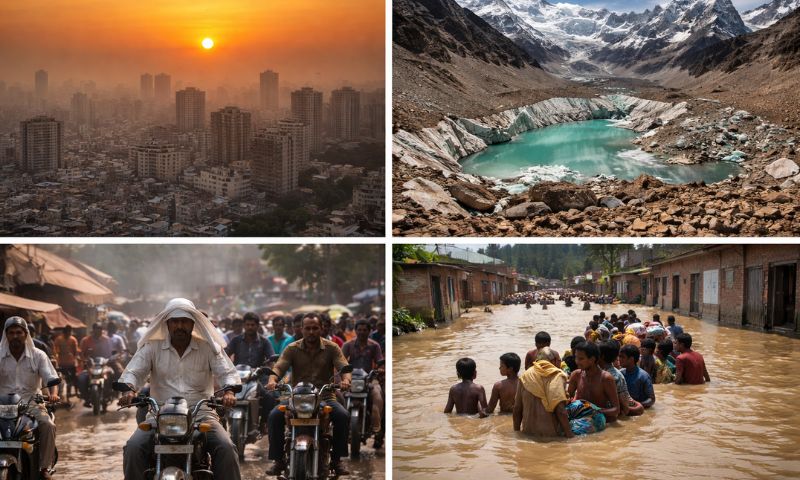
The Hotspot Effect: How Warming Is Reshaping Everyday Life in South Asia
South Asia is home to nearly a quarter of the world’s population, many of whom live in dense cities, farm-dependent rural areas, or flood-prone river basins. Scientists increasingly describe the region as a global climate hotspot because warming here combines extreme heat, volatile rainfall, fragile infrastructure, and high population exposure. Together, these factors turn climate change into a daily lifestyle issue rather than a distant environmental concern. A Region Already Running Hot South Asia’s climate starts from a warm baseline. Much of the region experiences long summers, high humidity, and intense solar exposure. As global temperatures rise, that baseline pushes closer to dangerous thresholds. According to the Intergovernmental Panel on Climate Change (IPCC), large parts of South Asia are projected to face severe heat stress in coming decades. In some areas, heat combined with humidity approaches wet-bulb levels that make it difficult for the human body to cool itself safely. Even healthy people struggle under these conditions, especially without access to cooling or shade. The Monsoon Is Becoming More Unpredictable Climate risk in South Asia is not only about heat. The region depends heavily on the annual monsoon, which supports agriculture, drinking water, and hydropower. Warming air holds more moisture, increasing the likelihood of shorter but more intense rainfall events. Scientists warn that this shift leads to flash floods, landslides, and urban flooding, even while dry spells persist between storms. Reporting cited by AP News notes that warming is already amplifying rainfall extremes across South Asia, raising disaster risks in both cities and mountain regions. Melting Glaciers and Downstream Risk South Asia sits downstream of the Hindu Kush–Himalaya range, often called Asia’s “water towers.” These glaciers feed major rivers such as the Indus, Ganges, and Brahmaputra. Rising temperatures are altering snowmelt patterns and increasing the formation of unstable glacial lakes. When heavy rain coincides with rapid melt, valleys face heightened flood risk. Scientists warn that these combined hazards make climate impacts harder to predict and manage across the region. Cities That Trap Heat Urban growth magnifies climate stress. South Asia is urbanizing rapidly, often without climate-resilient planning. Concrete, asphalt, and limited green cover trap heat, creating urban heat islands. The IPCC estimates that by 2080, between 940 million and 1.1 billion urban residents in South and Southeast Asia could be exposed to extreme heat lasting more than 30 days each year. Low-income communities, which often lack insulation, reliable electricity, or green space, face the greatest risk. When Climate Hits the Economy Extreme heat and erratic weather also carry economic costs. Lost work hours, crop damage, and health impacts quickly translate into slower growth. A Reuters report citing a World Bank assessment found that heat stress in Bangladesh caused economic losses equivalent to about 0.4% of GDP in 2024, mainly due to reduced labor productivity. Similar dynamics affect other South Asian economies where millions work outdoors or in non-climate-controlled environments. Hundreds of Millions Living in Climate “Hotspots” The World Bank estimates that more than 800 million people in South Asia live in areas projected to become climate hotspots. These are places where warming temperatures and shifting rainfall patterns threaten living standards through water scarcity, lower crop yields, and health risks. A Disaster-Heavy Region Climate-driven disasters are already frequent. According to the World Meteorological Organization, Asia remained the world’s most disaster-affected region in 2023. Floods and storms caused the highest casualties and economic losses, while heatwaves intensified across South Asia. How Climate Change Enters Everyday Life For many people, climate change is no longer abstract. In South Asia, it shows up as: Harder commutes during heat and smog Higher food prices after climate-damaged harvests School closures due to floods or extreme heat Longer power outages during summer demand spikes These disruptions reshape daily routines, work hours, travel plans, and household budgets. Why South Asia Feels Climate Change First South Asia’s hotspot status comes down to three forces working together: High exposure: Large populations in floodplains, heat-prone cities, and coastal zones High dependence: Economies tied to agriculture, monsoons, and outdoor labor Limited buffers: Gaps in housing quality, health access, and urban planning As the IPCC and regional studies warn, without faster adaptation, the region is likely to face more hot days, heavier rainfall, and rising social and economic costs in the years ahead.
