

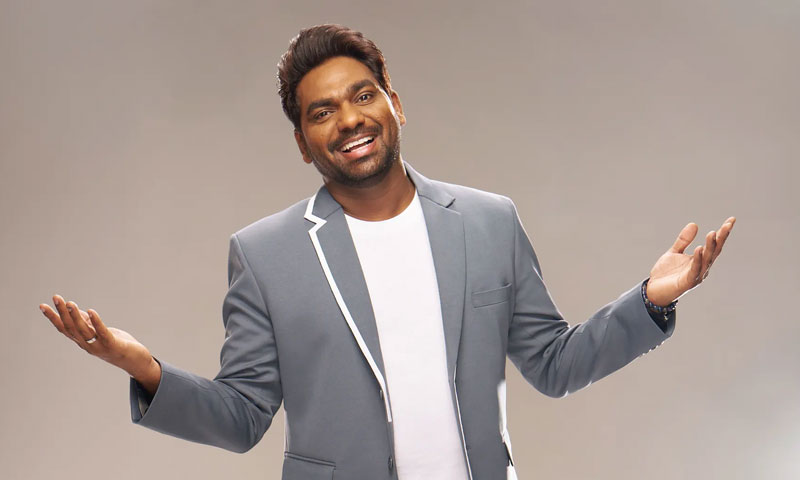
Indian stand-up comedy star Zakir Khan has announced that he will step away from stand-up comedy for several years, citing health concerns and the need for personal recovery after more than a decade of relentless touring. The surprise announcement came on January 18 during Khan’s live performance in Hyderabad as part of his ongoing Papa Yaar tour. Addressing the audience on stage, the comedian revealed that he plans to take an extended hiatus that could last until the end of the decade. “I’m going on a long, long break—till 2028–29 probably… maybe 2030,” Khan said in a clip that has since gone viral on Instagram. “Chaar-paanch saal ka break hai. Health wagairah sambhal lenge. Do-teen cheezein hain, unko theek karna hai.” The announcement sparked widespread reaction among fans, many of whom expressed shock and concern across social media platforms. Khan later confirmed the decision through an Instagram story earlier this week, framing his remaining shows as a celebration rather than a farewell. “Every show is a celebration till 20th June,” he wrote. “Main bahut sheher nahi aa paunga is baar, toh aap thoda takaluf utha kar aa jaiye. Thank you for the love.” This is not the first time Khan has spoken openly about stepping back from the spotlight. Last year, he had briefly paused his performances after revealing that he had been dealing with ongoing health issues. At the time, he admitted that he had continued performing despite feeling unwell for over a year, saying it was “zaruri tha uss waqt.” Over the past decade, Khan has become one of India’s most influential stand-up comedians, known for his storytelling style, poetic humor, and extensive global tours. His demanding schedule has seen him perform across India as well as internationally, often with little downtime between tours. The comedian is currently wrapping up the India leg of his Papa Yaar tour before heading overseas. He is scheduled to perform next in Dubai, followed by shows in Dublin and several cities in the United States, which will mark the conclusion of the tour. While Khan has not shared detailed plans for his break, his remarks suggest a focus on health, personal well-being, and long-postponed priorities—leaving fans hopeful for a refreshed return in the years ahead.
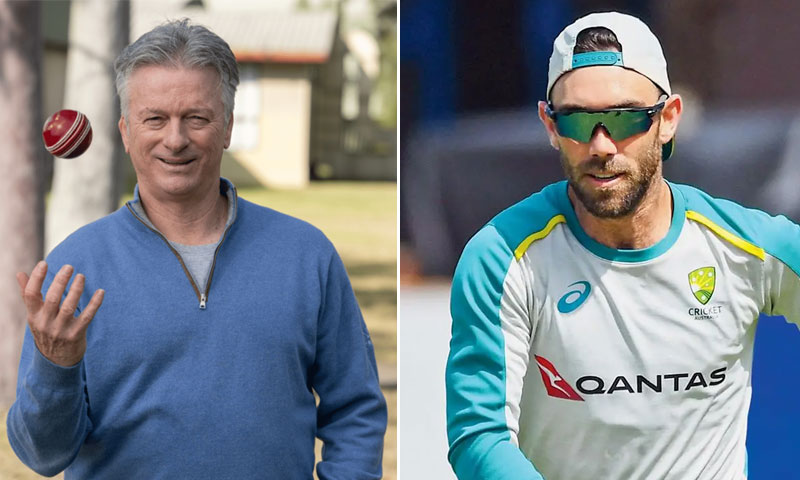
Waugh and Maxwell Back European T20 Premier League After Two Failed Starts
After two failed launch attempts, a new European franchise Twenty20 league is finally set to get off the ground, backed by high-profile cricket stars, global entertainment figures, and official approval from the sport’s governing body. The European T20 Premier League (ETPL) is scheduled to begin in August, with Australia all-rounder Glenn Maxwell and former Australian captain Steve Waugh among the franchise owners. The league is supported by the cricket boards of Ireland, Scotland, and the Netherlands, and has received clearance from the International Cricket Council. The ETPL ownership group also includes Indian actor and producer Abhishek Bachchan, who is among the league’s founders and a key driver behind its European expansion ambitions. Speaking to Reuters from Sydney, where the league formally unveiled its team owners, Bachchan acknowledged that cricket has traditionally struggled for mainstream recognition across much of continental Europe. “Mainland Europe is not known for cricket,” he said. “But this is an opportunity to build a strong cricket ecosystem across the region. With the ETPL, we want to bring the euphoria of cricket to places where the sport is still emerging.” The league will initially feature three franchises. The Amsterdam team is owned by a consortium that includes Waugh and former Australian hockey great Jamie Dwyer, a five-time International Hockey Federation Player of the Year. Maxwell is a co-owner of the Belfast franchise, while former New Zealand internationals Nathan McCullum and Kyle Mills have taken ownership of the Edinburgh side. Europe already represents the ICC’s largest regional membership base, with 33 member nations, including full members England and Ireland. Scotland and the Netherlands have previously featured in Cricket World Cups, while Italy is set to make its T20 World Cup debut next month—an indicator, Bachchan believes, of cricket’s growing footprint on the continent. “Italy qualifying for the World Cup shows how interest in cricket is expanding in Europe,” he said. “Add to that cricket’s inclusion in the 2028 Olympic Games, and you have a major opportunity for growth.” The league’s ambitions extend well beyond visibility. Bachchan said the long-term goal is to position the ETPL alongside the world’s leading T20 competitions. “We hope to turn the ETPL into one of the top T20 leagues globally,” he said. For Waugh, the appeal lies in grassroots impact as much as commercial success. The former Australia captain said the Amsterdam franchise could play a key role in inspiring young Dutch players by giving them direct access to elite international talent. “Franchise cricket allows local players to share dressing rooms with the best in the world,” Waugh told Reuters. “Dutch players could find themselves playing alongside someone like Mitchell Marsh or Steve Smith. That kind of exposure is priceless—you simply can’t replicate that experience.” The ETPL was originally conceived as the Euro T20 Slam but failed to launch in 2019. A second attempt planned for last year was also postponed. Organisers now say the revised structure, broader ownership base, and official backing have finally put the league on stable footing.

Secondhand, Repair, Repeat: The Fashion Trends Built on Responsible Buying
A few years ago, “fashion trends” meant hemlines and colors. Now, the biggest shift is about how people buy. Secondhand is mainstream. Repair is cool again. Brands sell “resale” as a feature, not a fallback. The driver is equal parts conscience and cost. The sustainability case is hard to ignore. The UN Environment Programme says the world produces 92 million tonnes of textile waste every year. It also points to the system behind it: clothing production doubled from 2000 to 2015, while the duration of garment use fell 36%. UNEP warns the sector’s footprint will keep rising without a circular shift. “Unsustainable fashion is aggravating the triple planetary crisis…” UNEP Executive Director Inger Andersen said, calling for “a circular economy approach that values sustainable production, reuse and repair.” That messaging is landing because shoppers now have practical alternatives. Secondhand is the clearest proof. ThredUp’s Resale Report projects the global secondhand market will reach $350 billion by 2028, as more consumers treat pre-owned as normal shopping. The same report (via industry coverage) also forecasts online resale will more than double, reaching $40 billion by 2028. Resale has become a trend engine too, as vintage denim, archived luxury, and “thrift flips” shape what looks current. Repair and “wear-it-longer” dressing is another trend with real impact. UNEP notes recycled fibres still make up only 8% of textile fibres (2023), which keeps pressure on buying less and extending use. That’s why visible mending, tailoring, and shoe repair content has moved from niche to mainstream. It’s also why brands now offer repair services, warranties, and spare buttons as part of the pitch. Then there is “fewer, better” buying: capsule wardrobes, repeat outfits, and neutral staples. The look is minimalist, but the logic is commercial. It reduces impulse purchases and makes wardrobes feel “new” through styling, not constant shopping. Finally, materials and transparency are shaping trend language. UNEP estimates fashion and textiles account for 2–8% of global greenhouse gas emissions and 9% of microplastic pollution reaching oceans each year. That’s why shoppers increasingly look for recycled materials, lower-impact fabrics, and clearer labels especially on everyday items like tees, denim, and activewear. Responsible buying is no longer the “ethical corner” of fashion. It’s becoming the trend cycle itself and brands that make circular choices easy are the ones positioned to win.
Streaming Giant Netflix Crosses 325 Million Subscribers
Netflix has marked a new milestone in its long rise as the world’s most popular streaming service. The company reported that it surpassed 325 million paying subscribers at the end of its 2025 holiday quarter, helping it beat Wall Street’s revenue estimates and lift its full-year finances. For the three months ending December 31, Netflix posted $12.05-12.1 billion in revenue, narrowly exceeding analysts’ forecasts of about $11.97 billion. Earnings per share were $0.56, slightly above expectations. Executives credited several recent hits for driving strong viewership. The final season of “Stranger Things” drew a massive audience, Nielsen data showed, with viewers logging billions of minutes of content. Netflix also streamed two NFL games on Christmas Day, further boosting engagement. Despite beating revenue forecasts, Netflix’s stock slid in after-hours trading. Investors reacted to the company’s 2026 outlook, which missed expectations in some areas and weighed on sentiment. Shares fell more than 4% as markets digested the mixed message. But the story goes well beyond quarterly results. Netflix’s leadership continues to pursue a bold acquisition of Warner Bros. Discovery, which would dramatically expand its content library. The company has amended its offer to an all-cash deal valued at more than $80 billion to fend off a rival bid from Paramount Skydance. In announcing the revised bid, Co-CEO Ted Sarandos said the all-cash offer would “enable an expedited timeline to a stockholder vote and provide greater financial certainty.” Netflix also plans to boost programming investment by roughly 10% in 2026 to create even more compelling series, films, and live experiences. The company’s ad-supported subscription tier, launched in late 2022, continues to grow rapidly and has helped Netflix nearly double its advertising revenue. It aims to hit about $3 billion in ad sales in 2026. Looking ahead, Netflix projects 2026 revenue between $50.7 billion and $51.7 billion, reflecting aspirations to broaden its offerings and reach even more viewers worldwide. As competitors proliferate, Netflix’s mix of global subscribers, new content spending, and strategic moves gives it a unique edge in the streaming wars. But with markets watching each forecast and deal closely, every quarter now feels like a turning point.
