

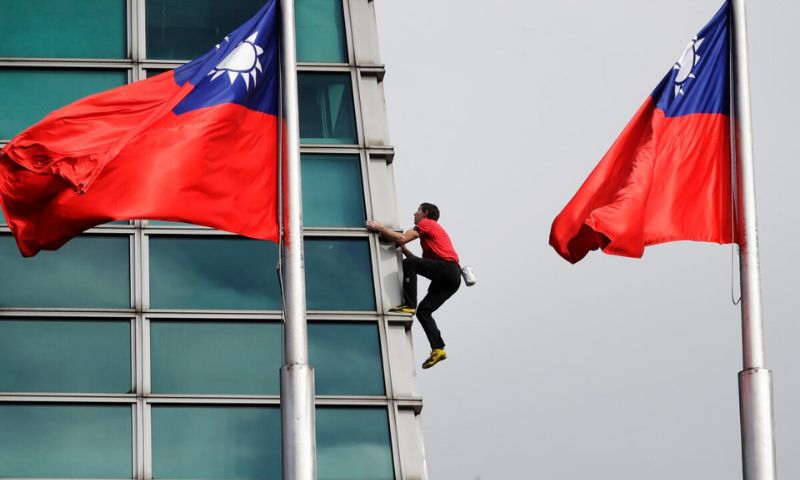
American climber Alex Honnold achieved an extraordinary milestone in January 2026 by scaling Taipei 101, one of the tallest buildings in the world, without ropes or safety equipment in a live broadcast event organised by Netflix. The feat — part of Netflix’s Skyscraper Live special — drew millions of viewers and renewed global interest in extreme climbing and human endurance. The 40-year-old rock climber completed the 1,667-foot ascent, climbing all 101 floors plus the 70-metre spire of the iconic Taiwan skyscraper. He undertook the challenge in 91 minutes, using only handholds and small architectural features on the building’s exterior. Thousands watched from the streets below and millions tuned in online as Honnold reached the top spire and celebrated with a wave and even a selfie. Honnold’s climb had been postponed briefly due to poor weather, but once conditions improved, he began his ascent early in the morning local time before the live broadcast. The event attracted both awe and concern from the public and media. Some applauded his skill and nerve, while others questioned the risks of airing such a dangerous stunt live. This climb marked Honnold’s first major free-solo attempt on a man-made structure, contrasting with his previous feats on natural rock walls, most famously his 2017 free solo of El Capitan in Yosemite National Park, chronicled in the Oscar-winning documentary Free Solo. Ahead of the event, Honnold spoke with media about the unique challenges of climbing a building rather than a rock face. He noted the structure’s architectural quirks — such as overhangs and horizontal modules — which would test strength and endurance. Despite the danger, he expressed excitement about the climb, saying he would undertake it even without the spectacle of a broadcast. ALEX HONNOLD AFTER COMPLETING HIS FREE SOLO OF TAIPEI 101: "Sick." The 101 story climb took 1 hour and 35 minutes #SkyscraperLIVE pic.twitter.com/TIzeRqiUcM — Netflix (@netflix) January 25, 2026 Regarding compensation, Honnold admitted he was being paid for the spectacle and broadcast rights, not for the physical act of climbing itself. He described the amount as “an embarrassing amount” compared with major sports salaries and said he would have climbed the building for free if given permission. The success of this historic ascent not only showcased Honnold’s remarkable abilities but also demonstrated the growing fascination with extreme live events in the streaming era. Taipei 101, once the world’s tallest building, now stands as the site of one of the boldest urban free-solo ascents in history.
More Rain and Snow Ahead as Fresh Weather System Moves Into Pakistan
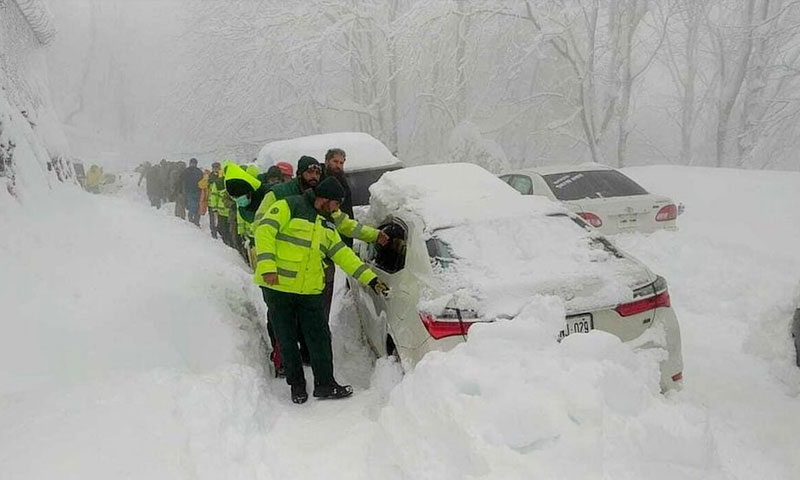
Pakistan is bracing for another round of rain, snow and freezing temperatures as the Pakistan Meteorological Department (PMD) warned that a new westerly weather system will affect large parts of the country from Sunday night through Tuesday, compounding disruption already caused by severe winter conditions in the upper regions. According to the PMD, the fresh weather system will enter western parts of the country on January 25 and spread to upper regions by January 26, bringing rain, strong winds and thunderstorms in plains, while heavy snowfall is expected in mountainous areas. Authorities across Khyber Pakhtunkhwa, Gilgit-Baltistan, Azad Kashmir, northern Balochistan and parts of Punjab have been placed on high alert due to the risk of road blockages, landslides and avalanches. The warning comes as life in several northern and western regions remains severely disrupted by ongoing snowfall and extreme cold. Key highways have been blocked, remote communities cut off, and tourists stranded in multiple locations. In northern Balochistan, snow and icy conditions have paralysed travel on major routes, including the Quetta–Ziarat and N-50 highways, where traffic has been suspended at several points. Dozens of vehicles remained stranded, while more than 100 tourists were reported stuck in and around Chaman. Authorities also imposed a temporary ban on tourist travel to Ziarat due to hazardous road conditions. Temperatures in parts of Balochistan plunged to minus 12 degrees Celsius, freezing water pipelines and causing acute shortages of drinking water in Quetta, Kalat, Chaman and Ziarat. Although snowfall has eased in some areas, intense cold and strong Siberian winds continue to grip the region. Meanwhile, heavy snowfall has affected several districts of Khyber Pakhtunkhwa, including Mansehra, Shangla, Dir, Swat, Kohistan, Kalam and Chitral, with reports of vehicles stranded and travel severely restricted. In Tirah Valley, rain and snow left around 100 vehicles stuck, prompting rescue operations by Rescue 1122, which shifted dozens of people to safer locations. Looking ahead, the PMD has forecast rain with strong winds and thunderstorms in Balochistan on January 25 and 26, while upper Sindh may also receive rainfall on January 26. From January 26 to 27, widespread rain and snowfall are expected in Gilgit-Baltistan, Azad Kashmir, Chitral, Dir, Swat, Shangla, Kohistan, Murree and the Galiyat, with brief breaks in between. Islamabad and surrounding areas are also likely to see showers, while parts of Punjab may experience cloudy weather with intermittent rain. Authorities have advised commuters and tourists to exercise caution, particularly in hilly areas where slippery roads, poor visibility and sudden closures are likely. Relevant departments have been placed on alert to respond swiftly to emergencies, as officials warn that the incoming system could further disrupt daily life, travel and tourism across large parts of the country.

Monster Winter Storm Paralyzes U.S. Travel, Triggers Widespread Blackouts and Emergency Declarations
A powerful winter storm sweeping across large parts of the United States has triggered widespread disruption, forcing the cancellation of thousands of flights and knocking out electricity to hundreds of thousands of homes as dangerously cold weather advances eastward. More than 4,000 flights were cancelled on Saturday, with disruptions expected to worsen as the storm spreads across the eastern two-thirds of the country. By early Sunday, power outages had already affected over 230,000 customers, stretching as far west as Texas, according to outage monitoring data. Weather forecasters warned that a combination of heavy snow, sleet, freezing rain and extreme cold would persist through Sunday and into the coming week, raising the risk of prolonged travel disruption and infrastructure strain. Describing the storm system as “historic,” U.S. President Donald Trump approved federal emergency disaster declarations for multiple states, including South Carolina, Virginia, Tennessee, Georgia, North Carolina, Maryland, Arkansas, Kentucky, Louisiana, Mississippi, Indiana and West Virginia. “We will continue to monitor and stay in touch with all states in the path of this storm,” Trump said in a social media post, urging Americans to remain safe and prepared. Widespread Emergency Declarations and Power Concerns At least 17 states and Washington, D.C. declared weather emergencies, according to the Department of Homeland Security (DHS). DHS Secretary Kristi Noem said tens of thousands of people across southern states were without power as utility crews raced to restore service. The hardest-hit states included Louisiana, Mississippi, Texas, Tennessee and New Mexico, where outages continued to rise into Sunday. https://x.com/dwnews/status/1876253635744514424 To prevent grid failures, the U.S. Department of Energy (DOE) issued emergency orders allowing grid operators in Texas and the mid-Atlantic region to deploy backup power resources, including at data centers and major facilities, even if doing so exceeded normal regulatory limits. Airlines and Airports Brace for Continued Disruptions Airlines across the country scrambled to adjust schedules as conditions deteriorated. By late Saturday night, more than 9,400 additional flights scheduled for Sunday had already been cancelled, according to flight-tracking data. Major carriers warned passengers to expect abrupt changes. Delta Air Lines reported further cancellations across Atlanta and the East Coast, while relocating cold-weather specialists to assist de-icing operations at southern airports. JetBlue said it had cancelled about 1,000 flights through Monday, while United Airlines confirmed it had proactively grounded flights in areas forecast to receive the worst conditions. Images from affected airports showed de-icing crews working around the clock as ice and snow accumulated on aircraft. Forecast Warns of “Crippling” Conditions The National Weather Service warned that the storm could bring widespread and long-lasting ice accumulation across the Southeast, where even moderate icing can lead to what forecasters described as “crippling to locally catastrophic impacts.” Meteorologists also warned that record-low temperatures and dangerous wind chills could push further into the Great Plains by Monday, increasing risks to public safety. Officials urged residents to stock up on food and fuel, limit travel where possible, and prepare for prolonged outages as the storm continues to move east.

BYD Introduces Atto 2 and Sealion 7 in Pakistan: Full Prices and Booking Info
Mega Motor Company (MMC), in partnership with BYD, the world’s leading New Energy Vehicle (NEV) manufacturer, has introduced two new all-electric SUVs — the BYD Sealion 7 and BYD Atto 2 — in Pakistan, signalling a significant expansion of the country’s electric mobility landscape. The vehicles were unveiled at an exclusive dealership launch in Lahore, with bookings now open nationwide. The additions broaden BYD-MMC’s growing electric portfolio, targeting both premium performance buyers and everyday urban drivers as Pakistan gradually transitions towards cleaner transportation. BYD Sealion 7: Performance-Driven Luxury Electric SUV Positioned as a luxury, performance-focused electric SUV, the BYD Sealion 7 is designed to compete with high-end global EVs in terms of power, technology and safety. One of BYD’s strongest sellers across the Asia-Pacific region, the Sealion 7 delivers 308 horsepower (230 kW) and 380 Nm of torque, accelerating from 0 to 100 km/h in 6.7 seconds. The SUV also features a strong braking capability, coming to a halt from 100 km/h in 37 metres, while offering a driving range of up to 567 kilometres on a single charge. Built for drivers seeking both refinement and excitement, the Sealion 7 blends performance with advanced ride comfort and safety systems. BYD Atto 2: Smart Electric SUV for Urban Pakistan The BYD Atto 2 is positioned as a practical, technology-oriented electric SUV tailored for daily commuting and city use. Designed with efficiency and convenience in mind, it features keyless NFC access, a 50W wireless charging pad, electric and ventilated seats, and a clean, user-friendly interior layout. The Atto 2 accelerates from 0 to 100 km/h in 7.9 seconds, making it one of the quickest in its category, while offering a driving range of up to 380 kilometres. According to BYD-MMC, the model delivers up to 75 per cent lower running and maintenance costs compared to comparable internal combustion engine vehicles. Core BYD Technology Across Both Models Both the Sealion 7 and Atto 2 are built on BYD’s e-Platform 3.0 and feature the brand’s 8-in-1 electric powertrain, designed to enhance efficiency, performance and driving comfort. They are also equipped with BYD’s Blade Battery, known globally for its high safety standards, thermal stability and durability, making it one of the most trusted battery technologies in the EV sector. What BYD Pakistan Says Speaking at the launch, Lei Jian, Country Head of BYD Pakistan, said the introduction of the two models reflects the company’s long-term vision for the local market. “As the world’s No.1 NEV brand, we are proud to bring our globally proven technology to Pakistan. With the Sealion 7 and Atto 2, we are making the transition to electric vehicles both practical and rewarding for Pakistani consumers.” Danish Khaliq, Vice President – Sales and Strategy at BYD Pakistan (MMC), said the new models cater to different stages of the EV transition. “From a value-driven electric SUV for daily urban use to a premium, performance-led vehicle, these launches address a wide spectrum of customer needs. Electric mobility in Pakistan is no longer a future concept — it is happening now.” Prices and Booking Details BYD Atto 2 Price: PKR 7.29 million Booking amount: PKR 1.4 million BYD Sealion 7 Price: PKR 15.49 million Booking amount: PKR 3 million A limited-time introductory offer is available for bookings made until February 28, which includes a complimentary 7 kW wall-mounted home charger. Prices are inclusive of freight and inland transit insurance. The offer also includes: 10-year warranty on the low-voltage LFP battery Two free charging sessions at HubcoGreen stations for Atto 2 customers Free installation of a 7 kW charger for Sealion 7 customers Building Pakistan’s First EV Charging Corridor Beyond vehicle launches, BYD-MMC, in collaboration with HubcoGreen, is developing Pakistan’s first nationwide NEV charging corridor, spanning approximately 1,300 kilometres from Karachi to Peshawar, connecting major cities and motorway networks.

Woman Forced to Publicly Apologise After Exposing Husband’s Affair on Social Media
A court in central China has ordered a woman to publicly apologise to her husband after ruling that her social media posts exposing his extramarital affair crossed the legal line into defamation — a decision that has sparked widespread debate online. The woman, Niu Na, from Henan province, revealed on social media that she had been married to her husband Gao Fei for more than a decade and that the couple share a daughter. According to Niu, she later discovered that Gao, a team leader at a local coal mining company, had been involved in a five-year affair with a married colleague surnamed Han. Niu alleged that during the affair, Gao used the couple’s joint assets to purchase gold jewellery, cosmetics and clothing for his mistress. Enraged by the betrayal, she took to Douyin, China’s version of TikTok, where she publicly disclosed details of the relationship, named workplaces linked to both individuals, and shared a sarcastic short story mocking her husband’s infidelity. Soon after the posts gained attention, Gao filed a lawsuit accusing Niu of defamation. The court ruled in his favour, stating that personal moral misconduct does not justify violating another person’s legal rights or reputation, regardless of the circumstances. As part of the judgment, Niu was ordered to post public apology videos for 15 consecutive days, with each video subject to court approval. Under Chinese civil law, defamation can result in legal obligations including a public apology, cessation of harmful behaviour and, in some cases, financial compensation. Since January 12, Niu has been uploading daily apology videos on Douyin. In one clip, she says:“I was overwhelmed by anger and made the wrong decision to insult you. I am sorry.” However, the apology videos — delivered with a notably ironic tone — quickly went viral. Within days, Niu amassed millions of likes and gained more than 350,000 followers, turning the court-mandated apology into an unexpected social media phenomenon. In the videos, Niu continues to reference her husband’s affair, sharing screenshots of chat records, financial transfers, and even images showing Gao’s injuries after he was allegedly assaulted by his mistress’s husband. In one video, she remarks sarcastically:“You and your mistress are clearly in true love. Even with serious moral flaws, your reputation deserves respect.” In another post, Niu displayed injuries she said were caused by domestic violence, adding that while she had suffered deeply, her emotional distress did not excuse her actions.“Emotional issues should be handled legally,” she said. Public reaction has been overwhelmingly supportive. Many users praised her composure and criticised the legal outcome, arguing that she was punished for exposing wrongdoing. Some commenters suggested her apology videos should be broadcast publicly to highlight the irony of the ruling. Capitalising on her sudden popularity, Niu has begun selling clothing, hair accessories and cosmetics featured in her videos, while also hosting livestreams sharing her personal journey and promoting her hometown. Each livestream reportedly attracts more than 10,000 viewers. It remains unclear whether Niu and Gao have formally divorced, though the two are currently living separately. Niu has said the betrayal took a severe toll on her health, but thanked her supporters for helping her move forward. “Your love and encouragement give me the strength to keep going,” she told followers.

New Faces, Big Omission: Pakistan’s T20 World Cup Squad Announced
Pakistan’s selectors have made a bold call ahead of the ICC Men’s T20 World Cup by dropping fast bowler Haris Rauf from the 15-member squad, while confirming Salman Ali Agha as captain for the global tournament. The squad was unveiled on Sunday morning at Gaddafi Stadium, Lahore, during a press conference attended by Aqib Javed, captain Salman Ali Agha, and white-ball head coach Michael James Hesson. Rauf’s omission is the most notable call, as Pakistan appear to have prioritised balance and recent form while finalising their squad for the 20-team tournament, which will run from February 7 to March 8. Several players will make their first appearance at a T20 World Cup. Captain Salman Ali Agha is joined by Faheem Ashraf, Khawaja Mohammad Nafay, Mohammad Salman Mirza, Sahibzada Farhan, and Usman Tariq, all of whom have earned maiden call-ups for a global ICC event. Road to 🏆 2026 begins!🇵🇰 Squad unveiled for the ICC Men’s T20 World Cup 🌍Read More 👉🏻 https://t.co/iooMXUS5g6#BackTheBoysInGreen #T20WorldCup pic.twitter.com/VOSkvs05MC— Pakistan Cricket (@TheRealPCB) January 25, 2026 The squad also features experienced campaigners who have represented Pakistan at previous T20 World Cups since 2021, including Abrar Ahmed, Babar Azam, Fakhar Zaman, Mohammad Nawaz, Naseem Shah, Saim Ayub, Shaheen Shah Afridi, Shadab Khan, and Usman Khan. The expanded 20-team format will see each side play four group matches, with the top teams advancing to the Super Eight stage followed by the knockout rounds. As part of their build-up to the tournament, Pakistan will host Australia in a three-match T20I series at Gaddafi Stadium on January 29, 31, and February 1, with the national training camp beginning today.

India Stayed Away From Pakistan, Bangladesh Shown the Door — ICC Under Fire
The International Cricket Council (ICC)’s decision to replace Bangladesh with Scotland at the Men’s T20 World Cup 2026 has reignited debate over how global cricket’s governing body applies security assessments, venue policies and travel refusals across major tournaments. Bangladesh were excluded from the event after the Bangladesh Cricket Board (BCB) declined to play its scheduled matches in India, citing security concerns and requesting that their fixtures be moved to Sri Lanka, a co-host of the tournament. The ICC rejected that request, stating that independent security reviews found no “credible or verifiable” threat, and that altering the schedule so close to the tournament’s start was not feasible. Criticism and Comparisons With Past ICC Decisions The ICC’s hard line has drawn criticism from former players and administrators, who argue that the approach contrasts sharply with past instances where tournament structures or venues were modified due to one team’s refusal to travel. Much of the criticism centres on the 2025 ICC Champions Trophy, where an ICC-approved framework allowed India and Pakistan matches to be played at a neutral venue during the 2024–27 broadcast cycle. Critics say that precedent raised expectations that Bangladesh might be offered a similar compromise rather than being removed from the competition. Former Pakistan captain Shahid Afridi publicly questioned why India’s security concerns were accommodated in the Champions Trophy framework while Bangladesh’s request was rejected. Former Australia international Jason Gillespie also raised concerns, asking why Bangladesh could not be permitted to play outside India, referencing the same precedent. How Bangladesh Were Replaced The ICC engaged in discussions with the BCB for more than three weeks after Bangladesh formally objected to playing in India. Despite multiple rounds of dialogue, Bangladesh did not confirm participation under the published schedule. After a final deadline passed without confirmation, the ICC invoked its governance and qualification procedures and confirmed Scotland — the next-highest ranked eligible T20I side — as Bangladesh’s replacement. Key Precedents: When Cricket Events Changed Venues or Formats The controversy has revived scrutiny of several past ICC and Asian Cricket Council (ACC) decisions where tournaments were altered due to security or travel disputes: Champions Trophy 2025 (Neutral Venue Model)India declined to travel to Pakistan, leading the ICC to approve a neutral-venue framework for India–Pakistan matches during the 2024–27 cycle. Asia Cup 2023 (Hybrid Model)Pakistan retained hosting rights, but India’s refusal to travel resulted in a hybrid model, with matches split between Pakistan and Sri Lanka. The International Cricket Council (ICC)’s decision to replace Bangladesh with Scotland at the Men’s T20 World Cup 2026 has reignited debate over how global cricket’s governing body applies security assessments, venue policies and travel refusals across major tournaments. Bangladesh were excluded from the event after the Bangladesh Cricket Board (BCB) declined to play its scheduled matches in India, citing security concerns and requesting that their fixtures be moved to Sri Lanka, a co-host of the tournament. The ICC rejected that request, stating that independent security reviews found no “credible or verifiable” threat, and that altering the schedule so close to the tournament’s start was not feasible. Criticism and Comparisons With Past ICC Decisions The ICC’s hard line has drawn criticism from former players and administrators, who argue that the approach contrasts sharply with past instances where tournament structures or venues were modified due to one team’s refusal to travel. Much of the criticism centres on the 2025 ICC Champions Trophy, where an ICC-approved framework allowed India and Pakistan matches to be played at a neutral venue during the 2024–27 broadcast cycle. Critics say that precedent raised expectations that Bangladesh might be offered a similar compromise rather than being removed from the competition. Former Pakistan captain Shahid Afridi publicly questioned why India’s security concerns were accommodated in the Champions Trophy framework while Bangladesh’s request was rejected. Former Australia international Jason Gillespie also raised concerns, asking why Bangladesh could not be permitted to play outside India, referencing the same precedent. How Bangladesh Were Replaced The ICC engaged in discussions with the BCB for more than three weeks after Bangladesh formally objected to playing in India. Despite multiple rounds of dialogue, Bangladesh did not confirm participation under the published schedule. After a final deadline passed without confirmation, the ICC invoked its governance and qualification procedures and confirmed Scotland — the next-highest ranked eligible T20I side — as Bangladesh’s replacement. Key Precedents: When Cricket Events Changed Venues or Formats The controversy has revived scrutiny of several past ICC and Asian Cricket Council (ACC) decisions where tournaments were altered due to security or travel disputes: Champions Trophy 2025 (Neutral Venue Model)India declined to travel to Pakistan, leading the ICC to approve a neutral-venue framework for India–Pakistan matches during the 2024–27 cycle. Asia Cup 2023 (Hybrid Model) Pakistan retained hosting rights, but India’s refusal to travel resulted in a hybrid model, with matches split between Pakistan and Sri Lanka. Champions Trophy 2009 (Relocated) Originally awarded to Pakistan, the tournament was postponed and later moved to South Africa amid security concerns. Cricket World Cup 2011 (Pakistan Matches Removed) Following the 2009 Lahore attack on the Sri Lanka team, Pakistan lost the right to host World Cup matches. Cricket World Cup 1996 (Walkovers) Australia and West Indies refused to travel to Sri Lanka, resulting in walkovers — one of the most cited examples of travel refusal in World Cup history. Cricket World Cup 2003 (Kenya Fixture) New Zealand refused to play in Kenya due to security concerns, requested a venue change, and were denied; Kenya were awarded the points. Why the Debate Is Intensifying The current backlash stems from the contrast between the ICC’s refusal to relocate Bangladesh’s matches and earlier cases where schedules were adjusted, venues changed or neutral solutions adopted to accommodate team concerns. Supporters of the ICC’s decision argue that late-stage changes can disrupt tournament planning and undermine governance consistency. The ICC has repeatedly stated that it will not amend schedules without verified threats, warning that doing so could set precedents affecting future events. With Bangladesh now excluded and Scotland stepping in,
